Israel Vows to Go After Hezbollah as It Names Another Killed

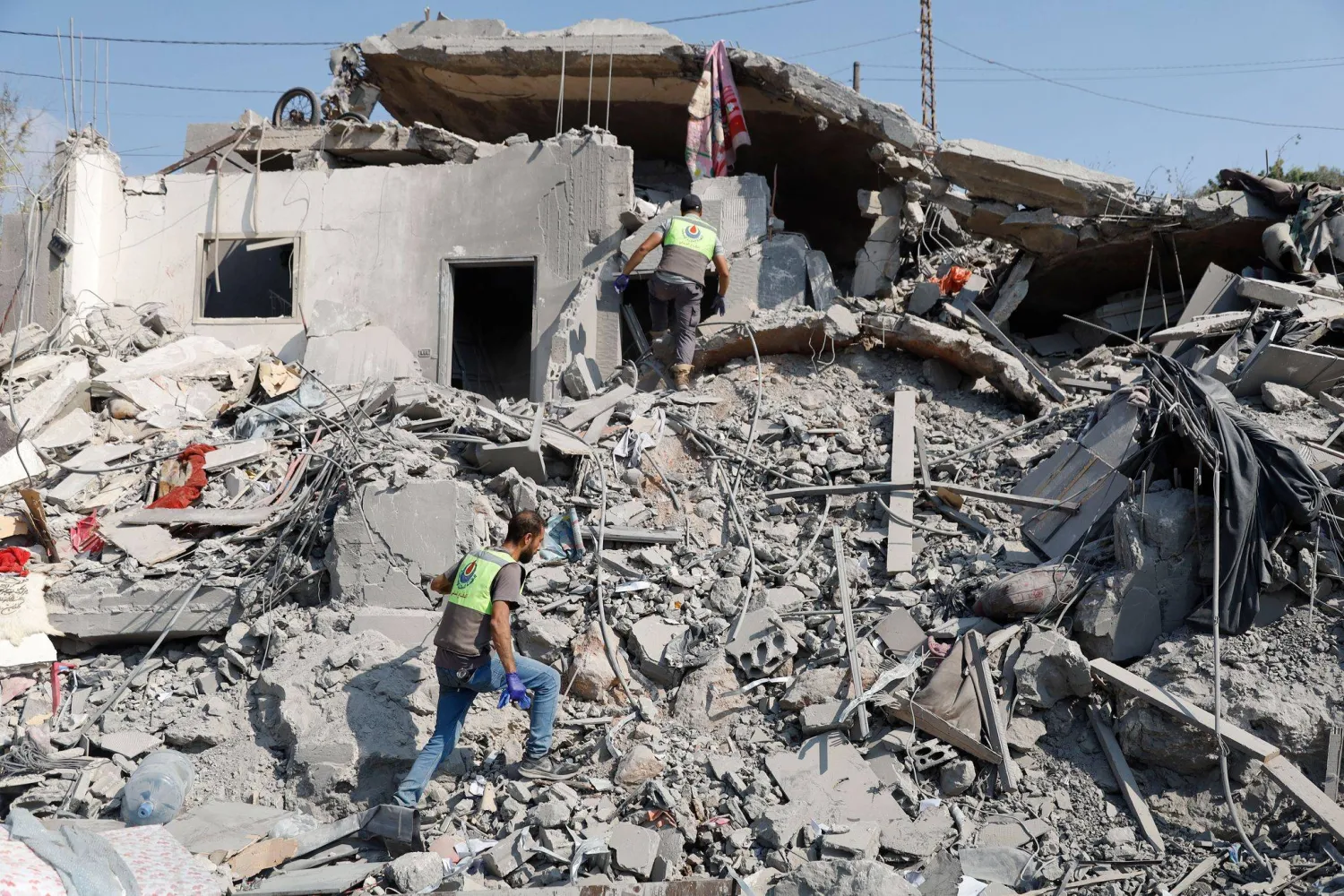
15 August 2026, Lebanon, Nabatieh district: An Israeli warplane carried out an airstrike on a house in a tourist area of Ansar, southern Lebanon, before dawn, completely destroying the building and causing extensive damage to surrounding properties. (dpa)
TT

Israel Vows to Go After Hezbollah as It Names Another Killed

15 August 2026, Lebanon, Nabatieh district: An Israeli warplane carried out an airstrike on a house in a tourist area of Ansar, southern Lebanon, before dawn, completely destroying the building and causing extensive damage to surrounding properties. (dpa)

Israel vowed Sunday it would hit Hezbollah again if threatened, as it identified what it described as a commander killed in strikes a day earlier that also left several children dead. 

Israeli strikes on Saturday killed 11 people in southern Lebanon, according to authorities, in the deadliest attacks since a deal was reached in June aimed at ending hostilities. 

Israel said the strikes were a response to Hezbollah setting off explosive drones inside a so-called "security zone" in southern Lebanon, seriously injuring three Israeli troops including an officer. 

"No score will be left unsettled in any arena. We'll defend our soldiers and our civilians with full power," Defense Minister Israel Katz wrote on X. 

The Israeli military identified one of those killed on Saturday as Abu Hassan Alaa, saying he was a senior commander of Hezbollah's Badr unit who had been involved in firing drones at Israeli troops. 

Israel earlier said that the strike killed a commander in Hezbollah's elite Radwan Force, Ali Samir Al-Haj Hassan. 

The Israeli military acknowledged that Hassan's family was present but defended the strike by saying they were not the target. 

Lebanese President Joseph Aoun said a whole family had been killed in the strike in the village of Ansar, with Lebanon's health ministry reporting that three children and two women died. 

Imran Riza, the UN humanitarian coordinator for Lebanon, condemned the strike. 

"Children and civilians continue to pay an unacceptable price. International humanitarian law is clear: civilians must be protected at all times," he said. 

Prime Minister Benjamin Netanyahu's office accused Hezbollah of deliberately placing civilians in harm's way. 

Hezbollah denied the account, saying that "another entire family has been wiped out following orders issued by Netanyahu". 

"Netanyahu, who is the subject of proceedings before the International Criminal Court over war crimes and crimes against humanity committed in Gaza, is once again presiding over the killing of Lebanese civilians," Hezbollah said in a statement. 

Hezbollah pulled Lebanon into the regional war in March by firing rockets at Israel in support of Iran, after US-Israeli strikes there sparked war in late February. 

Lebanon and Israel signed a US-brokered deal in which Lebanon's army will gradually take over security in southern areas occupied by Israel, but Hezbollah has refused to disarm. 


Israeli Fire Kills Three People in Gaza

Palestinians gather around a burning a vehicle after it was hit by an Israeli strike, according to health officials, in Gaza City, October 22, 2026. REUTERS/Dawoud Abu Alkas
TT

Israeli Fire Kills Three People in Gaza

Palestinians gather around a burning a vehicle after it was hit by an Israeli strike, according to health officials, in Gaza City, October 22, 2026. REUTERS/Dawoud Abu Alkas

Israeli fire killed one person in a car in Gaza City and at least two others in other parts of the enclave on Thursday, health officials there said.

A crowd gathered around the burning wreckage in Gaza City's Tel Al-Hawa neighbourhood as orange-vested emergency workers sprayed it with water, photos from the scene showed, Reuters reported.

Another strike killed a Palestinian man on a bike in the southern city of Khan Younis, and gunfire killed a woman near the Jabalia refugee camp, in the north, the medics added.

The Israeli military said they had struck a Hamas militant in Khan Younis, without giving further details. The military added they were still checking reports of the strikes in Jabalia and Gaza City's Tel Al-Hawa suburb.

Israel, which says the Hamas militant group has been rearming and launching attacks in violation of a year-old ceasefire, has stepped up strikes on the group in recent weeks.

Hamas has denied trying to carry out attacks or rebuild its arsenal and accuses Israel of undermining the Gaza peace deal.

Last year's US-brokered ceasefire calls for eventual reconstruction of the territory. But little progress has been made as negotiators have failed to agree terms for Hamas to disarm and Israel to withdraw its troops.

Israeli airstrikes have continued. At least 1,500 Palestinians have been killed in Gaza since the ceasefire, according to the territory's health officials, while Israel says four soldiers have been killed.

Palestinian authorities say more than 74,000 people have been killed in Israel's assault on Gaza, launched after Hamas-led fighters killed about 1,200 people in southern Israel on October 7, 2023.


Iraq Condemns Attacks on Saudi Arabia, Rejects Use of Its Territory to Target the Kingdom

Prince Faisal bin Farhan and Dr. Fuad Hussein (Saudi Foreign Ministry)
TT

Iraq Condemns Attacks on Saudi Arabia, Rejects Use of Its Territory to Target the Kingdom

Prince Faisal bin Farhan and Dr. Fuad Hussein (Saudi Foreign Ministry)

Iraqi Foreign Minister Fuad Hussein condemned the recent terrorist attacks targeting areas of Saudi Arabia, reaffirming his government's rejection of attacks on civilians and civilian facilities and its refusal to allow Iraqi territory to be used as a launching point for any attacks or activities threatening the security of the Kingdom or other countries in the region.

His remarks came during a telephone call Thursday with Saudi Foreign Minister Prince Faisal bin Farhan, during which the two ministers reviewed bilateral relations and ways to strengthen cooperation across various fields to advance mutual interests and enhance coordination in addressing current regional challenges.

The call also addressed the recent terrorist attacks targeting areas of Saudi Arabia.

Hussein reiterated the Iraqi government's condemnation of the attacks and its rejection of any actions that could endanger civilians or civilian infrastructure.

He stressed Iraq's firm opposition to the use of its territory for hostile acts targeting Saudi Arabia or undermining the Kingdom's security and stability.

For his part, Prince Faisal bin Farhan reaffirmed Saudi Arabia's support for the Iraqi government's efforts to reduce tensions and promote dialogue and cooperation with neighboring countries, contributing to greater security and stability across the region.


Sources Reveal to Asharq Al-Awsat Details of Fatah-Hamas Talks in Cairo

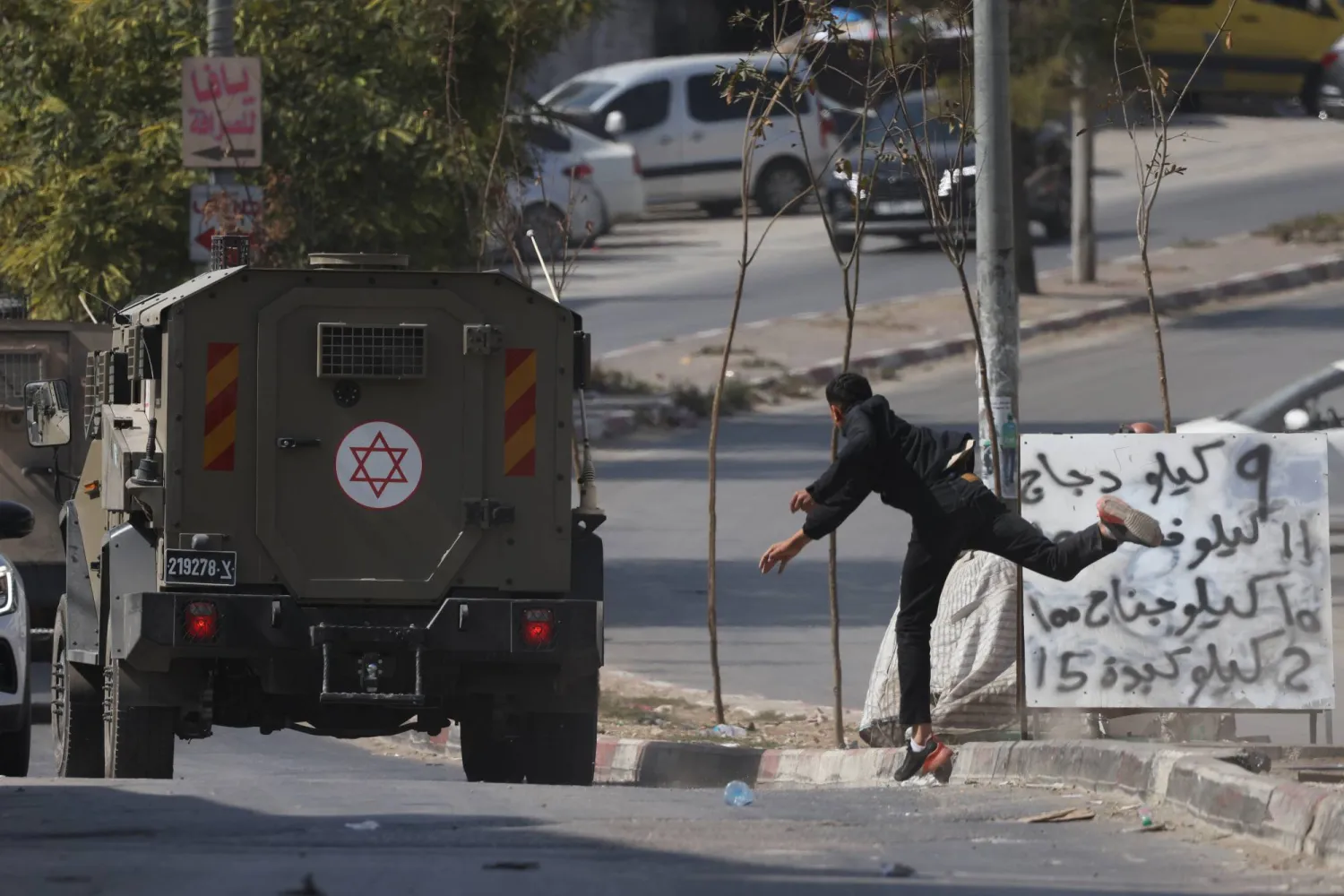
 A Palestinian boy throws stones at Israeli troops during an Israeli army raid at Balata refugee camp near the West Bank city of Nablus, 21 October 2026.   EPA/ALAA BADARNEH
A Palestinian boy throws stones at Israeli troops during an Israeli army raid at Balata refugee camp near the West Bank city of Nablus, 21 October 2026. EPA/ALAA BADARNEH
TT

Sources Reveal to Asharq Al-Awsat Details of Fatah-Hamas Talks in Cairo

 A Palestinian boy throws stones at Israeli troops during an Israeli army raid at Balata refugee camp near the West Bank city of Nablus, 21 October 2026.   EPA/ALAA BADARNEH
A Palestinian boy throws stones at Israeli troops during an Israeli army raid at Balata refugee camp near the West Bank city of Nablus, 21 October 2026. EPA/ALAA BADARNEH


Several Palestinian sources have revealed details of meetings held in Cairo days ago between a senior Fatah delegation and leaders and representatives of Palestinian factions, particularly Hamas. The discussions ended with an agreement to resume talks in the near future.

Two sources, one from Hamas and another from a different Palestinian faction, separately told Asharq Al-Awsat that the meetings would resume after the Israeli Knesset elections scheduled for next Tuesday, with the aim of reaching an agreement.

The Hamas source said two meetings had been held between the movement's delegation, which included Zaher Jabarin, head of its political bureau in the West Bank, and political bureau members Ghazi Hamad and Hussam Badran, and a Fatah delegation led by Jibril Rajoub and including Mohammad Shtayyeh.

The source noted that the first meeting was attended by Maj. Gen. Ahmed Abdel Khalek, the Egyptian intelligence official responsible for Palestinian affairs.

While the Hamas source described the first meeting as positive, a Fatah source and two representatives of other Palestinian factions who had been briefed on its outcome offered a different assessment.

They said the meeting had produced no meaningful understandings or concrete basis for further progress, with one source describing its results as particularly poor.

Nevertheless, they acknowledged that the atmosphere had been constructive, with both sides showing a willingness to listen to each other's demands.

All four sources said the Hamas delegation had raised several issues during the first meeting, including restructuring the Palestine Liberation Organization (PLO), the Supreme Court, employment, the future of employees in Gaza, passports and objections to the Palestinian Authority security services' treatment of Hamas members in the West Bank.

Hamas emphasized the need to resolve these issues as essential steps toward ending the Palestinian political division.

However, discussions focused primarily on the PLO and the need to address broader questions concerning the Palestinian national project and its future.

The second meeting, which most sources described as more significant and serious, saw the Fatah delegation present a document from Palestinian President Mahmoud Abbas containing several demands that Hamas would be required to accept.

Asharq Al-Awsat revealed the contents of the document late last month.

The demands included ending the consequences of the Hamas takeover of Gaza and committing to a single governing system, one law and one legitimate armed force.

They also called for recognition of the PLO and its political program as the sole legitimate representative of the Palestinian people, adherence to peaceful popular resistance, and commitment to a political settlement based on the two-state solution in accordance with international resolutions.

The document further stipulated the formation of a technocratic government by decision of President Abbas, with authority over the West Bank, East Jerusalem and the Gaza Strip.

It also required that responsibility for negotiations toward a comprehensive peace agreement remain exclusively with the PLO.


Hamas Reservations


According to a Hamas source and another Palestinian faction representative, the Hamas delegation raised reservations about three provisions in Abbas's document.

The sources said Hamas had no objection to recognizing the PLO and its political program but would not recognize the organization's commitments, particularly those concerning recognition of Israel, security coordination with Israeli authorities and other political arrangements governing Palestinian relations with Israel.

A second point of disagreement concerned Hamas's acceptance of a Palestinian state along the June 4, 1967, borders while refusing to recognize Israel as a second state without a clear process and concrete steps toward implementing a two-state solution.

The third issue concerned restricting resistance exclusively to peaceful methods.

The Hamas delegation requested alternative wording that would not rule out other forms of resistance.

According to the same sources, these issues remained unresolved.

The Fatah delegation informed Hamas representatives that it would refer the disputed provisions for internal discussions within the movement and consultations with President Abbas, who appeared determined to secure Hamas's acceptance of the document in its entirety.


Meetings with Other Palestinian Factions


The Fatah and Hamas delegations also met representatives of other Palestinian factions, including Islamic Jihad, the Popular Front for the Liberation of Palestine and the Fatah Democratic Reform Current led by Mohammed Dahlan, a former Fatah leader who broke away from the movement.

The meetings addressed many of the same issues, although discussions between Fatah and Dahlan's faction focused primarily on internal reconciliation.

Dahlan's representatives presented demands calling for the reinstatement of all members expelled from Fatah, the restoration of salaries to those whose payments had been suspended, and the reintegration of all members into the movement's governing bodies, including the Central Committee and Revolutionary Council.

Rajoub confirmed that these demands would be conveyed to President Abbas.

The Fatah delegation also met the leadership of Islamic Jihad in discussions that sources from both movements described as highly positive.

A Fatah source said Islamic Jihad had affirmed its commitment to any agreement reached through national consensus.

The group also requested a change to the wording concerning resistance, objecting to restricting it exclusively to peaceful popular resistance.

Four sources from Hamas and other Palestinian factions revealed that Egyptian officials had made clear that it was not Cairo's responsibility to convene a Palestinian national dialogue.

They said the decision to call such a dialogue must come from President Abbas, although Egypt remained fully prepared to host it.

According to the sources, Egyptian officials stressed to all the factions that bilateral meetings should pave the way for agreement on the outstanding issues before a comprehensive national dialogue is convened.

Cairo emphasized the importance of avoiding another failed reconciliation effort, insisting that broad agreement on the key issues should be reached before launching formal national talks.

The Egyptian side also pointed out that such a dialogue would attract close attention not only from Palestinians but also from Arab and Islamic countries, European governments and the United States.

A successful dialogue could help open the way for an internationally supported political process that would shape the options available to Palestinians and determine the future direction of their national cause.