Firefighters Battle Second Day of Blaze on Greek Island
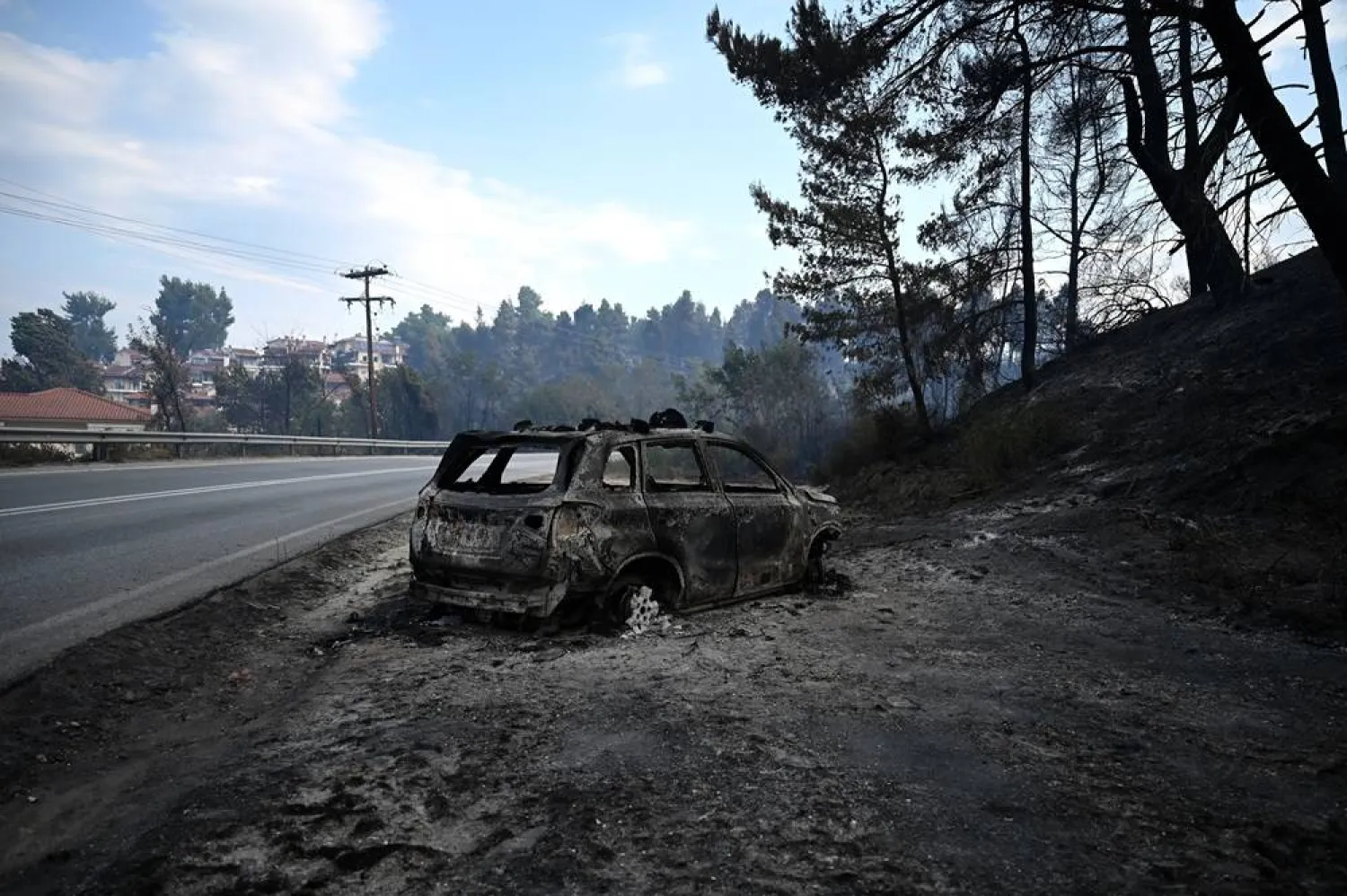
A burnt vehicle after a fire that broke out in the summer resort of Siviri, Chalkidiki, northern Greece, 14 August 2026. (EPA)
TT
TT
Firefighters Battle Second Day of Blaze on Greek Island
A burnt vehicle after a fire that broke out in the summer resort of Siviri, Chalkidiki, northern Greece, 14 August 2026. (EPA)
Firefighters battled for a second day on Sunday to contain a forest fire on the Greek Aegean island of Skyros, as the local mayor voiced hope it could soon be brought under control.
"Within the day I believe the fire will be fully extinguished," Skyros mayor Kyriakos Antonopoulos told state TV ERT.
The fire, which broke out on Saturday, prompted the evacuation of two small communities, but Antonopoulos said no inhabited areas were under threat on Sunday.
Reinforcements to the island of some 3,000 have been rushed in from neighboring areas.
After largely escaping the heatwave temperatures that blanketed much of Europe earlier this summer, Greece has been hit with several major wildfires since late July, fueled by unusually strong winds.
Five firefighters have died so far, including a Danish pilot killed in a mid-air collision between two Bell helicopters while battling a blaze near Athens earlier this month.
There was another scare last week when about 500 tourists were evacuated from beaches on the Halkidiki peninsula in northern Greece as a forest fire threatened two popular resorts.
Some 20,000 hectares of forest and agricultural land have burned this year in major fires near Athens and on the islands of Crete and Paros.
Greece is hit by wildfires every year. Experts say the risk is growing because of human-fueled climate change, which has made droughts and other extreme weather events more severe.
10 AlUla Hotels and Restaurants Featured in 2026 MICHELIN Guidehttps://english.aawsat.com/varieties/5324331-10-alula-hotels-and-restaurants-featured-2026-michelin-guide
10 AlUla Hotels and Restaurants Featured in 2026 MICHELIN Guide
These recognitions underline the destination’s growth as a global hub for luxury and culinary discovery - SPA
AlUla’s standing as a world-class center for luxury hospitality and culinary excellence received renewed acclaim, with 10 hotels and restaurants featured in the 2026 MICHELIN Guide for Saudi Arabia.
This latest MICHELIN Guide recognition celebrates the exceptional quality, distinctiveness, and authenticity of AlUla’s hospitality offerings, with each reflecting the destination’s sense of place and deep cultural roots.
The renowned Dar Tantora The House Hotel was awarded One MICHELIN Key, a testament to its opulent offering rooted in heritage. Situated in AlUla Old Town and built from carefully restored historic mudbrick dwellings, the eco-boutique hotel provides guests with an authentic sanctuary in the heart of the historic area.
The Chedi Hegra was also awarded One MICHELIN Key, recognized for its location within Saudi Arabia’s first UNESCO World Heritage Site. The property preserves historic structures, ancient fort walls and the former AlUla railway station, weaving centuries of heritage into a modern luxury experience.
Banyan Tree AlUla maintained its coveted One MICHELIN Key, a prestigious mark of distinction recognizing remarkable hotel experiences. Set within the sandstone canyons of Ashar Valley, the resort pairs minimalist luxury with sustainable design, offering a secluded retreat rooted in nature.
Also featured in the hotel selection are Our Habitas AlUla, recognized for its wellness-led, environmentally conscious approach to desert hospitality, and Caravan by Habitas AlUla, which offers a vibrant, adventure-inspired stay under the stars.
In the dining selection, new addition Tofareya earned a Bib Gourmand for its outstanding Saudi cuisine. Situated in a traditional village house in AlUla Old Town, Tofareya highlights local ingredients, including AlUla oranges and dates harvested from the ancient oasis. It joins returning Bib Gourmand awardee Joontos at Dar Tantora The House Hotel, which is praised for its contemporary and inventive spin on traditional Saudi dishes.
Entering the guide for the first time was Somewhere, set within the AlUla Oasis and serving Middle Eastern dishes with creative contemporary twists amidst lush palm groves.
The 2026 selection also includes returning MICHELIN-selected destinations such as Harrat at Banyan Tree AlUla, recognized for its pan-Arabic cuisine, and Tama at Our Habitas AlUla, celebrated for its farm-to-table approach and locally sourced, seasonal menus.
With 10 venues featured in the MICHELIN Guide, AlUla has a high concentration of MICHELIN-recognized hospitality venues in the region, reinforcing its position as a leading hospitality and culinary destination in the Kingdom.
Together, these recognitions underline the destination’s growth as a global hub for luxury and culinary discovery, where visitors can enjoy world-class hospitality amid ancient landscapes.
AlUla Skies 2026 Returns with Exceptional Celestial Experienceshttps://english.aawsat.com/varieties/5324136-alula-skies-2026-returns-exceptional-celestial-experiences
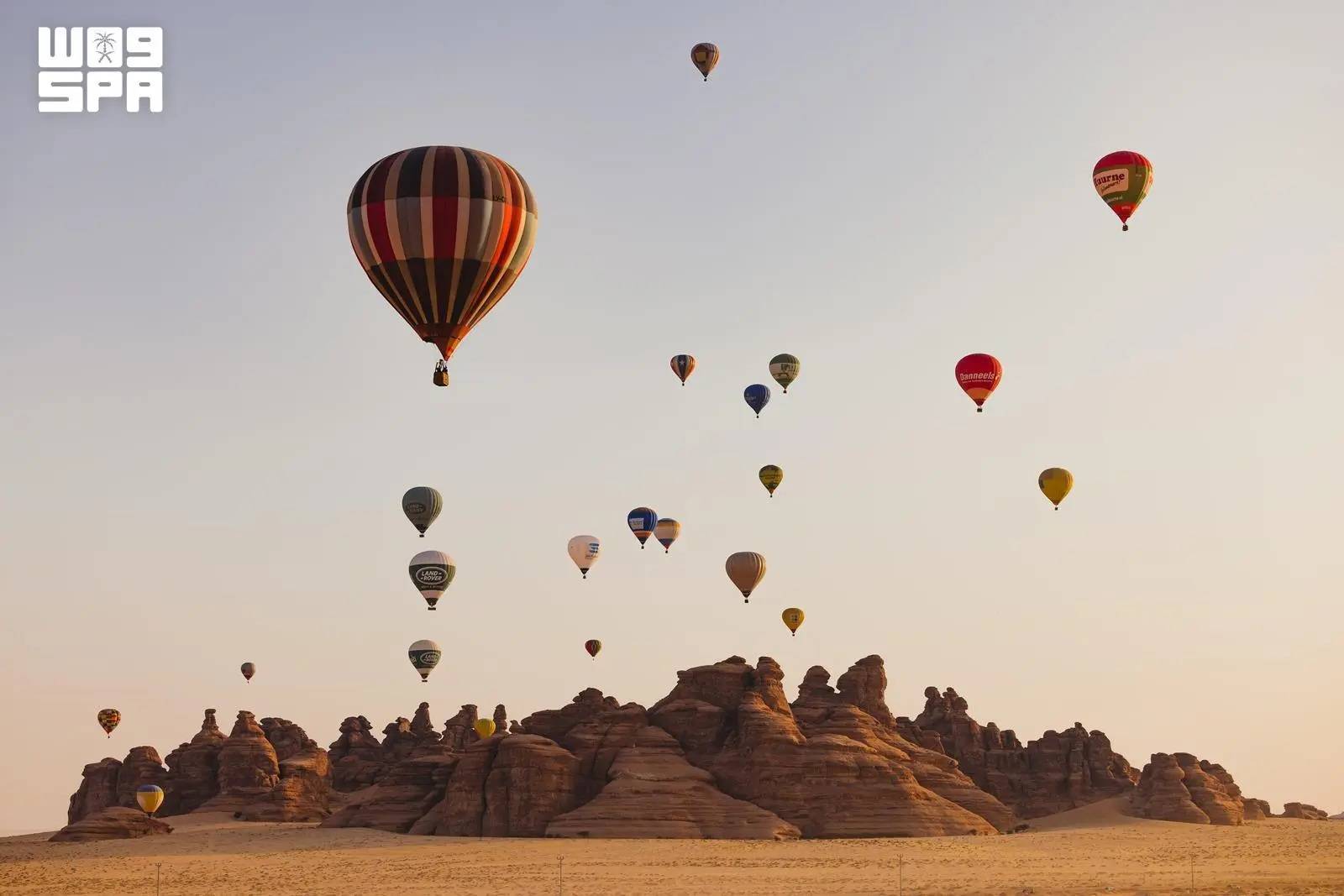
The AlUla Skies Festival will take place from November 6-15. (SPA)
TT
TT
AlUla Skies 2026 Returns with Exceptional Celestial Experiences
The AlUla Skies Festival will take place from November 6-15. (SPA)
Saudi Arabia’s AlUla Moments announced the return of AlUla Skies Festival, taking place from November 6-15, bringing 10 days of extraordinary experiences that celebrate the wonder of the skies. From hot-air balloons floating above the landscape at sunrise to immersive evenings beneath a canopy of stars, the festival offers visitors a spectacular new way to experience AlUla.
Designed as a celebration of nature, adventure, and astronomy, the event transforms AlUla’s dramatic desert landscapes into a destination for sky-inspired experiences, combining aerial adventures with cultural and entertainment programming, reported the Saudi Press Agency on Tuesday.
By day, guests can experience sunrise hot air balloon flights and aerial views over AlUla’s landscapes, while evenings will feature balloon glow shows, stargazing experiences, moonlight cinema, and wellness sessions, creating a unique blend of nature, culture, and immersive entertainment.
Timed to coincide with a period of moonless skies from November 7-12, with the New Moon on November 9, the 2026 edition offers ideal conditions for observing faint celestial objects. The festival will also coincide with the Leonid Meteor Shower on November 15, when visitors could see up to 20 meteors per hour with minimal moonlight interference.
As AlUla continues to grow as a leading destination for nature-based and experiential tourism, the festival offers visitors a chance to reconnect with the night sky and experience the landscapes from entirely new perspectives.
Among the headline moments of this year’s program is AlUla Skyrise, where guests can join a shared sunrise hot air balloon flight, rising above the landscapes of AlUla. The experience operates daily throughout the festival, with flights taking place from approximately 6:00-7:00 am, following early-morning transfers, briefing and boarding. Guests will also be served Saudi coffee and dates before take-off, with refreshments provided following the flight.
Visitors can also enjoy the Hot Air Balloon Glow Show, taking place at Hegra on November 6 and 7 and at Elephant Rock on November 13 and 14. The evening spectacle combines illuminated hot air balloons with music, lighting, projection, fire performers, and aerial trapeze artists, culminating in a choreographed grand finale.
Guests can join a shared sunrise hot air balloon flight, rising above the landscapes of AlUla. (SPA)
For those seeking a more accessible option, the Tethered Hot Air Balloon Experience offers gentle ascents with panoramic views of AlUla’s landscapes, making it ideal for families, first-time visitors, and photography enthusiasts. Payment is available on-site, with no advance booking required.
The festival will also feature VOX Moonlight Cinema at Our Habitas AlUla, across the 10-day program, with screenings scheduled throughout the festival.
For astronomy enthusiasts, the Stargazing at AlUla Fort experience will operate on November 6, 7, 10-12 and 13-15 from 19:00-23:00. The experience will feature five telescopes focused on planets and constellations, alongside guided observations led by a trained astronomer and a Rawi, who will provide cultural and storytelling context.
The 2026 program will also introduce Sunset Stillness wellness experiences at Our Habitas AlUla, featuring Guided Meditation, Sound Immersion and Conscious Connected Breathwork, taking place on November 13 and 14 from 17:00-18:00.
AlUla Skies Festival will bring stargazing experiences and hikes under the stars with Husaak, all set against AlUla’s sandstone mountains, canyons and heritage sites. With the festival taking place during a period of moonless skies, visitors can experience a range of daytime and night-time activities against AlUla’s dark desert skies.
The festival also highlights AlUla’s designation as the region’s First Dark Sky Park destination, with four areas officially designated as International Dark Sky Parks by DarkSky International, including AlGharameel Nature Reserve, Sharaan National Park and Wadi Nakhlah Nature Reserve. Together, these protected areas reinforce AlUla’s commitment to preserving its natural environments, reducing light pollution, while promoting sustainable tourism and offering visitors some of the region’s best stargazing conditions.
AlUla Skies Festival forms part of the AlUla Moments calendar, a year-round program celebrating art, culture, heritage, nature and adventure, and reinforces AlUla as a leading global destination for experiential travel.
Military Shows to be Featured at Saudi International Falcons and Hunting Exhibition 2026https://english.aawsat.com/varieties/5323919-military-shows-be-featured-saudi-international-falcons-and-hunting-exhibition
Military Shows to be Featured at Saudi International Falcons and Hunting Exhibition 2026
The exhibition will welcome visitors daily from 2 p.m. to 11 p.m. - SPA
The Saudi International Falcons and Hunting Exhibition 2026, scheduled for October 1 to 10 in Malham, north of Riyadh, will feature military shows presented by the Ministry of Interior among the accompanying events, adding a new element to the program.
The exhibition will allow visitors to watch the military shows at 4:30 p.m. and 7 p.m., while the band will perform at 6 p.m. and 8 p.m., SPA reported.
This year's exhibition will offer a wide range of experiences, including "Falconer of the Future," safari, mountain climbing, fishing, shooting, horseback and camel riding, auctions, and workshops, providing families, youth, and enthusiasts with a variety of options during their visit.
The exhibition will welcome visitors daily from 2 p.m. to 11 p.m.
لم تشترك بعد
انشئ حساباً خاصاً بك لتحصل على أخبار مخصصة لك ولتتمتع بخاصية حفظ المقالات وتتلقى نشراتنا البريدية المتنوعة