
China’s Fuel Exports Edge Back Towards Levels Before Iran War as Beijing Eases Curbs

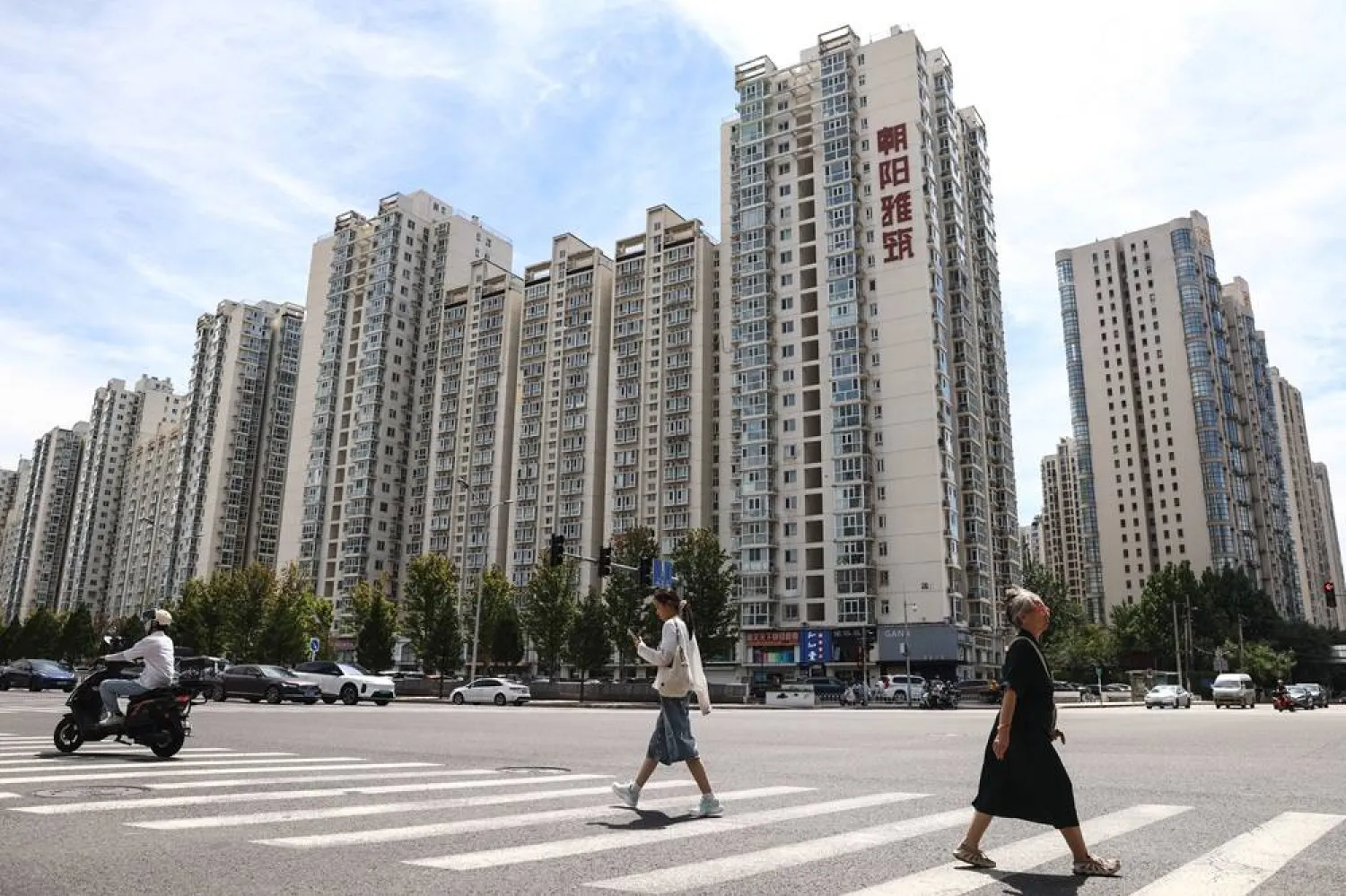
People cross a street past highrise buildings in Beijing, China, 17 August 2026. (EPA)
TT

China’s Fuel Exports Edge Back Towards Levels Before Iran War as Beijing Eases Curbs

People cross a street past highrise buildings in Beijing, China, 17 August 2026. (EPA)

China's exports of ‌refined oil products in July fell 12.9% year-on-year but rose 6.7% from the previous month, customs data showed on Tuesday, as the easing of export curbs allowed refiners under pressure to ship more fuel overseas.

The key fuel supplier to Asia curbed exports sharply in March to protect its domestic market from the oil shock caused by the closure of the Strait of Hormuz in the Iran war. Beijing eased those controls ‌in July ‌and again in August, when officials approved ‌enough ⁠exports to exceed ⁠pre-war levels.

In July, the latest month for which data is available, refined oil exports, which include diesel, gasoline, aviation fuel and marine fuel, totaled 4.65 million metric tons, up from 4.36 million in June, when exports jumped 29% from May.

Diesel exports are ⁠roughly back to the level of last ‌July after rising 88% ‌month-on-month to 810,000 tons, or about 50% higher than the monthly ‌average last year.

Rising exports are a boon ‌for customers in a tight market. They are also a precondition for the normalization of China's oil imports, which remain well below pre-war levels.

By allowing refiners to export more ‌product overseas, where prices are higher, the sector receives greater incentive to increase output ⁠and, in ⁠time, oil imports.

Exports of other fuels remain below pre-war levels, although rising. Gasoline exports stood at 420,000 tons in July, down 55.3% year-on-year but up 320% from June.

China's aviation fuel exports rose 42% from June to 1.32 million tons in July, but were down 33% from the same period last year.

The data also showed LNG imports rose 2.4% year-on-year to 5.5 million tons in July.

China's LNG imports in the first seven months dropped 4.6% from the same period last year.


Oil Heads for $100, Asia Stocks Subdued as Middle East Tensions Escalate

An aerial view shows storage tanks at the sprawling BP refinery on September 08, 2026 in Whiting, Indiana. (Getty Images/AFP)
TT

Oil Heads for $100, Asia Stocks Subdued as Middle East Tensions Escalate

An aerial view shows storage tanks at the sprawling BP refinery on September 08, 2026 in Whiting, Indiana. (Getty Images/AFP)

Brent crude rallied towards $100 per barrel on Wednesday, keeping the mood in Asian stock markets subdued, as attacks intensified in the Middle East, stoking inflation worries ahead of the release of closely watched US consumer price data.

The yen strengthened towards the nearly seven-month high touched against the dollar on Tuesday as traders exited short positions in the Japanese currency amid expectations for faster Bank of Japan interest rate hikes and a potential rush of repatriation of Japanese capital.

The euro edged higher ahead of the European Central Bank's policy decision on Thursday, with markets widely expecting a hike amid inflationary pressures from the Iran war.

Iranian-backed ‌Houthis in Yemen ‌launched strikes on several Saudi cities on Tuesday, ⁠while US forces hit multiple Iranian oil tankers and Iran struck Jordan.

Oil prices jumped for a fourth straight session on Wednesday, with Brent crude futures rising $1.10 to $99.02 a barrel. US West Texas Intermediate crude was at $93.95 a barrel, up $0.93.

Japan's Nikkei slipped 0.2%, Hong Kong's Hang Seng dropped 0.3% and mainland Chinese blue chips were little changed.

A rebound in chip and AI stocks helped some other regional benchmarks though, with South Korea's KOSPI jumping 1.2% and Taiwan's TAIEX eking out a ⁠0.2% gain.

Overnight, the Philadelphia SE semiconductor index jumped 1.3%, despite declines on ‌Wall Street's three main indexes.

US S&P 500 futures added ‌0.1%, after the cash index sank 0.6% on Tuesday.

Pan-European STOXXX 50 futures fell 0.5%.

"Across several of the major ‌macro markets, we see indecision in the price action -- tight ranges and a general holding/consolidation pattern," ‌Chris Weston, head of research at Pepperstone, wrote in a client note.

Brent crude is currently "one of the clearest real-time signals for sentiment" for the overall market, and $100 "now feels like a highly achievable level," he said.

Inflation worries have weighed on global equities in recent weeks and lifted bond yields as traders price higher odds ‌for central bank tightening.

US CPI data is due on Friday.

Traders assign close to even odds for a quarter-point hike or a hold from ⁠the US Federal Reserve ⁠on Wednesday of next week, while being all but certain of a quarter-point increase from the BOJ two days later.

The yen strengthened around 0.5% to 153.32 per dollar, edging back towards its high of 152.89 from the previous session. It had surged around 4% over the last five sessions, with hawkish comments from BOJ officials ostensibly initiating a move that then snowballed as breaks of key levels triggered additional buying, market players said.

The ECB is all but certain to raise euro zone rates by a quarter point on Thursday. The euro added 0.1% to $1.1634, putting it in the middle of its tight range of the past three weeks.

Sterling was little changed at $1.3552. The Bank of England is due to announce its latest policy decision on Thursday of next week, with economists predicting the key rate will be on hold for the remainder of this year.

The Aussie rose 0.2% to $0.7230. Bitcoin drifted higher to change hands at $79,009.09. Gold gained 0.7% to around $4,385 an ounce.


Qualcomm Strikes $4 Billion AI Chip Deal with Amazon

A Qualcomm sign is pictured at Mobile World Congress (MWC) in Shanghai, China June 28, 2019. REUTERS/Aly Song 
TT

Qualcomm Strikes $4 Billion AI Chip Deal with Amazon

A Qualcomm sign is pictured at Mobile World Congress (MWC) in Shanghai, China June 28, 2019. REUTERS/Aly Song 

Qualcomm said on Tuesday it gave Amazon the right to acquire about $4 billion in shares under a deal to develop custom chips for artificial intelligence (AI) data centers.

The warrant lets Amazon buy Qualcomm shares at a fixed price of $161.26 apiece, according to a regulatory filing.

The company said the shares vest in tranches tied to the “execution of certain commercial arrangements,” as well as the purchase of up to $60 billion worth of Qualcomm’s server chips and other technology.

Under Tuesday's deal, Qualcomm and Amazon will work on chips for AI inference, a fast-growing market focused on running trained AI models that has become a key battleground among semiconductor firms.

Beyond computing chips, the deal includes optical communications technology from Qualcomm. The companies will develop high-speed optical connectivity technologies, including solutions extending to 1.6 terabits per second, to support growing bandwidth demands in AI data centers.

As part of the tie-up, Qualcomm plans to expand its use of AWS services and infrastructure for chip design workloads, aiming to shorten development cycles.

Shares of San Diego, California-based Qualcomm rose more than 7% in early trading on Tuesday.

The stock has slipped about 1% this year, through last close, as a rebound in August only partly recouped steep losses sparked by weaker smartphone demand.

The agreement is the ⁠latest sign of Qualcomm's efforts to diversify beyond smartphones gaining traction as it faces the eventual loss of its Apple modem business, rising component costs and weaker handset demand.

Qualcomm has spent the past year courting cloud providers with custom AI chips and data-center technology as they seek alternatives to Nvidia's dominant processors.


First Syrian Industries Expo SYRIX Opens in Jeddah to Foster Saudi-Syrian Trade, Investment

Officials are seen at the opening of the expo in Jeddah on Tuesday. (SPA)
TT

First Syrian Industries Expo SYRIX Opens in Jeddah to Foster Saudi-Syrian Trade, Investment

Officials are seen at the opening of the expo in Jeddah on Tuesday. (SPA)

The inaugural edition of the Syrian Industries Expo, SYRIX Jeddah, 2026, organized by Jeddah Chamber, opened in Jeddah on Tuesday.

The expo brings together a wide range of Syrian companies and manufacturers, alongside businesspeople, importers, distributors, and others interested in commercial and investment opportunities in the Saudi market. Deputy Mayor of Jeddah Governorate Ali Al-Qarni attended the event.

Running through September 11, the expo serves as an economic platform to showcase Syrian products and industrial capabilities. It also aims to open new avenues for trade and investment cooperation between Saudi and Syrian business communities through direct meetings and the development of sustainable commercial partnerships.

The event features business-to-business meetings between businesspeople, investors, manufacturers, importers, and distributors. The meetings will explore sourcing, distribution, and investment opportunities, helping expand the presence of Syrian products in the Saudi market and open new trade channels.

The expo covers a range of Syrian sectors and industries, including textiles, engineering, chemicals and food, as well as sectors related to agriculture, tourism, culture and labor. This reflects the diverse opportunities for cooperation between the two countries' business communities.

SYRIX Jeddah marks a new step in strengthening economic and trade relations between Saudi Arabia and Syria. It provides investors and business owners with an opportunity to explore promising opportunities and build partnerships that support trade and investment while advancing the two countries’ shared interests.