
Saudi Listed Real Estate Firms Post $766 Million in First-Half Profit

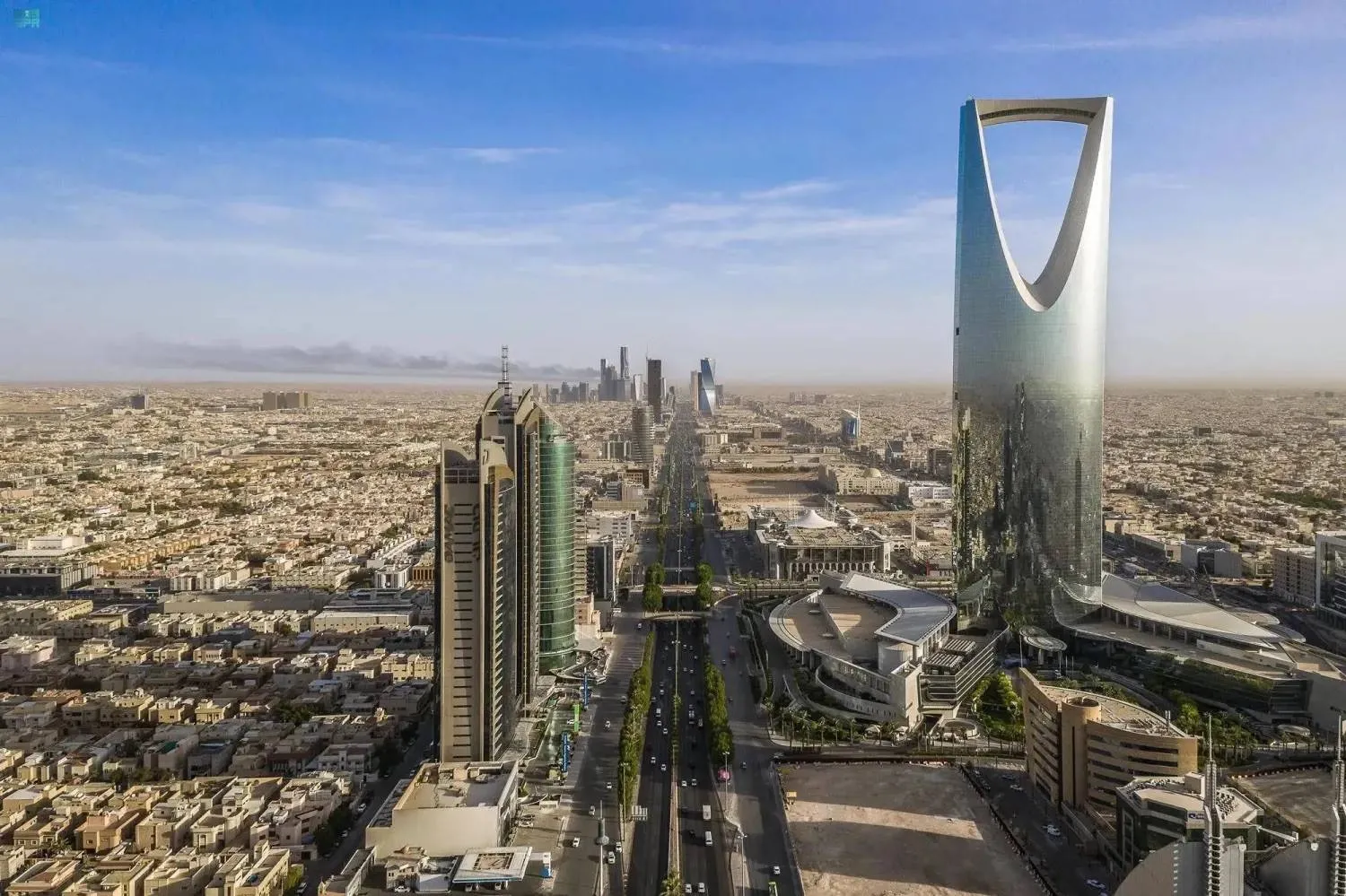
The Saudi capital, Riyadh (SPA) 
TT

Saudi Listed Real Estate Firms Post $766 Million in First-Half Profit

The Saudi capital, Riyadh (SPA) 

Saudi Arabia’s listed real estate companies posted combined net profit of more than $766 million (SAR 2.87 billion) in the first half of 2026, reflecting a resilient performance despite an 18% decline from the same period last year.

The results were supported by higher property sales, faster project execution and more diversified revenue streams. Fourteen companies reported net profits, while only three posted losses.

Experts and analysts see the market undergoing a regulatory and structural transformation centered on transparency, governance and increasingly differentiated business models, potentially paving the way for selective improvement among the most operationally and financially efficient companies in the second half.

Cenomi Centers led the sector with first-half profit of SAR 588.2 million, down 14.7% year on year. Al Akaria ranked second with about SAR 579 million, a 152.2% surge, while Dar Al Arkan placed third with SAR 498.97 million, up 11.4%.

In the second quarter, combined sector profit slipped just 0.49% to SAR 1.455 billion from SAR 1.462 billion a year earlier.

Project Deliveries

Khaled Almobid, CEO of Menassat Realty Co., told Asharq Al-Awsat that disparities in companies’ financial results were natural because the sector encompasses different business models. Some companies rely on development and sales, others on leasing and recurring income, while some are tied to major projects, specific seasons or destinations.

A company could therefore record a sharp profit increase following project deliveries, asset sales or improved margins, while another could see earnings decline despite maintaining strong operating activity, he explained.

Almobid noted that Al Akaria’s profit surge and Dar Al Arkan’s growth reflected some developers’ ability to capitalize on projects, sales and accumulated demand. Cenomi Centers’ lower earnings, meanwhile, did not necessarily signal weakness in the broader property market, with each company’s performance needing to be assessed according to its business model, revenue sources and financing structure.

Market Reshaping

According to Almobid, new regulations are reshaping the sector by raising professional and transparency standards and encouraging the development and productive use of assets rather than land hoarding.

Financing costs nevertheless remain a major factor because they affect project expenses and the ability of individuals and investors to buy property, influencing sales momentum and profit margins.

He expects selective earnings improvement over the next two quarters rather than uniform growth across the sector. The second quarter’s decline of less than 0.5%, compared with an almost 18% drop for the full first half, could be an early indication that the pace of deterioration is easing.

Companies best positioned to benefit will be those with projects nearing completion, land acquired at favorable costs, disciplined debt levels and strong operating cash flow. The second half could therefore prove stronger for some companies, although Almobid cautioned that it was too early to expect a broad, synchronized profit upcycle.

The next phase, he added, will increasingly differentiate companies: the winners will not necessarily be those with the largest property portfolios, but those most capable of converting their assets into sustainable cash flow and profits.

Regulatory Changes

Real estate expert and appraiser Ahmed Al-Faqih told Asharq Al-Awsat that quarterly and half-year results were more indicative of individual listed developers’ project deliveries and management performance than of the direction of the broader development market.

Sweeping regulatory and legislative changes, particularly governance requirements for developers, are affecting the market, but their impact is unlikely to be fully reflected in major developers’ earnings for about another 12 months.

While some new governance requirements have increased development costs, Al-Faqih noted that real estate balance measures have helped reduce one of developers’ biggest expenses: land. Partnerships with landowners have made this key component more accessible, significantly lowering actual costs.

He concluded that developers’ profitability ultimately depends largely on two factors: their ability to deliver and sell projects without delays, and effective management capable of avoiding major mistakes. Large-scale development projects and regulatory changes are also creating an increasingly competitive environment for Saudi real estate companies.


What Does Saudi Exchange’s New Market Order Mechanism Mean?

An investor walks past the "Tadawul" logo in the Saudi market (Reuters)
TT

What Does Saudi Exchange’s New Market Order Mechanism Mean?

An investor walks past the "Tadawul" logo in the Saudi market (Reuters)

Saudi Exchange began implementing an updated market order mechanism on October 4, 2026, in the Main Market and Nomu-Parallel Market, in a move aimed at improving execution efficiency and making better use of available market liquidity.

What is a market order?

A market order is a buy or sell order executed immediately at the best available prices in the order book, without the investor specifying a particular price.

This type of order is typically used when an investor prioritizes speed of execution over obtaining a specific price.

How did the previous mechanism work?

Previously, a market order was executed against the quantity available at the best price only.

For example, if an investor wanted to buy 10,000 shares and only 3,000 shares were available at the best price, those 3,000 shares would be executed, while the remaining quantity would be converted into a limit order at the price of the last executed portion.

What has changed?

Under the new mechanism, a market order can now be executed across multiple price levels, within a range of up to five price ticks starting from the best available price.

This allows the order to access additional liquidity available at nearby price levels, rather than being limited to the quantity available at the best price alone.

What happens if the entire order is not executed?

Once the maximum permitted range is reached, or if no additional quantities are available within the specified range, the remaining unexecuted quantity is converted into a limit order at the price of the last execution.

What is the purpose of the update?

Saudi Exchange said the update aims to:

  • Increase the quantities executed immediately.
  • Improve the use of available market liquidity.
  • Reduce the likelihood of large portions of orders remaining unexecuted.
  • Enhance the efficiency of the trading mechanism.
  • Support market depth and improve the investor experience.

Does the update apply to all markets?

No. The update applies only to shares listed on the Main Market and Nomu-Parallel Market. It does not apply to the derivatives market, which will continue to use the current mechanism.

Why has the update attracted investors' attention?

The mechanism used to execute orders directly affects the speed of trade execution and the efficiency of access to liquidity, particularly for stocks with gaps between price levels or limited trading volumes.


Trump Names Intelligence Chief Clayton as AI Czar, to Head Task Force

(FILES) Jay Clayton testifies during a Senate Intelligence Committee hearing on his nomination to be Director of National Intelligence, on Capitol Hill in Washington, DC, on July 15, 2026. (Photo by Ken Cedeno / AFP)
TT

Trump Names Intelligence Chief Clayton as AI Czar, to Head Task Force

(FILES) Jay Clayton testifies during a Senate Intelligence Committee hearing on his nomination to be Director of National Intelligence, on Capitol Hill in Washington, DC, on July 15, 2026. (Photo by Ken Cedeno / AFP)

US President Donald Trump has appointed Director of National Intelligence Jay Clayton as the administration's AI czar, the Wall Street Journal reported on Saturday, citing an interview with Clayton.

Clayton, who was appointed intelligence chief in August, will lead a new White House panel tasked with reporting within 120 days on the risks and opportunities posed by AI, the newspaper said.

"The president asked that a group be put together," which the administration refers to as the "Super Intelligence Force," to ensure the US remains a leader in advanced AI while protecting Americans' ⁠interests, Clayton told ⁠the Journal, adding that "the risk of not being first is high."

The safety of AI has become a major issue in recent weeks, with some researchers warning that people building the technology believe it could kill humans within a decade. Several Democratic and Republican lawmakers have responded with ⁠alarm and calls for more action.

Trump has appeared to take a light touch toward AI regulation, arguing that excessive oversight could weaken competitiveness against China. He said on Tuesday that he does not want to work with Chinese President Xi Jinping on governing AI technology.

Clayton's panel will review AI-related risks and current government reporting mechanisms for breaches, hacks and other incidents, and recommend ways to strengthen federal-response capabilities under existing authorities, the Journal said, citing the task force's charter.

This is the ⁠second time ⁠Trump has named an adviser to oversee AI-related decisions across the administration. Venture capitalist David Sacks held the AI czar role at the beginning of Trump's second term.

The task force's vice chairs will be Emil Michael, Scott Kupor and Federal Trade Commission Chair Andrew Ferguson, while members will include Vice President JD Vance, Defense Secretary Pete Hegseth, Treasury Secretary Scott Bessent and White House Chief of Staff Susie Wiles, according to the report. External advisers will also include Sacks and former Secretary of State Condoleezza Rice, the Journal said.


From Absorbing the Shock to Recovery: How Is Saudi Arabia Building a More Resilient Economy?

The King Abdullah Financial District (KAFD)
TT

From Absorbing the Shock to Recovery: How Is Saudi Arabia Building a More Resilient Economy?

The King Abdullah Financial District (KAFD)

Economic strength is no longer measured solely by GDP growth rates, the size of foreign reserves, or the ability to attract investment during prosperous times. In a world increasingly exposed to successive shocks, ranging from wars and disruptions in energy and trade to pandemics and financial market crises, another equally important standard has emerged: an economy’s ability to withstand changing circumstances, continue functioning during a crisis, and subsequently recover and adapt.

As a result, the concept of economic resilience has gained growing prominence in global economic debates. A resilient economy is not one that remains unaffected by crises, but rather one that can mitigate their impact, preserve its core functions, and return to a growth path more quickly, while maintaining the capacity to adapt if shocks persist or evolve.

This issue is particularly significant for Gulf economies, especially Saudi Arabia, which has undergone substantial transformations over the past decade in its economic structure, sources of revenue, investment patterns, and trade, while simultaneously building fiscal and institutional buffers to deal with crises.

In this context, the International Monetary Fund (IMF) views resilience as an economy’s ability to absorb shocks, adapt to them, and recover rapidly while maintaining economic and financial stability. This capability depends not only on the availability of resources but also on sufficient room for fiscal and monetary policies to respond, strong institutional frameworks capable of managing crises, and structural fundamentals that enable the economy to adjust to long-term changes.

Ships are anchored off the coast of Khasab in Oman's Musandam Governorate, near the Strait of Hormuz, on October 2, 2026. (Photo by AFP)

The Bank for International Settlements (BIS) adds another dimension to the concept by emphasizing the importance of limiting the buildup of financial imbalances before shocks occur. Resilience is not only about how an economy reacts during a crisis but also about the policies that reduce vulnerabilities and prevent shocks from having more severe consequences. From this perspective, prudential, monetary, and fiscal policies work together to strengthen an economy’s ability to navigate cycles of financial booms and downturns.

This discussion coincides with the IMF’s upcoming World Economic Outlook report, titled “Resilience under Strain, Urgent Choices,” scheduled for release on October 13 during the IMF and World Bank annual meetings in Bangkok. The report comes at a time when the global economy faces overlapping shocks, from energy and trade disruptions to geopolitical tensions.

In its latest briefing, the IMF noted that the global economy has demonstrated resilience despite continuing war-related disruptions, although countries differ significantly in their ability to absorb and adapt to these consequences.

IMF Managing Director Kristalina Georgieva praised the resilience of Gulf Cooperation Council (GCC) economies and their ability to contain the spillovers of regional conflicts. She noted that this resilience is rooted in strong fiscal and economic foundations, ample fiscal and external buffers, a robust banking sector, and strategic investments in energy, logistics, and economic diversification.

Georgieva speaks with the Saudi finance minister on the sidelines of the meeting of GCC finance ministers and central bank governors (X)

This raises a practical question: What makes one economy more capable than another of absorbing shocks and recovering from them? Are financial reserves alone sufficient, or does resilience also require diversified sources of growth, revenue, and trade; deeper financial markets; infrastructure that provides alternatives; and institutions capable of responding rapidly and effectively?

According to Tim Callen, former head of the IMF mission to Saudi Arabia and visiting fellow at the Arab Gulf States Institute in Washington, economic resilience reflects an economy’s ability to endure a negative shock with minimal disruption to domestic activity. Measuring resilience, he says, involves not only assessing the initial damage but also evaluating the speed of recovery.

Callen argues that comparing economies exposed to the same shock offers a practical way to assess resilience. The issue is not merely the extent of the initial damage, but also how quickly and strongly economic activity rebounds. The smaller the initial impact and the faster the recovery, the greater the economy’s resilience.

Resilience Goes Beyond Financial Reserves

Callen stresses that resilience cannot be reduced to the size of reserves or the strength of public finances, despite the importance of having fiscal space and adequate foreign-exchange reserves to absorb shocks. A truly resilient economy combines these buffers with greater diversification in production and exports, a broader range of trading partners, and alternative transportation and export routes.

He warns that heavy reliance on a single export product, one trading partner, or a single route for transporting goods and energy makes an economy more vulnerable when external shocks occur. He also highlights the role of effective policymaking and governance, noting that a country's ability to translate financial resources into a rapid and effective response depends on institutional quality, the speed of decision-making, and the capacity to reallocate resources as circumstances change.

From this perspective, fiscal buffers are only one component of resilience rather than a substitute for it. They give governments room to act and support economic activity during difficult periods, but their effectiveness is significantly enhanced when accompanied by diversified sources of growth, trade, and transportation.

When Alternatives Are Put to the Test

This aspect of resilience is especially evident in Saudi Arabia’s energy sector, where the importance of having multiple export routes becomes clear whenever traditional shipping channels are disrupted.

Callen says the attacks targeting the East-West Pipeline highlighted the value of the alternatives Saudi Arabia has developed over recent years. The pipeline, which transports oil from production areas in eastern Saudi Arabia to Yanbu on the Red Sea coast, provides an additional export route and reduces reliance on maritime shipping lanes.

However, these alternatives are facing a new test amid continuing risks to navigation in the Red Sea and the Bab al-Mandab Strait, alongside developments in the Strait of Hormuz. Callen notes that the extent to which these alternatives can mitigate disruptions depends on the scale of the damage and how long it lasts, adding that the situation has become "more challenging than it was a month ago."

Nevertheless, he believes that the existence of alternative routes remains a critical factor in an economy’s ability to deal with shocks, as it allows trade and energy flows to be redirected and adjusted in response to evolving circumstances, rather than being dependent on a single route.

Group photo of the GCC ministers of finance and central bank governors during their meeting in Manama (X)

Saudi Arabia: A Transformation in Response Capability

Callen does not believe that Saudi Arabia’s improved resilience is solely the result of changes in the structure of the economy or the growing contribution of non-oil sectors. In his view, the most significant transformation in recent years has been the improvement in policy-making quality and the speed of response, together with the development of institutions and tools better equipped to manage crises.

He points out that this progress became particularly evident during the COVID-19 pandemic, when the government was compelled to make rapid decisions and address a large-scale shock within a short period. According to Callen, that experience demonstrated how the ability of institutions to respond and adapt can be a crucial element of economic resilience, even before structural transformations are fully realized.

He also believes that advances in debt and financing management have expanded the government's room for maneuver. He highlights the role of the National Debt Management Center in building greater expertise in international debt markets, thereby providing broader financing options, whether through borrowing, the use of assets, or a combination of different instruments depending on the nature of the shock and the economy’s needs.

Shock Testing: From Absorption to Recovery

Dr. Ahmed bin Nasser Al-Rajhi, Vice Chairman of the Saudi Economic Association, views economic resilience as a multi-stage capability that begins with anticipating a shock, then absorbing its initial impact, recovering from it, adapting to its consequences, and ultimately redirecting the economy toward a new growth path.

From this perspective, he argues that economic strength should not be measured solely by the size of financial resources, but by the ability to use those resources effectively while diversifying sources of growth, production, and financing.

Al-Rajhi believes that Saudi Arabia’s experience in recent years provides practical evidence of improvements in this capability, citing the continued growth of the non-oil sector during periods of declining oil prices and its ability to keep expanding even in years when the oil sector experienced slower growth.

He notes that the non-oil sector grew by around 5 percent between 2016 and 2019, despite lower oil prices, and maintained growth of approximately 5 percent between 2022 and 2025, despite weak growth in the oil sector. In his view, these developments reflect the increasing independence of non-oil growth drivers and the declining share of the oil sector in GDP to around 20 percent.

Al-Rajhi adds that foreign investment inflows have become another important factor in broadening the base of economic activity. He points to Ministry of Investment data showing a fivefold increase in investment inflows, accompanied by a significant rise in the number of foreign companies operating in the Kingdom, boosting foreign direct investment.

Latest data from the General Authority for Statistics also show that net foreign direct investment inflows into Saudi Arabia reached SAR19.1 billion during the second quarter of 2026. Al-Rajhi says that achieving this level of inflows despite the geopolitical challenges facing the region reflects the economy’s continued ability to attract foreign capital, as well as the expanding base of companies and business activities operating in the Kingdom.

The Saudi finance minister (Asharq Al-Awsat)

COVID-19: An Early Test of Resilience

Al-Rajhi also cites the COVID-19 pandemic as a real-world test of the economy’s ability to absorb a large and sudden shock. Following the sharp contraction caused by lockdown measures, economic activity returned to growth at a rapid pace, increasingly driven by private-sector demand and investment rather than solely by government spending or improvements in oil revenues.

He argues that the speed of the recovery, particularly in non-oil activities, reflects a change in the nature of the Saudi economy compared with earlier periods, when declines in oil prices were transmitted more directly to other components of economic activity. From this perspective, the growth of non-oil sectors has become, in his view, a tool for resilience rather than merely a diversification objective.

Al-Rajhi stresses that this resilience does not mean the economy has become immune to shocks. Supply-chain disruptions, rising shipping and energy costs, and geopolitical tensions can still affect the economy through inflation, financing costs, and trade. However, the Kingdom’s strategic logistics position, combined with the experience it has accumulated in crisis management, provides additional capacity to adapt to such shocks.

Fiscal Buffers: Room to Maneuver

On the financial front, Al-Rajhi believes that government reserves and assets, together with the strength of the banking sector, provide an important cushion against external shocks. According to data from the Saudi Central Bank (SAMA), the Kingdom’s reserve assets stood at $487.3 billion at the end of August 2026, while the banking sector maintains high levels of capital and liquidity and continues to benefit from deposit growth, supporting its ability to finance the economy during periods of disruption.

However, these buffers are not unlimited. Rising government borrowing alongside growing corporate financing needs could increase pressure on domestic liquidity, particularly in a high-interest-rate environment. Al-Rajhi argues that reducing reliance on domestic financing while making greater use of international markets could ease liquidity pressures and create more room for financing the private sector, particularly small and medium-sized enterprises (SMEs).

GCC ministers of finance and central bank governors meet in Manama (X)

Financing Costs: A New Test of Resilience

Financing costs are emerging as one of the next major tests of resilience, especially given the riyal’s peg to the US dollar and the transmission of US interest rate changes into the local market.

Al-Rajhi notes that higher financing costs may affect investment and spending decisions, but the extent of the impact varies according to financing structures. Fixed-rate loans, for example, are not affected in the same way as new borrowing or variable-rate financing facilities.

Accordingly, he argues that debt management strategies should emphasize diversification of funding sources, alignment of debt maturities with cash flows, and prioritization of projects according to their economic returns. He also suggests reducing the relative dependence on domestic financing as one option that could provide greater access to credit for the private sector, particularly SMEs.

Logistics Alternatives: A Key Component of Resilience

Al-Rajhi does not limit resilience to public finances or the performance of the non-oil economy. He also links it to the Kingdom’s ability to maintain the flow of trade and energy during periods of disruption.

He believes recent geopolitical developments underscore the importance of diversifying oil export outlets and investing in infrastructure that provides alternatives to traditional transport routes. He points to the East-West Pipeline and the need for additional logistics options, as well as a more integrated railway network connecting different regions of the Kingdom.

In his view, investment in such infrastructure serves not only the energy sector but also reduces reliance on a limited number of trade and transportation routes, enhancing the economy’s capacity to adapt to disruptions. Infrastructure itself, therefore, becomes an element of economic resilience.

Yet Al-Rajhi argues that the most important indicator in the years ahead will not simply be the reduced sensitivity of growth to oil prices, but the economy’s ability to build a broader productive base founded on human capital.

He places investment in education and youth development at the center of this equation, noting that a growing working-age population and an expanding middle class can support domestic demand and broaden investment opportunities in services and value-added industries.

Al-Rajhi further argues that Saudi Arabia’s attractiveness to foreign investors represents another factor expanding the economy’s activity base. He points to Ministry of Investment data showing that foreign investment inflows have increased fivefold, alongside a substantial rise in the number of foreign companies operating in the Kingdom, boosting the stock of foreign direct investment.

Recent data from the General Authority for Statistics show that net FDI inflows reached SAR19.1 billion in the second quarter of 2026. According to Al-Rajhi, achieving this level of inflows despite ongoing geopolitical tensions in the region demonstrates the economy’s continued ability to attract foreign capital and reflects the expansion of the Kingdom’s corporate and business landscape.

King Fahd Industrial Port in Yanbu. SPA

Diversification: From a Growth Driver to a Resilience Tool

This perspective aligns with the views of Dr. Abdullah Almeer, Assistant Professor of Economics at King Fahd University of Petroleum and Minerals, who argues that economic resilience rests on a combination of structural diversification, fiscal buffers, deep local financial markets, human and institutional capital, and diversified trade and investment partnerships.

Almeer believes these elements work together to reduce dependence on any single source of income, financing, or trade. Deep domestic financial markets, for example, provide companies and the broader economy with additional funding channels when external capital flows weaken. At the same time, a broader base of economic sectors and activities helps distribute the effects of shocks rather than concentrating them in one sector.

He maintains that GDP growth rates and debt levels alone are insufficient measures of economic resilience. Other important indicators include the contribution of the non-oil sector to growth, the ability of revenues to cover debt-servicing obligations, the distribution of debt maturities, import-cover ratios, net foreign assets, and the share of non-oil revenues in total government revenues.

According to Almeer, the picture also includes indicators related to the depth of the financial system and labor market, such as the volume of domestic credit relative to GDP and the economy’s ability to generate jobs outside the public sector. The broader the base of economic activity, financing sources, and employment opportunities, the more capable the economy becomes of absorbing shocks without their effects rapidly spreading to other sectors.

Resilience and the Cost of Financing

The importance of resilience extends beyond managing crises themselves; it also shapes how investors and lenders view an economy. Almeer notes that strong economic fundamentals and a country's ability to cope with shocks can influence sovereign risk assessments and financing costs. They can also support both foreign and domestic investment flows and contribute to the deepening of financial markets.

Investors do not look solely at the size of a shock. They also assess an economy’s ability to finance its needs, maintain liquidity, sustain economic activity, and return to a growth trajectory once the shock subsides.

The Gulf and Saudi Arabia: Broadening the Growth Base

This aspect is particularly important in Gulf economies, where public finances and economic activity have historically been closely linked to energy price cycles. Almeer says that diversification is no longer merely about boosting growth rates or creating new sectors; it has become an integral part of risk management and the promotion of long-term economic sustainability.

This includes diversifying sources of revenue and exports, developing new sectors such as technology, artificial intelligence, mining, tourism, financial services, and the digital economy, while also expanding the role of the private sector and foreign investment. The broader this economic base becomes, the more widely the effects of shocks are distributed, rather than being concentrated in a single sector or source of income.

In Saudi Arabia, this transformation is evident in the expanding base of non-oil economic activity and the growing role of private and foreign investment. Almeer believes that diversifying trade and investment partnerships adds another dimension by expanding markets and sources of investment while reducing reliance on a limited number of partners. This becomes especially important during periods of global trade disruption and rising transportation and insurance costs.

Fiscal Resilience and the Challenge After the Crisis

However, possessing fiscal buffers does not mean exhausting them every time a shock occurs.
On this point, Callen notes that governments may need to increase spending or draw on part of their assets during crises to mitigate disruptions and maintain economic activity. The real challenge, however, comes after the crisis has passed, when those buffers need to be rebuilt.

An economy that depletes a significant portion of its fiscal capacity in response to a single shock becomes more vulnerable to subsequent shocks if it does not gradually restore its safety margins. Fiscal resilience, therefore, is not only about having the resources needed to weather a crisis, but also about preserving and replenishing those resources in preparation for future challenges.

From Response to Preparedness

This places economic resilience within a broader framework than simply reacting to crises. Financial reserves, funding markets, diversified production and export bases, multiple transport and export routes, and efficient institutions are not separate tools; rather, they are interconnected elements that collectively strengthen an economy’s ability to withstand shocks.

In the Saudi case, recent developments have highlighted the importance of this integration. Fiscal buffers provide room for maneuver, economic diversification broadens the base of activity, alternative export routes offer additional options for the energy sector, and the efficiency of institutions and speed of decision-making determine how effectively these tools can be deployed when circumstances change.

Yet the nature of risks is itself evolving, making the process of building adaptability a continuous effort rather than a response to any single shock. Consequently, resilience is measured not only by an economy’s ability to weather crises, but also by its capacity to preserve the foundations of growth and stability, and to continuously strengthen its tools and safety buffers in line with changing risks.