



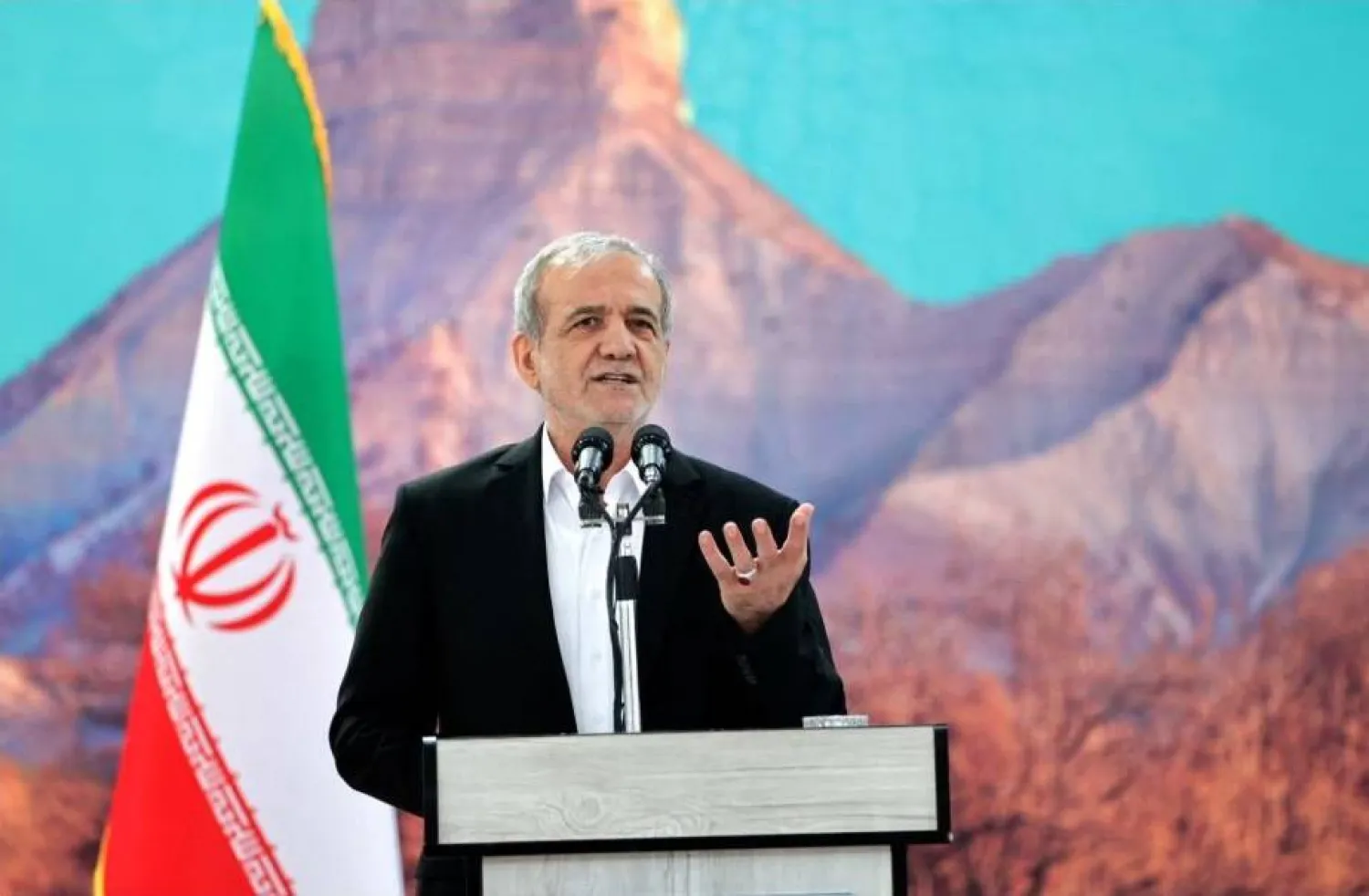

Iranian President Masoud Pezeshkian said Friday it was time to end the months-long Middle East war with the United States because Tehran appeared to be in a stronger position than Washington.
Tehran is keeping the key Strait of Hormuz partially shut and Washington is persisting with a naval counter-blockade of Iran.
"It is better that we bring the war to an end now as we are in a position of power and dignity," Pezeshkian said in a meeting with doctors.
"The whole world acknowledges our victory and emphasises that America has attacked our schools, hospitals and infrastructure in violation of all regulations and is hated around the world."
Pezeshkian also defended a memorandum of understanding agreed with the US in June aimed at ending the war, claiming it did not signal a defeat for Tehran.
"They cannot find even a single clause in this agreement that indicates capitulation. All the commitments concern the other side," he said.
His remarks come weeks after Iran's Supreme Leader Mojtaba Khamenei said he had approved the deal to end the war despite having "different views".
Hardline lawmakers in Iran's parliament have also criticized the government over the deal, accusing it of giving concessions to the US, mostly over the re-opening of the strategic Hormuz Strait.
According to reports in US media, the American navy has been organizing and protecting secret convoys of tankers through the southern sector of the Strait of Hormuz enabling between five and 10 million barrels a day of oil to be exported.
As Tehran claimed to be in the stronger position, the US has said it would ramp up sanctions to heap pressure on Tehran.
The American plan drew condemnation from Iran's foreign ministry, which accused the US of "economic terrorism" and "crimes against humanity".
"The perpetrators and instigators of these sanctions are deserving of trial and punishment for committing such heinous crimes," it said in a statement carried by state media.
US Treasury Secretary Scott Bessent on Thursday vowed Washington would "collapse" the Iranian regime with its threatened campaign nearly six months since their war began.
The comments underscored how the Trump administration is shifting to economic rather than military pressure on Tehran as the US president's unpopular war drags on.
China also criticized Washington's economic plan, saying that US "sanctions and pressure" would not resolve the Middle East conflict.


