Israel’s Deadly Gaza Strikes Cast Doubt on Ceasefire Progress Days After Kushner Visit

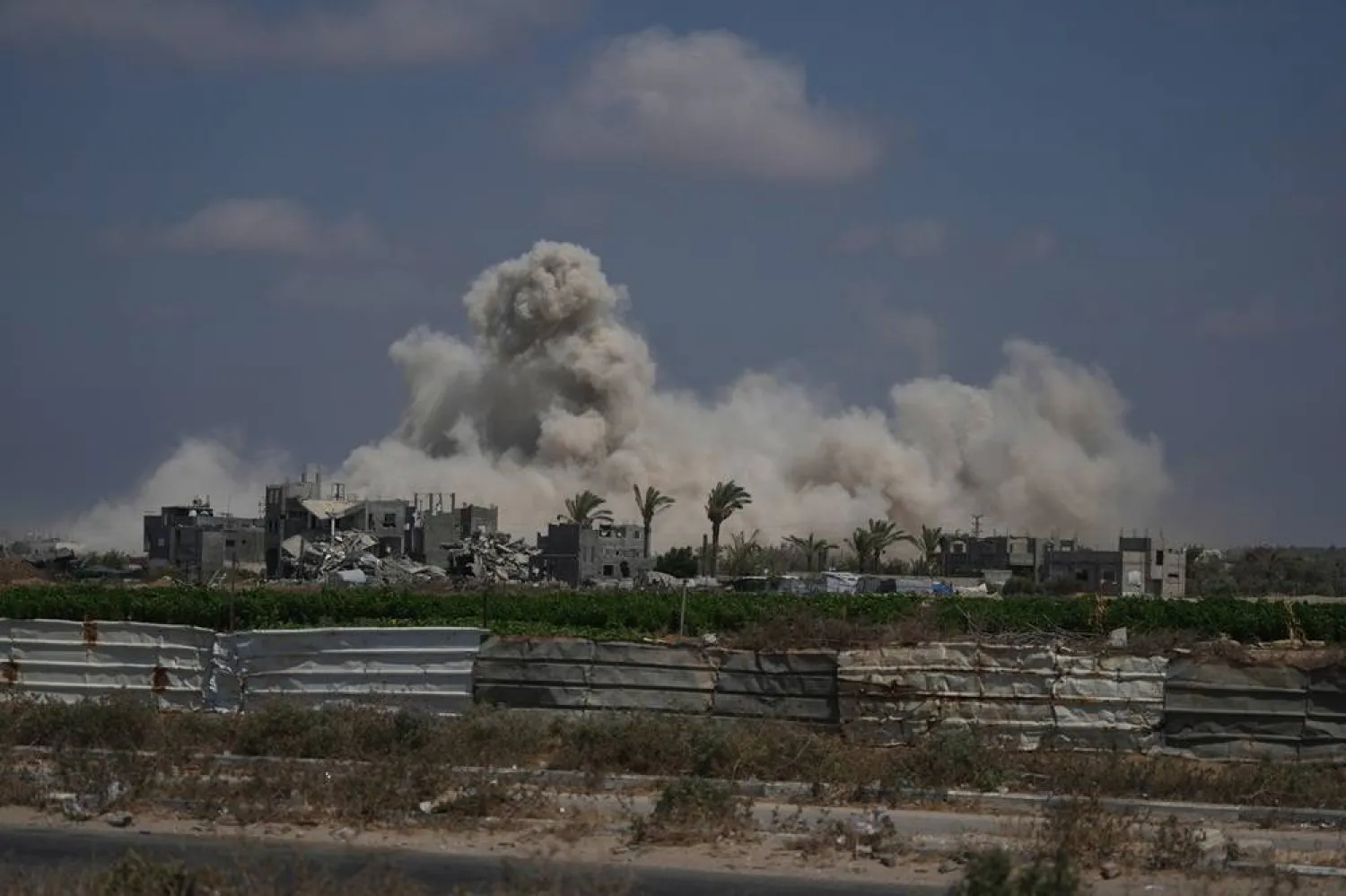
The Israeli army demolishes buildings east of Deir al-Balah, central Gaza Strip, Saturday, Aug. 22, 2026. (AP)
TT

Israel’s Deadly Gaza Strikes Cast Doubt on Ceasefire Progress Days After Kushner Visit

The Israeli army demolishes buildings east of Deir al-Balah, central Gaza Strip, Saturday, Aug. 22, 2026. (AP)

Deadly airstrikes in Gaza on Wednesday cast more doubt on whether new US efforts can advance a tenuous ceasefire in the Palestinian territory.

Just two days after US negotiators reportedly asked Israel to draw down attacks in the Gaza Strip, at least 10 people were killed Wednesday in two strikes, according to local hospitals and the Palestinian Red Crescent. Israeli troops also crossed the ceasefire line in southern Gaza and detained a Hamas police colonel at dawn Wednesday, two witnesses and a Hamas official said.

Israel's military said one of the strikes on Wednesday, in the area of Nuseirat refugee camp, struck a Hamas commander who had participated in the Hamas-led attack in southern Israel on Oct. 7, 2023, in which 1,200 people, mostly civilians, were killed and 251 abducted.

A second strike in the Tuffah area of Gaza City struck four Hamas militants gathering in a police station, the military said, claiming they were planning to carry out attacks against Israeli troops.

Israel's military said a strike the day before targeted a meeting of four Hamas commanders and additional militants.

The commanders killed included Mohammad Hamdi Ahmad Al-Masri, Mohammad Attar and Mohammad Fathi Hussein Nasser, all accused of carrying out terrorist attacks against Israeli troops, and Samed Samir Harb Abu Habal, who infiltrated Israeli territory during the Oct. 7, 2023, Hamas attack, according to a statement from Israel's military.

The Hamas-run Interior Ministry said the Wednesday Gaza City strike on the police station killed eight police officers and a 13-year-old girl. Two officers were women, it said. One person was killed in Nuseirat. On Tuesday evening, an Israeli strike on a busy seaside cafe killed seven Palestinians, including a child, according to Gaza’s Health Ministry.

Jared Kushner, a US negotiator and President Donald Trump's son-in-law, held a marathon meeting with Israeli Prime Minister Benjamin Netanyahu on Monday, in which he asked Israel's leader to draw down attacks on Gaza, a person familiar with the meeting said. The person spoke on condition of anonymity because they weren't authorized to brief journalists.

Also on Wednesday, Israel's military said it had completed reviews of 150 incidents of troop conduct during the war in Gaza and would launch criminal investigations into the 2024 killings of a 5-year-old girl and her family, as well as of 15 Palestinian paramedics in 2025.

At least 17 killed in Israeli strikes

The deadly strikes in Gaza on Tuesday and Wednesday exacted more casualties even as a ceasefire that’s been in place since October has significantly diminished the fighting in the tiny enclave where more than 2 million Palestinians live. Since the ceasefire, Israeli strikes have killed at least 1,273 people, according to health officials in Gaza.

The nearly three-year Israel-Hamas war has killed more than 73,400 Palestinians, according to Gaza's Health Ministry. The ministry, part of the Hamas-run government, maintains detailed records viewed as generally reliable by UN agencies and international organizations. It doesn't distinguish between civilians and fighters, but says women and children make up around half of the toll.

In the early hours of Wednesday, at least 15 Israeli troops entered the Muwasi coastal area, west of the city of Khan Younis, two residents and a Hamas official said.

Accompanied by armed men, the troops stormed the tent of Sabri Abdel-All, a colonel for the Hamas-led Blue Police in Khan Younis. They also detained another resident identified as Nashat Ezzat Zaarab, they said.

The two residents and the Hamas official spoke on condition of anonymity for their safety.

Latest ceasefire negotiations offer few concrete commitments

On the diplomatic front, the ceasefire also appears stalled. Trump's initial ceasefire plan laid out a broad vision for ending Hamas’ rule in Gaza and rebuilding the territory, much of which was reduced to rubble during the war.

But since last fall, major sticking points have emerged on the conditions of Hamas' disarmament and Israel's withdrawal — and which should come first.

Earlier this month, Trump announced that Hamas had agreed to disarm. But Hamas said it would begin to disarm if Israel halts strikes and withdraws, adding that laying down its heavy weapons would come later and be contingent on the creation of a Palestinian state — something Israel’s government rejects.

Netanyahu also pushed back on the deal, saying Israel won't withdraw from its current lines in Gaza until Hamas has completely disarmed.

After Wednesday's strikes, Hamas spokesperson Hazem Qassem lashed out at the Board of Peace — the body Trump established to oversee the ceasefire — saying it has provided a "cover” for Israel to escalate its attacks in Gaza instead of pressuring it to abide by the ceasefire agreement.

Syria Arrests Two ISIS Militants Involved in Assassinations

A member of the security forces walks through a checkpoint operated by Syria's Interior Ministry on the outskirts of Sawara Sughra, in the northern countryside of Sweida, Syria, September 15, 2026. REUTERS/Khalil Ashawi
TT

Syria Arrests Two ISIS Militants Involved in Assassinations

A member of the security forces walks through a checkpoint operated by Syria's Interior Ministry on the outskirts of Sawara Sughra, in the northern countryside of Sweida, Syria, September 15, 2026. REUTERS/Khalil Ashawi

Syrian authorities said on Sunday they arrested two ISIS members in the east of the country, blaming them for targeted killings including that of a defense ministry official.

In a statement, the internal security forces announced the arrest of "two individuals following close intelligence surveillance" in Deir Ezzor.

They are accused of "carrying out a series of assassinations in the governorate, the latest of which was targeting Ministry of Defense member Ibrahim al-Jassem" in the city of Mayadin.

Syrian authorities blamed the group for a bombing in Damascus while French President Emmanuel Macron was visiting the country in July, and said they had dismantled the cell responsible.

According to a report presented to the United Nations Security Council that same month, the group counts some 3,000 combatants in Syria.


Areas Controlled by Armed Gangs in Gaza Become Safe Havens for Criminals and Killers

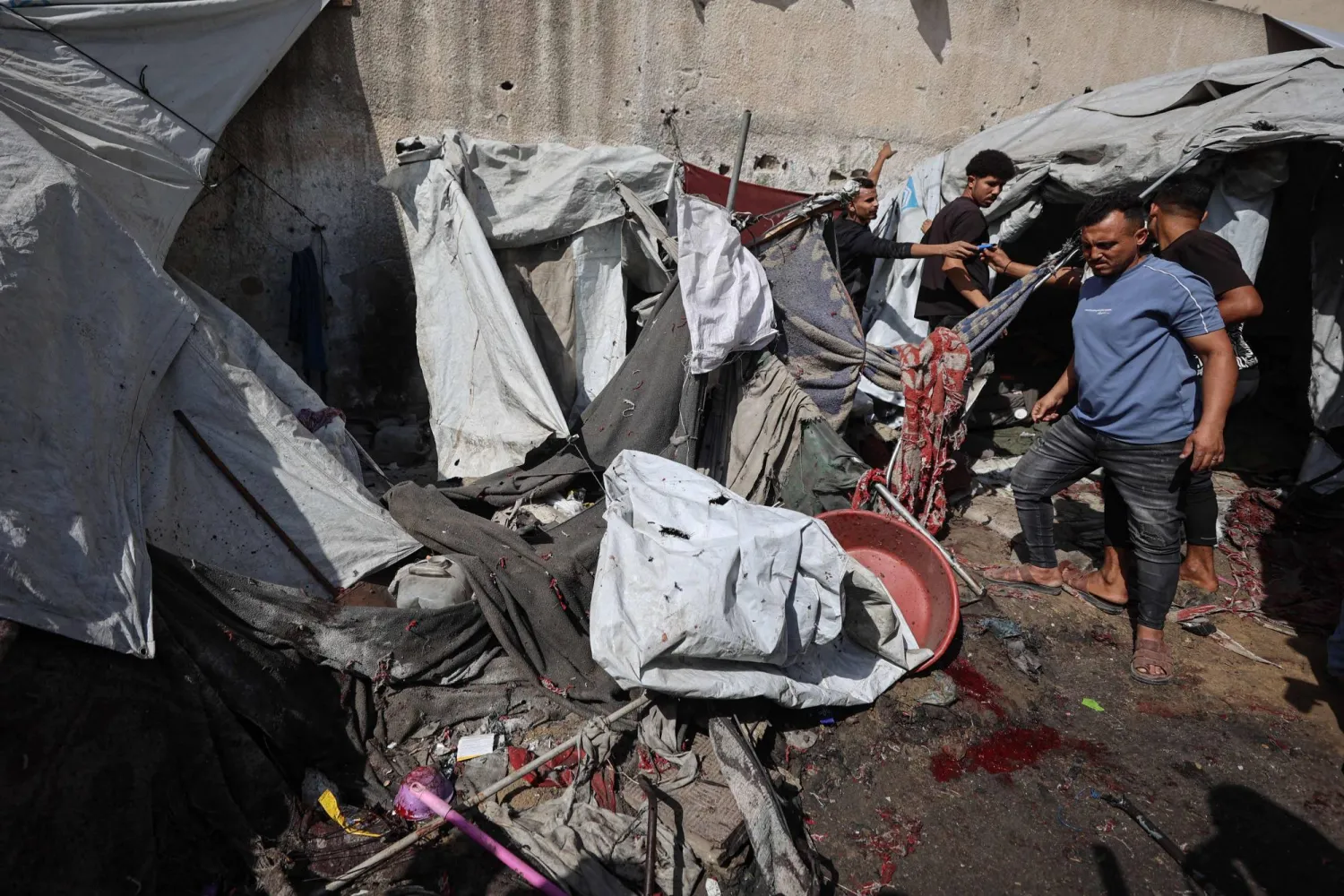
 Palestinians inspect a destroyed tent and traces of blood on the ground following an Israeli strike that killed three people in Gaza City's Al-Remal neighbourhood on November 1, 2026. (Photo by Omar AL-QATTAA / AFP)
Palestinians inspect a destroyed tent and traces of blood on the ground following an Israeli strike that killed three people in Gaza City's Al-Remal neighbourhood on November 1, 2026. (Photo by Omar AL-QATTAA / AFP)
TT

Areas Controlled by Armed Gangs in Gaza Become Safe Havens for Criminals and Killers

 Palestinians inspect a destroyed tent and traces of blood on the ground following an Israeli strike that killed three people in Gaza City's Al-Remal neighbourhood on November 1, 2026. (Photo by Omar AL-QATTAA / AFP)
Palestinians inspect a destroyed tent and traces of blood on the ground following an Israeli strike that killed three people in Gaza City's Al-Remal neighbourhood on November 1, 2026. (Photo by Omar AL-QATTAA / AFP)

About a week ago, gunmen killed two police officers affiliated with the Hamas government and wounded several others during an operation in Deir al-Balah, central Gaza, to arrest a wanted suspect. The attackers subsequently fled in what was not the first incident of its kind.

Field sources told Asharq Al-Awsat that, within hours of the incident, it became clear that the gunmen had headed toward areas where armed gangs operate east of Deir al-Balah.

According to the sources, areas controlled by armed gangs in the Gaza Strip, primarily located in territories under Israeli military control that account for approximately 70% of the enclave, have become safe havens for criminals, particularly those responsible for killing security personnel.

The sources confirmed that all those who fled to areas where armed gangs operate had committed crimes of a purely criminal nature.

Repeated Incidents

One source said that over the past year and a half, similar incidents had been documented involving gunmen who committed murders, wounded individuals, carried out robberies or engaged in drug trafficking before fleeing to areas controlled by armed gangs.

These gangs exploit such incidents to recruit fugitives into their ranks, taking advantage of their personal circumstances, socioeconomic conditions and the fact that they are wanted by police and judicial authorities.

In the October 26 incident, police officers were attempting to ambush a wanted suspect when he opened fire on them. Other gunmen joined the shooting, killing two officers and wounding several others.

Multiple sources confirmed this account, including the Hamas-run Interior Ministry, which said it was pursuing the suspects and continuing its efforts to maintain security and stability in the Gaza Strip and prevent the spread of lawlessness.

However, some of those involved returned the day after the killings, barricaded themselves inside a house and gathered armed relatives around them.

The sources reported mediation attempts aimed at resolving the dispute and persuading the wanted suspects to surrender to Hamas government security forces, but no agreement has been reached so far.

The families of the two slain officers have demanded swift retribution and insisted that neither those directly involved nor their supporters be allowed to escape punishment.

In a joint statement, the families said that carrying out retribution was the only guarantee of "upholding justice and calming tensions."

Their demands came amid fears of renewed violence that could result in deaths on both sides, particularly after some of those involved in the killings returned to Hamas-controlled areas.

Security Concerns

Armed gangs have become a persistent security concern for Hamas security agencies and other Palestinian factions, which continue to pursue their members, particularly in light of the gangs' involvement in serious security incidents, including assassinations of security officials and abductions of faction activists.

The situation comes as Hamas police and security agencies face severe difficulties investigating and pursuing criminal and security-related offenses across the Gaza Strip because of repeated Israeli attacks against their personnel.

In the latest such incident, several police officers were killed on Sunday while deployed in areas south of Al-Mawasi in Khan Younis, when an Israeli drone struck them as they carried out their duties.

Five officers were killed, including Lieutenant Colonel Mohammed Al-Jamal and Major Bassam Miqdad. Six others, including civilians, sustained injuries of varying severity.

Gaza's Interior Ministry described the attacks as "systematic," saying they had killed 75 police officers and personnel since the ceasefire took effect in October 2025.

In a statement, the ministry appealed to the international community to "take urgent action and pressure the occupation to stop its crimes against the police force, which performs civilian duties under the law to preserve citizens' security and safety."

Repeated Attacks

Separately, three Palestinians, including a man and his child, were killed in an airstrike on a crowded street filled with displaced people in the Al-Rimal neighborhood of western Gaza City.

The man's wife and their other child sustained serious injuries.

The strike occurred during a period of heavy movement by residents, displaced people and schoolchildren, leaving several others wounded, some critically.

A Hamas source told Asharq Al-Awsat that Jamal Abu Isaid, a commander in the Al-Qassam Brigades, the movement's military wing, was among those killed in the strike.

Only minutes separated the first airstrike, which targeted police officers in Khan Younis, from the second, which struck a group of civilians in Gaza City.

Around midday Sunday, several Palestinians were also wounded, including a woman in critical condition, when Israeli military vehicles opened fire toward the Halawa displacement camp in Jabalia al-Balad, northern Gaza.

Another Palestinian was reported to have died from critical injuries sustained several days earlier in the village of Al-Masdar in central Gaza.

The latest deaths brought the number of Palestinians killed since the ceasefire came into effect to more than 1,585, with over 5,700 others wounded.

During October, Israeli airstrikes across the Gaza Strip killed more than 143 Palestinians, including 22 children, according to figures from the enclave's Health Ministry.


Yemeni Army Holds Positions Around Taiz, Advances in Al-Jawf

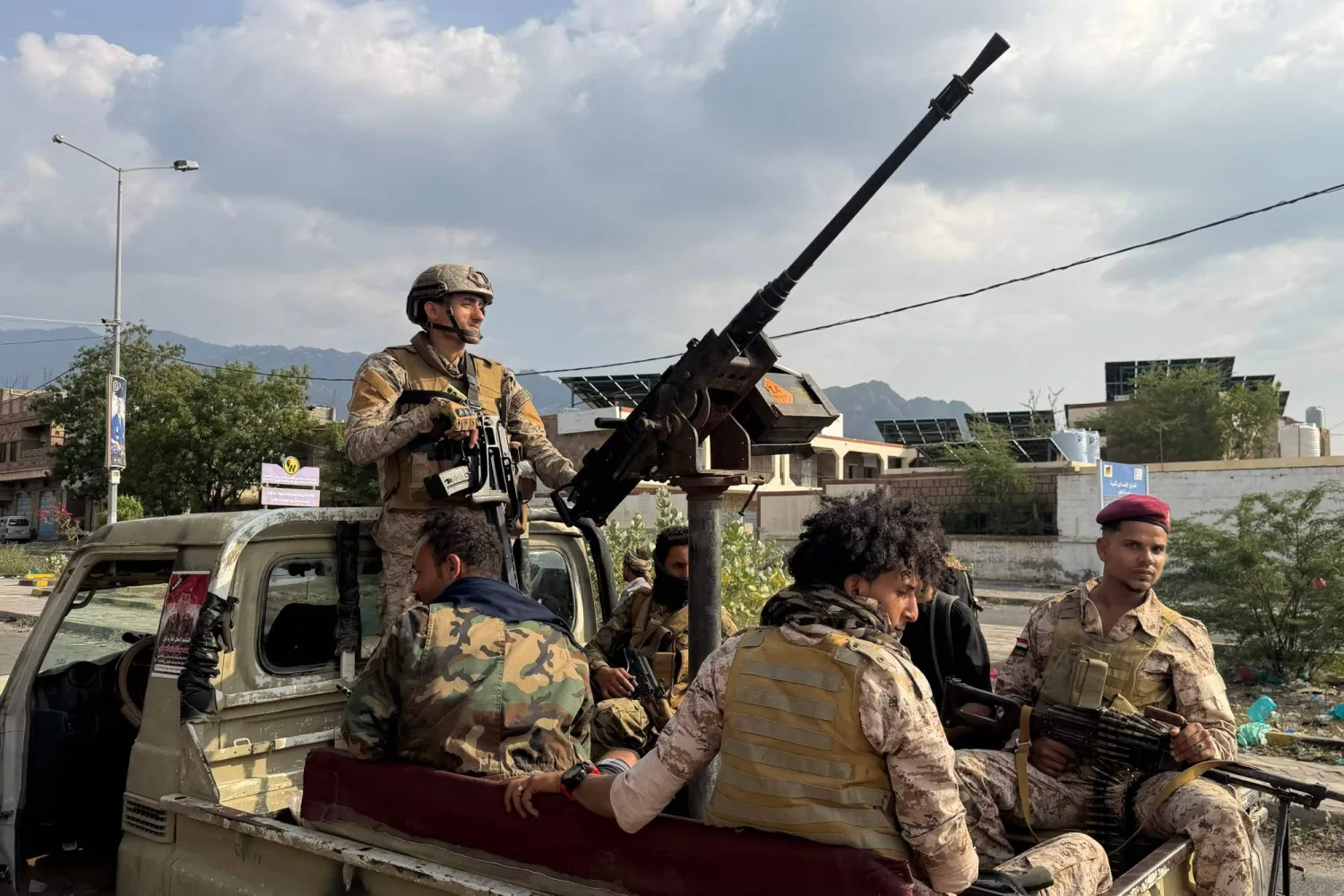
Yemeni government fighters ride on the back of a truck during battles at the Jabal Han front west of the city of Taiz on October 21, 2026. (Photo by AFP) /
TT

Yemeni Army Holds Positions Around Taiz, Advances in Al-Jawf

Yemeni government fighters ride on the back of a truck during battles at the Jabal Han front west of the city of Taiz on October 21, 2026. (Photo by AFP) /

Yemeni government forces have held their positions on the front lines around the besieged city of Taiz, repelling a fierce Houthi attack on the Al-Aqrud front southeast of the city with support from the Popular Resistance. Meanwhile, government forces recaptured military positions and strategic high ground east of Al-Hazm, the capital of Al-Jawf Governorate, in a battlefield development aimed at advancing toward the city.

While government forces maintained their defenses in Taiz and made gains in Al-Jawf, the Houthis expanded their military operations toward Al-Maqatirah district in northern Lahj Governorate. Despite airstrikes and significant losses, the group seized the historic Al-Maqatirah Castle and advanced into key areas and high ground, including the Al-Nafaq area and positions overlooking the Hayjat Al-Abd mountain pass, following fierce clashes with government troops.

According to local sources, government forces, supported by the Giants Brigades and Nation's Shield Forces, still control large parts of the district. They have repelled attacks and destroyed columns of Houthi reinforcements at the foot of the mountain pass and in the Wadi Souq Al-Rubou area.

Government troops continue to launch counterattacks to recapture positions seized by the Houthis, while deploying additional reinforcements and tribal fighters to confront the group's advance.

Clashes south and southeast of Taiz are concentrated on the Al-Aqrud and Kahlan fronts, as well as in Al-Dhabab west of the city.

Government forces, backed by the Popular Resistance, repelled a fierce Houthi assault on the Al-Aqrud front amid continuing clashes and airstrikes targeting Houthi concentrations in these areas.

On Sunday, airstrikes extended to areas in Dhamar and Hodeidah governorates, including Bajil district. Houthi positions in Hayjat Al-Abd and along the Al-Sahi road southwest of Taiz were also targeted as part of the air operations accompanying the ground battles.

Meanwhile, the Houthi offensive remained concentrated on Al-Maqatirah district in northern Lahj, where the group seized the historic Al-Maqatirah Castle and advanced into Al-Nafaq and several elevated positions overlooking the Hayjat Al-Abd mountain pass.

Strategic Importance of Al-Maqatirah

These developments carry significant military implications because of the location of the Al-Maqatirah mountains and castle, which overlook the Hayjat Al-Abd and Al-Karbah roads, two vital routes connecting Taiz with southern Yemen.

Control of the castle allows forces to monitor movements around these corridors and threaten traffic passing through them, raising concerns about further military restrictions on roads leading to Taiz and deepening the isolation of a city already suffering under a Houthi siege.

The strategic importance of these heights extends beyond securing local roads. Controlling them opens the way for an advance toward Tur Al-Bahah district and provides an elevated vantage point overlooking Al-Anad military base in Lahj Governorate.

Because of its mountainous location, Al-Maqatirah also serves as strategic depth for routes connecting to the western coast and the Bab Al-Mandab Strait.

Control of its high ground would help secure lines of advance, reduce the risk of flanking maneuvers, and influence troop movements and supply routes across the area extending toward Ras Al-Arah, south of the Bab Al-Mandab Strait.

Battlefield Gains in Al-Jawf

In a parallel development, Yemen's armed forces, represented by the First Emergency Division, announced the recapture of military positions and strategic high ground east of Al-Hazm following fierce battles that forced Houthi fighters to flee their positions around the Duhaidha Mountains.

The forces said they seized weapons and ammunition depots abandoned by the Houthis and destroyed military vehicles and armored combat vehicles.

They added that dozens of Houthi fighters were killed or wounded in the clashes, while others were captured.

On the administrative and military front, Yemen's Presidential Leadership Council issued two presidential decrees on Sunday appointing Major General Hussein Al-Ajji Ali Al-Awadhi as governor of Al-Bayda Governorate and Major General Ameen Ali Al-Akimi as governor of Al-Jawf Governorate. Al-Akimi was also appointed commander of the Al-Jawf Military Axis.