


Exceptional School Year: South Lebanon Families Weigh Options Amid War Fears

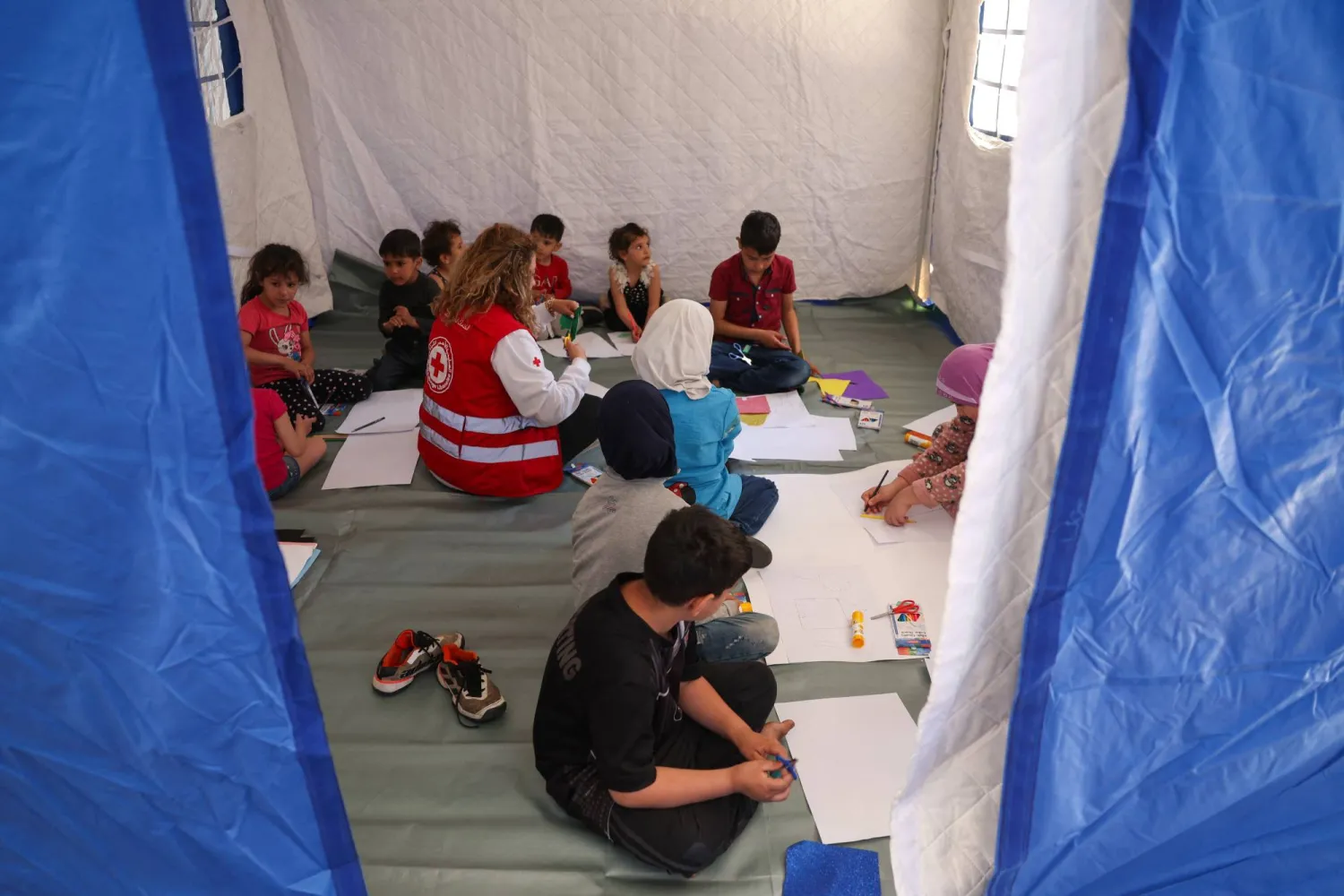
A member of the Red Cross provides learning activities to children inside a tent at Camille Chamoun Sports City stadium turned into a temporary shelter in Beirut, Lebanon, May 8, 2026. REUTERS/Mohamed Azakir
TT

Exceptional School Year: South Lebanon Families Weigh Options Amid War Fears

A member of the Red Cross provides learning activities to children inside a tent at Camille Chamoun Sports City stadium turned into a temporary shelter in Beirut, Lebanon, May 8, 2026. REUTERS/Mohamed Azakir

For many families in southern Lebanon, choosing a school is no longer a decision made months in advance.

With September approaching, parents are still weighing where to enroll their children, watching the security situation and recalling the upheaval of the past two years, when thousands of students were kept out of classrooms, families were displaced and schools shifted from in-person to remote learning.

The uncertainty has produced starkly different choices. Some families are enrolling children in schools in the areas where they were displaced.

Others are opting for lower-cost public schools in case classrooms are forced to close again. Some are seeking schools in safer areas that stayed open during the previous war.
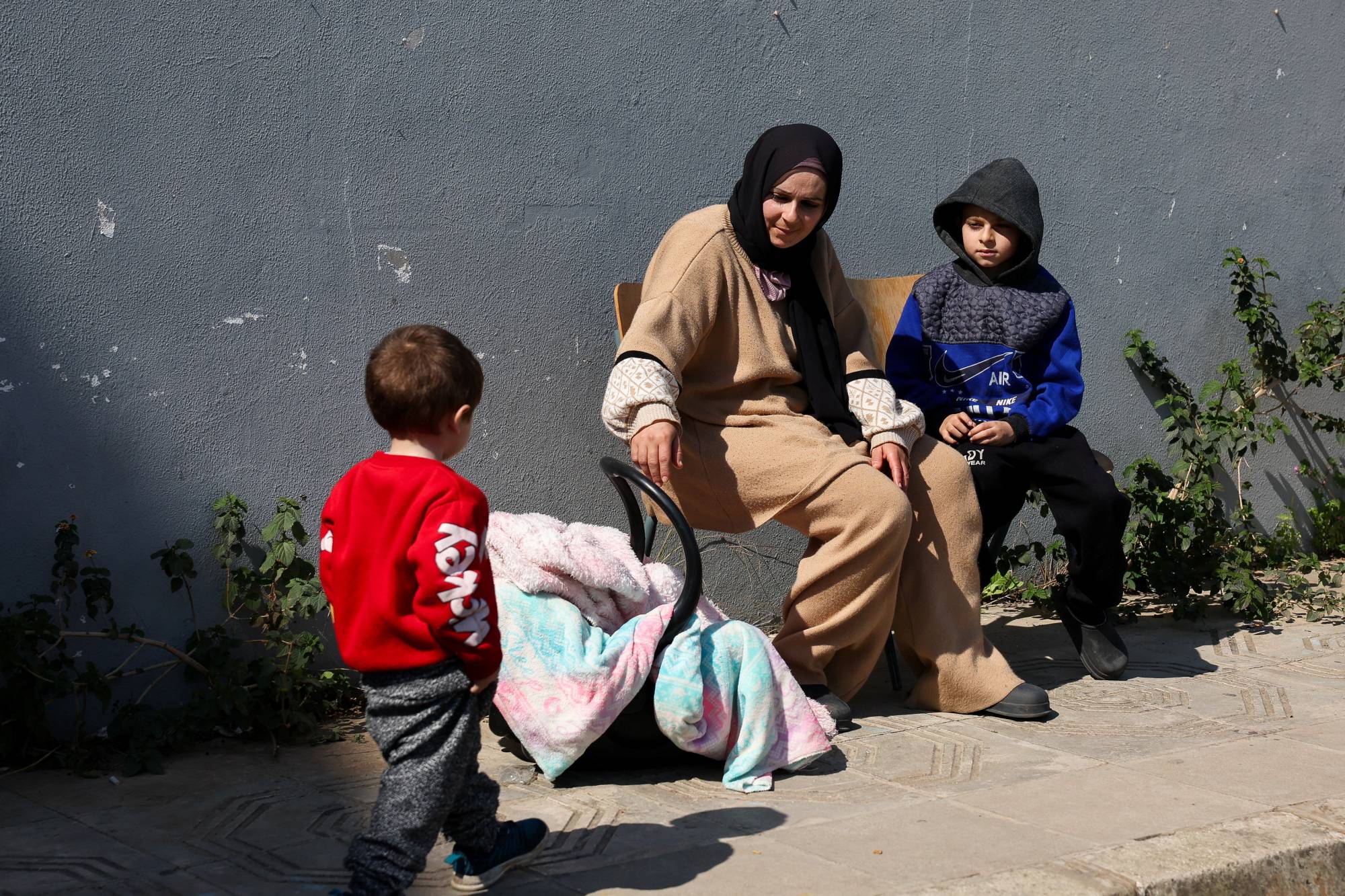
A displaced woman with children sits outside a school-turned-shelter, following an escalation between Hezbollah and Israel amid the US-Israeli conflict with Iran, in Beirut, Lebanon, March 3, 2026. REUTERS/Mohamed Azakir

Normally, most Lebanese schools, particularly private ones, complete enrollment by the end of the previous academic year, allowing the new school year to begin with student lists already finalized.

This year, some schools are keeping registration open through the first two weeks of September as parents hesitate over where to send their children.

“I enrolled my children, but I still haven’t bought their books,” said Abeer, a mother of three.

“Every day I look at the book lists and wonder: Should I wait, or pay for them and have the same thing happen as in the past two years? I’ll wait until mid-September before deciding.”

For Maryam, safety means keeping school close to home.

“My son is in first grade. I enrolled him in the public school near us in the village,” she said. “That way, if anything happens, I can pick him up quickly and flee at any moment.”

Parents from border areas who do not expect to return home soon are among those searching for schools where they have been displaced.

Others are turning to public schools, known for their lower fees, wary of paying high tuition only for schools to close again.

Some families are taking another approach: looking for schools in safer areas that managed to keep classrooms open during the previous war.

For parents reluctant to repeat the experience of remote learning, that has become a key condition.

“We decided to stay in the area where we were displaced,” said Um Ahmad. “So I looked for a school that did not close during the war and enrolled my children there.”

“I don’t believe remote learning is as beneficial as in-person education,” she said. “There is also the severe psychological strain that war places on my children and on us adults alike. So I believe in-person learning is better as long as it remains possible.”
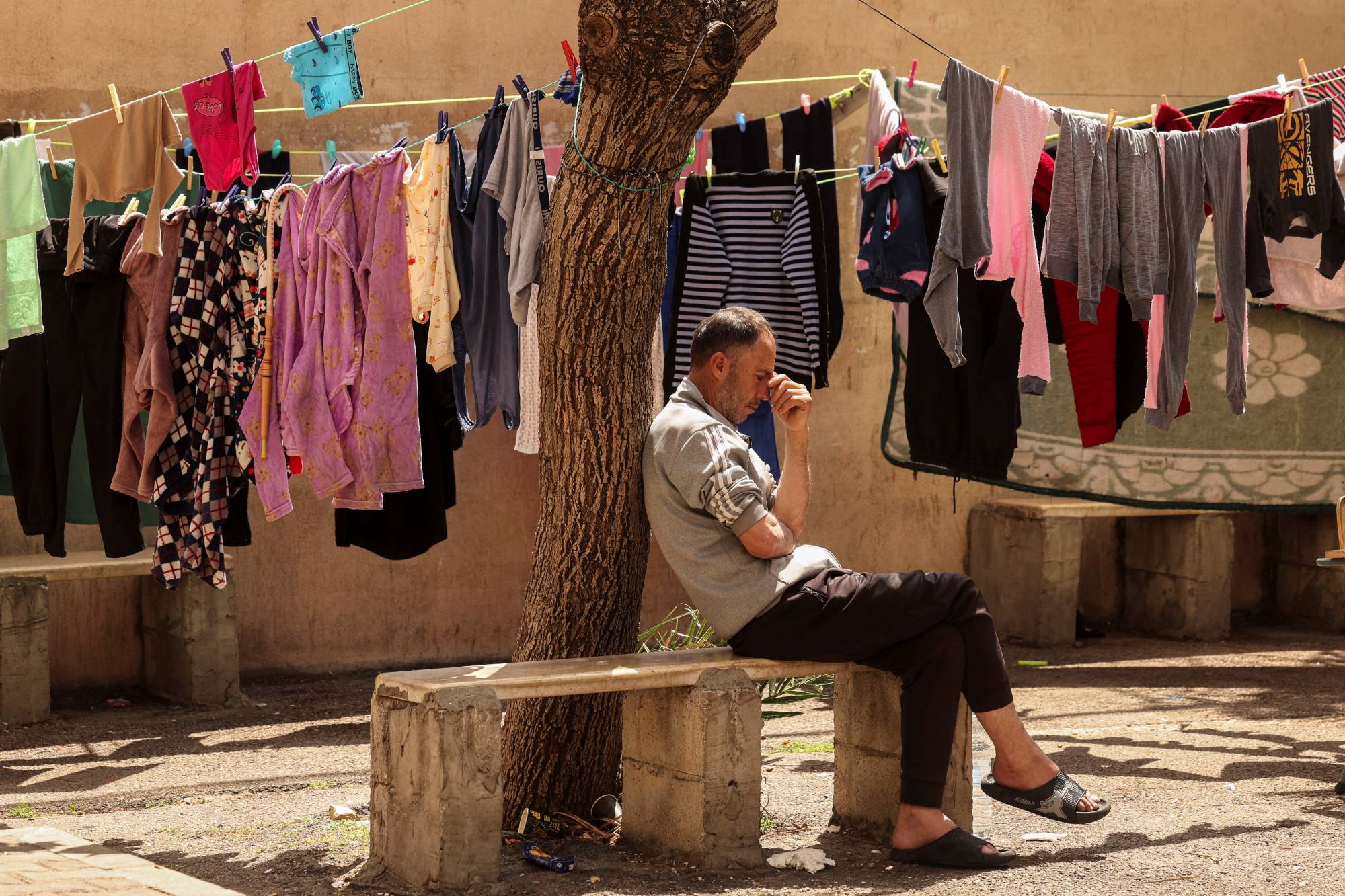
A displaced man, who fled his home after an Israeli evacuation order, sits in a university-turned shelter in Sidon, Lebanon, April 13, 2026. REUTERS/Aziz Taher

Schools prepare for both scenarios

Schools are facing the same uncertainty.

Several schools in southern Lebanon outside areas exposed to bombardment are preparing to open for the new academic year, but they are not assuming in-person learning will remain possible throughout it.

One private school in Nabatieh told parents it was preparing to “adopt in-person learning whenever security conditions allow.”

The message reflects a broader effort by schools to prepare for either in-person or remote teaching, depending on developments on the ground.

The approach is also in line with the Education Ministry’s plan for the 2026-27 academic year, which seeks to keep education running according to conditions in each area: in-person teaching where safety and preparedness allow, and remote learning in areas affected by the security situation.

Between school and home, safety comes first

Some families have made the opposite calculation, choosing remote learning as the safer option.

Leila’s children had been attending a secondary school in Toul, in the Nabatieh district. She decided to move them to another school in Zebdine after their former school said it would return to in-person teaching next year, while the new school announced it would continue remotely.

“I’ll keep them with me at home,” she said. “That will feel safer to me.”
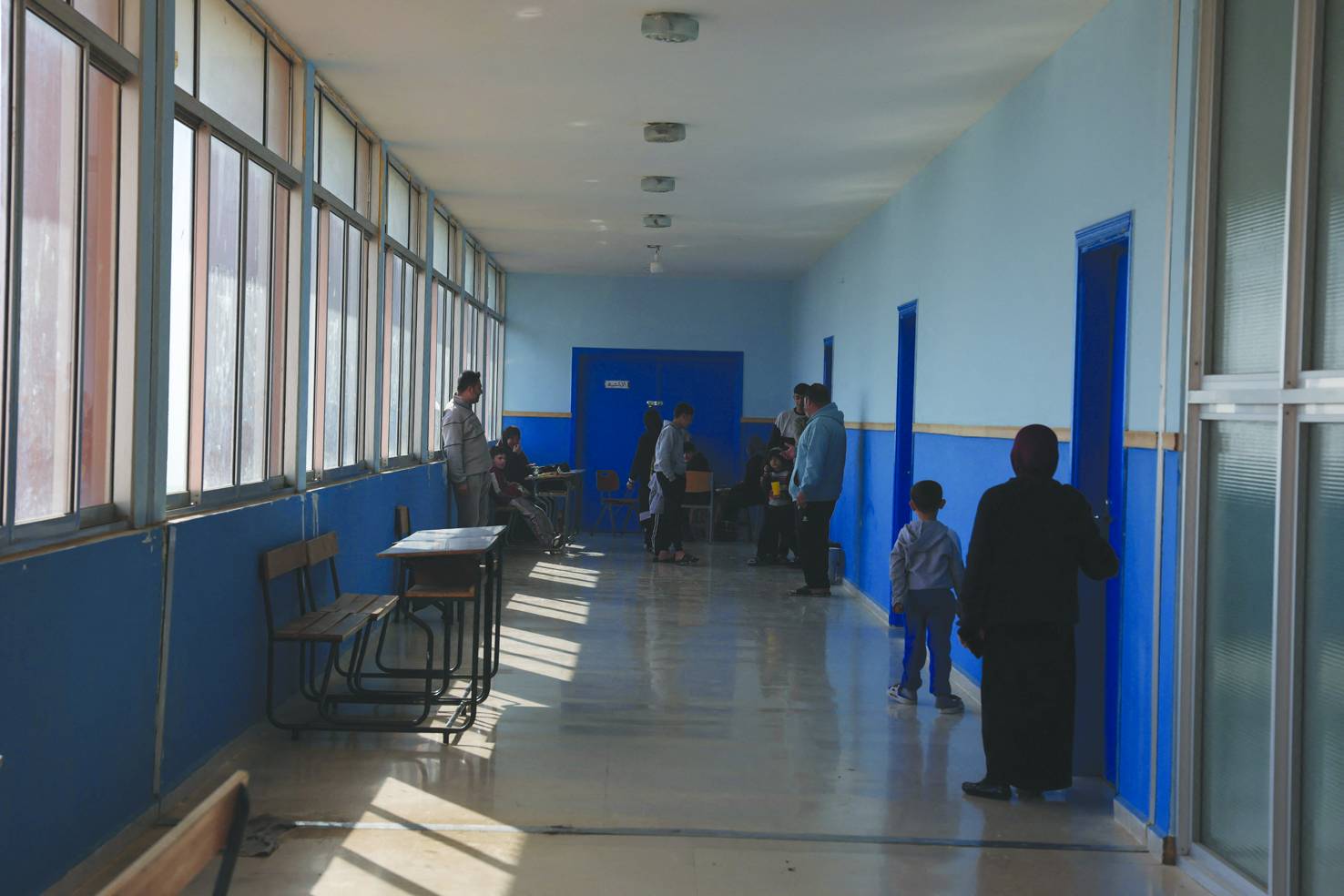
People shelter at a school, which is hosting displaced people, following an escalation between Hezbollah and Israel, amid the US-Israeli conflict with Iran, in Lebaa, Lebanon, March 15, 2026. REUTERS/Raghed Waked

The Tarhini family made a similar choice from abroad.

They left for Africa after the war broke out and enrolled their children in a Lebanese school offering remote learning while they waited for the situation to stabilize.

“The political and battlefield developments do not bode well, and it seems the war will undoubtedly return,” the father said, adding that the family’s decision gave him greater peace of mind for now.


Israeli Strike Kills Two People in Gaza, Medics Say

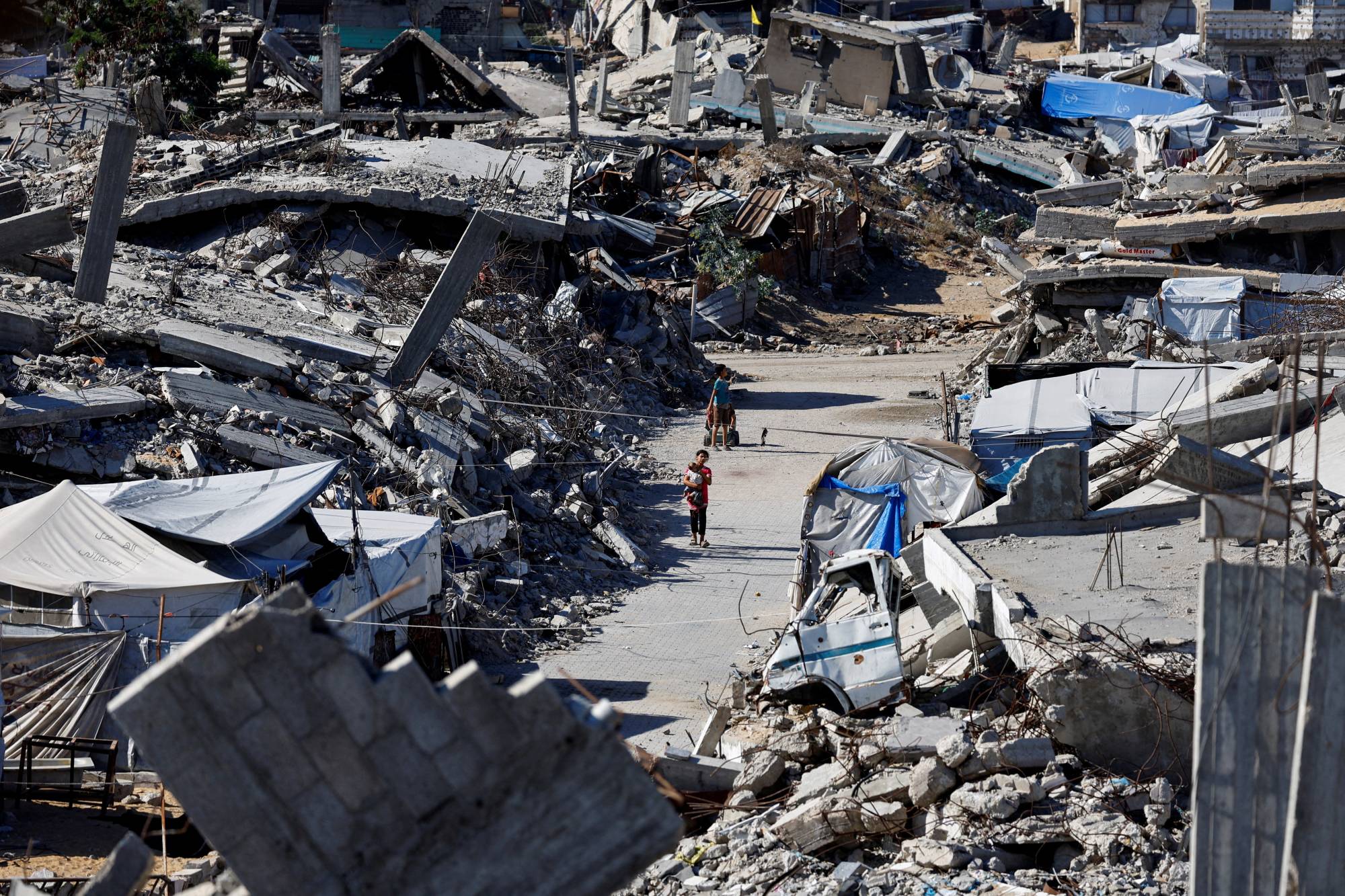
Internally displaced Palestinians walk among the ruins of destroyed residential buildings in the Al-Sheikh Radwan neighborhood, east of Gaza City, Gaza Strip, 10 September 2026. (EPA)
TT

Israeli Strike Kills Two People in Gaza, Medics Say

Internally displaced Palestinians walk among the ruins of destroyed residential buildings in the Al-Sheikh Radwan neighborhood, east of Gaza City, Gaza Strip, 10 September 2026. (EPA)

An ‌Israeli airstrike on Sunday killed at least two Palestinians in a vehicle and wounded 13 others in the Gaza Strip, medical staff said.

The strike in the Tel Al-Hawa neighborhood in western Gaza City, left the vehicle mangled, according to footage circulated on social media. Local medical staff told ‌Reuters that ‌they urged people to provide ‌information ⁠that could help identify ⁠the two people who were killed and whose bodies were dismembered by the explosion.

The Israeli military said the strike targeted two Hamas fighters, without giving further information.

An October 2025, ⁠US-backed, ceasefire halted large-scale fighting in ‌Gaza, but ‌it has not ended Israeli strikes and ‌there has been little progress on ‌steps towards permanent peace.

Hamas accuses Israel of violating the ceasefire and undermining efforts to implement US President Donald Trump's broader plan ‌to end the Gaza conflict, which includes the Israeli withdrawal ⁠from ⁠the strip and the disarmament of Hamas.

Israel says Hamas has been violating the deal.

More than 1,300 Palestinians, mostly civilians, have been killed in Gaza since the ceasefire took effect, according to the territory's health officials, while the Israeli military says four Israeli soldiers have been killed.

Hamas does not usually disclose information about fatalities among its fighters.


Syria Rejects Sovereignty Violations, Netanyahu’s Entry into Its Territory

An Israeli observation post overlooking the village of Beit Jinn in southern Syria (AFP) 
TT

Syria Rejects Sovereignty Violations, Netanyahu’s Entry into Its Territory

An Israeli observation post overlooking the village of Beit Jinn in southern Syria (AFP) 

Syria on Saturday renewed its rejection of violations of its sovereignty and Israeli Prime Minister Benjamin Netanyahu’s entry into its territory, as Israeli forces continued a weeklong escalation of artillery fire and incursions around Beit Jinn, on the slopes of Mount Hermon in western rural Damascus.

Residents fear an Israeli incursion into the town could lead to a repeat of events in late 2025, when dozens were killed or wounded in clashes between residents and an Israeli patrol that entered Beit Jinn.

Syrian Foreign Minister Asaad al-Shaibani said Syria had clearly reaffirmed before the UN Security Council, with the support of more than 40 countries, its rejection of violations of its sovereignty and Netanyahu’s entry into Syrian territory.

In a post on X, al-Shaibani stressed that Damascus remained committed to the country’s unity, independent decision-making and territorial integrity. He welcomed the international response supporting Syria in the face of continuing Israeli violations and said Damascus would continue to defend its national rights through legitimate political and diplomatic means under international law and the UN Charter.

Representatives of several UN member states, joined by Syria’s Permanent Representative to the UN Ibrahim Olabi, gathered outside the Security Council in New York on Friday to denounce Netanyahu’s entry into Syrian territory and reaffirm Syria’s sovereignty, unity and territorial integrity.

Netanyahu, accompanied by Israeli Defense Minister Israel Katz, entered the Syrian side of Mount Hermon on Sept. 9, where Israeli forces are deployed.

Damascus strongly condemned what it called Netanyahu’s “illegal entry” into Syrian territory and his tour of Mount Hermon, describing it as a flagrant violation of Syria’s sovereignty, territorial integrity and international law.

Syria held Israel fully responsible for the consequences of the violations and called on the UN, international organizations and influential countries to act to halt the attacks and ensure a return to the Disengagement Agreement.

Meanwhile, local sources in Beit Jinn told Asharq Al-Awsat that more than 10 Israeli military vehicles and two tanks had entered farmland belonging to the village of Mazraat Beit Jinn, east of the town.

The incursion came hours after Israeli artillery fire struck the Ain al-Shaara area north of Beit Jinn, with the shell landing on agricultural land.

Israeli forces had repeatedly shelled areas around Mazraat Beit Jinn and Bat al-Warda hill since Sept. 3, without reported casualties or material damage. An Israeli drone had also struck a civilian vehicle on the road to the town, wounding several civilians.

Local sources voiced fears of a repeat of Nov. 28, 2025, when an Israeli military patrol entered Beit Jinn, triggering fierce clashes with residents that killed 13 people from the town and wounded 24 others.

The escalation in western rural Damascus comes as Israeli forces continue incursions and attacks on towns and villages in rural Daraa and Quneitra near the ceasefire line. The operations have continued since the first day following the fall of former President Bashar al-Assad’s government on Dec. 8, 2024.


Fatah Demands Apology for Oct. 7 ‘Catastrophe’ as Hamas Hits Back

A meeting of Fatah’s Revolutionary Council in Ramallah (WAFA) 
TT

Fatah Demands Apology for Oct. 7 ‘Catastrophe’ as Hamas Hits Back

A meeting of Fatah’s Revolutionary Council in Ramallah (WAFA) 

A heated Palestinian debate erupted after Fatah Central Committee member Majed Faraj called on Hamas to apologize to the Palestinian people for what he described as the “catastrophe” that followed Oct. 7, 2023.

Speaking to Fatah activists at a public gathering ahead of legislative elections, Faraj said Hamas should apologize before returning to political life as a Palestinian faction like any other.

“This is a personal opinion and not an official position,” he added.

Fatah supporters and several of its leaders applauded, including Zakaria Zubeidi, who was recently released from an Israeli prison under a Hamas-Israel prisoner exchange deal. His reaction drew criticism from Hamas activists and freed prisoners.

Bassem Naim, a member of Hamas’ political bureau, hit back at Faraj, Fatah and the Palestinian Authority, arguing that the Oct. 7 attack had strategic consequences not only for Palestine but for the region and the world.

In a Telegram post, Naim said that if Hamas were required to apologize, Faraj should also demand apologies from Fatah and the late Yasser Arafat for what, by Faraj’s own standard, were “catastrophes” inflicted on Palestinians over decades. He cited the Al-Aqsa Intifada, which was followed by Israel’s Operation Defensive Shield and the reoccupation of the West Bank, as well as earlier events in Jordan, Lebanon and the first Gulf War.

Naim said Palestinians had the right to assess every stage of their national struggle and demand accountability, but argued that such scrutiny should not be selective or serve foreign agendas. He described the Oslo process as a “major mistake” that had proved a catastrophic failure.

He added that Hamas had repeatedly called for comprehensive national dialogue to review all paths, including the “Al-Aqsa Flood,” but accused Fatah of rejecting such efforts, most recently at meetings in Ankara and El Alamein.

Fatah Revolutionary Council member Monzer al-Hayek defended his movement, saying the only thing Fatah could apologize for was failing so far to achieve an independent Palestinian state.

He noted that Fatah had built a national authority, given Palestinians an entity, identity and passport, and advanced the statehood project until Palestine achieved UN non-member observer state status.

Al-Hayek accused Hamas of obstructing the national liberation process, weakening the political track and helping create conditions that brought Israel’s far right to power.

The dispute comes amid mutual accusations that each movement is seeking to obstruct or postpone the elections. Hamas has sought to form a broad electoral coalition of several factions, while Fatah has worked to block the effort and persuaded PLO factions, including the Popular Front for the Liberation of Palestine, not to join.

Fatah’s Revolutionary Council said the movement would contest legislative elections scheduled for Nov. 28 on an official national list in consultation with PLO factions. It called for comprehensive national dialogue, Palestinian unity within the PLO framework and a fully sovereign Palestinian state on the June 4, 1967 borders.

President Mahmoud Abbas reaffirmed his commitment to holding legislative elections on Nov. 28, 2026, and urged the international community to pressure Israel not to obstruct voting in Jerusalem and the Gaza Strip.
