



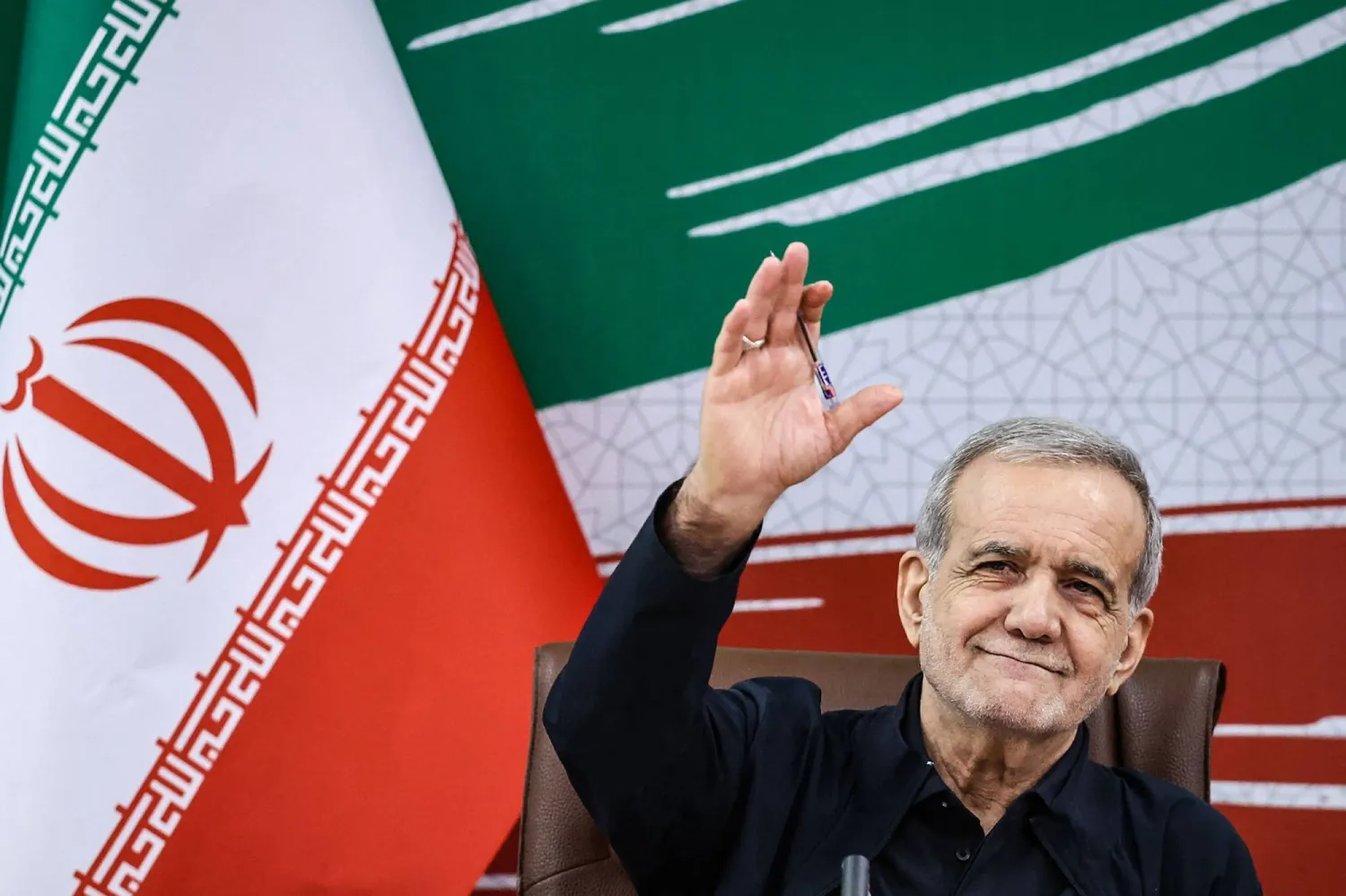

Iranian President Masoud Pezeshkian defended a recent memorandum of understanding as the best way for the country to move beyond what he described as a situation of “neither war nor peace.”
In a speech published by state-run IRNA early on Sunday, he said members of Iran’s Supreme National Security Council believed the memorandum represented the best possible agreement based on what he described as dignity, wisdom and the national interest.
“There is not a single provision in this agreement that amounts to capitulation,” Pezeshkian said. “The supreme leader sets the policies, and we will follow that path.”
The deal known as the Memorandum of Understanding that US President Donald Trump signed in June set an ambitious 60-day deadline for ending the war with Iran and reaching an accord on its nuclear program.
That period ended last week, but the two sides remain far apart, with no signs of compromise on the crucial issue of reopening the Strait of Hormuz, vital to global shipping.
While stressing that Tehran did not intend to back down in the face of its adversaries, Pezeshkian also linked the agreement to Iran’s economic prospects, saying the country could not attract investment in this stalled phase.
“Capital and money are extremely sensitive to risk,” The Associated Press quoted him as saying. “We have to remove this risk from the country.”
Nearly six months into the war with the United States and Israel, the Iranian economy is suffering under sanctions and a naval blockade that is making it extremely difficult for the country to export oil, its most valuable product.
Meanwhile, the hard-line new leader of Iran’s Supreme National Security Council, Mohsen Rezaei, threatened Tehran’s neighbors against joining the new US effort to hurt Iran’s economy.
“If (Trump) wants to do something, we will retaliate in a seismic manner,” he said in an interview with the state broadcaster that aired Saturday.
Rezaei was named this month as part of senior appointments widely seen as hardening Tehran’s political and military stance. His interview with IRIB is his most extensive public statement since then.


