


‘Eagles of Civilization’ Gives Momentum to Egypt-China Military Ties

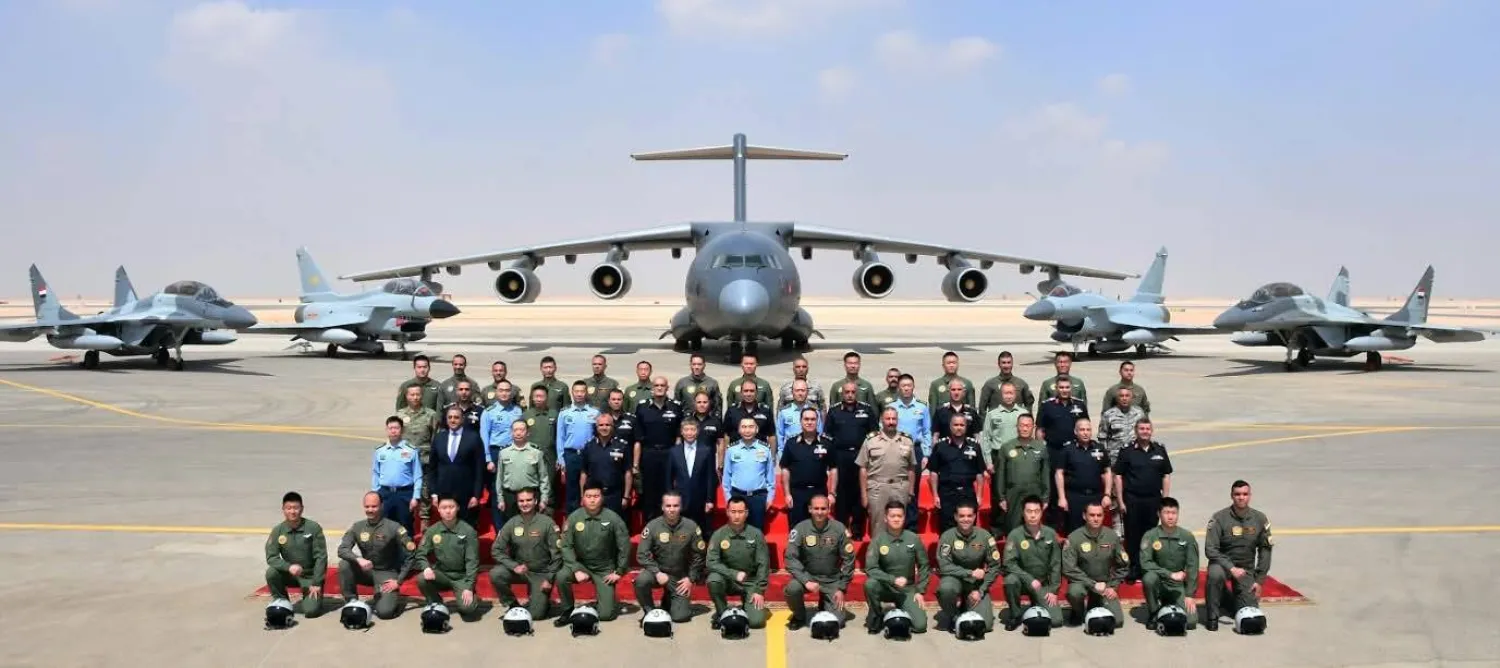
Part of the "Eagles of Civilization 2025" exercise (Military Spokesperson)
TT

‘Eagles of Civilization’ Gives Momentum to Egypt-China Military Ties

Part of the "Eagles of Civilization 2025" exercise (Military Spokesperson)

Egyptian-Chinese military relations are entering a new phase of cooperation with the launch of the joint air combat maneuvers “Eagles of Civilization 2026,” amid ongoing regional tensions.

The drills are the second of their kind between Egypt and China in two years and represent a new boost to military ties between the two countries, according to an Egyptian military and strategic expert who spoke to Asharq Al-Awsat.

He believes the cooperation could later expand into broader military collaboration as part of Cairo’s efforts to diversify its sources of military production.

On Saturday, the Egyptian military announced in a statement the start of “Eagles of Civilization 2026,” involving a number of multi-role fighter aircraft of various types.

The statement noted that the drills are being conducted over several days at several air bases across Egypt as part of the second edition of the exercise between the two countries.

The initial phases include a series of theoretical and practical lectures aimed at harmonizing combat concepts between the two sides, in addition to joint air sorties and training on planning and managing combined air operations.

According to the Egyptian statement, the exercises aim to exchange expertise and enhance the skills of participating forces within the framework of Egypt’s joint training program with allied and friendly nations. The goal is to strengthen cooperation across various military fields.

On August 14, Senior Colonel Chen Xi, spokesperson for China's Ministry of National Defense (MND), stated during a press conference that the exercises would conclude in early September.

He noted that this is the second joint training program between the air forces of the two countries.

According to Xi, “the training will focus on such subjects as air combat tactics, air superiority operations, and combat search and rescue, and will include force employment drills.”

"As the second iteration of its kind, the joint training will further enhance mutual trust and traditional friendship, deepen substantive cooperation between the Chinese and Egyptian militaries, and contribute to regional peace and stability," stressed the spokesperson.

The first edition, “Eagles of Civilization 2025,” was held in April 2025 at an Egyptian air base and involved various types of multi-role fighter aircraft.
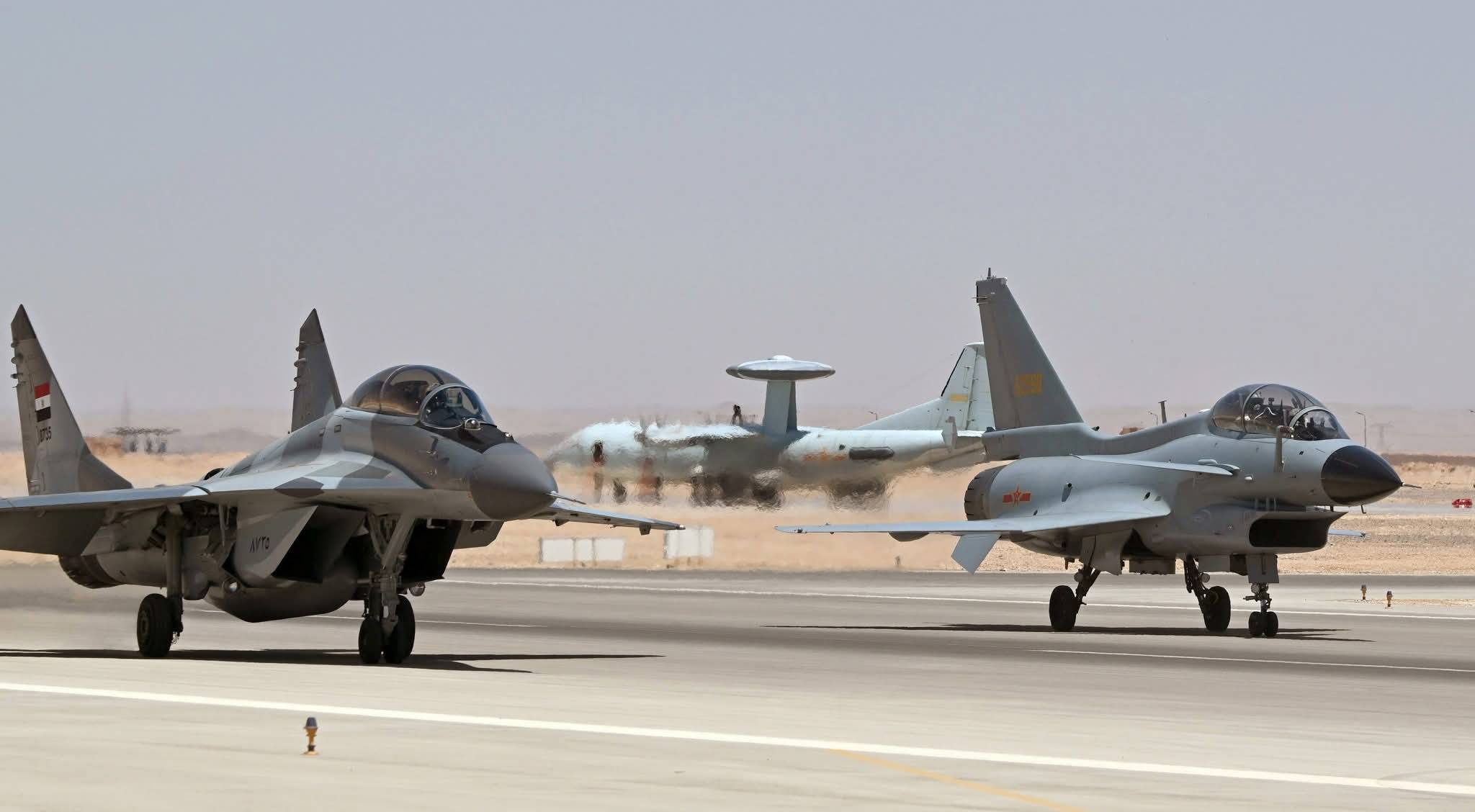
Fighter jets from the "Eagles of Civilization 2025" exercise (Military Spokesperson)

Boost to Military Relations

Military and strategic expert Major General Samir Farag told Asharq Al-Awsat that the exercise directly contributes to strengthening military relations between Egypt and China.

He said the second edition reflects the success of the first exercise, stressing that the deployment of Chinese aircraft to Egypt for joint training demonstrates that Beijing is deriving significant benefits from the cooperation.

“Egypt is known for the diversity of its partnerships and is among the countries that conduct the largest number of joint military exercises. We benefit from them, and so do our partners,” Farag added.

Expanding Cooperation

Egyptian-Chinese military cooperation has previously been a source of concern for Israel. In February 2025, Israeli media reported serious concerns among Israeli security agencies regarding the possibility of Egypt acquiring Chinese J-10C fighter jets equipped with long-range air-to-air missiles.

Israeli sources said at the time that the main concern was not the fighter aircraft itself but rather the long-range Chinese air-to-air missile, a capability the Egyptian Air Force had not previously possessed. Such missiles, they argued, could enable Egyptian aircraft to engage Israeli aircraft even before they entered visual range.

This was followed by a report in The National Interest magazine in December, stating that Egypt had turned to China to develop an advanced fleet of drones as part of efforts to counter what it described as Israel’s aggressive actions along Egypt’s eastern border.

Addressing speculation that the current maneuvers are linked to specific arms deals, Farag said that discussions about the purchase of J-10 fighters or other weapon systems fall outside the scope of the drills. “The exercise has nothing to do with that issue,” he stressed.

He added that Egyptian-Chinese military relations are moving toward broader partnership, particularly given existing cooperation in the field of drones that are being manufactured locally in Egypt. He noted that further military collaboration is likely in both joint training and defense-industrial production.



Yemeni Forces Consolidate West Coast Gains, Reinforce Bab al-Mandab Positions

 Yemeni government fighters sit in the back of a vehicle near Dhubab, Taiz Governorate, Yemen, in this still image taken from video released October 5, 2026.    Southern Giants Brigades/Handout via REUTERS
Yemeni government fighters sit in the back of a vehicle near Dhubab, Taiz Governorate, Yemen, in this still image taken from video released October 5, 2026. Southern Giants Brigades/Handout via REUTERS
TT

Yemeni Forces Consolidate West Coast Gains, Reinforce Bab al-Mandab Positions

 Yemeni government fighters sit in the back of a vehicle near Dhubab, Taiz Governorate, Yemen, in this still image taken from video released October 5, 2026.    Southern Giants Brigades/Handout via REUTERS
Yemeni government fighters sit in the back of a vehicle near Dhubab, Taiz Governorate, Yemen, in this still image taken from video released October 5, 2026. Southern Giants Brigades/Handout via REUTERS

Yemeni armed forces consolidated gains along the western coast and reinforced positions overlooking the Bab al-Mandab Strait as they pushed ahead in al-Wazi'iyah district in western Taiz province under Operation “Dawn of Yemen.” Fighting with the Houthis continued in the southern Taiz countryside and on fronts around the city.

The armed forces said they had neutralized more than 1,800 Houthi fighters in recent hours. Army figures put Houthi losses at nearly 10,000 killed or wounded over two weeks of air and ground strikes across multiple fronts.

Nation Shield forces, the Giants Brigades and the Joint Forces took full control of the Kahboub front, according to Yemeni military media. The advance strengthens government forces’ hold on heights overlooking Bab al-Mandab and boosts their ability to secure the strategic corridor as operations continue along the western coast.

Taiz province’s emergency committee suspended classes at public, community and private schools, institutes, colleges and universities in districts that have come under Houthi control. It also placed government employees there on temporary leave, citing exceptional security conditions.

The United Nations warned of a worsening humanitarian situation in Taiz as Houthi attacks spread, displacement rises and aid access faces growing restrictions. Major roads remain closed, adding to pressure on services and limited resources.

The eastern road into Taiz city remains closed, the United Nations said in a recent report. Road closures between Aden and Taiz have disrupted a major supply route from warehouses in Aden, hampering aid agencies’ ability to reach those affected and meet growing needs.


Iraq Rejects Syrian Request to Repatriate 4,000 Suspected ISIS Detainees

Members of the Iraqi border forces patrol along a concrete wall on the Iraqi-Syrian border, in the town of al-Baghuz in the Al-Qaim district of western Iraq, on January 21, 2026. (AFP)
TT

Iraq Rejects Syrian Request to Repatriate 4,000 Suspected ISIS Detainees

Members of the Iraqi border forces patrol along a concrete wall on the Iraqi-Syrian border, in the town of al-Baghuz in the Al-Qaim district of western Iraq, on January 21, 2026. (AFP)

Iraq has rejected Syria's request to repatriate thousands of suspected ISIS members transferred from Syrian detention centers to Iraqi custody earlier this year, a senior Iraqi security official said on Wednesday.

Iraqi National Security Advisor Qasim al-Aboudi said that a meeting had been held recently between Syria, Iraq and the United States to discuss the fate of the prisoners.

Al-Aboudi said Syria had requested that the 4,000 Syrian prisoners be handed over to be tried in Syria, but Iraq refused. Iraq has repatriated about 50 Syrian detainees who were determined not to be ISIS members, he told The Associated Press, while the Syrian prisoners remaining in Iraq include about 400 who are believed to be high-level members of the extremist group.

“Iraq is conducting investigations, and anyone proved to have committed crimes in Iraq will be tried under Iraqi law,” he said.

Some prisoners could later be transferred to their home countries to complete their sentences, he said.

Syria did not immediately respond to requests for comment.

More than 5,700 prisoners with alleged ISIS ties — including some 4,000 Syrians — were transferred from northeast Syria to Iraq after fighting broke out in January between Syrian government forces and the Kurdish-led Syrian Democratic Forces, which had long guarded the detention centers where they were held.

Some ISIS-linked prisoners managed to flee during the chaos of the clashes, and there were fears that a larger-scale escape would take place. While the extremist group lost control of the territory it once seized in Iraq and Syria years ago, its cells still periodically carry out attacks in both countries.

The discussions about the prisoners' fate come as the United States has ended a 12-year mission to fight ISIS in Iraq, with the last US troops withdrawing from the country last month.

Al-Aboudi said Iraq has asked for financial support from the US and other countries taking part in the global coalition against ISIS to help with the costs of housing the prisoners.

“Iraq asked for an allocation of $500 million. The coalition promised support, but Iraq is still waiting,” he said.

A US defense official and the office of Tom Barrack, the US envoy to Syria and Iraq, referred questions about the prisoners to Iraqi and Syrian authorities.

Many of the prisoners transferred to Iraq had been held in Syria for years without charges. Rights groups have raised concerns about detention conditions in both countries.


Arab Parliament President Stresses Houthi Attacks on Saudi Arabia Pose Direct Threat to Regional Security

Arab Parliament President Stresses Houthi Attacks on Saudi Arabia Pose Direct Threat to Regional Security
TT

Arab Parliament President Stresses Houthi Attacks on Saudi Arabia Pose Direct Threat to Regional Security

Arab Parliament President Stresses Houthi Attacks on Saudi Arabia Pose Direct Threat to Regional Security

President of the Arab Parliament Mohammed bin Ahmed Al-Yamahi stressed that repeated terrorist attacks by the Houthi militia against Saudi Arabia and its civilian and oil facilities pose a direct threat to regional security.

During his speech at the 153rd Assembly of the Inter-Parliamentary Union in Arusha, United Republic of Tanzania, Al-Yamahi addressed Iranian attacks that targeted several Arab countries and threatened civilians, infrastructure, and vital facilities, SPA reported.

He also discussed regional escalation and related threats to the security of Arab countries. He called on the international community to move beyond condemnation and take measures to protect states and their sovereignty and compel the parties to respect international law.