
Regional security and ongoing developments in the Middle East, including the Strait of Hormuz crisis, Houthi threats to navigation in the Bab al-Mandab Strait and the Red Sea, the two-state solution and recognition of a Palestinian state, the ongoing humanitarian crisis in Gaza amid Israel’s rejection of the US plan for the territory, as well as the situations in Syria and Lebanon, constitute shared concerns for Saudi Arabia and France.
According to observers and experts interviewed by Asharq Al-Awsat, the two countries maintain almost similar views on these issues.
Although major economic, investment, and cultural initiatives continue to strengthen the “strategic partnership” between the two countries, a partnership expected to gain further momentum with the convening on Monday of the first meeting of the Saudi-French Strategic Partnership Council, which was agreed upon during President Emmanuel Macron’s state visit to Saudi Arabia at the end of 2024, political and security cooperation also occupies a central place in bilateral relations. Indeed, it has become intertwined with virtually every major regional issue, reflecting a model of strategic partnership that many regard as exemplary.
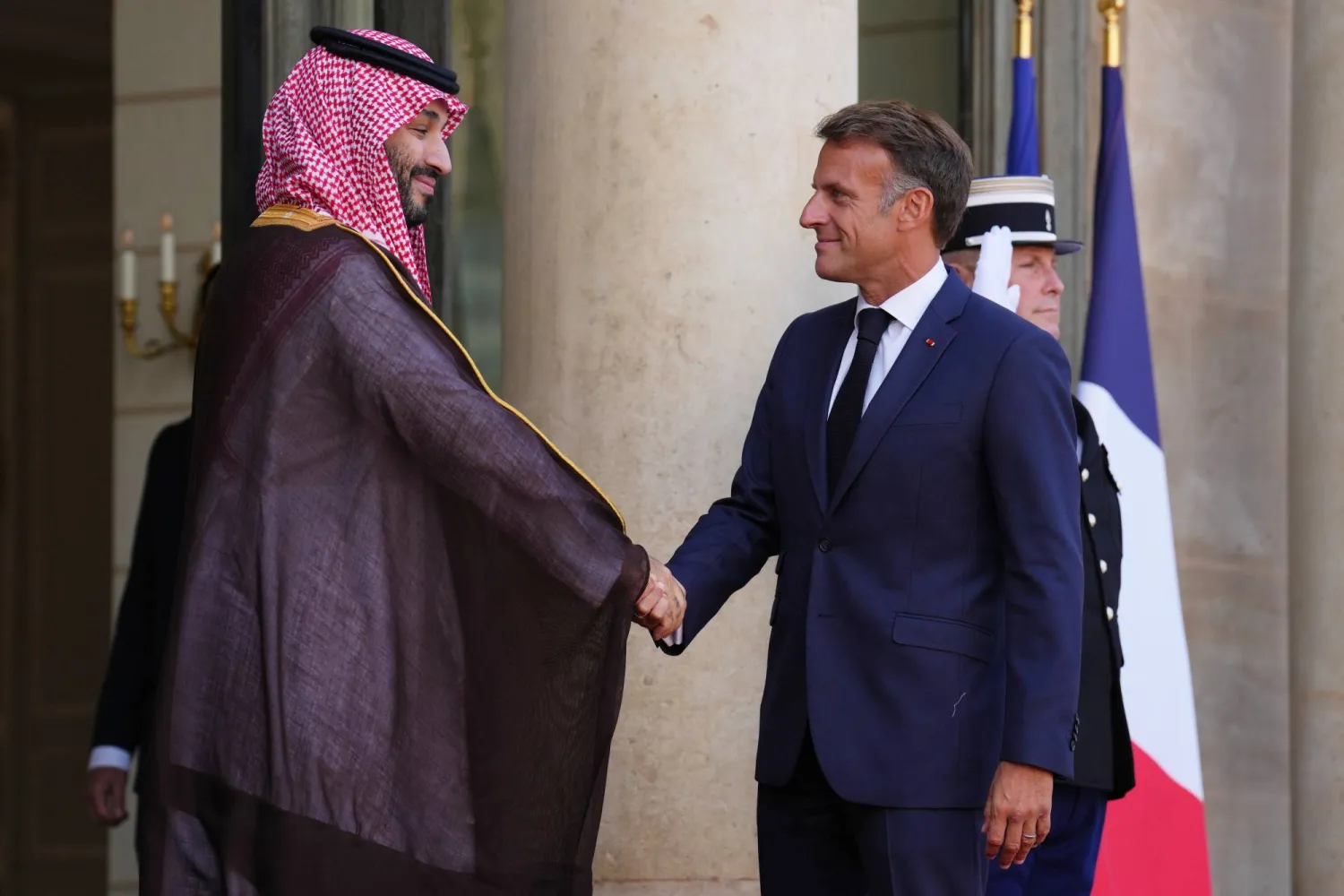
Mohammed bin Salman and Macron: Continuous Consultation
Political and military analyst Abdul Latif Al-Mulhim believes that both countries are actively working to promote regional and international security, stability, and peace, while pursuing diplomatic efforts aimed at safeguarding maritime security and freedom of navigation.
According to Al-Mulhim, there are clear indications of the importance France attaches to its partnership with Saudi Arabia. He argues that Paris increasingly regards the Kingdom, given its regional role, as a “close ally that plays a key role in maintaining regional peace, security, and stability.”
As evidence, he points to what he describes as Macron’s commitment to maintaining continuous consultations with Crown Prince Mohammed bin Salman on current crises and possible solutions.
Joint Projects
Speaking to Asharq Al-Awsat, Al-Mulhim noted that Saudi Arabia and France consistently emphasize the importance of strengthening cooperation and coordination in defense-related fields to serve their mutual interests.
He added that both countries’ efforts to develop their defense industries and technologies could pave the way for joint defense projects or military cooperation that would contribute to regional and global security and stability.
He further highlighted ongoing efforts to enhance security coordination in areas such as combating crime in all its forms, counterterrorism and counter-extremism efforts, disrupting terrorist financing, and strengthening cybersecurity.
Political analyst Nidal Al-Sabaa believes there are significant opportunities for political and security cooperation between the two countries, particularly at this critical moment for the Middle East, where numerous crises remain unresolved.
He pointed to the US-Israeli confrontation with Iran, Iranian threats to the economic interests of Gulf and Arab states, the closure of the Strait of Hormuz, the security challenges in the Bab al-Mandab Strait, the ongoing Gaza crisis resulting from the policies of Israel’s current government, uncertainty surrounding Lebanon amid continued Israeli threats, and the wider instability affecting the region.
Cooperation on Syria: A Model of Strategic Partnership
Al-Sabaa views recent developments in Syria as a positive example of Saudi-French cooperation in support of the Syrian government. He cited the international conference on implementing the two-state solution, co-chaired by the Saudi Crown Prince and Macron, as another illustration of effective bilateral coordination.
He also identified a new potential avenue for cooperation involving coordination between the European Union’s maritime mission Aspides and the multinational defense coalition launched by Saudi Arabia with the participation of several regional and international partners.
Opportunities to Secure Maritime Navigation
Aspides is a naval operation established by the European Union in February 2024 as a defensive response to the Red Sea crisis following repeated Houthi attacks on international shipping that began in October 2023.
The mission was launched with a mandate to protect commercial vessels and ensure freedom of navigation. It operates along major shipping lanes around the Bab al-Mandab Strait while monitoring maritime security in the Strait of Hormuz, as well as international waters in the Red Sea, the Gulf of Aden, the Arabian Sea, the Gulf of Oman, and the Arabian Gulf.
French Interest in Saudi Defense Initiatives
French sources told Asharq Al-Awsat on Sunday that Paris attaches great importance to the visit of the Saudi Crown, given the Kingdom’s influential position at the Gulf, Arab, regional, and Islamic levels.
The sources also highlighted France’s interest in Saudi-led initiatives, including the Makkah Agreement, which resulted in the formation of a defense alliance bringing together Saudi Arabia, Pakistan, and Türkiye. According to the sources, the agreement has been designed to remain open to additional members in the future.
They also pointed to another Saudi initiative: the creation of a multinational maritime defense coalition aimed at ensuring safe navigation through the Bab al-Mandab Strait and the Red Sea.