Riyadh and Paris Reach Understanding on Regional Issues, Agree to Strengthen Strategic Partnership

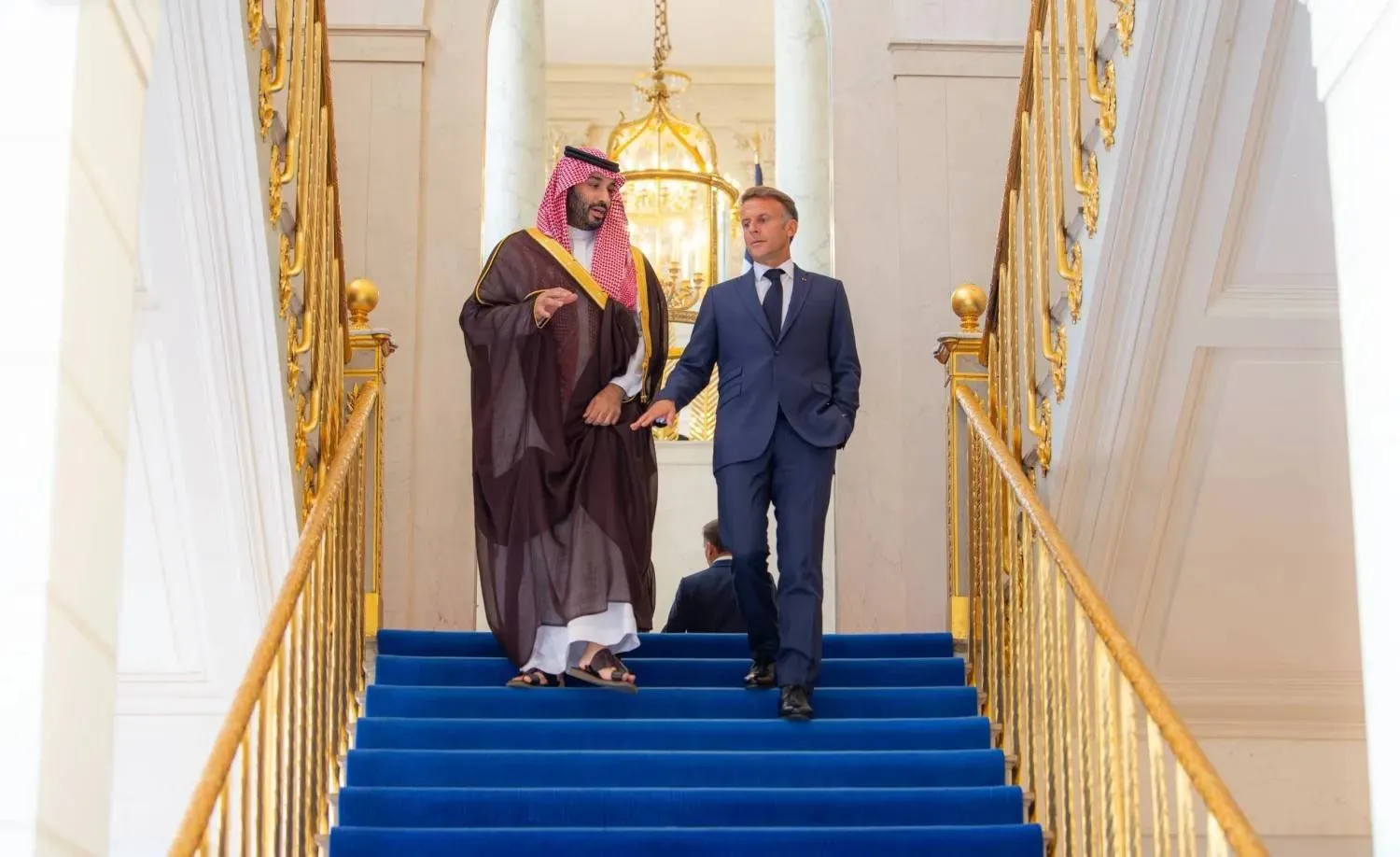
Prince Mohammed bin Salman bin Abdulaziz Al Saud, Saudi Crown Prince and Prime Minister, and French President Emmanuel Macron are seen at the Elysee Palace in Paris on Monday. SPA
TT

Riyadh and Paris Reach Understanding on Regional Issues, Agree to Strengthen Strategic Partnership

Prince Mohammed bin Salman bin Abdulaziz Al Saud, Saudi Crown Prince and Prime Minister, and French President Emmanuel Macron are seen at the Elysee Palace in Paris on Monday. SPA

The reception that French President Emmanuel Macron prepared for Prince Mohammed bin Salman bin Abdulaziz Al Saud, Saudi Crown Prince and Prime Minister, on Monday strongly reflects the warmth of the relationship between the two countries.

That relationship began in 2017 with the French president's first official visit to Saudi Arabia. Since then, meetings between the two sides have been held regularly.

On Monday, Macron welcomed the Crown Prince at the Elysee Palace in Paris, as part of the Saudi leader's state visit to France.

Earlier, the Crown Prince visited Les Invalides where he was received by French Prime Minister Sebastien Lecornu in an official welcoming ceremony.

Escorted by cavalry from the French Republican Guard and a motorcycle motorcade, the Crown Prince was greeted with the playing of the Saudi Royal Anthem and the French National Anthem, before inspecting the guard of honor as the unit commander presented the participating military formations.
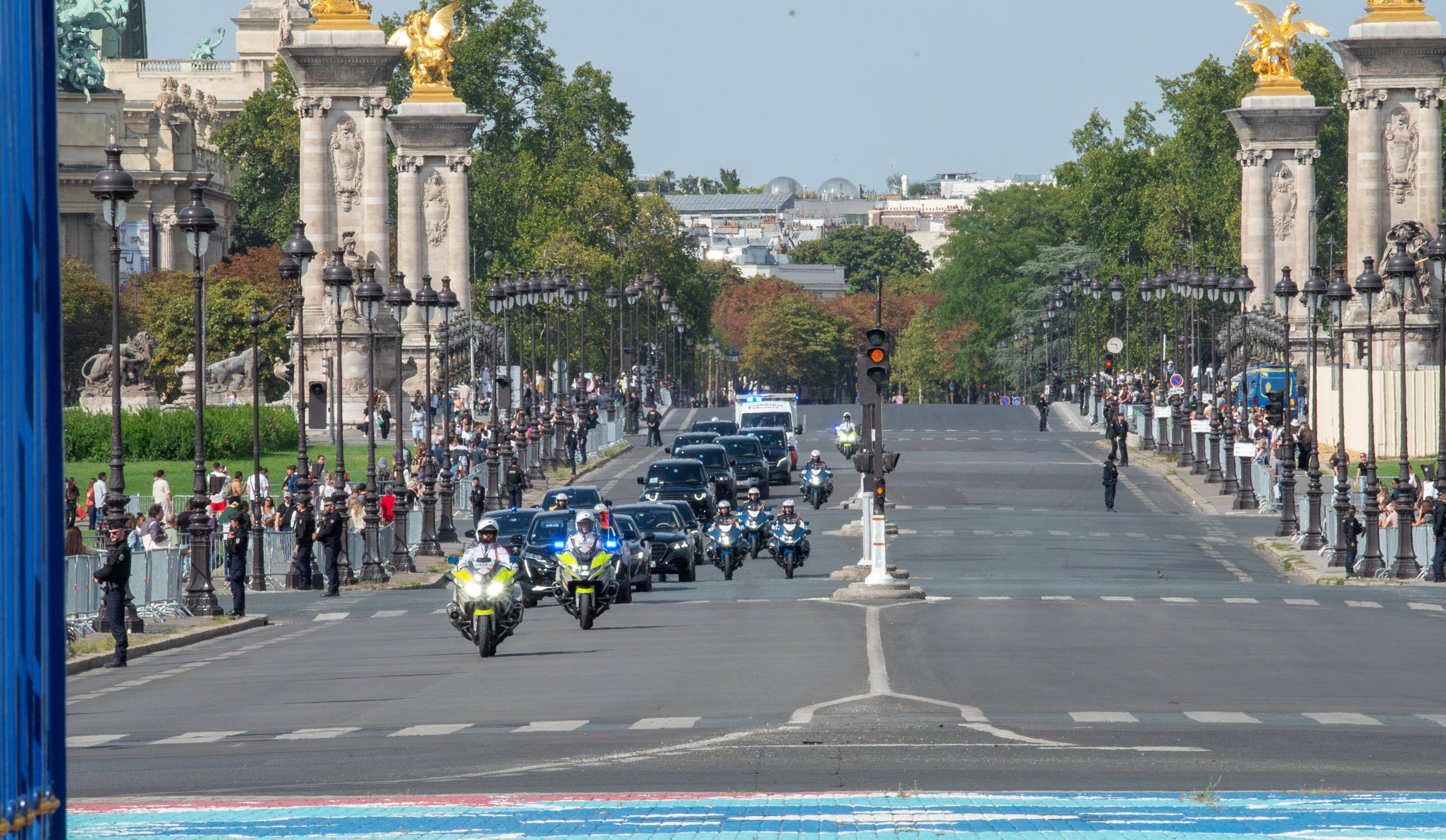
Saudi Arabia's Crown Prince Mohammed bin Salman's motorcade during his two-day official visit to France, at the Hotel des Invalides in Paris, France, August 24, 2026. Bandar Algaloud/Courtesy of Saudi Royal Court/Handout via REUTERS

Agreement on Regional Issues

The visit comes at a highly volatile moment for the region, whether regarding Iran, about which sources at the French presidency say that “no one has any clear vision of how to find a way out of it,” or the situations in Gaza, the West Bank, Lebanon, Syria, the Red Sea, and Yemen.

All of these crises carry significant risks not only for the region but also for the world as a whole, particularly given the severe disruption to shipping through the Strait of Hormuz and the threats affecting the Bab el-Mandeb Strait and the Red Sea.

A joint statement was issued at the conclusion of the Crown Prince’s visit to Paris. The two leaders affirmed “their mutual aspiration to strengthen the existing strategic partnership between the two countries.”

They also stressed “the historic depth of the relationship between France and Saudi Arabia on the occasion of the centenary of the establishment of political relations between the two countries.”

“They reaffirmed their shared ambition that the strategic partnership between Saudi Arabia and France ... gave a new momentum to the friendship, trust, and mutual respect between the two countries, and respond to their common interests and to the challenges facing the world and the Middle East region.”

The two leaders presided over the first meeting of the French-Saudi Strategic Partnership Council, launching new initiatives.

Regional crises

The Crown Prince and Macron “expressed their shared vision for stability in the Middle East, based on the sovereignty of states, respect for international law, and the pursuit of political and diplomatic solutions to conflicts and security threats.”

On Iran, “they emphasized the necessity of a negotiated solution to avoid further escalation and ensure regional security. They reaffirmed their long-standing commitment to a diplomatic solution ensuring the peaceful nature of Iran’s nuclear program.”

According to the statement, they also urged Iran to resume full cooperation with the International Atomic Energy Agency.

“The two sides condemned the attacks on ships in the Strait of Hormuz and threats to the security of waterways, and they stressed the importance of restoring navigation in the Strait of Hormuz to its normal state as it was before February 28, 2026, in terms of freedom of navigation, regular shipping traffic, and the absence of any direct or indirect tolls, restrictions on passage, in accordance with international law.”
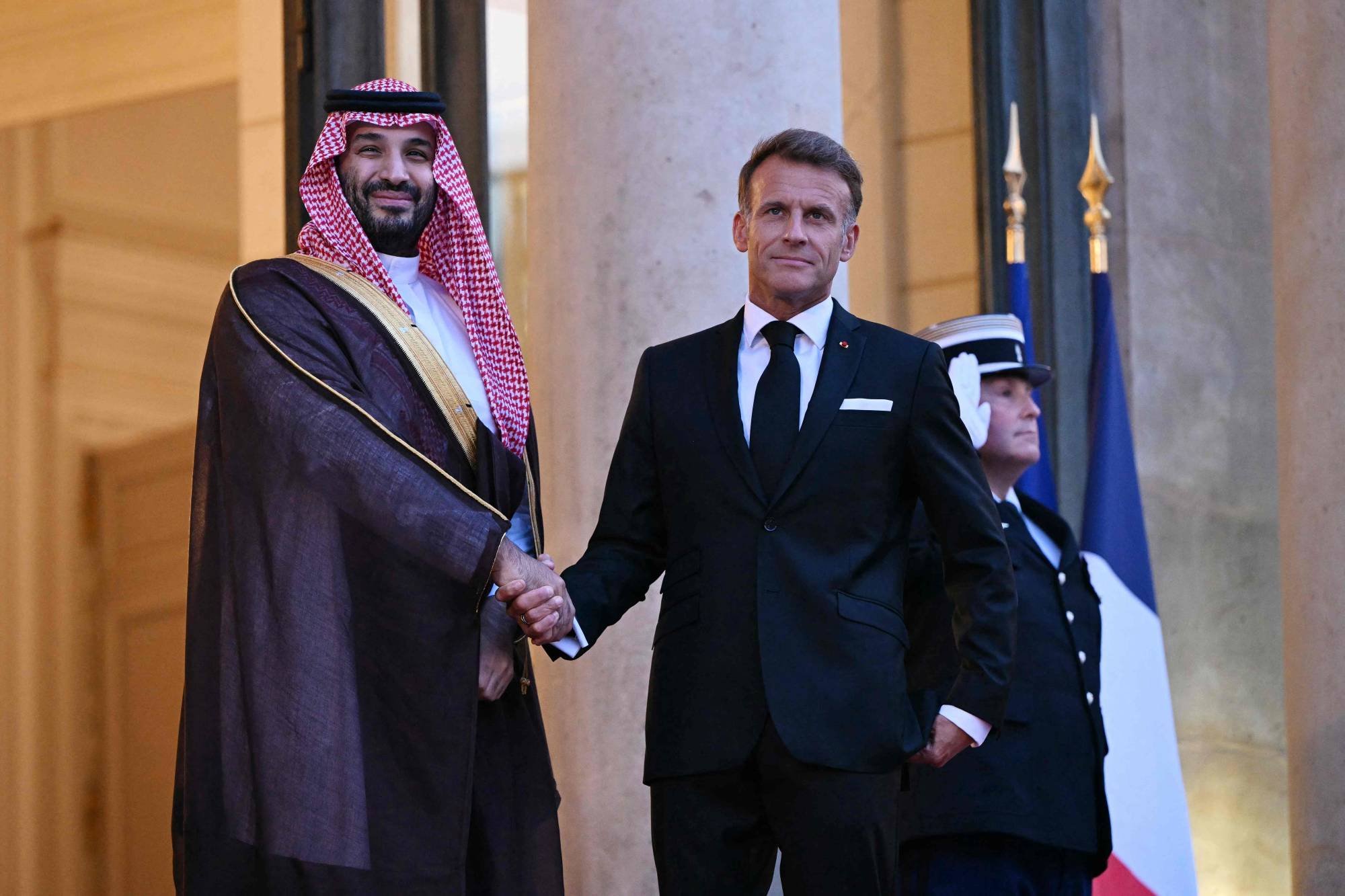
France's President Emmanuel Macron (R) welcomes Saudi Arabia's Crown Prince Mohammed bin Salman as he arrives for a State dinner in his honor at the Elysee Palace in Paris on August 24, 2026. (Photo by LOU BENOIST / AFP)

On Palestinian affairs, the Saudi Crown Prince and Macron welcomed the announcement of an agreement on the disarmament of Hamas in the Gaza Strip and called on its implementation.

They stressed “the importance of preserving the unity of the Palestinian territories and rejected any attempt to undermine the Palestinian people's right to establish their independent state within the 1967 borders. Saudi Arabia and France called for an end to the Israeli settlement policy and settlers’ violence that threaten the two-state solution and reiterated their commitments to the full implementation of the New York Declaration.”

On the war in Lebanon, Prince Mohammed and Macron “agreed to intensify their efforts towards a final resolution of the conflict in Lebanon, which must involve strengthening the Lebanese state and its institutions, as well as preserving Lebanon's sovereignty and territorial integrity.”

They also lauded measures taken by Lebanese President Joseph Aoun, and the government, headed by Prime Minister Nawaf Salam, in rebuilding state institutions and extending the authority of the state.

“They also reaffirmed their commitment to supporting the Lebanese Armed Forces and security forces, with a view to enabling them to fully fulfil their national responsibilities. They stressed the importance of the full implementation of UN Security Council Resolution 1701 and the need for the disarmament of all non-state armed groups to be successfully completed. They also stressed the need for Israel to withdraw from all Lebanese territory,” the joint statement said.

On Sudan, both sides emphasized the importance of halting foreign interference in the country, and stressed their commitment to the unity, stability, and economic recovery of Syria.

They specifically welcomed the establishment of a Saudi-Syrian-French business council.

Consolidating defense cooperation

As expected, Riyadh and Paris adopted a declaration strengthening their defense cooperation, including in the field of armaments and training.

In the energy sector, “both sides emphasized the importance of stability in global energy markets, security of supply, and the protection of maritime routes, while commending the Kingdom's role and efforts in enhancing the resilience of supply chains and the sustainability of energy sources.”

“They also stressed the need to strengthen strategic cooperation in oil and petrochemicals, sustainable electricity generation (including energy efficiency, renewable energy, energy storage, peaceful nuclear energy, clean hydrogen, and emission reduction and removal technologies), and capacity building in these areas.”

As France has become a leading investor in Saudi Arabia, particularly in sectors such as energy, water management, transportation, and logistics, the two countries have agreed to strengthen their economic ties and cross-investments.

They welcomed Qiddiya Investment Company’s ambition to develop a major mixed-use, multi-park destination in Cergy-Pontoise, in the Île-de-France region, bringing together entertainment, leisure, hospitality, culture and sport within an integrated new destination.

“Current ambitions include up to three major entertainment anchors, hotels and complementary leisure experiences, for a total amount of around €6 billion over the development lifecycle,” said the statement.

“As a symbol of the strength of this partnership, Saudi Arabia and France reaffirmed the importance of their exceptional cooperation on AlUla, within the framework of Saudi Vision 2030, in particular in the fields of archaeology, heritage, and culture,” it said.

“In this regard, they decided to extend the Saudi-French partnership on AlUla until 2035 and work on an evolved framework that reflects the maturity of cooperation between the two countries and builds on the opportunities AlUla offers as a major cultural and heritage destination of the 21st century,” the joint statement added.


Arab Coalition Intercepts 3 Ballistic Missiles, UAV

Official Spokesperson for the Coalition to Restore Legitimacy in Yemen Major General Turki Al-Malki
TT

Arab Coalition Intercepts 3 Ballistic Missiles, UAV

Official Spokesperson for the Coalition to Restore Legitimacy in Yemen Major General Turki Al-Malki

Official Spokesperson for the Coalition to Restore Legitimacy in Yemen Major General Turki Al-Malki said on Saturday that air defenses intercepted and destroyed three ballistic missiles launched by the terrorist Houthi militia toward Riyadh.

Al-Malki, said in a separate statement, that a UAV launched by the Houthis toward the southern region was also intercepted and destroyed.


Oman Marks National Day Amid Economic Diversification Push, Diplomatic Efforts to Ease Tensions

Sultan Haitham bin Tariq attends a military parade marking Oman's National Day (Oman News Agency)
TT

Oman Marks National Day Amid Economic Diversification Push, Diplomatic Efforts to Ease Tensions

Sultan Haitham bin Tariq attends a military parade marking Oman's National Day (Oman News Agency)

Oman marked its National Day on Friday, Nov. 20, facing two pressing challenges: weaning its economy off oil and gas and preserving its diplomatic role in a region roiled by political and security tensions, particularly the military escalation between the United States and Iran and threats to shipping through the Strait of Hormuz.

The occasion comes as the sultanate presses ahead with its 11th Five-Year Development Plan (2026-2030), the second phase of Oman Vision 2040, aimed at diversifying revenue, expanding the private sector's role, creating jobs and improving public services.

Figures published by the Oman News Agency point to improving public finances, but also underscore persistent challenges in boosting non-oil growth and creating jobs.

Public finances improve

Oman posted a budget surplus of about 90 million Omani rials ($234 million) in the first nine months of 2026, reversing a deficit of 433 million rials ($1.13 billion) in the same period last year.

Government revenue climbed 16% to 9.828 billion rials ($25.56 billion), while public spending stood at 9.738 billion rials ($25.33 billion).

Public debt fell by about 600 million rials ($1.56 billion) to 14.1 billion rials ($36.67 billion) by the end of September, extending the government's efforts to rein in borrowing.

According to the Oman News Agency, the public debt-to-GDP ratio dropped from 65.9% to 34.6% during the first phase of Oman Vision 2040.

In September, S&P Global Ratings affirmed Oman's BBB- credit rating with a stable outlook and raised its real economic growth forecast for 2026 to about 3.5%.

Yet stronger public finances have not loosened the economy's reliance on energy. Oil and gas accounted for roughly 73% of government revenue in the first nine months, leaving the budget exposed to swings in global markets.

GDP figures reveal a stark divide between oil and non-oil sectors.

Oman's economy expanded 5.1% in the second quarter of 2026, fueled by a 14.7% surge in oil activity. Non-oil activity, by contrast, grew just 0.7%.

The gap underscores a central challenge for policymakers: turning new investments and projects into productive industries and revenue streams independent of energy exports.

Oman is banking on manufacturing, logistics, tourism and financial services to drive that shift.

Cargo volumes rose 15% at the Port of Salalah and 52% at the Port of Sohar in the first half of the year.

The Special Economic Zone at Duqm also launched the first phase of a wind turbine manufacturing project worth more than 70 million rials ($182 million), with annual production capacity of up to 1,000 megawatts.

The Sultanate also established the Oman Global Financial Center this year in a push to attract financial institutions and investment and expand its financial services sector.

Jobs put economic transition to the test

Economists see the labor market as a crucial test of Oman's economic transformation, particularly as more young people enter the workforce.

The Ministry of Labor reported 53,525 employment opportunities by the end of September 2026, including direct hiring, workforce replacement and job-linked training, according to the Oman News Agency. That represented 89% of its annual target.

But distinguishing actual hires from training and workforce replacement programs remains essential to gauging their impact on unemployment and the sustainability of jobs.

On the social front, Oman earmarked about 614 million rials ($1.60 billion) in its 2026 budget for its social protection system, which served more than 1.5 million people by the end of 2025.

The year also saw the opening of healthcare facilities, including Al Suwaiq Referral Hospital, built at a cost of more than 75 million rials ($195 million), and Khasab Referral Hospital, alongside other service projects across the country's governorates.

Diplomacy faces a mounting test

Abroad, Muscat has stayed the course on diplomacy, keeping channels open with rival parties and seeking political solutions to regional crises.

That approach has taken on greater significance as tensions persist between Iran and the United States, fueling concerns over shipping security in the Strait of Hormuz and surrounding waterways.

Oman's ties with Gulf Cooperation Council states, coupled with its continued contacts with Tehran and Washington, have enabled it to relay messages and help bridge differences.

But its policy of avoiding escalation and pursuing diplomatic solutions faces a growing test: maintaining access to opposing sides as regional divisions widen and lasting settlements become harder to secure.

As the sultanate enters a new phase of economic development, its domestic and foreign priorities are becoming increasingly intertwined.

Regional stability directly affects trade and investment, particularly for an economy seeking a bigger role in maritime transport and logistics.

Oman's National Day therefore comes at a pivotal moment. The challenge at home is to sustain fiscal gains and translate them into broader growth and more jobs.

Abroad, Omani diplomacy is striving to help resolve one of the region's most serious military conflicts as the risk of further escalation grows.


Coalition Carries out Sophisticated Operation to Neutralize Sources of Threat in Hodeidah

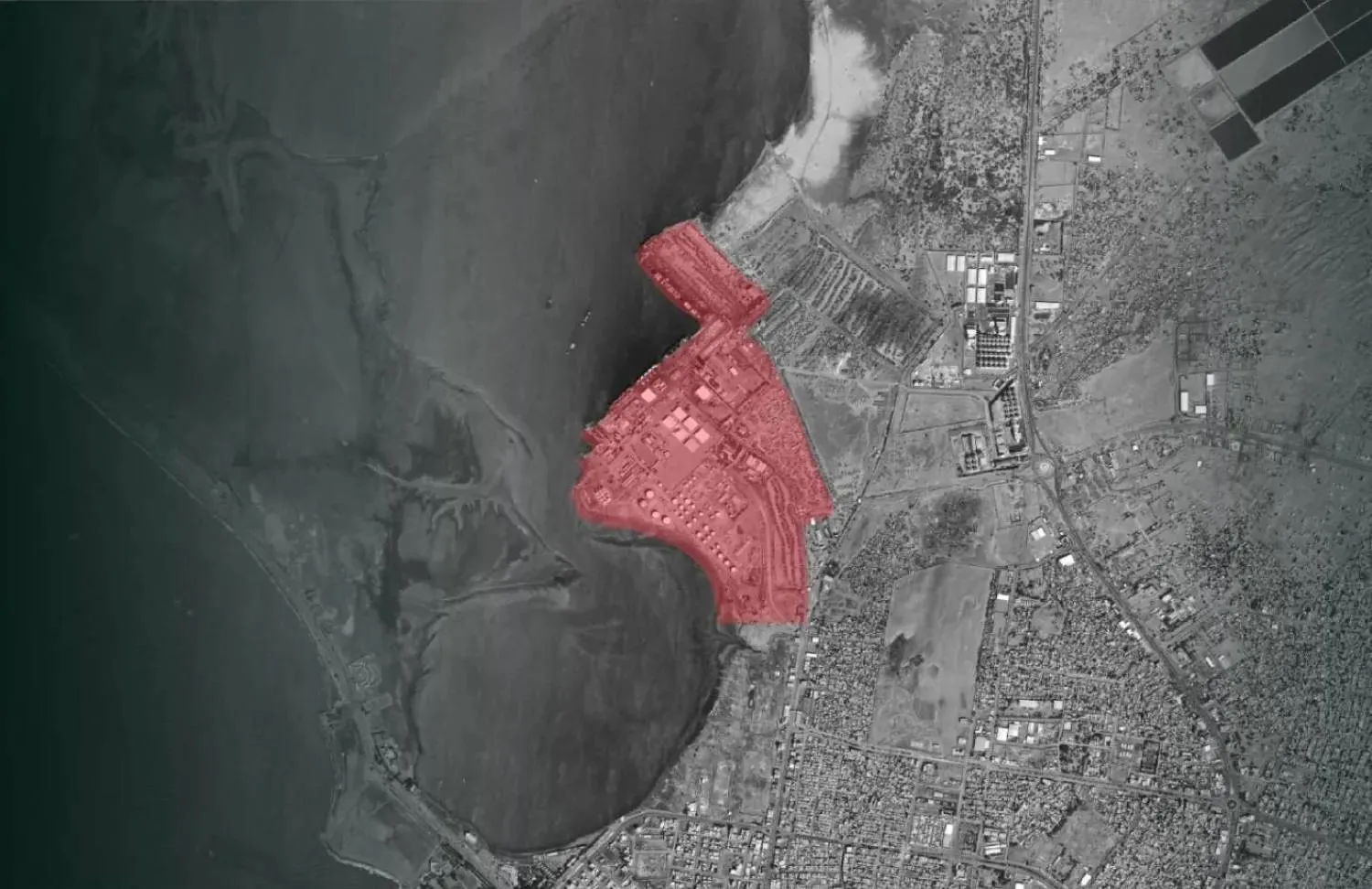
An area of Hodeidah port is highlighted indicating where the operation will be focused. (Coalition to Restore Legitimacy in Yemen)
TT

Coalition Carries out Sophisticated Operation to Neutralize Sources of Threat in Hodeidah

An area of Hodeidah port is highlighted indicating where the operation will be focused. (Coalition to Restore Legitimacy in Yemen)

The Coalition to Restore Legitimacy in Yemen announced on Friday that it carried out a sophisticated operation to neutralize sources of threat used by the terrorist Houthi militia to support its military efforts to attack civilians in Yemen and Saudi Arabia.

Official Coalition Spokesperson Major General Turki Al-Malki operational capabilities at the Yemeni port of Hodeidah, which facilitated the smuggling and transport of weapons and ballistic missiles, were targeted.

An operation was underway to destroy military targets and ballistic capabilities in the governorates of Sanaa, Saada, and Taiz, he added.

A military operation was carried out in Sanaa at dawn on Friday, targeting ballistic missile and drone capabilities, he revealed.

Seven legitimate military targets designated for military use in support of the militia's military efforts have been destroyed, as well as six workshops used for manufacturing and assembling ballistic missile launcher structures and drones, he said.

Al-Malki added that one of the militia's primary supply depots in Sanaa was also neutralized.

The Coalition had earlier on Friday urged civilians to leave Hodeidah port ahead of the operation.

Al-Malki said a ballistic missile and four drones fired by the Houthis towards Saudi Arabia’s Southern Region and a drone launched at the Riyadh Region were destroyed.