Oil on Track for Weekly Loss Even as Iran Tensions Simmer

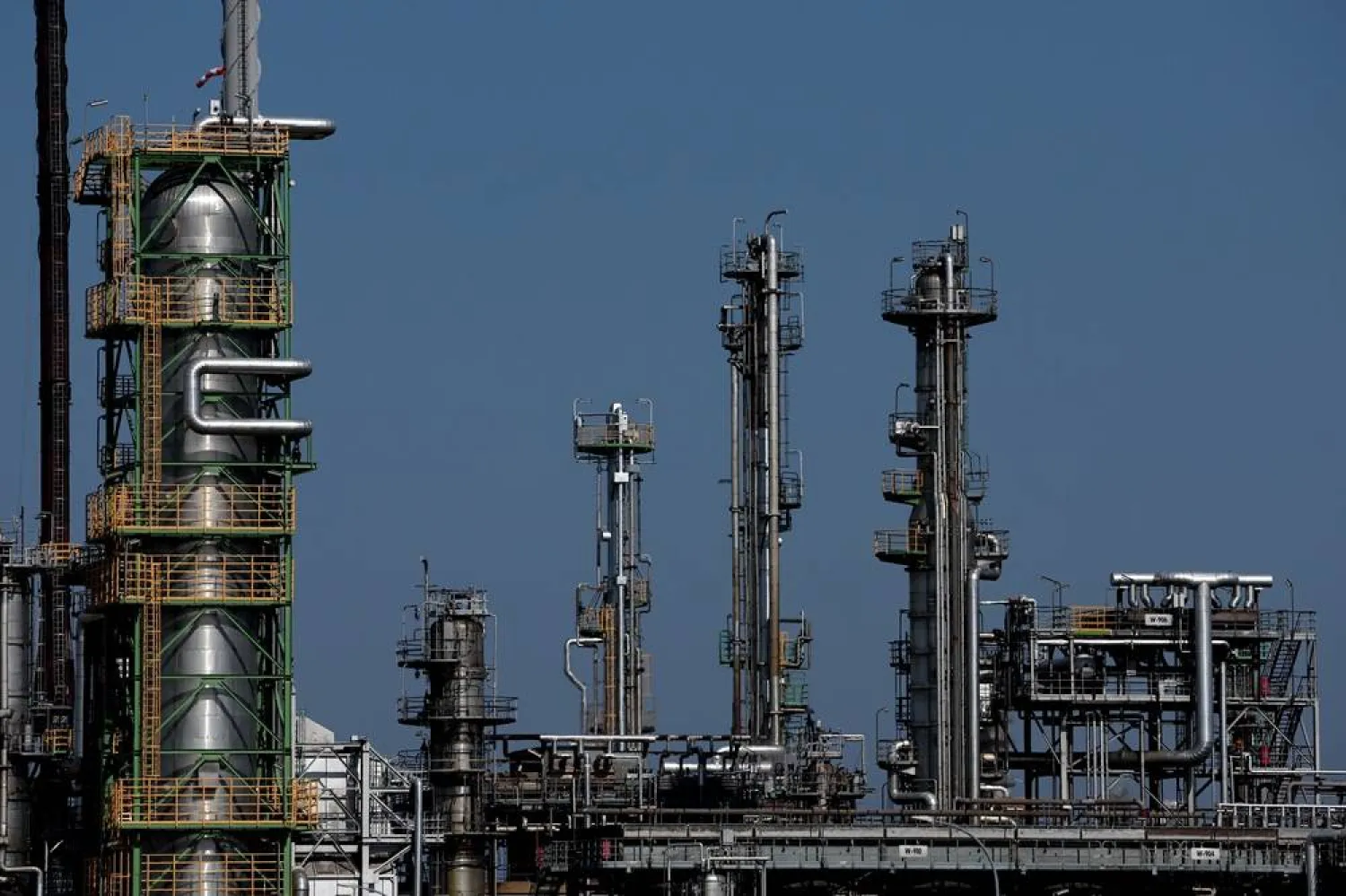
Crude oil processing facilities at the PCK refinery in Schwedt, Germany, 26 August 2026. (EPA)
TT

Oil on Track for Weekly Loss Even as Iran Tensions Simmer

Crude oil processing facilities at the PCK refinery in Schwedt, Germany, 26 August 2026. (EPA)

Oil prices fell on Friday and are on track to snap a two-week winning streak, despite settling higher in the previous session following a report that US President Donald Trump is not interested in returning to previous deal terms with Iran.

Brent crude futures were down 60 cents, or 0.67%, to $89.10 a barrel at 0636 GMT. West Texas Intermediate crude futures fell 64 cents, or 0.77%, to $82.89.

Both benchmarks were poised to end the week lower, with Brent down 5.3% and ‌WTI falling ‌4.3%.

"Despite diplomatic efforts hitting a roadblock, there ‌are growing ⁠signs of additional ⁠oil flowing through the Strait of Hormuz," ING analysts said in a note. "As the conflict persists, producers are adapting to the new realities and becoming increasingly comfortable navigating the strait."

Goldman Sachs on Thursday estimated recent total Gulf exports at 15 million to 16 million barrels per day (bpd), 7 million to ⁠8 million bpd below pre-war levels but ‌5 million to 6 million above ‌the lowest point in March.

Citing people familiar with the matter, ‌the Wall Street Journal report said the Trump administration has ‌repeatedly told mediators it has no interest in reviving the June memorandum of understanding, complicating diplomatic efforts to restart talks.

Earlier on Thursday, Washington said it was not in talks with Iran despite diplomatic ‌efforts by other countries to re-engage the two sides.

On Monday, the US announced what it ⁠called ⁠the "toughest sanctions in history" on Iran. Tehran said the sanctions were an "inhumane and hostile act" that had lost their effectiveness.

Elsewhere, geopolitical tensions escalated after Moscow warned it could strike British military targets inside and outside Ukraine in response to Kyiv's attacks on Russian territory using British-supplied long-range cruise missiles.

Trump, however, said Russian President Vladimir Putin will not attack a North Atlantic Treaty Organization (NATO) country, and he downplayed media reports that CIA Director John Ratcliffe this week had warned Russian officials against such an attack. Britain is one of the founding members of NATO.


S&P Affirms China’s ‘A+’ Rating, Sees Growth Above 4% as Fiscal Support Continues

 People interact with a humanoid robot outside the 2nd World Humanoid Robot Games at the National Speed Skating Oval in Beijing on August 26, 2026. (AFP)
People interact with a humanoid robot outside the 2nd World Humanoid Robot Games at the National Speed Skating Oval in Beijing on August 26, 2026. (AFP)
TT

S&P Affirms China’s ‘A+’ Rating, Sees Growth Above 4% as Fiscal Support Continues

 People interact with a humanoid robot outside the 2nd World Humanoid Robot Games at the National Speed Skating Oval in Beijing on August 26, 2026. (AFP)
People interact with a humanoid robot outside the 2nd World Humanoid Robot Games at the National Speed Skating Oval in Beijing on August 26, 2026. (AFP)

S&P affirmed China's sovereign credit rating at "A+" on Friday, citing its expectation that the country's economy will likely continue to grow by 4% or more over the next one to two years.

S&P said the outlook on the ‌rating remained "stable", reflecting ‌the agency's view that ‌China ⁠will provide larger fiscal ⁠support to keep the economy growing.

China's finance ministry said on Friday that it welcomed S&P's decision to affirm China's ratings and outlook and vowed to continue ⁠to implement more proactive ‌and effective macroeconomic ‌policies.

China's "strong progress" in strengthening supply chains, technological ‌capabilities and manufacturing prowess has ‌allowed its economy to remain resilient in the face of global uncertainties, including trade tensions with the US and ‌the Iran war, S&P said.

However, the ratings agency flagged ⁠weakness ⁠in domestic demand, citing a prolonged property-sector downturn and subdued consumer spending.

Separately, ratings agency Fitch warned earlier this week that China risks slipping back into deflation without a more pronounced recovery in domestic demand, despite signs of improving price pressures earlier this year.


Most Asian Stocks Advance as Attention Turns to Warsh Speech

Kevin Warsh's speech at Jackson Hole will be closely followed by investors hoping for some clues on the bank's rate plans. Brendan SMIALOWSKI / AFP/File
TT

Most Asian Stocks Advance as Attention Turns to Warsh Speech

Kevin Warsh's speech at Jackson Hole will be closely followed by investors hoping for some clues on the bank's rate plans. Brendan SMIALOWSKI / AFP/File

Asian stocks mostly rose Friday ahead of a closely watched speech by Federal Reserve boss Kevin Warsh that investors will be parsing for clues about the outlook for interest rates amid elevated inflation and no sign of an end to the Middle East crisis.

With the euphoria following Nvidia's blistering earnings report petering out, the attention is back on the economy as debate surrounds if or when the US central bank will tighten monetary policy, said AFP.

Last month's Fed meeting saw policymakers keep borrowing costs on hold but with three of them dissenting in favor of a hike, and while the latest figures showed inflation easing slightly it remains well above the two percent target.

Worries that price rises will remain elevated for some time -- fueled largely by a spike in energy costs caused by the Iran war -- have put upward pressure on long-term Treasury yields, making government borrowing increasingly expensive.

Traders are hoping Warsh's speech at the annual meeting of central bankers and economic leaders at Jackson Hole, Wyoming, will give them an insight into decision-makers' thinking.

However, his last major public appearance after the July meeting was widely panned as giving an ambiguous message, and analysts warn that his refusal to give forward guidance will likely mean investors are left disappointed.

Stephen Innes at Quintex Intel said the address -- Warsh's first since taking the helm at the Fed -- was "the most consequential central bank speech left this year", and comes almost three weeks before the next policy announcement.

"Recent data have reduced the immediate need for tighter policy, giving Warsh room to re-establish the Fed's inflation-fighting message without signaling imminent action," he wrote.

"The speech arrives against a difficult policy backdrop. Inflation remains above target for a sixth consecutive year, while Fed officials have begun debating whether tighter policy may still be required."

Asian equity markets were broadly higher in early trade, with tech firms struggling to extend Thursday's rally that came on the back of Nvidia's profit blowout and bumper forecast, which soothed worries over the AI boom.

Tokyo, Hong Kong, Shanghai, Sydney, Singapore, Jakarta and Taipei all rose, though Seoul retreated along with Wellington and Manila.

Wall Street had provided a positive lead, with all three main indexes rising, though the gains were based entirely on the tech sector, which was the only one of 11 to advance.

Oil prices edged down but remain in danger of spiking further as investors await a breakthrough in efforts to reopen the Strait of Hormuz to tanker and cargo traffic.

US officials have vowed further economic pressure to make Iran open the waterway -- through which about a fifth of world oil passes -- after six months of war, but attempts at a diplomatic solution remain elusive.


Visa, Mastercard Launch International Card Payments in Syria after US Lifts Terrorism Designation

Visa and Mastercard credit cards are seen in this illustration taken February 3, 2026. REUTERS/Dado Ruvic/Illustration
TT

Visa, Mastercard Launch International Card Payments in Syria after US Lifts Terrorism Designation

Visa and Mastercard credit cards are seen in this illustration taken February 3, 2026. REUTERS/Dado Ruvic/Illustration

Visa and Mastercard carried out their first international card transactions in Syria on Wednesday, a major step in reconnecting the country with global payment networks days after Washington removed it from its state sponsors of terrorism list.

The near-simultaneous moves by two of the world's largest payment networks offer one of the clearest signs yet of Syria's accelerating reintegration into the global financial system after decades of sanctions and isolation.

Qatar's QNB Group said it and Mastercard had completed what it described as the world's first end-to-end international card payment in Syria, while Visa said separately it had tested its first live international transaction in the country with Lebanon-based Fransabank.

Syrian President Ahmed al-Sharaa took part in the Visa test, making a card payment at a restaurant in Damascus's historic Old City, according to a video published by Syria’s state-run Syrian Response. Central Bank Governor Mohammed Safwat Raslan was seated alongside him.

The transactions came just two days after the US formally removed Syria from its list of state sponsors of terrorism.

The designation, imposed in 1979, had remained a major deterrent to international banks and investors even after Washington dismantled its broader sanctions program against the country.

Washington terminated comprehensive sanctions on Syria in December last year while retaining targeted measures against former President Bashar al-Assad and his associates, rights abusers, drug traffickers, ISIS and al-Qaeda affiliates and Iranian proxies.

But Syria's continued designation as a state sponsor of terrorism carried restrictions on financial transactions and remained a source of legal and compliance risk for banks considering doing business there. The US formally removed Syria from the list on Monday.

Syrian Foreign Minister Asaad al-Shaibani told Reuters before the removal that Damascus hoped lifting what he called the "last obstacle" would reconnect Syria with the global financial and economic system and boost investment.

"There is no longer any obstacle to investment, doing business and rebuilding economic life in Syria," he said.

Sharaa's government has made restoring access to global finance and attracting foreign investment a central part of its economic strategy since rebels led by him toppled Assad in December 2024.

STEP TOWARDS WIDER ACCEPTANCE

Visa said it planned to enable international visitors to use their cards while in Syria, and described the test as a step towards wider international card acceptance in the country.

QNB said its system now allows Syrian merchants including hotels, restaurants and government entities to accept international Mastercard credit cards through its point-of-sale terminals. It will gradually add eligible merchants as part of a phased rollout, subject to regulatory approvals.

Visa's transaction was carried out in cooperation with Fransabank Lebanon as the acquiring financial institution and Paymera, a Syrian payments technology company owned by the state's sovereign fund.