


Iran Warns US against Israeli Attack on South Lebanon Ridge Held by Hezbollah, Sources Says

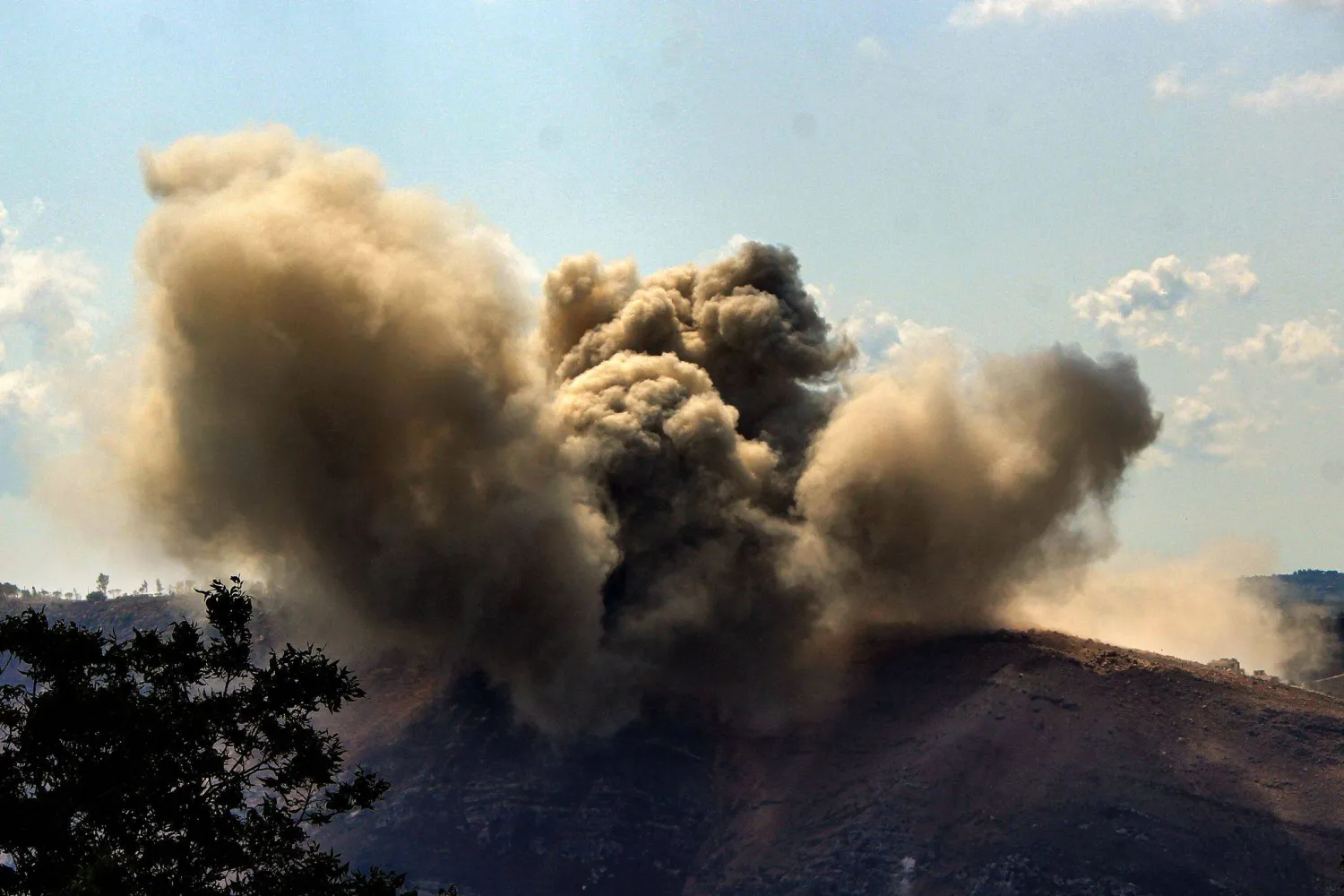
31 August 2026, Lebanon, Arnoun: Smoke billows after an Israeli detonation on Arnoun, not far from the strategic hill of Ali Taher, allegedly a strategic pro-Iranian Hezbollah post. Photo: Stringer/dpa
TT

Iran Warns US against Israeli Attack on South Lebanon Ridge Held by Hezbollah, Sources Says

31 August 2026, Lebanon, Arnoun: Smoke billows after an Israeli detonation on Arnoun, not far from the strategic hill of Ali Taher, allegedly a strategic pro-Iranian Hezbollah post. Photo: Stringer/dpa

Iran has warned the United States that it would respond forcefully to an Israeli offensive on a mountainous ridge in southern Lebanon where Iranian military personnel are holed up alongside Hezbollah fighters, three officials briefed on the message told Reuters.

The message, delivered last month, highlights Iran's continued direct involvement in the ground fighting in southern Lebanon and its readiness to retaliate against Israeli attacks there as the regional war enters its seventh month.

Hezbollah is believed to have built an underground command center and weapons stores within the Ali al-Taher ridge, which has a commanding view of southeastern Lebanon, according to Lebanese security sources, and has become one of the most contested pieces of ground in the Israel-Hezbollah war.

Hezbollah has said in public statements that it controls the hill and will confront any Israeli advances. Its officials have referred to a "facility" there, but have declined to provide details.

The Israeli military has occupied swathes of territory to Ali al-Taher's south and has identified the ridge as one of its "primary ‌operational focuses" in ‌public statements.

In its message to Washington, Tehran threatened that any full-fledged Israeli offensive on the ridge ‌would be ⁠met with a large-scale ⁠Iranian attack, said the three officials in the region, who spoke to Reuters on condition of anonymity.

Hezbollah declined to comment on whether Iranian forces were present in Ali al-Taher. In response to Reuters questions about the message, or whether the US had put pressure on Israel not to attack Ali al-Taher, a White House official said, "this is not accurate." There was no immediate comment from Iran's permanent mission in Geneva, the US Defense Department, or Oman's foreign ministry. The Israeli military declined to comment.

IRGC FORCES HOLED UP, OFFICIALS SAY

Two regional officials, briefed by Tehran, said over a dozen members of the Iranian Revolutionary Guards Corps, including at least ⁠two senior officers, were with Hezbollah fighters.

The third source, a foreign official with direct knowledge of the message, ‌said it was delivered around mid-August and that as a result of US pressure, Israel ‌had put off storming Ali al-Taher.

Contacted by Reuters, Hezbollah's media office neither confirmed nor denied Iran's message but said it was a "natural conclusion" that such a ‌warning would have been sent about the ridge.

"Iran considers any Israeli move on the ground in southern Lebanon, especially territorial expansion, a major ‌violation of the Islamabad Agreement," Hezbollah's media office said, referring to the June US-Iran memorandum of understanding that included a Lebanon ceasefire.

Iran fired missiles towards Israel in early June in retaliation for attacks on Hezbollah on the Lebanese capital's outskirts.

ISRAEL SEEKS TO BESIEGE HEZBOLLAH FIGHTERS

Despite a ceasefire announced in June, the Israeli military has said Hezbollah is still operating around the ridge and twice over the last week launched explosive drones towards Israeli troops near the ridge.

In July, it said it ‌had launched an air strike on a Hezbollah fighter near an access shaft to the underground site at Ali al-Taher and vowed not to allow Hezbollah to operate in the area or pose ⁠a threat to Israeli soldiers.

An Israeli ⁠military official, speaking on the condition of anonymity, told Reuters in June that Hezbollah fighters were stuck underground without food or water. Israeli newspaper Maariv, citing a military source, said on Thursday that the Israeli military assessed there were no IRGC forces in Ali al-Taher and that some Hezbollah fighters had died without food and water.

The third official said Israel's military was trying to smoke out Hezbollah and IRGC personnel by besieging them, shooting down attempted drone deliveries of food and water to the ridge.

"What we have seen over the past month is Israeli pressure to besiege Ali al-Taher in order to impose a reality within this facility that renders it uninhabitable. This approach, and the absence of a large-scale attack, means that it is possible a message was conveyed through several countries -- this is a natural conclusion," Hezbollah's media office told Reuters.

HEZBOLLAH THREATENS RETALIATION

A Lebanese source briefed by Hezbollah said the group's fighters can still access their positions through the ridge's northern side.

Reuters could not independently confirm the military situation at Ali al-Taher, which Israel's military has included in a self-declared security zone occupied by its troops and off-limits to Lebanese.

Despite Iran's warning, the Lebanese source and a senior Lebanese security official said an Israeli military operation to capture the ridge was still possible in the coming weeks.

Hezbollah said any large-scale attack on Ali al-Taher would mean a return to full-blown war, and could see missiles landing on northern Israeli communities.


Israeli Fire Isolates Lebanese Villages Beyond 'Yellow Line'

An Israeli army vehicle operates in East Zawtar, as seen from West Zawtar, southern Lebanon, October 1, 2026. REUTERS/Mohamed Azakir
TT

Israeli Fire Isolates Lebanese Villages Beyond 'Yellow Line'

An Israeli army vehicle operates in East Zawtar, as seen from West Zawtar, southern Lebanon, October 1, 2026. REUTERS/Mohamed Azakir

Residents of border villages in southern Lebanon face growing risks as Israeli forces continue firing at village entrances and surrounding roads, raising fears that entire communities could become effectively isolated without their access routes being formally closed or Israeli troops being stationed inside them.

The repercussions extend beyond daily travel, affecting residents' ability to reach their farmland and medical facilities amid continued Israeli military movements and aerial surveillance.

Lebanese President Joseph Aoun discussed the issue with US Secretary of State Marco Rubio during a telephone call on Thursday evening.

Last week, Israeli forces prevented residents of Kfar Shouba from reaching their fields on Thursday. Two days earlier, Israeli gunfire had swept the Marjayoun-Ebel El Saqi road, coinciding with shelling on the outskirts of Haris and Baraachit and gunfire directed toward the entrances of Mansouri.

Controlling Access Through Firepower to Prevent Residents' Return

Retired Brig. Gen. Dr. Hisham Jaber told Asharq Al-Awsat that Israel had learned from its previous military experiences and was therefore seeking a different approach.

"Israel does not want to occupy the southern villages beyond the Yellow Line and station its forces inside them this time. Instead, it seeks to occupy strategic positions overlooking those villages, allowing it to control surrounding areas from a distance while avoiding the risks its troops would face if they entered the villages," he said.

Jaber explained that Israel's current tactics rely on controlling main and secondary roads connecting the villages through firepower deployed from Israeli military positions, alongside continuous aerial surveillance using drones.

"Israeli drones constantly monitor movements, and whenever they detect activity on a road, the types of vehicles involved are examined," he said.

"Some vehicles may be targeted simply because they arouse suspicion. Motorcycles, for example, are frequently targeted, while other vehicles, such as vans, may also be at risk depending on their movements and Israeli suspicions."

Jaber warned that roads connecting border villages would become dangerous even without a direct Israeli military occupation.

Indeed, several roads have become so dangerous and isolated that they are effectively impassable, despite not being under direct occupation.

These include the Nabatieh-Marjayoun road through Khardali, where vehicles can no longer pass, as well as roads around Nabatieh al-Fawqa, Kfar Tebnit and the outskirts of Kfar Rumman.

The restrictions stem from artillery shelling, intense sweeping gunfire, and strikes carried out by artillery and drones.

On October 2, a delegation from the Deir Mimas municipality met President Joseph Aoun and requested guarantees that roads leading to the village would remain open, essential services would be maintained, and farmers would be able to reach their land for the olive harvest.

Artillery Shelling to Deter Residents from Returning

Assessing the continued Israeli shelling of southern villages, Jaber said such attacks do not necessarily signal a new military escalation each time they occur.

"Israel already maintains a continuous level of attacks and repeatedly uses artillery to strike specific areas and villages," he said.

He explained that intermittent artillery shelling of villages, including Kfar Rumman, serves a political and security objective: preventing residents from returning to their homes, stopping communities from reestablishing themselves and deterring any activity Israel might perceive as a threat to its forces.

"Israel does not need to conduct large-scale ground operations to achieve this objective. It can keep villages under pressure through occasional artillery shelling, discouraging residents from returning and making normal life difficult," he said.

Retired Brig. Gen. Said Kazah, meanwhile, told Asharq Al-Awsat that roads linking southern Lebanon's border villages, as well as areas under Israeli occupation or facing Israeli military positions, remain unsafe because of continued military movements and gunfire.

He warned that it was impossible to know the intentions of Israeli forces or the nature of the operations they might undertake.

"The danger is not limited to the roads. It also extends to residents who continue to remain in their border villages," he said.

Border Roads and Villages Remain Unsafe

Kazah explained that the presence of a foreign army occupying territory leaves roads and surrounding areas under constant threat.

"When a foreign army occupies territory, all roads and areas within or facing the occupied zone remain vulnerable because we cannot know the intentions of the occupying forces or the operations they may be planning," he said.

"As a result, the presence of civilians in southern villages remains fraught with danger."

He added that wars invariably involve collateral damage resulting from gunfire, a possibility taken into account when military operations are planned.

This, he said, helps explain the risks faced by civilians living in or near areas where military operations are taking place.

"Border roads are not entirely safe. All border areas under Israeli occupation, and even those facing them, remain exposed to danger, whether from direct military operations or bullets that may reach them during exchanges of fire," Kazah said.

"This makes both civilian movement and residence in these areas subject to constant risks."

Fears that villages could become isolated are grounded in previous incidents.

In March, Israeli shelling disrupted traffic along the Khardali road and the Marjayoun-Hasbaya route before both were reopened.

On June 4, the Lebanese Army announced the reopening of the Marjayoun-Dibbin-Ebel El Saqi road after removing Israeli earth barriers.

At the time, however, the army warned civilians against approaching the area until troop deployments were completed and checks for unexploded ordnance had been carried out.


Yemen Rejects Iran's Mediation Bid While It Continues to Arm Houthis

Al-Zouba called on the Islamic world to cut off funding and arms supplies to the Houthis (SABA)
TT

Yemen Rejects Iran's Mediation Bid While It Continues to Arm Houthis

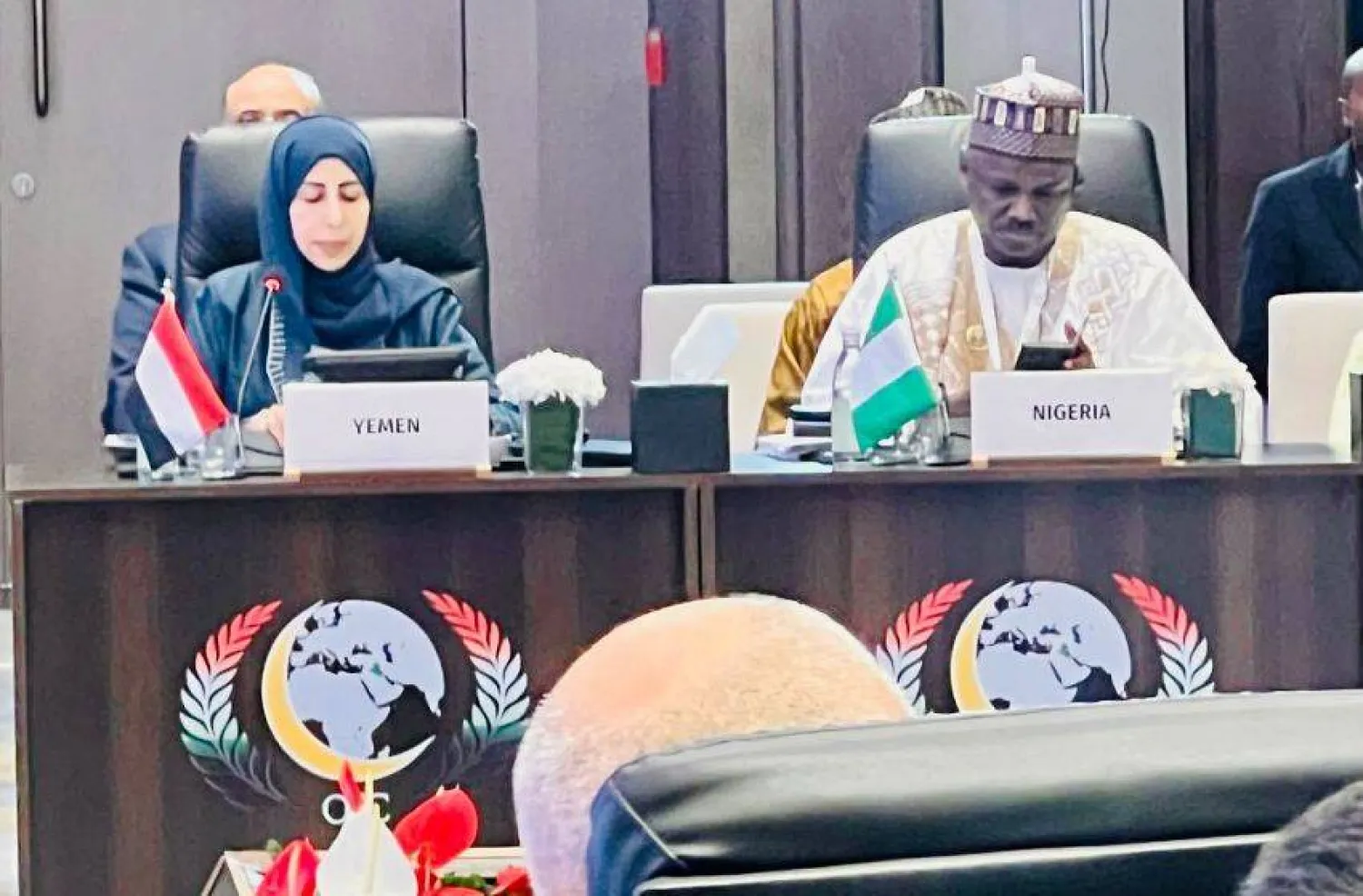
Al-Zouba called on the Islamic world to cut off funding and arms supplies to the Houthis (SABA)

The Yemeni government has rejected Iran's attempts to position itself as a mediator in the country's war, holding Tehran responsible for supporting the Houthi takeover and prolonging the conflict by supplying the group with weapons, funding, training, missiles, drones and military experts.

Foreign Minister Afrah Al-Zouba said Iran had made itself a party to the war against the Yemeni people and should end its military support for the Houthis and respect national sovereignty and the principles of good neighborliness rather than offer to mediate. Her remarks reflect the government's efforts to move beyond political accusations against Tehran and press for international action against the sources of the group's weapons.

Speaking on the sidelines of the 52nd session of the Council of Foreign Ministers of the Organization of Islamic Cooperation (OIC) in the Iraqi capital, Baghdad, Al-Zouba said Tehran could not arm one party to a conflict and then present itself as a mediator seeking to end it.

She argued that Iran's attempts to portray the war as a conflict between Yemen and Saudi Arabia ignored the reality of an armed group's takeover of the Yemeni state.

The minister accused the Iranian regime of using Yemen as a bargaining chip and channeling pressure directed at Tehran into attacks whose costs are borne by the people of the region, international trade and global markets.

She noted that the Houthis had rejected regional and international peace initiatives, including a Saudi-proposed roadmap, and exploited periods of de-escalation to regroup and strengthen their military capabilities.

Tehran's Responsibility

Al-Zouba also rejected Iran's attempts to portray the Houthis as Yemen's legitimate representatives or describe them as the "Yemeni Armed Forces."

She stressed that Tehran's dealings with the group did not grant it the legitimacy to represent the Yemeni state or give the Iranian regime authority over Yemen's sovereign decisions.

The minister also rejected efforts to characterize the campaign to restore state institutions as a conflict between Yemen and Saudi Arabia.

She said Houthi claims that the group acts according to its own interests and calculations did not absolve Iran of responsibility for arming it and enabling it to continue its attacks.

Al-Zouba cited several Iranian actions that she described as violations of Yemeni sovereignty, including the handover of Yemen's diplomatic premises in Tehran to a Houthi representative in November 2019.

She also pointed to the smuggling of an Islamic Revolutionary Guard Corps (IRGC) officer into Sanaa in October 2020 and his appointment as ambassador to the Houthis, as well as flights operated to Sanaa airport in July 2026 without the internationally recognized government's approval.

The minister accused Tehran of continuing to interfere in Yemen's affairs despite the severing of diplomatic relations in October 2015, describing those actions as violations of the rules governing relations between states, Yemeni sovereignty and the Vienna Convention on Diplomatic Relations.

Al-Zouba linked these accusations to the ongoing military escalation in Yemen, citing Houthi ballistic missile attacks on Maashiq Palace, the seat of the presidency and government in the temporary capital, Aden.

She also pointed to the continued siege of Taiz and shelling of residential neighborhoods, alongside attacks targeting Saudi Arabia and threatening international shipping.

Call for Islamic Action

Amid what she described as growing threats, the Yemeni foreign minister urged OIC member states to take a firm stance against the Houthis, designate the group a terrorist organization, cut off its funding sources and halt the flow of weapons and military expertise to its forces.

She stressed that the continuation of the war could not be separated from Iranian military and technical support, warning against allowing Yemeni territory to become a launching pad for threats to regional security.

Al-Zouba called for Islamic solidarity to move beyond declarations and translate into practical measures that protect member states and their resources while countering foreign interference that fuels conflicts.

She also urged the international community to enforce the arms embargo on the Houthis under UN Security Council Resolutions 2216 and 2624, hold the group's financiers accountable and support the Yemeni government in restoring state institutions and extending its authority throughout the country.

Al-Zouba emphasized that Yemen's security was closely tied to that of its neighbors and that confronting Iranian interference required ending support for armed proxies and safeguarding national sovereignty.

She also highlighted Saudi Arabia's continued support for Yemen through economic, humanitarian and development assistance.

On the political front, the minister said the Yemeni government, which had remained committed to pursuing peace for 12 years, would not accept a political process that served as cover to legitimize the Houthi takeover or allow weapons to remain outside state institutions.

She stressed that a just and lasting peace required respect for Yemen's sovereignty, unity and territorial integrity, the restoration of its institutions and adherence to the agreed framework for a political settlement, foremost among them UN Security Council Resolution 2216.

The remarks came as Operation Dawn of Yemen, launched by Presidential Leadership Council Chairman Rashad al-Alimi, continued its campaign to restore state institutions and extend government authority across the country's entire territory, according to the government.


US Ambassador Condemns Israeli Settler Attack on American Journalist

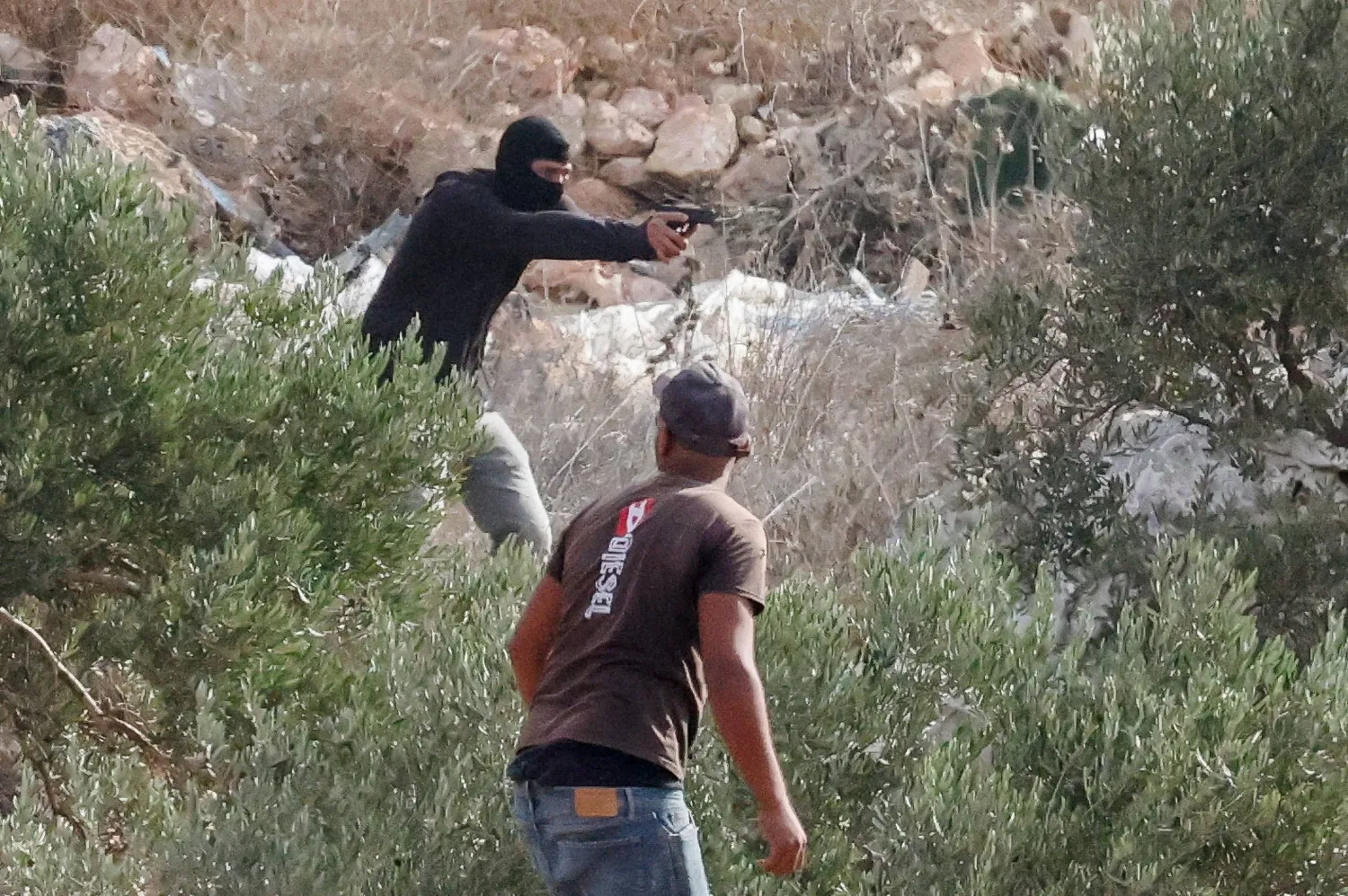
An Israeli settler points a gun amid clashes with Palestinians harvesting olives in Abu Falah near Ramallah in the Israeli-occupied West Bank, October 16, 2026. (Reuters)
TT

US Ambassador Condemns Israeli Settler Attack on American Journalist

An Israeli settler points a gun amid clashes with Palestinians harvesting olives in Abu Falah near Ramallah in the Israeli-occupied West Bank, October 16, 2026. (Reuters)

US Ambassador to Israel Mike Huckabee sharply condemned on Sunday settler violence during an olive harvest in the West Bank that injured several Palestinians and Washington Post photographer Heidi Levine as “a despicable act of terror carried out by masked cowards.”

In a post late Saturday on X, he called for “a full investigation, arrest, and prosecution to the fullest extent of the law to whoever participated in this.”

Levine was seriously injured in the attack Friday in the West Bank village of Abu Falah. Israeli police are also investigating an attack by Israeli settlers on European diplomats Saturday in another West Bank village.

Settler violence against Palestinians has soared this year and spiked further in recent weeks as Israel plans to hold elections Oct. 27.

Israeli Prime Minister Benjamin Netanyahu was ambiguous in addressing Levine’s assault, condemning “violence against anyone” but referring to the attack as “alleged” and saying its circumstances remain unclear.

Huckabee said Levine’s assault was “vicious” and “dishonorable,” and noted that she was clearly identified as a journalist when she was attacked.

Levine, an award-winning photojournalist who has covered conflict zones around the world for more than four decades, remains hospitalized in Tel Aviv as she recovers from hand surgery, broken ribs and other injuries she sustained in the attack.

She said she was forced to the ground and beaten for more than 10 minutes by the settlers, who also stole her camera, passport and phone.

The Washington Post reiterated its call for a full and transparent investigation, though Israel rarely investigates settler violence fully. Yesh Din, an Israeli rights group, says around 94% of investigations into settler violence since 2005 have ended without an indictment, with just 3% leading to full or partial convictions.