
Houthi Changes Target Military Leaders as Government Strikes Intensify

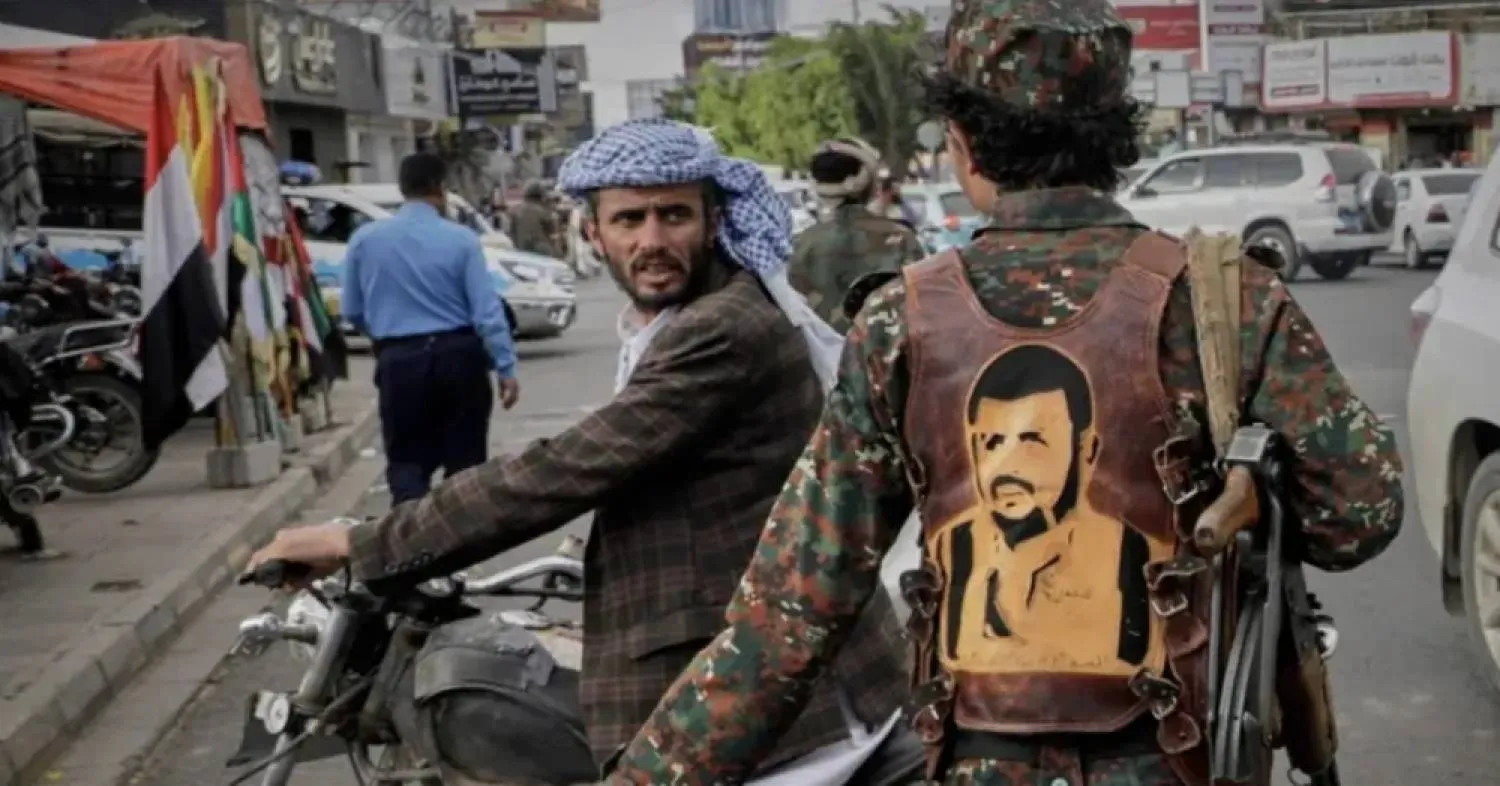
Houthi fighter in Sanaa wearing a depiction of the group’s leader on his uniform (AP).
TT

Houthi Changes Target Military Leaders as Government Strikes Intensify

Houthi fighter in Sanaa wearing a depiction of the group’s leader on his uniform (AP).

The Houthi group has made surprise changes to the leadership of two military regions, as the Yemeni armed forces step up strikes against high-value Houthi targets, according to a Yemeni military source who spoke to Asharq Al-Awsat.

According to the source, who requested anonymity due to the sensitivity of the information, the changes included the commanders of the Third and Seventh Military Regions. He said the move reflects growing doubts within the group over the loyalty and competence of some of its leaders, amid intensifying government strikes, particularly those involving drones.

“Over the past few days, the group replaced the commanders of the Third and Seventh Military Regions with two longtime leaders considered among its closest loyalists in Saada,” the source said.

Restructuring on the Ground

The source, who is close to developments on the ground, said the reinforcements the group has sent to the fronts over the past 20 days have been accompanied by a broad reshuffling of field commanders. He noted that about 90 percent of commanders of subordinate units, at the company and battalion levels, were selected from ideological leaders, most of whom are from Saada Governorate.

The source attributed these moves to a “state of confusion and suspicion” within the group, saying they are no longer limited to tribal leaders or newly recruited members but have extended to senior leadership levels, including figures belonging to the social and sectarian circles closest to the group.

He added that the group’s confidence in tribal leaders “has fallen to its lowest levels,” prompting it to replace a number of field commanders with figures more closely tied to its central leadership.
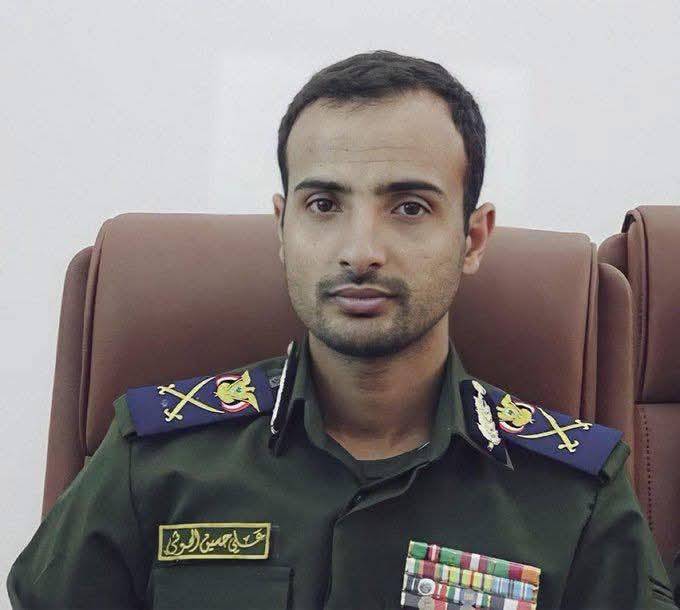
Ali Hussein Al-Houthi, son of the founder of the Houthi group (X)

Factional Rivalries

The source linked some of the internal tensions to the growing influence of Ali Hussein Al-Houthi, the son of the group’s founder, saying his rise has caused noticeable divisions among senior leaders.

He pointed to disputes that have strained relations between Ali Hussein Al-Houthi and several prominent figures, including Abdul Hakim Al-Khaiwani, head of the group’s security and intelligence service, military commander “Abu Ali Al-Hakim,” and Mohammed Ali Al-Houthi, a member of what the group calls the “Supreme Political Council.”

Yemeni sources who spoke to Asharq Al-Awsat said representatives of Iran’s Islamic Revolutionary Guard Corps are seeking to contain the growing divisions among the group’s factions and prevent them from affecting its military and security cohesion, particularly as it faces mounting military and societal pressures.

Asharq Al-Awsat published a report in August 2025 on the growing intelligence role of the group founder’s son, who had come to oversee most of the group’s agencies and institutions, including the Foreign Ministry in the Houthi-controlled government, relying on the strong support provided to him by his uncle, Abdul-Malik Al-Houthi, the group’s current leader.

Security and political sources in Houthi-controlled areas said at the time that Ali Hussein Al-Houthi’s intelligence and repressive role had expanded significantly during the first months of 2025. He had been granted the rank of major general in the security services, and a special intelligence agency had been established for him under the name “Police Intelligence Service.”

Discontent Over Dhamar Arrests

In the same context, the military source said a new security agency linked to Ali Hussein Al-Houthi recently carried out a campaign of arrests that targeted about 70 figures from Dhamar Governorate at once, sparking widespread discontent among local communities.

“The available information confirms that a large part of the arrests and moves linked to the internal disputes are no longer being carried out by the Houthi security and intelligence service, but by a new security body,” the source said, referring to the agency he said is run by Ali Hussein Al-Houthi.

These developments come as the group faces mounting military pressure on several fronts, amid indications that it is moving to tighten its security grip and reorganize its leadership structure in anticipation of any potential breaches or shifts in the course of the fighting.


Signs of a Full-Scale Yemeni Offensive Against the Houthis

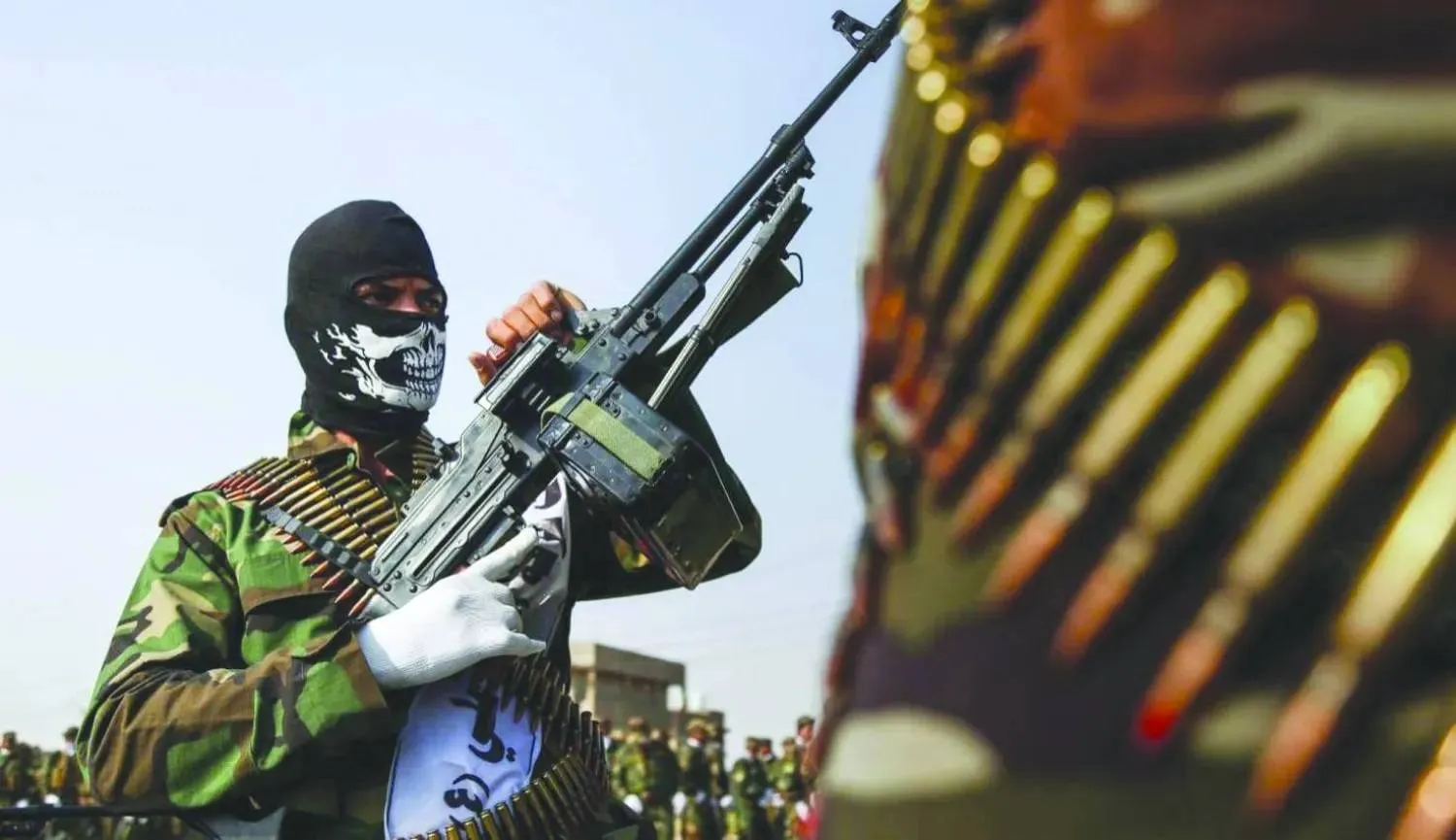
Yemeni leadership's move toward general mobilization signals a decisive battle against the Houthis (Military Media)
TT

Signs of a Full-Scale Yemeni Offensive Against the Houthis

Yemeni leadership's move toward general mobilization signals a decisive battle against the Houthis (Military Media)

Clashes between Yemen's government forces and the Iran-backed Houthi group have intensified on the fronts in Taiz and Lahj, alongside an increase in airstrikes, ground operations, and missile attacks. Meanwhile, the general mobilization measures and military readiness announced by Yemen's leadership are pointing toward a new phase that could signal the launch of a full-scale confrontation with the group.

The fronts west of Taiz and in areas bordering Lahj are witnessing ongoing battles, amid Houthi attacks, infiltration attempts, and flanking maneuvers, met by intensive Yemeni military operations involving formations from the Giants Brigades and Nation's Shield Forces, as well as tribal fighters.

The confrontation has also moved to a broader government level following the adoption of executive measures related to general mobilization and a discussion by Yemen's National Defense Council of the readiness of the armed forces, security forces, and military formations across the various fronts. The Yemeni leadership has reiterated that the objective is to restore state institutions and extend their sovereignty over the country's entire territory.

The al-Aghbari front, on the outskirts of al-Mudharaba District and Ras al-Ara in Lahj Governorate, witnessed fierce nighttime battles in the areas of Dhi Ahdah, al-Khazm, and al-Mansoura following a Houthi attack on positions held by government forces and backed by tribal fighters.

Yemeni military sources said government forces and tribal fighters repelled the attack, with clashes continuing through Wednesday and leaving casualties on both sides.

The fighting coincided with airstrikes targeting Houthi positions in the areas of al-Bazalah and al-Dhuhourah, located between al-Wazi'iyah and al-Mudharaba. The Taiz Military Axis Media Center also reported airstrikes on Houthi positions in al-Wazi'iyah District, west of the governorate.

Taiz Under Fire

In Taiz, the Houthi group has stepped up its missile and artillery attacks on residential areas and villages in the south and west of the governorate.

Local sources said the group targeted areas in al-Shamayatayn District with four ballistic missiles, while villages in Jurdad Bani Omar were also shelled with rockets and artillery, injuring two civilians and causing fear among residents.

In al-Turbah, south of the governorate, local sources said the group shelled residential neighborhoods with four ballistic missiles, causing material damage to a number of homes and properties.

Other field reports said three ballistic missiles were fired, one of which struck the building of the Mother and Child Hospital, which is still under construction in the city, causing material damage.

The Houthi shelling also reached the villages of Bani Bakari in Jabal Habashi District, while government forces continued their operations along several axes of the governorate.

At the military level, Yemeni Armed Forces spokesman Colonel Staff Officer Majed Abdullah al-Nazili said the forces had carried out 414 precise targeting operations over a 24-hour period against Houthi reinforcements and military capabilities on various fronts.

Al-Nazili said the operations employed a range of modern capabilities and resulted in the neutralization of Houthi militants and military equipment.

This came a day after government forces announced that they had carried out 356 targeting operations over a 24-hour period, saying that, according to their field estimates, the operations had killed or wounded 476 Houthi militants. This brought the total casualties announced by the government forces over four days to nearly 3,000 dead and wounded.

According to the government forces, the targets included command-and-control centers, weapons and artillery depots, and dozens of military vehicles, as the group continued sending reinforcements to the front lines.

General Mobilization Takes Effect

Alongside the developments on the battlefield, the most significant political and military development has been the move by Yemen's state institutions toward organizing a general mobilization.

The National Defense Council held a meeting chaired by Rashad al-Alimi, Chairman of the Presidential Leadership Council, and attended by political, military, and government leaders. The meeting discussed the latest national developments and the readiness of the armed forces, security forces, and military formations on the various fronts, as well as executive measures related to general mobilization.

The council affirmed that the armed forces would continue carrying out their responsibilities to protect civilians and deter sources of threat, with the ultimate goal of restoring state institutions and extending state sovereignty over the entire national territory.

It also stressed the importance of integrating military, security, economic, humanitarian, media, and diplomatic efforts under state leadership, and mobilizing the country's capabilities, resources, and potential in support of this objective.

This follows the Yemeni House of Representatives' approval of a request by the Chairman of the Presidential Leadership Council to declare a general mobilization, a step encompassing human and material resources as well as the capabilities of state institutions.

The National Defense Council approved directives and executive measures related to the general mobilization, stressing the need to move it from a broad framework to a disciplined institutional mechanism in accordance with the constitution and applicable laws.

At the same meeting, the council praised what it described as the cohesion of the armed forces, military formations, and popular resistance, as well as what it said was their ability to regain the initiative on various fronts. It also praised popular and tribal support for the forces and displaced people.

This course of action takes on particular significance as fighting continues in Taiz and Lahj. The institutional measures are coinciding with an increase in the intensity of military operations on the ground, reflecting the state's readiness to deploy its resources and capabilities more broadly in the confrontation.

The National Defense Council has not announced the start of a full-scale offensive. However, its combination of military readiness, general mobilization measures, calls for the integration of national resources, and continued operations on several fronts points to preparations for a broader confrontation.

A Threat Beyond the Front Lines

The National Defense Council linked the military developments to threats it said the Houthi group poses beyond the battlefronts. It warned of the use of mobile Iranian air-defense systems, cruise missiles, and advanced military technologies.

It said these capabilities were expanding the scope of the threat to air-navigation routes in Yemen and the region, putting civilian aircraft and humanitarian and relief flights at risk. The council called for international action to prevent the flow of weapons, technology, and military expertise to the group.

The council also welcomed regional and international positions supporting the government and state institutions, and referred to UN Security Council resolutions concerning Yemen, foremost among them Resolution 2216.

On the humanitarian front, the council affirmed the state's commitment to protecting civilians and civilian facilities and responding to the needs of displaced people and families forced from their homes by the group. It called on international organizations and donors to support the growing humanitarian response.

Alongside the military effort, Yemen's leadership has maintained a parallel political track targeting members of the group. The National Defense Council renewed its assurance that the door to "safe return" remains open to those who abandon the Houthis and stop fighting or working on their behalf.


Israeli Strikes Kill Six People in Gaza, Medics Say

 A woman attends a mass funeral at the Nuseirat refugee camp in the central Gaza Strip on September 29, 2026, following the recovery of 41 bodies from the rubble of a residential building hit in an Israeli strike at the start of the war in October 2023. (Photo by Eyad Baba / AFP)
A woman attends a mass funeral at the Nuseirat refugee camp in the central Gaza Strip on September 29, 2026, following the recovery of 41 bodies from the rubble of a residential building hit in an Israeli strike at the start of the war in October 2023. (Photo by Eyad Baba / AFP)
TT

Israeli Strikes Kill Six People in Gaza, Medics Say

 A woman attends a mass funeral at the Nuseirat refugee camp in the central Gaza Strip on September 29, 2026, following the recovery of 41 bodies from the rubble of a residential building hit in an Israeli strike at the start of the war in October 2023. (Photo by Eyad Baba / AFP)
A woman attends a mass funeral at the Nuseirat refugee camp in the central Gaza Strip on September 29, 2026, following the recovery of 41 bodies from the rubble of a residential building hit in an Israeli strike at the start of the war in October 2023. (Photo by Eyad Baba / AFP)

Israeli strikes killed at least six Palestinians in two separate attacks in the Gaza Strip on Wednesday, the territory's health officials said.

Medics said an Israeli airstrike on a vehicle killed at least four people and wounded 14 others in the Tel Al-Hawa neighborhood in Gaza City, while an earlier airstrike on an apartment elsewhere in the city killed a woman.

Later on Wednesday, an Israeli airstrike outside a mosque in Khan Younis killed one person and wounded others, medics said, taking the day's death toll to at least six.

Israel, which says Hamas has been rearming and launching attacks in violation of an October ceasefire, has stepped up strikes on the group in recent weeks.

Hamas has denied trying to carry out attacks or rebuild its arsenal and accuses Israel of undermining the Gaza peace deal.

Last year's US-brokered ceasefire calls for eventual reconstruction of the territory. But little progress has been made as negotiators have failed to agree terms for Hamas to disarm and Israel to withdraw its troops.

Israeli airstrikes have continued. At least 1,400 Palestinians have been killed in Gaza since the ceasefire, according to the territory's health officials, while Israel says four of its soldiers have been killed.

Palestinian authorities say more than 74,000 people have been killed in Israel's assault on Gaza.


Lebanese Army Says Four Wounded in Explosion, Not Israeli Strike

Smoke rises following an explosion in Mansouri, as seen from Henniye, Lebanon, September 29, 2026. REUTERS/Mohamed Azakir
TT

Lebanese Army Says Four Wounded in Explosion, Not Israeli Strike

Smoke rises following an explosion in Mansouri, as seen from Henniye, Lebanon, September 29, 2026. REUTERS/Mohamed Azakir

The Lebanese military said on Wednesday that the explosion of an unknown object wounded a soldier and three civilians, after initially saying it was an Israeli strike.

"A soldier and three civilians were wounded in the Nabatieh al-Fawqa area as a result of an explosion while the army was escorting residents to inspect their properties in the area," the army said in a statement, AFP reported.

"Following investigations and an engineering inspection, it was determined that the incident was caused by the explosion of a suspicious object," it added.

The military had initially said the soldier and civilians were wounded by an Israeli strike on a military vehicle.

Lebanon's military deployed in two of the "pilot zones" in July, but the implementation of the agreement has been stalled since then.

In his meeting with US Secretary of State Marco Rubio in Washington on Wednesday, Lebanese Prime Minister Nawaf Salam pushed for the agreement to be further implemented.

Hezbollah meanwhile refuses to lay down its weapons, and Israel still carries out strikes on Lebanon and occupies land in its south despite the agreement.