

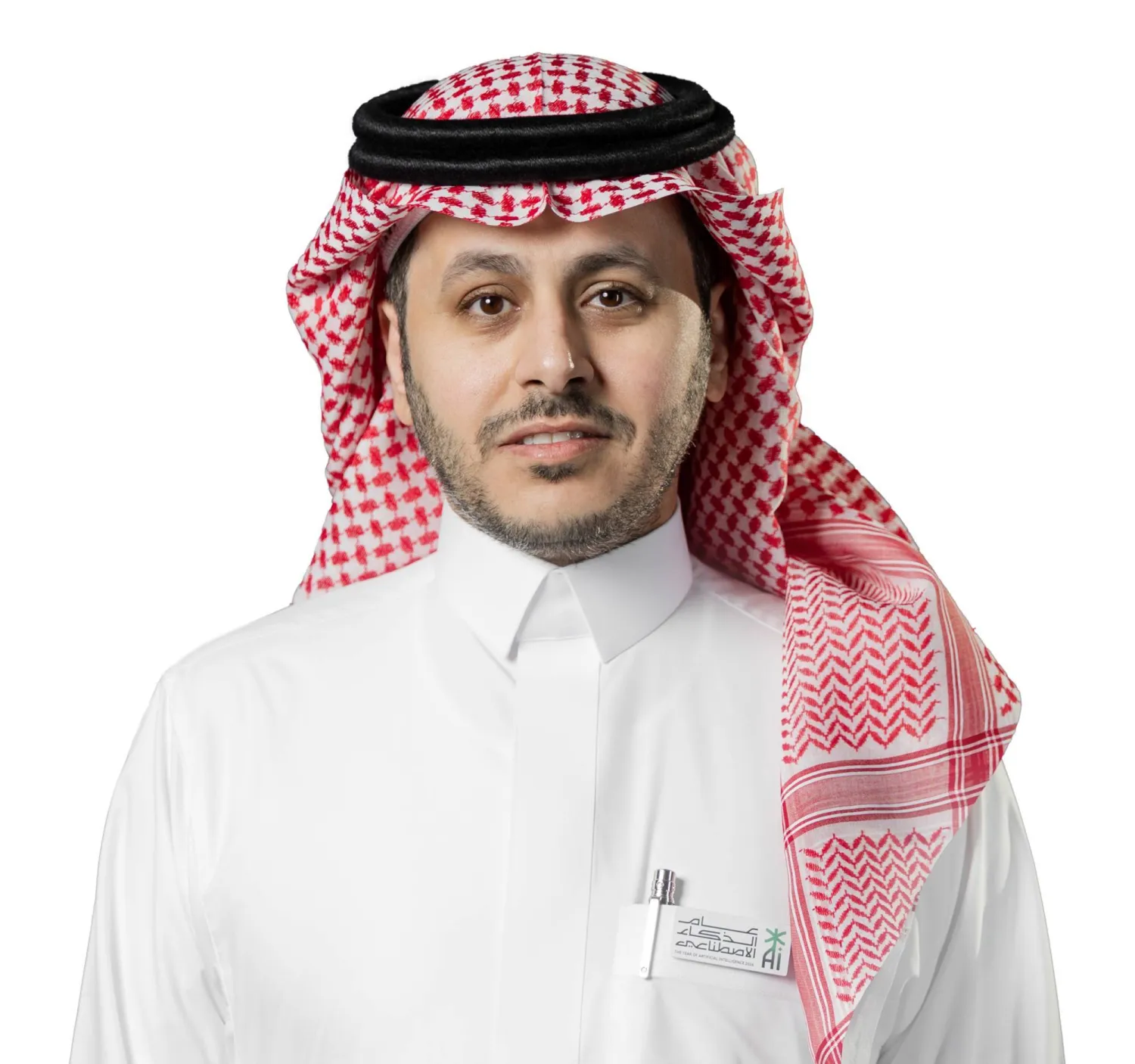

SDAIA to Asharq Al-Awsat: Saudi Arabia Moving from Adopting AI Standards to Shaping Them

 Saeed bin Mohammed Al-Shahrani, SDAIA spokesman (SDAIA)
Saeed bin Mohammed Al-Shahrani, SDAIA spokesman (SDAIA)
TT

SDAIA to Asharq Al-Awsat: Saudi Arabia Moving from Adopting AI Standards to Shaping Them

 Saeed bin Mohammed Al-Shahrani, SDAIA spokesman (SDAIA)
Saeed bin Mohammed Al-Shahrani, SDAIA spokesman (SDAIA)

AI ethics is no longer merely a matter of broad principles for regulators, particularly with the emergence of autonomous agents capable of making decisions and taking actions with minimal human intervention. In Saudi Arabia, the Saudi Data & AI Authority (SDAIA) maintains that an intelligent system does not bear legal responsibility when harm occurs; responsibility remains with the developer and the entity operating it.

Saeed bin Mohammed Al-Shahrani, SDAIA spokesman, told Asharq Al-Awsat in an exclusive interview that traditional governance frameworks are no longer sufficient to keep pace with such developments. In his view, high-risk decisions require human oversight, clear chains of responsibility and documented, operational emergency shutdown mechanisms.

His comments come ahead of the fourth UNESCO Global Forum on the Ethics of Artificial Intelligence, hosted in Riyadh from Sept. 14-17, marking the first time the international forum is being held in the Arab world. More than 100 speakers will take part in dozens of sessions and workshops, including ministers, policymakers, experts, academics, representatives of international organizations and the public and private sectors, as well as technology executives.

Global Forum Priorities

The program begins with preparatory meetings and gatherings of international networks involved in implementing UNESCO’s Recommendation on the Ethics of Artificial Intelligence, as well as a closed strategic briefing for ministerial participants and a ministerial dialogue on international cooperation.

The forum will review five years of implementing UNESCO’s recommendation, adopted in 2021, and discuss financing governance systems and building regulatory capacity. It will also see the launch of the updated Readiness Assessment Methodology, RAM 2.0, based on analysis of more than 55 readiness reports.

Sessions will address practical issues including AI use in public administration, health and humanitarian work, youth mental health, the environment, energy and water, linguistic diversity — including Arabic — as well as physical AI, robotics and human-machine relations in the workplace.

From Principles to Engineering Requirements

Five years after UNESCO adopted its AI ethics recommendation, Al-Shahrani sees the main problem as no longer a lack of principles, but the difficulty of translating them into tools developers and regulators can use and against which compliance can be measured.

He described the key gap as the “operational translation of principles”: turning concepts such as fairness, transparency and accountability into engineering requirements, standardized tests and binding regulatory controls for developers. He also pointed to disparities in governments’ ability to conduct hands-on technical assessments and monitor systems before deployment and during operation.

In Saudi Arabia, SDAIA has introduced principles and frameworks governing the relationship between people, data and AI technologies, Al-Shahrani said, covering integrity and fairness, security and privacy, humanity, social and environmental benefits, reliability and safety, transparency, as well as accountability and responsibility.

Flexible Regulation

Al-Shahrani identified building specialized governance skills and institutional capacity as a major readiness challenge, noting that technology is evolving faster than people can adapt.

He continued that SDAIA is pursuing a “flexible regulation” strategy based on continuous assessment and providing companies with self-assessment tools rather than imposing complex bureaucratic procedures.

The approach comes amid growing debate within the AI industry over whether safety and oversight measures can keep pace with the rapid development of advanced models.

From Adopting Standards to Shaping Them

SDAIA does not necessarily expect the world to reach a single detailed AI law. Al-Shahrani acknowledged the difficulty of establishing one detailed framework given differences in legal systems and economic priorities among the United States, Europe, China and others, but considers convergence on fundamental principles and safeguards “possible and necessary.”

What is needed, he argued, is not a single dominant model but common ground on issues such as safety and ethics, while narrowing the gap between technological powers and emerging markets.

Al-Shahrani told Asharq Al-Awsat that Saudi Arabia has become an active participant in shaping international AI rules and initiatives by sharing its expertise, partnerships and a vision that seeks to balance innovation and governance.

He highlighted cooperation with UNESCO and other international institutions, as well as the establishment in Riyadh of the International Center for AI Research and Ethics (ICAIRE), under UNESCO’s auspices.

The center is intended to help move AI ethics from broad principles to practical implementation by embedding them in scientific research, education, standards, innovation and public policy from the earliest stages of technology development — reflecting Saudi Arabia’s desire to help shape standards rather than merely apply rules formulated elsewhere.



OpenAI Says 3 Staffers Fired for Mishandling 'Sensitive' Info

FILE PHOTO: An OpenAI logo is displayed at Moscone Center during the Dreamforce 2026 technology summit in San Francisco, California, US, September 17, 2026. REUTERS/Carlos Barria///File Photo
TT

OpenAI Says 3 Staffers Fired for Mishandling 'Sensitive' Info

FILE PHOTO: An OpenAI logo is displayed at Moscone Center during the Dreamforce 2026 technology summit in San Francisco, California, US, September 17, 2026. REUTERS/Carlos Barria///File Photo

ChatGPT-maker OpenAI said Thursday that it has fired three researchers for allegedly mishandling "sensitive information" and violating company policies, including work that involved an external organization that evaluates artificial intelligence models.

The San Francisco-based AI lab did not confirm their identities, but at least two of the employees worked on safety and alignment, according to the Wall Street Journal and Bloomberg.

"We have parted ways with three individuals," OpenAI told AFP in a statement.

"Our investigation confirmed that these individuals mishandled sensitive information outside established company procedures, violating our policies and breaking the trust essential to our work."

The firings come amid a tense debate about AI safety and whether the technology presents an existential risk to humanity.

Last month, a 27-year-old researcher named Jacob Coxon resigned from Anthropic with a stark warning that the leading AI labs, including OpenAI, where he previously worked, were "gambling with our lives" by racing toward developing ever more powerful models.

The three researchers fired by OpenAI are Jasmine Wang, Tomek Korbak, and Mikita Balesni, according to the WSJ. The researchers did not immediately respond to AFP's request for comment.

All three have regularly posted about AI safety-related issues on X in recent weeks.

"i am at OpenAI and i think AI is >10% likely to kill all humans," Balesni posted on September 10, echoing statements made by other AI employees in recent weeks.

As speculation swirled about why employees at OpenAI and Anthropic were speaking so freely about their personal beliefs, Korbak jumped into the public discourse.

"I'm quite unhappy with much of what OpenAI does. I am very happy that Im allowed to say 'I'm quite unhappy with much of what OpenAI does,'" Korbak wrote on September 11.

"It's hard to overstate how dangerous speeding towards RSI is," Wang posted in response to Coxon's resignation, referring to recursive self-improvement, which is a technique where software is designed to continuously teach itself.

Leading US tech companies signed a voluntary pledge this week to regulate themselves on safety after meeting with President Donald Trump at the White House.

Trump called it a "morally binding" commitment to build adequate safeguards on the fast-moving technology.

Executives from Nvidia, Google, Meta, xAI, OpenAI and Anthropic signed the agreement.
Concerns about the safety of advanced AI models have escalated in recent months.

OpenAI canceled the release of a new model, Astra 6.1, because it deemed the model unreliable and found that it frequently ignored instructions.

Instead, the company launched GPT-6.1 Sol, an updated version of a different model, during its annual DevDay conference on Tuesday from San Francisco. OpenAI said Sol would cost one-fifth the price of Astra.

In July, AI agents developed by OpenAI attacked Hugging Face, an AI model and application library, during an incident where the autonomous software escaped its confined testing environment.

Since then, additional security incidents have been reported that involved models developed by OpenAI, Anthropic and Google.

On Thursday, cybersecurity firm Asymmetric Security said in a report that agents developed by OpenAI covered up their own tracks after gaining unauthorized access to government websites.

The Federal Trade Commission launched a broad investigation into artificial intelligence safety practices at Anthropic and OpenAI, the Washington Post reported on Wednesday, though the scope of the inquiry is unclear.


Effective Altruism: The Philosophy Behind Silicon Valley's AI Fears

Effective Altruism conspicuously connects a number of leaders in American tech and finance. ANDREJ IVANOV / AFP
TT

Effective Altruism: The Philosophy Behind Silicon Valley's AI Fears

Effective Altruism conspicuously connects a number of leaders in American tech and finance. ANDREJ IVANOV / AFP

Dario Amodei says he is not part of it. But the Anthropic chief's personal and professional circle is entwined with Effective Altruism (EA), a philanthropic movement that has become one of the most contested ideas in Washington and Silicon Valley.

To its proponents, EA is a rational, evidence-based way to do good. To many in the Trump administration, it fuels unfounded and exaggerated fears about artificial intelligence -- the kind of warnings Amodei has become known for.

Here are some facts about EA:

- Philosophical roots -

EA is a loosely defined movement that uses evidence and reason to work out how to do the most good with a person's money and time.

Its intellectual roots can be traced to Australian philosopher Peter Singer.

If reasonable people would agree it is morally right to ruin one's clothes to save a drowning child, he argued in 1972, they should also sacrifice greater resources and comforts to save lives in foreign lands -- because the distance should not matter.

The idea took hold among wealthy donors who felt a moral obligation to give, but wanted their money to do as much good as possible.

- Giving what you can -

EA took shape as a decentralized movement during the heady, techno-optimistic days of the late 2000s and early 2010s -- when many believed social media and smartphones would promote empathy and democracy.

In 2007, financial professionals Holden Karnofsky and Elie Hassenfeld quit their jobs to launch GiveWell, which produced data-driven analyses of charities' effectiveness.

Karnofsky was once Amodei's roommate, and is now married to his sister Daniela, who co-founded Anthropic with him.

Two years later, Oxford University philosophers William MacAskill and Toby Ord launched "Giving What We Can," encouraging people to donate at least 10 percent of their income to tackling global poverty.

"The critique of the status quo was that existing attempts to evaluate the work of charities and nonprofits focused on things like overhead and executive pay," Theodore Lechterman, a philosophy professor at IE University in Madrid, told AFP.

GiveWell and others wanted to ask, "How much good is this organization actually doing in the world?" Lechterman said.

EA's three big causes today are global poverty, factory-farmed animals and "the most controversial one -- global catastrophic risk," said Richard Chappell, a professor at University of Miami and an EA proponent.

That worry about the future is where AI comes in.

- Data-driven -

Over the last 15 years, EA has found eager followers in American tech and some corners of Wall Street.

"Since the movement is data driven, it's a relatively easier sell to people who...make decisions on the basis of data," Lechterman said.

That numbers-backed thinking means engineers, software developers or entrepreneurs might all find it more appealing than humanities graduates, Lechterman said.

Among them was Sam Bankman-Fried, the crypto-finance wunderkind sentenced in 2024 to 25 years in prison for fraud.

A vocal champion of the movement, Bankman-Fried said he went into finance to make a fortune he could give away.

He also was an early investor in Anthropic.

- EA and AI -

As AI worries grew, EA philosophers such as MacAskill were "kind of thinking about the future of humanity," said Brian Berkey of the University of Pennsylvania.

The result was long-termism, a philosophy that "came to play a very central role" in the movement.

MacAskill reportedly brokered contacts between Bankman-Fried and Elon Musk.

Musk was for years outspoken about the threat he believed AI posed to humanity, and in 2015 helped create OpenAI to guard against it.

EA's focus on AI also owes much to a neighboring movement, rationalism -- an online community that grew up around writer Eliezer Yudkowsky, who has warned since the 2000s that superintelligent AI could wipe out humanity.

The two movements overlap heavily in membership and ideas, sharing an emphasis on reasoning through evidence and probabilities, and a conviction that preventing human extinction should be a top priority.

Both converged last month on Jacob Coxon, a 27-year-old researcher who quit Anthropic warning that AI companies were "gambling with our lives." His post was viewed more than 100 million times.

Days later, Amodei published a lengthy essay arguing that AI's mounting risks warranted a slowdown.


Samsung Electronics Reportedly Raises Galaxy S26 Smartphone Prices

FILE PHOTO: FILE PHOTO: A Samsung Electronics logo appears in this illustration taken August 25, 2025. REUTERS/Dado Ruvic/Illustration//File Photo/File Photo
TT

Samsung Electronics Reportedly Raises Galaxy S26 Smartphone Prices

FILE PHOTO: FILE PHOTO: A Samsung Electronics logo appears in this illustration taken August 25, 2025. REUTERS/Dado Ruvic/Illustration//File Photo/File Photo

Samsung Electronics has raised the prices of its flagship Galaxy S26 smartphones amid rising memory chip prices, the Yonhap news agency reported on Thursday.

The South Korean smartphone maker raised the ⁠domestic price of its ⁠Galaxy S26 base model by 149,600 won to 1,403,600 won ($1,029.94), the report said.

The ⁠prices of other models were also raised by 149,600 won, apart from the S26 Ultra 1TB model, which was increased by 270,000 won to 2,821,500 won.

The Galaxy S26 ⁠smartphones ⁠were launched in March with higher prices for some models in the US and South Korea, testing demand as soaring memory chip costs pressure margins.