


Arsenal of Iraqi Armed Factions ‘Remaining Until 2028’

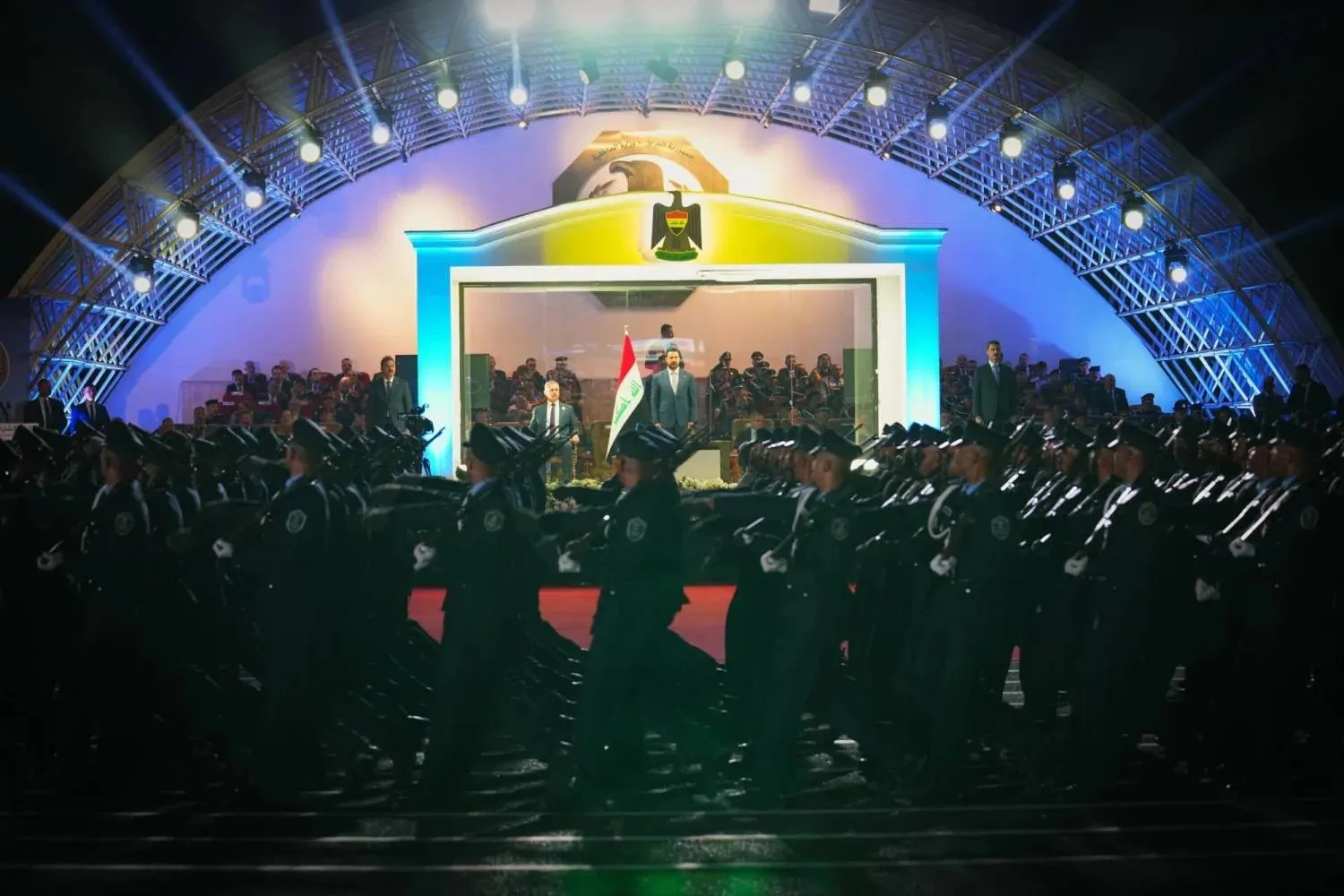
Police academy graduates at a ceremony attended by PM Ali al-Zaidi in Baghdad on September 13. (Government media)
TT

Arsenal of Iraqi Armed Factions ‘Remaining Until 2028’

Police academy graduates at a ceremony attended by PM Ali al-Zaidi in Baghdad on September 13. (Government media)

Following lengthy meetings in Baghdad, leaders within Iraq's ruling coalition believed they were capable of finalizing a settlement with representatives of pro-Iranian factions regarding post-US troop withdrawal arrangements, particularly the fate of weapons outside state control.

However, following attacks launched last Thursday from southern Iraq, near the border with Iran, against oil facilities in Saudi Arabia, these leaders likely found themselves functioning as "politicians searching for roles in a theater they do not control."

Private sources and officials speaking to Asharq Al-Awsat revealed that, prior to the recent attacks and with Iranian assistance, the factions succeeded in "hollowing out the weapons-containment plan after politically cornering Prime Minister Ali al-Zaidi and stripping him of his leverage and enforcement tools."

Indeed, despair is gripping officials across various authorities in Baghdad. During a meeting with an American official who recently visited Iraq, a senior Kurdish official addressed him saying: "The political system now resembles an old bus speeding down a slope without brakes."

‘Time bomb’

Over the past few weeks, members of the committee negotiating the containment of weapons - former PM Nouri al-Maliki, former PM Mohammed Shia al-Sudani, and Hadi al-Amiri, head of the Badr Organization - spent hours across at least four meetings negotiating a settlement based on the "non-use of weapons" on the condition that they are "not surrendered," according to sources.

Representatives of the factions planted - without objection from the senior negotiators - a "time bomb" within the settlement, which stipulates that "any agreement on the non-use of weapons shall be deemed void under specific circumstances."

Meanwhile, both sides reached a timeline extending until early 2028 for the factions to ultimately agree on laying down their arms.

Many believe that the timeline, initial details of which were obtained by Asharq Al-Awsat, reflects the vision of Iranian Parliament Speaker Mohammad Bagher Qalibaf, who requested that Iraqi factions "buy time" with the United States.

Against this backdrop, leaders within the Coordination Framework leapt back into the arena after months of losing political influence. This shift follows Iranian pressure spearheaded by Qalibaf and other Iranian officials who visited Baghdad last month to prevent the US from securing gains that had begun with its unprecedented support for the government of PM Ali al-Zaidi.

Following the formation of al-Zaidi's government, hopes were revived in Iraq and the region that it would be able to address one of the most complex issues within the Iraqi political system. However, over time, it became apparent that the factions possess "experience in taming successive governments in Baghdad."

The balance of power in Baghdad has shifted. September 30 has become "a date for a factional victory," as described by individuals from Shiite factions and parties, instead of a deadline for achieving state monopoly over arms.

Meanwhile, US forces are accelerating their departure without leaving air defense equipment, even with their closest Kurdish allies in Erbil, in the Kurdistan Region.
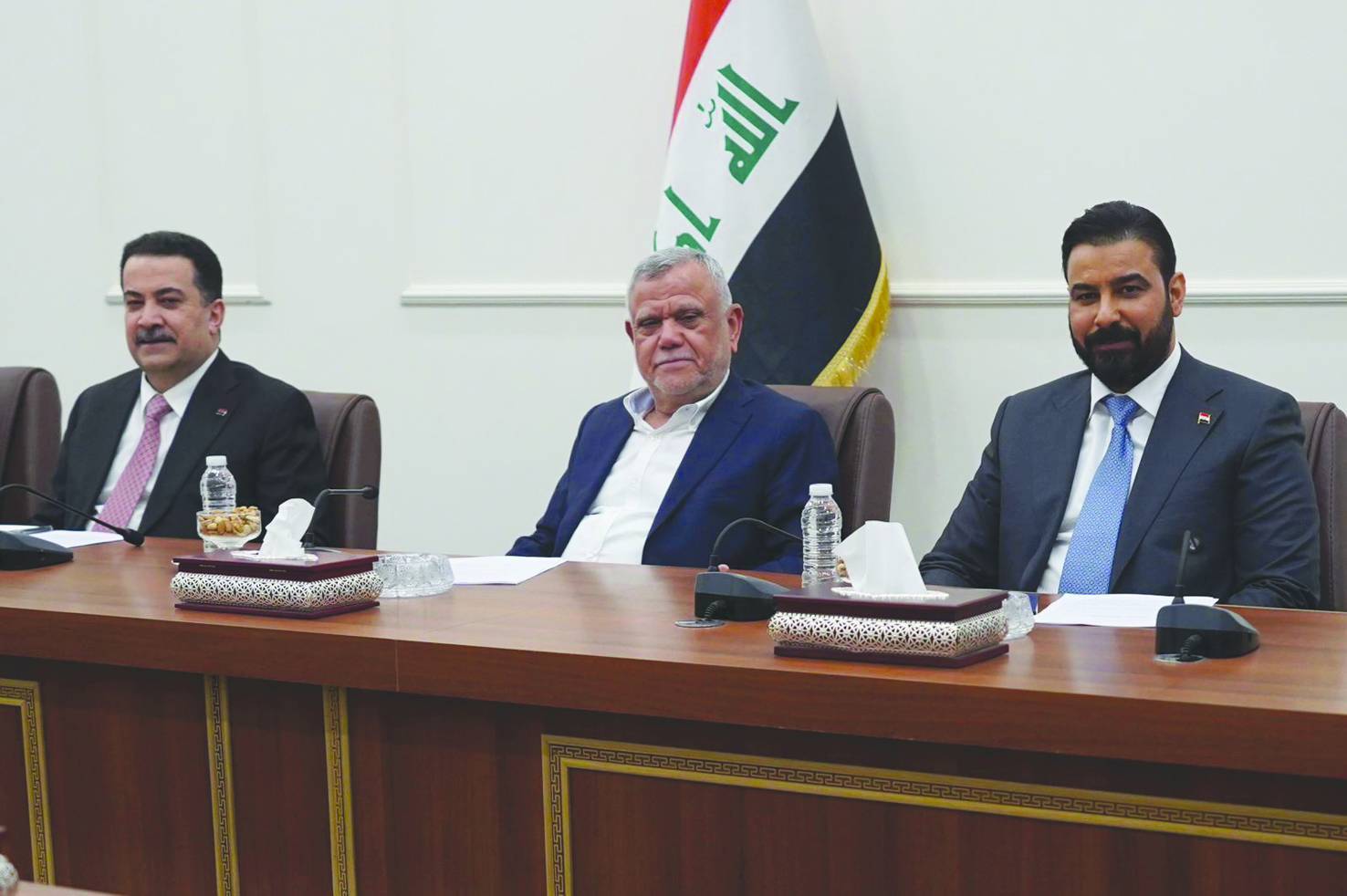
PM Ali al-Zaidi, Coordination Framework member Hadi al-Ameri and former PM Mohammed Shia al-Sudani. (Coordination Framework)

Deadline without guarantees

About a week before the attack on the East-West pipeline in Saudi Arabia, negotiators from the Coordination Framework, along with representatives of the factions, reached a timeline extending to the end of 2027.

This agreement has no guarantees, except that the Iraqi factions pledge - according to the draft reviewed by Asharq Al-Awsat - to integrate their fighters as brigades within the Popular Mobilization Forces without surrendering their weapons, in a process beginning September 30 and continuing until December 31, 2026.

The second phase of the agreement begins in early 2027 with scheduling the withdrawal of Turkish forces from Iraq, to be completed by July 1 of next year.

The third phase begins with the formation of a four-party committee comprising the PMF, Coordination Framework, factions, and government to monitor the implementation of the integration and the Turkish withdrawal until early 2028.

However, representatives of the factions approved the plan on the condition that it "be considered immediately void by one party" in the event that war against Iran resumes during any stage of implementation, or if "any party within the Coordination Framework or the factions faces an existential threat," according to two individuals briefed on the meeting.

One of them told Asharq Al-Awsat that "in return, the factions commit to not targeting foreign companies or other entities during the phases of the agreement."

Over the past months, Iraqi officials had been informing diplomatic and intelligence circles in the US that Baghdad had exited the "unity of the fronts" established by Iran across four regional capitals, but that they required "special treatment to resolve the issue of weapons outside state control."

In view of the recent draft agreement, the factions continue to tightly link the two tracks: regional war and restricting weapons to state control.
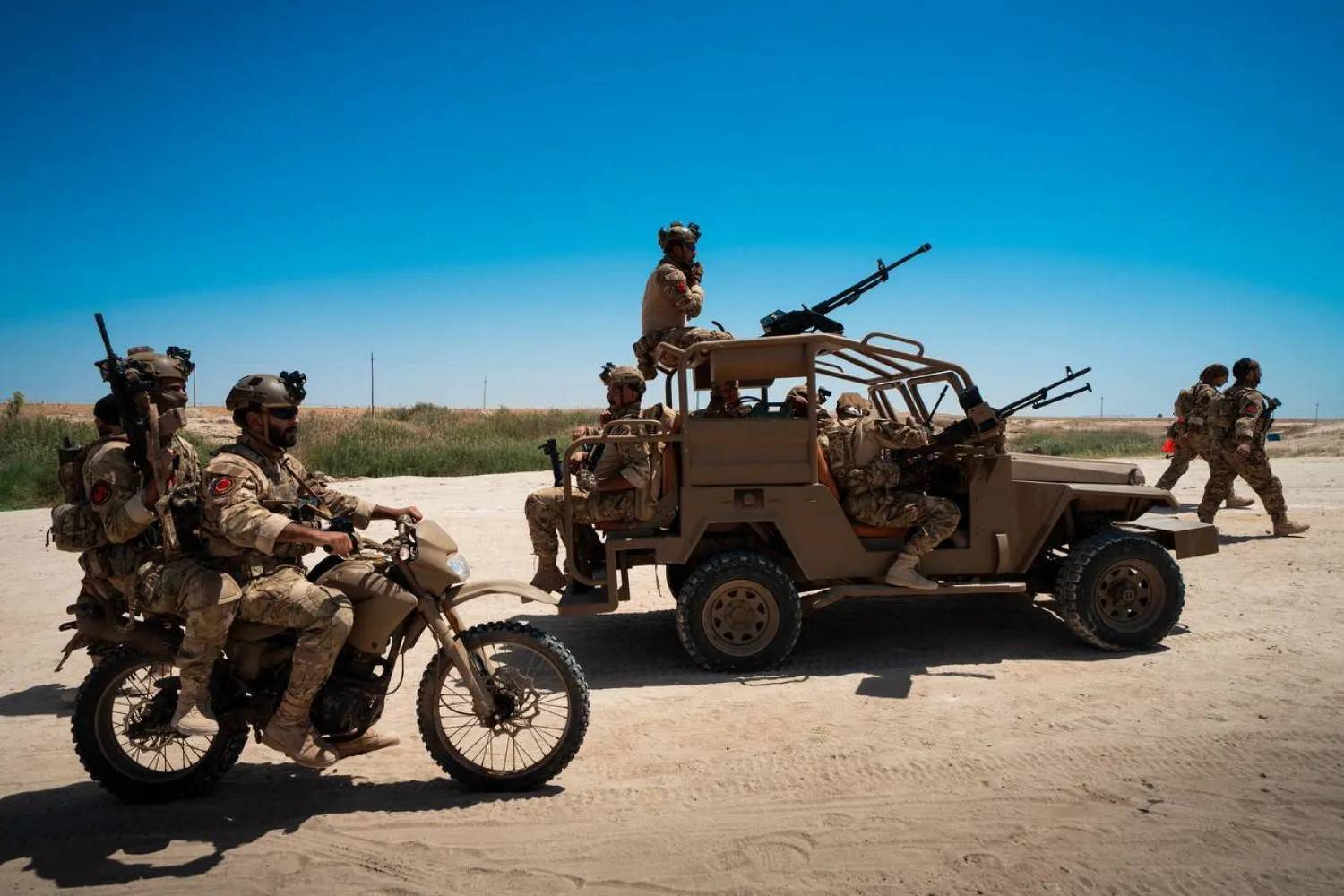
PMF fighters on patrol. (PMF)

‘Framework’ protects resistance fighters

A consensus was reached among the four leaders within the Framework and representatives of the factions on the necessity of "protecting the resistance fighters." During the final meeting, they drafted the agreement that outlines the post-September 30 phase "from the factions' perspective," according to a leader who was present at the meeting.

The leader, speaking on the condition of anonymity, stated that "the agreement may be announced early next October, depending on circumstances (...) as nothing is guaranteed."

In that meeting, held earlier this September, Haidar al-Gharawi, head of the Ansar Allah al-Awfiya faction, and Abu Alaa al-Walae, head of the Kataib Sayyid al-Shuhada, were in attendance. They were joined by a representative of Abu Hussein al-Humaidawi, head of Kataib Hezbollah, and another representing Akram al-Kaabi, head of the Harakat al-Nujaba. All of these factions are close to Iran and are also linked to shadow factions such as Awliya al-Dam and Ahl al-Kahf.

According to two individuals briefed on what transpired during the meeting, the representatives of the factions outlined "priorities" that entail "not surrendering weapons and avoiding any process that portrays the matter as a surrender to the US, while refraining from heading toward an escalation that would prompt the Americans to halt the support to al-Zaidi's government."

A senior political advisor within the ruling coalition believes that "the new approach, which tips the balance in favor of the factions over the government, received a strong boost after it leaked into the corridors of Shiite parties that the Americans would also not object to a proforma containment of weapons, on the condition that they are not used."

There is a growing impression regarding the futility of negotiating with the factions, and that a minimal agreement ensuring the freezing or regulation of weapons would be enough.

The advisor told Asharq Al-Awsat that "despair has begun creeping into the Americans and Iraqi officials tasked with weapons containment; in fact, some have stopped exerting pressure altogether to make the plan succeed and have abandoned the file out of sheer exhaustion from the factions," as he put it.

However, an Iraqi official speaking to Asharq Al-Awsat on the condition of anonymity, warned against "assuming a lenient American stance, as messages have recently arrived with the appointment of Steven Fagin as the new Chargé d'Affaires of the US Embassy."

The official stated: "It is being rumored in private meetings that Washington considers the factions' weapons to be the arsenal of a hostile state that Baghdad cannot keep, but must destroy."
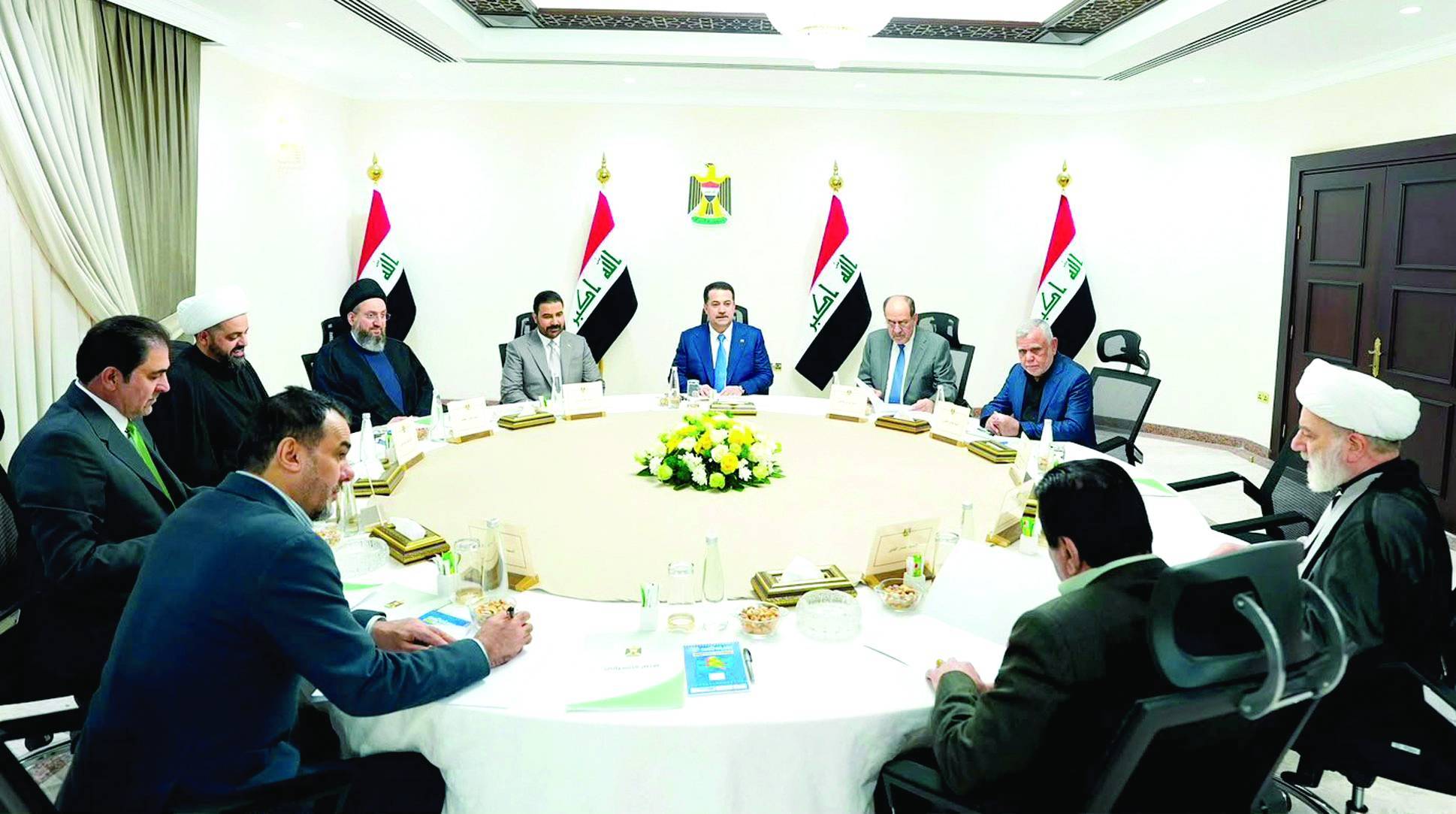
PM Ali al-Zaidi attends a Coordination Framework meeting in Baghdad. (INA)

No neutral party

Al-Zaidi was less involved in the Coordination Framework negotiations with the factions, perhaps because he "does not feel that the negotiating party is sufficiently neutral," according to an advisor within the ruling coalition.

During a recent Framework meeting held in Baghdad, al-Zaidi told the leaders of Shiite parties: "I will be frank with you, the committee negotiating with the factions is biased... I do not feel that trusting it is a wise decision."

However, the PM himself slowed down the weapons containment process. Those close to him said that he "realized how much the momentum he began with following his meeting with US President Donald Trump (mid-last July) was far from reality."

Nevertheless, a prominent leader responded to him by saying: "The committee includes veteran and experienced figures who are undertaking a complex mission that they have not been, and will not be, able to accomplish."

According to a person close to the government palace in Baghdad "al-Zaidi decided to step back slightly, but in a calculated manner, without abandoning the project."

A senior official also quoted al-Zaidi during one of the meetings as saying: "There is no solution to the dilemma except by imposing state authority over weapons."

In parallel with the four meetings held between the factions and leaders of the Framework, al-Zaidi engaged in bilateral dialogues with Harakat al-Nujaba and Kataib Sayyid al-Shuhada, offering them what reliable sources described as "civilian privileges" in exchange for a reasonable formula for disarmament.
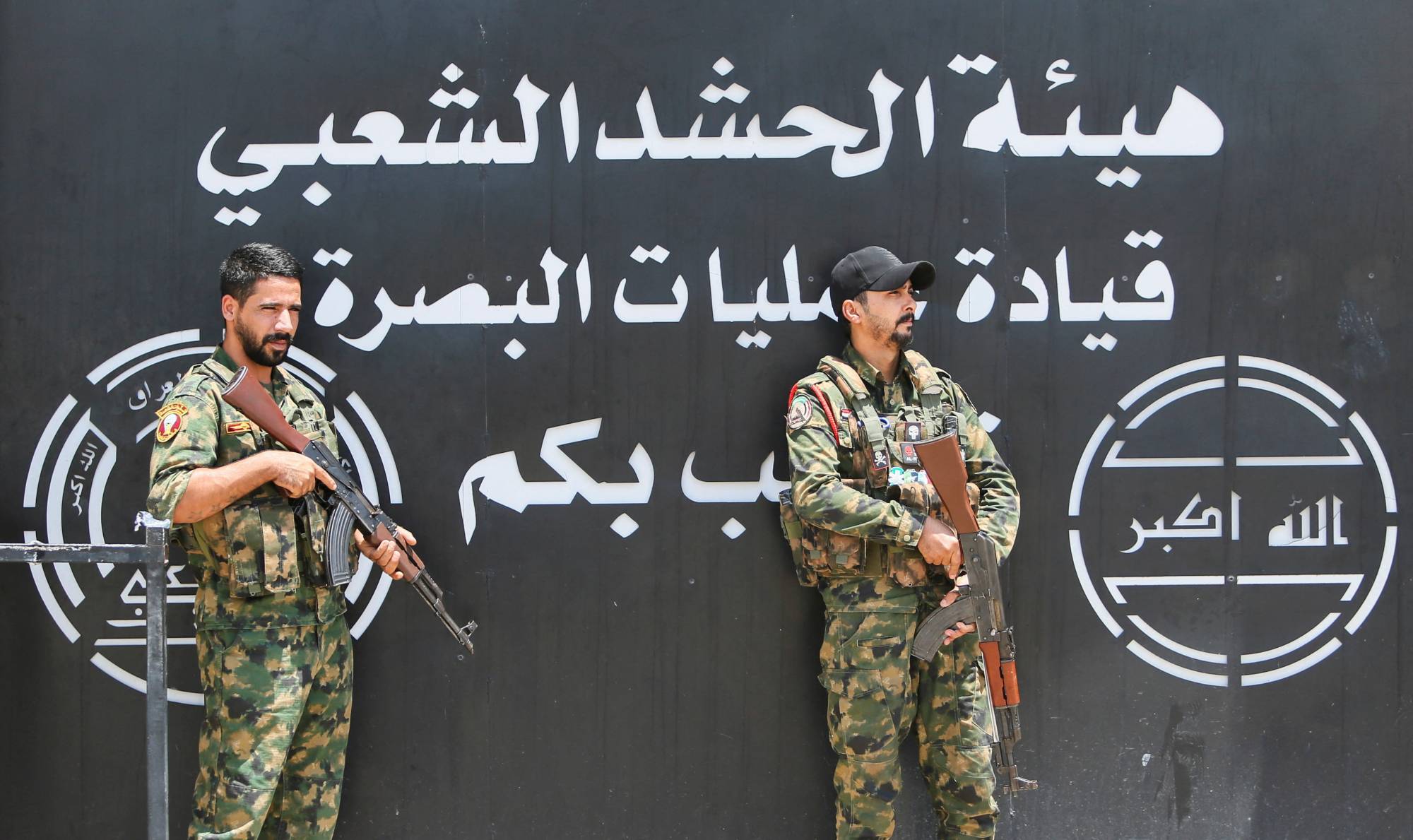
PMF members guard a PMF command base in Basra on July 29, 2026. (Reuters)

Factions want more

However, the factions are demanding more than that. A person close to the leader of one of the factions said they are "seeking guarantees against legal prosecution and a waiver on background checks for their members and leaderships."

He added: "Everyone knows that no one can grant these guarantees, but making them a condition is part of the process of buying time."

A person close to Al-Nujaba revealed that "the factions view civilian privileges (meaning positions within government institutions) as a natural entitlement resulting from their role in fighting ISIS."

They noted that Kataib Hezbollah was not part of the bilateral talks with the government due to "a deep crisis of trust that forces them to impose harsher conditions."

At most, the government's attempts to lure the factions into a settlement have failed. The American official told Asharq Al-Awsat that "the Iraqis he met feel that al-Zaidi stands alone without friends or allies," and that "the entire process (of weapons containment) has reached a dead end, and they do not know the way out of all this."

The official added that he heard a similar tone of despair from the Kurdish official in Erbil, saying: "The sound of a massive crash will echo from the dilapidated bus in Baghdad (...) the brothers in Baghdad cannot apply the brakes on the factions."

EU Lays Groundwork to Keep its Forces in Lebanon after UNIFIL Term Ends

A UNIFIL patrol in southern Lebanon. (UNIFIL)
TT

EU Lays Groundwork to Keep its Forces in Lebanon after UNIFIL Term Ends

A UNIFIL patrol in southern Lebanon. (UNIFIL)

The European Union is continuing to fulfill its commitments to support Lebanon’s military and security institutions after the end of UNIFIL’s mandate by establishing a new mission to provide training and advice to the Lebanese army and Internal Security Forces.

The mission will not replace the UN Interim Force in Lebanon (UNIFIL), but will help “strengthen state sovereignty and extend its authority” across Lebanese territory.

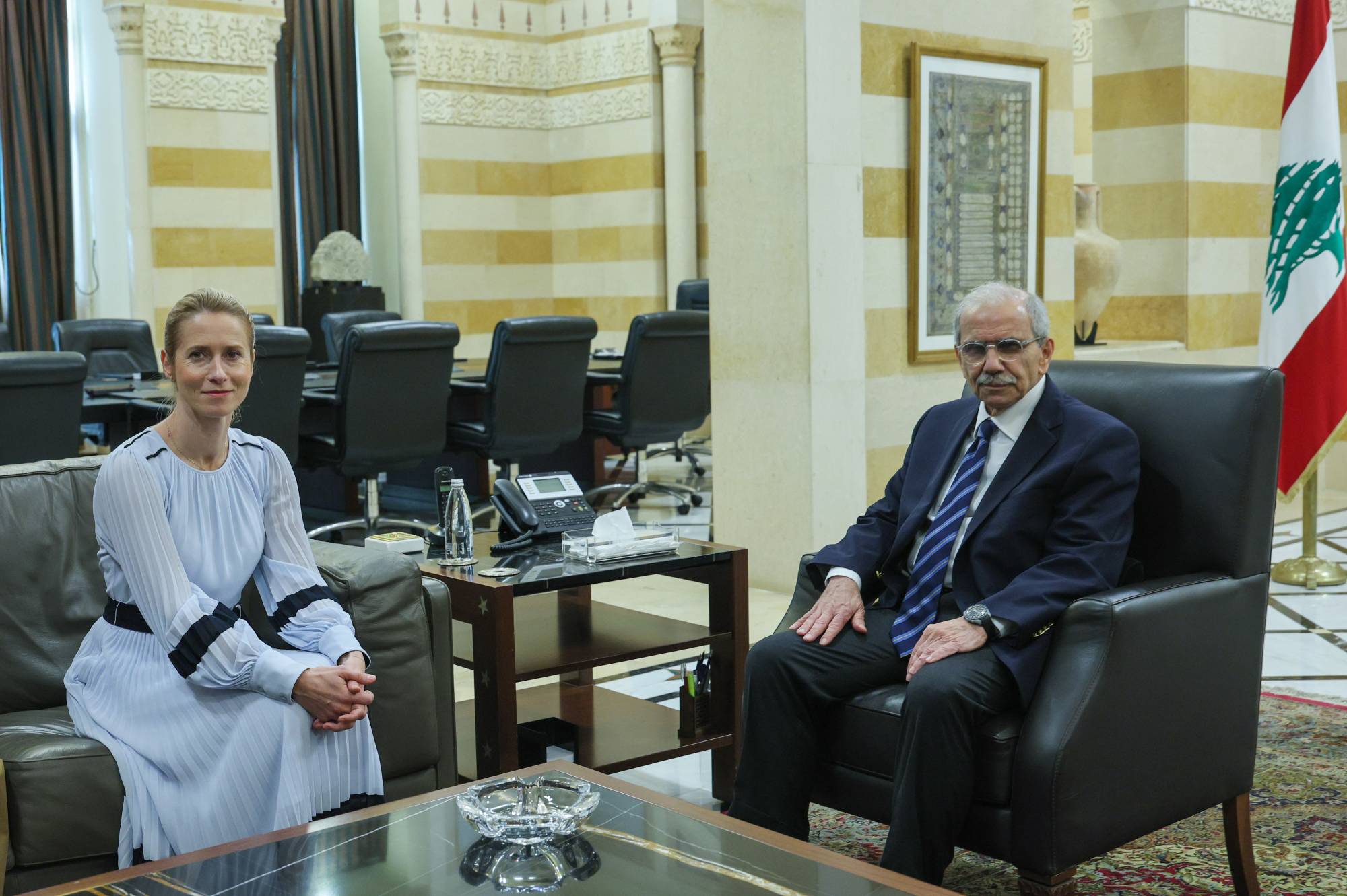
Speaking in Beirut on Thursday, Kaja Kallas, the EU’s high representative for foreign affairs and security policy and vice president of the European Commission, announced plans for a new EU mission to provide training and advice to the Lebanese army.

She said she expects EU foreign ministers on Monday to formally establish the mission, which will make a key contribution to Lebanon’s security.

The mission will provide advice and assistance to the Lebanese army and Internal Security Forces to strengthen their authority across Lebanon, secure its borders and bolster internal security.

All of this will be in line with UN Security Council Resolution 1701, Kallas said, adding that the mission will not replace UNIFIL and will not focus exclusively on southern Lebanon.

UNIFIL’s mandate is nearing its end. European countries are among its leading supporters and troop contributors, notably France, Italy, Spain, Germany and Ireland.

As the mandate’s expiration approaches, a proposal to establish a European replacement force with the same responsibilities has faced US and Israeli opposition, stalling the initiative.

Lebanese Prime Minister Nawaf Salam (R) meets with Kaja Kallas (L), the European Union's high representative for foreign affairs and security policy, at the Government Palace in Beirut, Lebanon, 08 October 2026. (EPA)

Multiple roles

Through the new mission, the EU is continuing its commitment to support Lebanon’s armed forces and enable the Lebanese state to fulfill its pledges, particularly maintaining internal stability and implementing its decisions to establish a state monopoly on weapons and extend control across its territory exclusively through its legitimate forces.

A Lebanese ministerial source told Asharq Al-Awsat that the mission “is not linked to UNIFIL or any other mission.”

“Its role is not military, and it will not take over UNIFIL’s responsibilities. Its role will be logistical and will include training Lebanese military forces, alongside social, health and education activities, meaning it will have more than one role,” the source said.

It added that the European mission’s task would be to “strengthen state sovereignty, extend its authority and enable Lebanese security agencies to deploy and carry out their duties.” That role can be inferred from Kallas’s statement that the mission would align with Security Council Resolution 1701, which provides its political framework.

The EU has allocated 505 million euros to Lebanon for 2026 and 2027, the second part of a 1-billion-euro package announced in 2024, to support economic recovery, reforms, security and essential services.

European assistance to the army through the European Peace Facility has totaled 182 million euros since 2022.

The EU has expressed its readiness to provide Lebanon with the assistance it needs, particularly for the army, Internal Security Forces, and social and humanitarian institutions. It also supports the Lebanese state’s decisions to establish full control over its territory and move ahead with disarming Hezbollah.

Alongside this role, the EU is pushing to extend UNIFIL’s mandate to avoid a security vacuum after the international mission leaves.

UNIFIL has played an important role for almost 50 years. A continued UN presence in Southern Lebanon is under discussion, and the EU remain ready to work with Lebanon, the UN, and the Security Council members on what comes next, Kallas said in Beirut.


A Year into Ceasefire, Israel Wages a Scaled-Down War in Gaza

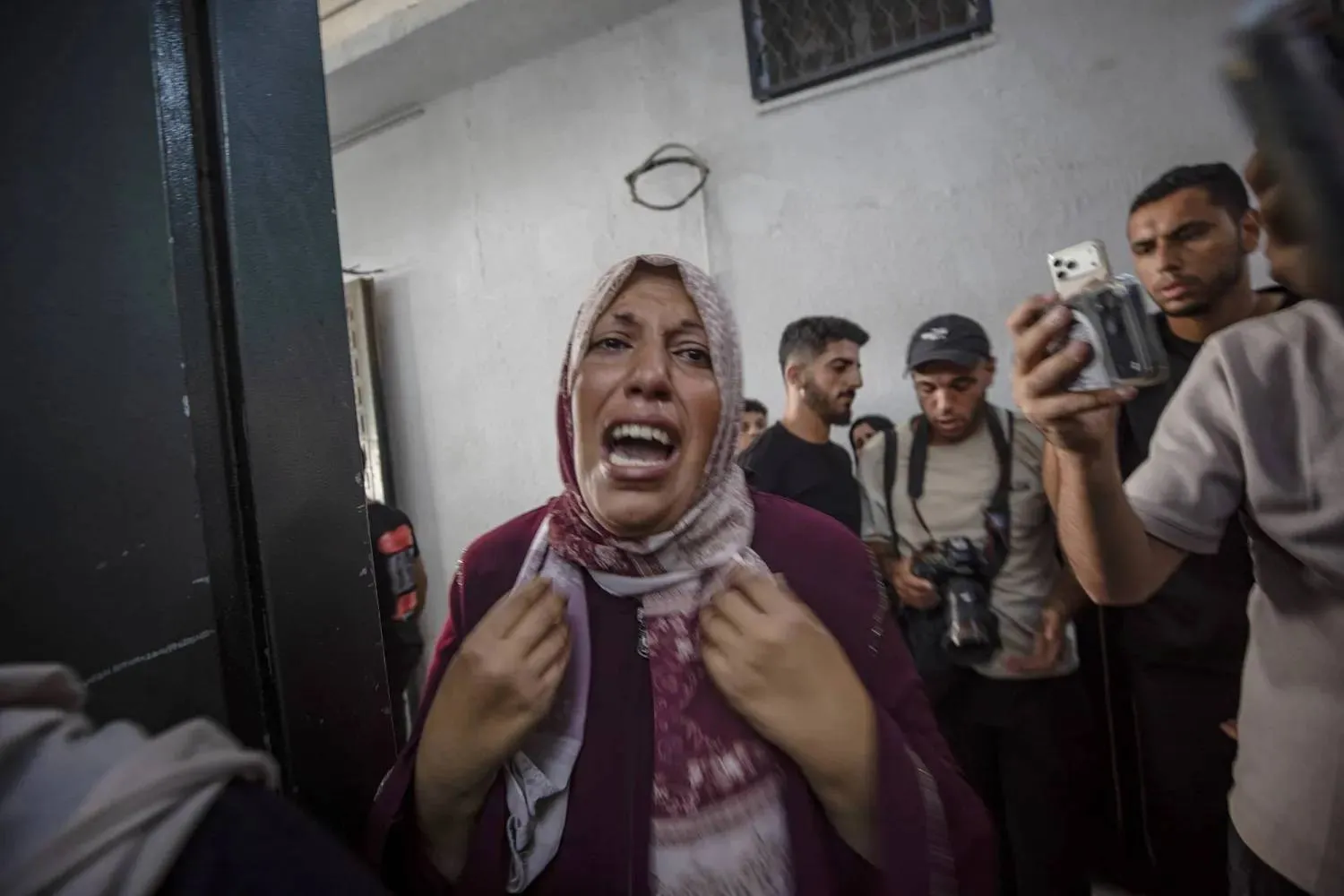
A Palestinian woman weeps during the funeral of an eight-year-old boy killed in an Israeli airstrike in Gaza City on Friday. (EPA)
TT

A Year into Ceasefire, Israel Wages a Scaled-Down War in Gaza

A Palestinian woman weeps during the funeral of an eight-year-old boy killed in an Israeli airstrike in Gaza City on Friday. (EPA)

October 10, 2026, marks one year since the announcement of an end to the war in Gaza, even as Israel continues to wage it on a smaller scale, killing more Palestinians and destroying their homes on the grounds that Hamas refuses to disarm.

On the eve of the fragile ceasefire’s first anniversary, Gaza endured a night of intense attacks that reminded thousands of residents of the war’s harshest days.

The Israeli military ordered residential blocks evacuated at night before bombing and destroying homes and apartment buildings in Gaza City and Khan Younis. A child and a woman were killed while trying to evacuate homes where families had sought refuge.

Shortly before midnight on Thursday, Israeli warplanes twice bombed homes in a residential block in the Katiba area, north of the al-Amal neighborhood in Khan Younis, in southern Gaza. The strikes destroyed or severely damaged several homes, displacing hundreds of Palestinians who lost their only shelter.

Israeli warplanes also destroyed two residential buildings in Gaza City. One housed displaced people in apartments in the Sabra neighborhood in the city’s south.

The Israeli military ordered the entire surrounding residential block evacuated, but some families did not have enough time to leave.

A child and a woman from the Abu Asr family, displaced from the Shujaiya neighborhood, were killed. At least seven people were wounded, including a journalist who put down his camera to help residents evacuate their homes.

The second building was destroyed in Gaza City’s Old City, west of Shujaiya and north of Zeitoun, after orders to evacuate it and the entire surrounding area.

Palestinians observed that Israeli warplanes fired several missiles at the targeted buildings, particularly in Gaza City, that failed to explode, prompting repeated attacks.

The strikes displaced hundreds of Palestinians living in those residential blocks. Unable to find alternative shelter, they had to spend the night in hospital courtyards, at shelters or with relatives.

The Israeli military said the strikes aimed to destroy four weapons storage facilities belonging to Hamas and Islamic Jihad. It has offered the same explanation in statements about similar strikes in the past.

Palestinian factions have repeatedly denied those claims, accusing Israel of deliberately destroying the homes and buildings still standing in Gaza.

Targeted killings and ground operations

The nighttime strikes came hours after six Palestinians were killed in a series of airstrikes in two separate incidents. Those killed included a woman and two members of the Al-Quds Brigades, Islamic Jihad’s armed wing, whose vehicle was attacked by an Israeli drone in the industrial area south of Gaza City.

A third member was killed in a targeted strike on a tent in the Tawam area northwest of the city.

On Friday morning, a Palestinian was killed and five others, including two women and a child, were wounded by gunfire from Israeli military vehicles that advanced into al-Masdar and the Maghazi refugee camp in the eastern part of central Gaza.

Two Palestinians were also wounded in a strike on al-Mawasi in Khan Younis.

For the third time in less than a week, Israeli military vehicles advanced from the Abu Hamam military position east of Deir al-Balah toward areas north of al-Masdar village, firing as engineering vehicles bulldozed land.

Israel is digging a wide trench and erecting an earth embankment in that area near the Yellow Line, as part of a broader plan being implemented along Gaza’s borders.

Figures covering the fragile ceasefire’s first year show that more than 1,478 Palestinians have been killed and more than 5,000 wounded since it took effect, according to Gaza’s Health Ministry and government media office.

The government media office said Israel had committed 5,223 violations on the ground since the agreement began, including bombing, gunfire, the demolition of homes and buildings, and incursions. More than 200 Palestinians have also been detained.

Israel controls more than 63% of Gaza’s territory after expanding the area within the so-called Yellow Line over the past year of the ceasefire. The agreement announced at the time designated it as an initial withdrawal line.

The UN Office for the Coordination of Humanitarian Affairs (OCHA) said 196 Palestinians, including 18 women and 43 children, were killed near that line between the start of the ceasefire and early April 2026.

OCHA said areas subject to access restrictions accounted for about 64.9% of Gaza’s territory. It said those areas were under tighter and more direct Israeli control, with Palestinians barred from entering most of them and humanitarian organizations required to coordinate access in advance.


Lebanon Says 6 Wounded in Attack That Israel Says Targeted Pro-Iran Syrian Operative

An Israeli army vehicle operates in East Zawtar, as seen from West Zawtar, southern Lebanon, October 1, 2026. (Reuters)
TT

Lebanon Says 6 Wounded in Attack That Israel Says Targeted Pro-Iran Syrian Operative

An Israeli army vehicle operates in East Zawtar, as seen from West Zawtar, southern Lebanon, October 1, 2026. (Reuters)

Lebanon said an Israeli attack on Friday wounded six people as Israel said it targeted a "Syrian terrorist" who planned anti-Israel attacks under Iranian instructions.

"The Israeli attack near the town of Hawsh al-Sayyed Ali in the Hermel district led to six wounded, including five Syrian nationals, two of them women, and one Lebanese," Lebanon's health ministry said.

Lebanon's state-run National News Agency (NNA) reported that "an enemy military drone targeted a car" in the town, located close to the Syrian border, an area largely been spared such attacks since an Israel-Hezbollah ceasefire was agreed in June.

Israel's military said that it "struck a Syrian terrorist", identified as Yusuf Ali al-Hassoun, who it said "operated under the direction of the Iranian regime and advanced terrorist attacks targeting Israeli civilians and Israeli soldiers operating in southern Syria".

It did not say whether the suspect was operating as part of a particular militant group.

Hassoun allegedly "planned and advanced attacks" against soldiers "that were thwarted, including the launching of explosive drones and rockets toward Israeli soldiers in southern Syria".

The Israeli military "will continue to operate to eliminate immediate threats on all fronts", it said.

Since the December 2024 ouster of longtime Syrian ruler Bashar al-Assad, Israel has carried out hundreds of strikes in Syria and sent troops into a UN-patrolled buffer zone that had separated Israeli and Syrian forces in the Golan since 1974.

It has also carried out repeated incursions deeper into Syrian territory, sometimes seizing residents, and has vowed to keep troops in a so-called "security zone" in southern Syria, where it seeks a broader demilitarized area.

On Monday, the Israeli military said it had killed an assailant at an army outpost in the area it occupies in southern Syria.

Syria's former ruler Assad was an ally of Iran and Tehran-backed armed group Hezbollah, which drew Lebanon into the Middle East war this year by attacking Israel.
