


Lebanon Needs International Force After Peacekeepers Leave, PM Tells UN Chief

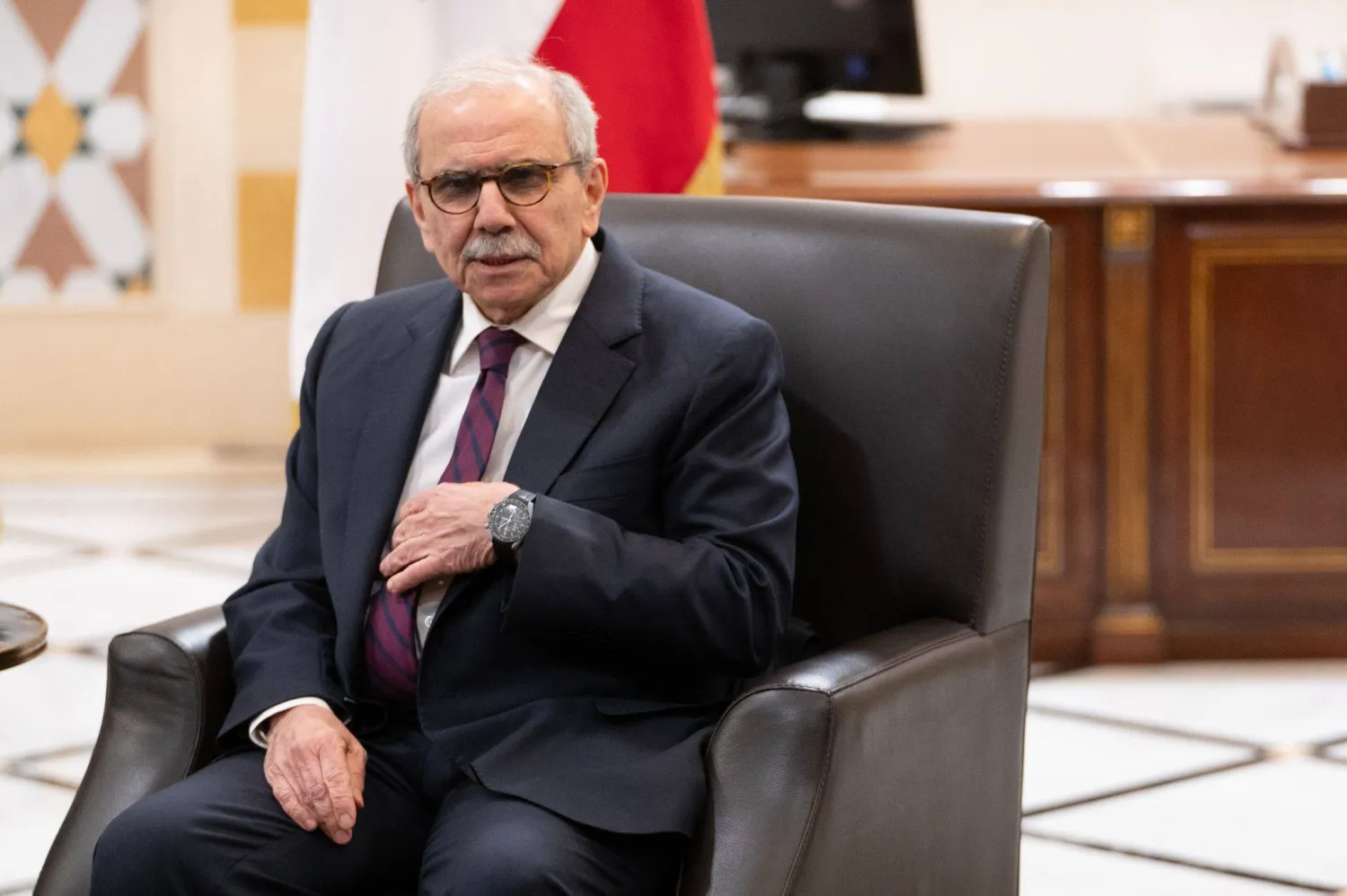
16 February 2026, Lebanon, Beirut: Lebanese Prime Minister Nawaf Salam is pictured during a meeting at the Prime Minister's office. (dpa)
TT

Lebanon Needs International Force After Peacekeepers Leave, PM Tells UN Chief

16 February 2026, Lebanon, Beirut: Lebanese Prime Minister Nawaf Salam is pictured during a meeting at the Prime Minister's office. (dpa)

Lebanese Prime Minister Nawaf Salam told United Nations chief Antonio Guterres on Monday that Lebanon needed a UN-sponsored international force to stay in the country's south after the current UN peacekeeping mandate expires.

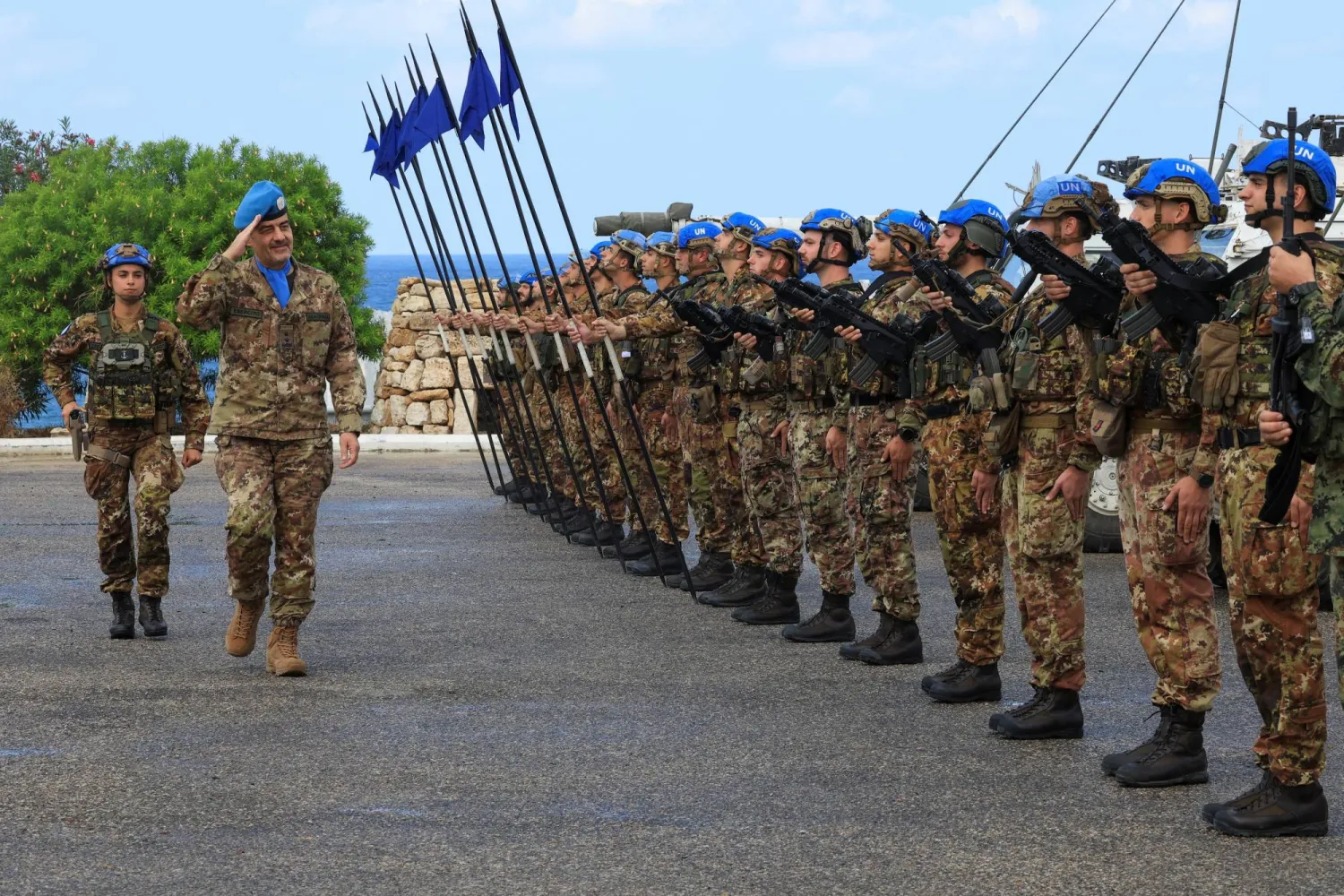
The UN Interim Force in Lebanon (UNIFIL), which currently counts around 7,500 peacekeepers from 46 countries, has acted as a buffer between Lebanon and Israel since 1978.

But under US pressure, the UN Security Council voted last year to halt the force's mandate at the end of this year.

Meeting Guterres at the UN headquarters in New York, Salam "stressed the importance of maintaining an international presence under the umbrella of the United Nations in the south in the post-UNIFIL phase", according to a statement from the premier's office.

This should be in a way that "ensures the continuation of the functions of monitoring, reporting and liaison, contributes to preserving stability, and supports the process of extending the Lebanese state's authority over all its territory", Salam added, according to the statement.

UNIFIL's looming departure comes as Israel maintains troops in a self-declared "security zone" occupying around 10 kilometers (six miles) deep inside south Lebanon along the border.

Israel launched heavy airstrikes and a ground invasion after Hezbollah drew Lebanon into the Middle East war in March by attacking Israel in support of the group's backer Iran.

Last week, Lebanese President Joseph Aoun told AFP that Lebanon wanted a new force, European or otherwise, to prevent a security vacuum after the peacekeepers depart, but that "the best and most optimal option remains extending UNIFIL's mandate".

The creation of a new force to succeed UNIFIL was also on the agenda of a meeting last week in Paris between Aoun, French President Emmanuel Macron and King Abdullah II of Jordan.

France and Italy have said they want to set up a multinational coalition to succeed UNIFIL.

In a June report, Guterres said peacekeepers would be needed after UNIFIL's mission expires.

Salam also told Guterres that around 329,000 people are still displaced in Lebanon since the latest conflict erupted, urging support for the humanitarian response.



Gaza Health Officials Say Israeli Fire Kills Three, Including Child

 Displaced Palestinians walk through a tent camp inside a school-turned-shelter in Khan Younis, in the southern Gaza Strip, September 10, 2026. (Reuters)
Displaced Palestinians walk through a tent camp inside a school-turned-shelter in Khan Younis, in the southern Gaza Strip, September 10, 2026. (Reuters)
TT

Gaza Health Officials Say Israeli Fire Kills Three, Including Child

 Displaced Palestinians walk through a tent camp inside a school-turned-shelter in Khan Younis, in the southern Gaza Strip, September 10, 2026. (Reuters)
Displaced Palestinians walk through a tent camp inside a school-turned-shelter in Khan Younis, in the southern Gaza Strip, September 10, 2026. (Reuters)

Gaza health officials said Israeli fire killed three people, including a woman and a child, and injured several others across the Palestinian territory on Monday.

Officials at Nasser hospital in the southern city of Khan Younis said the body of a child, Ismail Al-Bardawil, was brought to the medical facility after Israeli tanks opened fire on tents for displaced people in the Al-Mawasi area.

Mahmoud Bassal, the spokesman for Gaza's civil defense agency, which operates as a rescue force under Hamas authority, said the child was 11 years old.

In the central Gaza Strip, Al-Awda hospital officials said 31-year-old Fidaa Toutah died from her wounds after being shot by Israeli forces on Salah al-Din street east of Nuseirat refugee camp.

Officials at Al-Shifa hospital in Gaza City said a man, Mohsen Ahmed Bahjat, died after being shot in the head by a drone in Jabalia in the northern Gaza Strip.

Gaza's civil defense agency confirmed the identities of the dead to AFP.

It said its teams had transported nine wounded people to hospitals following Israeli fire in Khan Younis in the south and Bureij refugee camp in the center of the territory.

When contacted by AFP, the Israeli military said it was checking the reports.

Israel in October last year agreed to a ceasefire brokered by the United States but since then has advanced further into Gaza.

Israeli Prime Minister Benjamin Netanyahu has vowed no let-up in strikes targeting Hamas, which led the unprecedented October 7, 2023 attack against Israel.

The 2023 attack killed 1,221 people, according to an AFP tally based on official Israeli figures.

The massive Israeli offensive in response has left most of Gaza in ruins and killed more than 73,900 people, according to Gaza's health ministry, which is under Hamas authority and whose figures are considered reliable by the United Nations.

Israeli strikes have killed more than 1,300 people since the ceasefire was announced last year, according to the Gaza health ministry.

The Israeli army has identified five deaths in its ranks over the same period, as well as the death of one civilian contractor.


Gaza Students Return to In-Person Schooling for First Time in Three Years

Palestinian students attend their first day of the new school year inside a tent classroom at a school in Khan Younis, in the southern Gaza Strip, September 19, 2026. (Reuters)
TT

Gaza Students Return to In-Person Schooling for First Time in Three Years

Palestinian students attend their first day of the new school year inside a tent classroom at a school in Khan Younis, in the southern Gaza Strip, September 19, 2026. (Reuters)

Hundreds of thousands of children in Gaza returned to in-person teaching on Saturday for the first time in nearly three years, albeit in damaged or makeshift school buildings and tents, and with uniforms, notebooks and pens unaffordable for many families.

The United Nations Children's Fund (UNICEF) says 98% of schools in Gaza were either destroyed or damaged during the war, and Gaza education officials say about 660,000 students have been deprived of in-person learning and regular participation in education.

The reopening is a fragile milestone for Gaza after a conflict that has killed around 22,000 students and more than 770 education workers, including 532 teachers, according to Ibrahim Ramadan, director of education for East Khan Younis.

"The last time ‌I have been ‌to school was three years ago. Now, we are starting the school ‌year, ⁠it is year ⁠of joy, happiness and success," said Moayed Abu Mustafa in Khan Younis.

Mustafa said he was determined to learn even though he will sit on the floor in a tent lacking ventilation, he has no decent shoes, nor a notebook and pen, and lost friends during the war.

"Despite all of this we will learn, we will learn even in a tent."

Fifteen-year-old displaced student Samar Abu Salmi, who lives with her family in a tent, is also returning to class.

"We studied on phones and we haven’t seen our teachers... now, we are back pursuing our ⁠dream... from one tent to another," she said, speaking in the yard of ‌her new makeshift school.

She also lacks much of the essential equipment, ‌which has become unaffordable for her family.

"Before the war, everything was available for us - notebooks, pens, goods, clothes, outings, things ‌that we could get cheaply," Salmi said.

MATTRESSES AND A BLACKBOARD

Despite the devastation in the enclave, the Ministry ‌of Education, backed by international and local organizations, has moved ahead with the 2026-27 academic year, establishing dozens of temporary schools made of tents, tarpaulins, sheet metal and wood to accommodate pupils.

Some are built on sandy ground, others have classrooms with only some mattresses and a blackboard, into which students cram. Others are still housing dozens of displaced families.

Attending another school ‌was 14-year-old Yamen Abu Samra.

"We used to wake up happy to go to school... Now, when we come to school, we’re afraid of stray ⁠bullets, rockets, strikes, everything," he ⁠said.

"Now, I’m sitting in a tent that has absolutely nothing, just the sun and the heat," he added.

At least 540,000 students are expected to attend in-person classes this year in makeshift private schools, temporary learning centers and educational points, with UNICEF support, according to education officials. Online learning will continue for those who can't attend classes or who left Gaza during the war.

Israeli forces remain in control of more than 60% of Gaza despite last year's ceasefire, which halted major fighting but failed to end the conflict.

Palestinian authorities say more than 73,000 people have been killed in Israel's assault on Gaza, launched after Hamas-led fighters killed about 1,200 people in southern Israel in October 2023.

Stationery trader Khaled Aliyan, 30, said Israeli import restrictions have reduced supplies and hiked prices.

"This notebook, which used to cost 3 shekels ($1), now costs 15 (shekels). All stationery items are expensive," he said.

Israel's COGAT military agency, which controls access to Gaza, did not respond to a Reuters request for comment on restrictions on supplies and strikes on schools. Israel has repeatedly accused Hamas of using schools for military purposes, which Hamas denies.


WFP Ramps up Response in Yemen as Hunger Fears Escalate, Official Says

 Displaced Yemenis carry water at Al-Firdaws camp in Ras Imran, on the western outskirts of Aden, Yemen, Monday, Sept. 21, 2026. (AP)
Displaced Yemenis carry water at Al-Firdaws camp in Ras Imran, on the western outskirts of Aden, Yemen, Monday, Sept. 21, 2026. (AP)
TT

WFP Ramps up Response in Yemen as Hunger Fears Escalate, Official Says

 Displaced Yemenis carry water at Al-Firdaws camp in Ras Imran, on the western outskirts of Aden, Yemen, Monday, Sept. 21, 2026. (AP)
Displaced Yemenis carry water at Al-Firdaws camp in Ras Imran, on the western outskirts of Aden, Yemen, Monday, Sept. 21, 2026. (AP)

The acting ‌chief of the World Food Program on Monday said the agency was ramping up its response to the escalating crisis in Yemen, where Houthi fighters seized the country's Red Sea coast, displacing tens of thousands of people.

Nearly 700 people have been killed and thousands injured, according to the UN, as the group made their advance. More than 120,000 Yemenis have fled their homes within Yemen, and thousands more by boat across the Red Sea to Africa.

"We are stepping up. We have supported around 60,000 people with hot meals and food commodities and we ‌are building up ‌our pipeline to respond to hundreds of thousands ‌more," ⁠WFP Acting Executive Director ⁠Carl Skau told Reuters during the United Nations General Assembly in New York.

The escalation in Yemen comes as more than 18 million people, roughly half the population, face acute food insecurity and some 2.2 million children under age 5 are acutely malnourished, according to the WFP data.

Camps for the displaced are "already overstretched and our operations there are underfunded," Skau ⁠said. "People are not eating enough, there is no ‌healthcare, and these are the places where ‌you now see tens of thousands of newly arrived people with nothing, and ‌having had their lives disrupted."

The surge by the Iran-backed group ‌this month extended the wider Middle East conflict to a new theater and further threatened global energy supplies, resulting in a spike in oil prices, upending maritime trade in the region.

"Ninety percent of the food in Yemen is ‌imported. So when ports are not working or when airports are not working, that's having an impact ⁠on food security ⁠in Yemen," said Skau, who recently visited the country.

Skau also warned that the agency was unable to operate in the Houthi-controlled areas as the group continues to occupy UN offices after it confiscated its assets and detained dozens of UN staff.

"Our offices in the north are occupied by the Houthi de facto authorities, and our assets are still confiscated, so under such circumstances it's very difficult for us to operate," said Skau.

The Swedish diplomat said the organization, the largest UN agency by budget, was severely underfunded and forced to cut back on life-saving aid. He said he would push for more funding at the diplomatic jamboree with nearly 130 heads of state visiting New York this week.

The World Health Organization says 680 people were killed or injured across Yemen over the course of a week as fighting between the Houthis and government forces continues.

WHO said on Monday in a post on X that 164 people were killed and 516 injured between Sept. 13 and Sept. 18. This brings the total number of casualties since Aug. 6 to 3,672, including 674 deaths and 2,998 injuries.

Lahj province in southwestern Yemen is currently an active front line where 58 deaths and 226 injuries were reported within six days, according to the UN agency.

The fighting has so far displaced 129,438 people across seven provinces, the International Organization for Migration said.

The IOM said in an update Monday that people escaping the conflict inside the country were forced from their homes in only a few weeks, with many already fleeing more than once.
