


South Lebanon Children Return to School Destroyed by Israel Strike

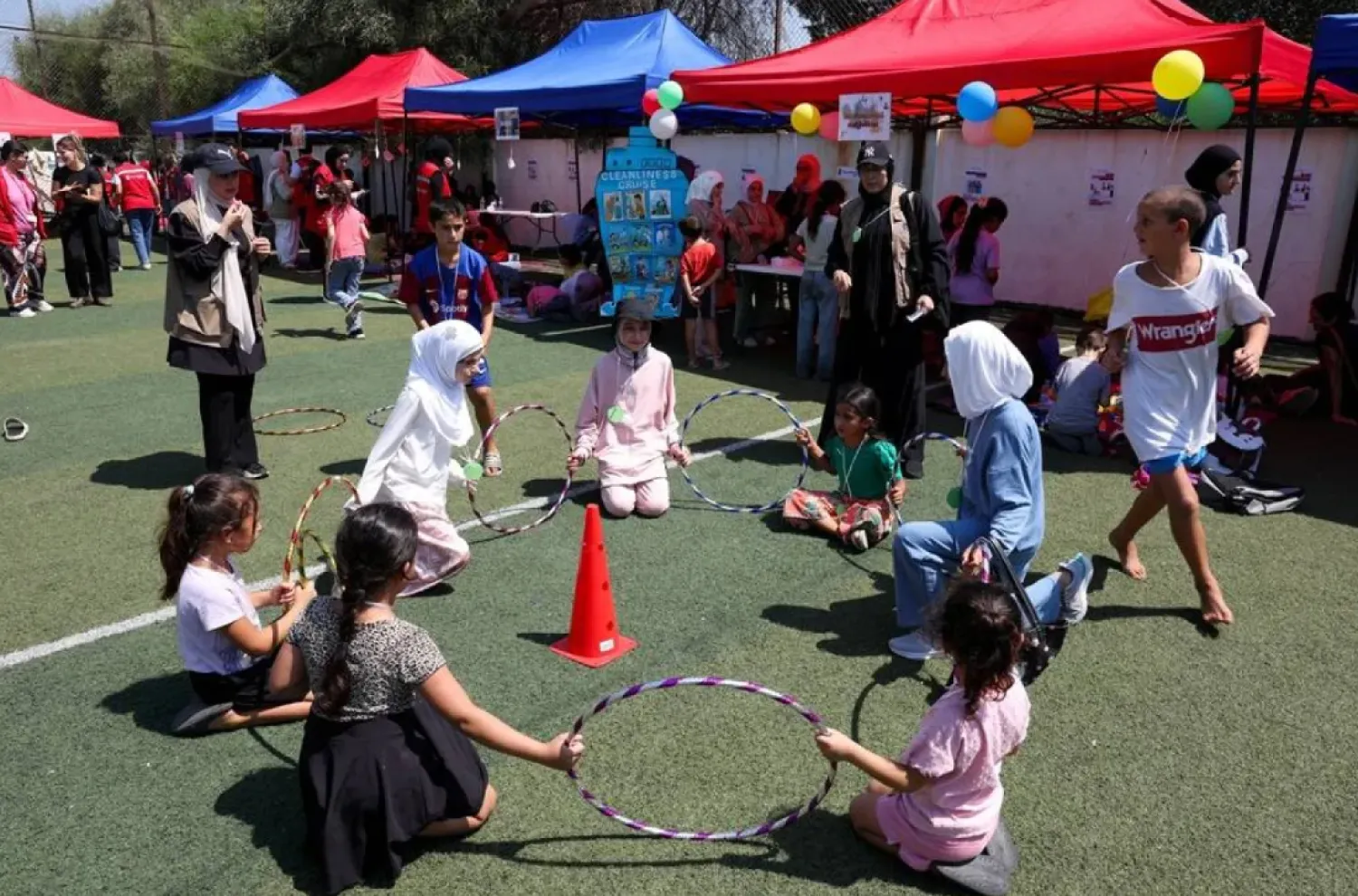
Displaced children play during an activity organized by the NGO Save the Children at a school turned into a shelter for displaced families in Tyre, southern Lebanon, August 27, 2026. (Reuters)
TT

South Lebanon Children Return to School Destroyed by Israel Strike

Displaced children play during an activity organized by the NGO Save the Children at a school turned into a shelter for displaced families in Tyre, southern Lebanon, August 27, 2026. (Reuters)

In southern Lebanon, eight-year-old Yara Ajami started the academic year this week in a doorless, windowless classroom after her school was destroyed by an Israeli strike.

Well known in the area for its excellence, Ajami's elementary school in Burj Qalaway was struck by Israel in May.

"We are happy to be back (to school), but we were happier before. We used to draw, play, but now there are no desks or chairs," the young girl with braided hair said as she climbed a bare concrete staircase.

Rather than go to their old school building, Ajami and the other students returning to classes after the summer break on Monday were diverted to a nearby structure still under construction that was being built to house preschoolers.

The sun shone through unglazed windows into unfinished classrooms as children followed their lessons, while outside clumps of twisted rebar jutted from the ground like dead bushes where walls used to stand.

The students come from areas heavily hit by Israeli attacks and most were displaced during the war, with some -- like Ajami -- returning to find their homes damaged or destroyed.

- 'Sadness in their eyes' -

"There is sadness in their eyes, each one of them has a story," school principal May Mehdi told AFP from the courtyard.

"But I am happy they are here," she said, showing on her phone what the school, her pride, once looked like.

Mehdi does not have an office in the current building, which does not even have a teacher's lounge.

Around 250 students are registered in the 24-classroom school, which used to have at least 600 school-goers before the start of the latest war in March, when Hezbollah attacked Israel in support of Tehran, following US-Israeli attacks on Iran.

Israel responded with major airstrikes and a ground invasion that killed more than 4,300 people, including 261 children according to Lebanese authorities.

More than a million people were displaced, but more than 800,000 returned since June, when a US-Iran memorandum of understanding and a Lebanon-Israel framework agreement significantly reduced the violence.

In some schools in the south that have been converted into shelters, displaced people and students now share the space, with floors reserved for each group.

The Israeli army has repeatedly accused Hezbollah of using civilian buildings, including schools, to launch attacks or hide weapons.

Rights groups, however, have accused Israel of possible war crimes in its war with Hezbollah.

Lebanese authorities accuse Israel of systematically destroying villages in the south, including homes, schools, places of worship and water and electricity infrastructure.

- 'Destruction, insecurity, displacement' -

Many of Burj Qalaway's children were unable to start the school year, being still displaced or fearing to return to the town, less than a kilometre (mile) away from Israeli troops occupying a swathe of the south.

On Thursday, an Israeli strike hit Qantara, a nearby village.

Earlier this month, UNICEF said that nearly 100,000 students in Lebanon were unable to return to their schools for the academic year due to "damage, destruction, insecurity, or displacement".

The UNICEF report also stated that 436 schools were damaged by the war, while 37 were completely destroyed.

The Burj Qalaway school previously boasted a laboratory, a computer room, and an interactive room.

Government-funded prefabricated units are being installed on the school premises where rubble has not yet been cleared.

- 'Make my father proud' -

Teacher Hoda Najdi gave her class while emphasizing to her students the importance of continuing their education and achieving good results despite the difficult circumstances.

"My home was destroyed and so was my school... (but) the students give us the strength and will to continue," the 42-year-old told AFP.

Student Mohammed Mozannar, who was displaced from one place to another in Beirut during the war, said he was "very happy to be back to make up for" the lost year.

"I had no books, no phone and no internet" to follow lessons online, he said.

"I now want to make my father proud."

But the return to school also brought back painful memories for some, like 14-year-old Rawan Fakih.

"I remembered the activities we used to do, I remembered how stressful exams were... and I remembered my friend who was killed" by an Israeli strike, she said.


UN Identifies 214 Firms Linked to Israeli Settlements

Palestinians protest against Israeli settlements near Nablus in the occupied West Bank (Reuters)
TT

UN Identifies 214 Firms Linked to Israeli Settlements

Palestinians protest against Israeli settlements near Nablus in the occupied West Bank (Reuters)

The United Nations on Friday released a fresh update of its database of companies with activities in Israeli settlements in Palestinian territories, listing 214 firms from 11 countries.

Since last year's update, the UN rights office added an additional 61 companies to the database and had removed five companies.

But major firms like Airbnb, Booking.com, Motorola Solutions and TripAdviser remained on the list.

The report, which was harshly criticized by Israel, served as a "reminder to companies that they have human rights responsibilities", UN rights chief Volker Turk said in a statement.

Firms, he said, "are expected to conduct due diligence to ensure that they do not become involved in human rights violations or abuses".

While most of the companies were based in Israel, others were based in Canada, China, France, Germany, Luxembourg, the Netherlands, Portugal, Spain, Britain and the United States.

There were two Spanish companies removed from the database since last year, along with one each from Canada, Israel and Portugal.

The list was first produced in 2020 after a UN Human Rights Council resolution called for a database of firms that profited from business in illegally occupied Palestinian territory.

The UN rights office was asked to list companies found to be taking part in any of 10 activities, including construction, surveillance, demolitions and destruction of agricultural land in Israeli settlements in the West Bank, including East Jerusalem.

Despite a requirement for the database to be updated annually, it has been revised just twice before, in 2023 and 2025.

The list is not exhaustive.

It only reviews companies about which it received submissions during set timeframes, the last of which closed in June 2024.

In all, it has received submissions about 596 companies, of which it has so far reviewed 381.

Israel, which has been harshly critical of the database from the start, slammed it again Friday as "a distorted mechanism... established solely to persecute the Jewish state".

The country's mission to the UN in Geneva charged that it was "a political tool" used by the rights office "to advance a smear campaign against business enterprises that committed no wrongdoing".

Israel has controlled the West Bank since 1967 in an occupation considered illegal under international law.


Lebanon PM Stresses Need to 'Avert Vacuum' if UN Force Leaves

16 February 2026, Lebanon, Beirut: Lebanese Prime Minister Nawaf Salam is pictured during a meeting at the Prime Minister's office. (dpa)
TT

Lebanon PM Stresses Need to 'Avert Vacuum' if UN Force Leaves

16 February 2026, Lebanon, Beirut: Lebanese Prime Minister Nawaf Salam is pictured during a meeting at the Prime Minister's office. (dpa)

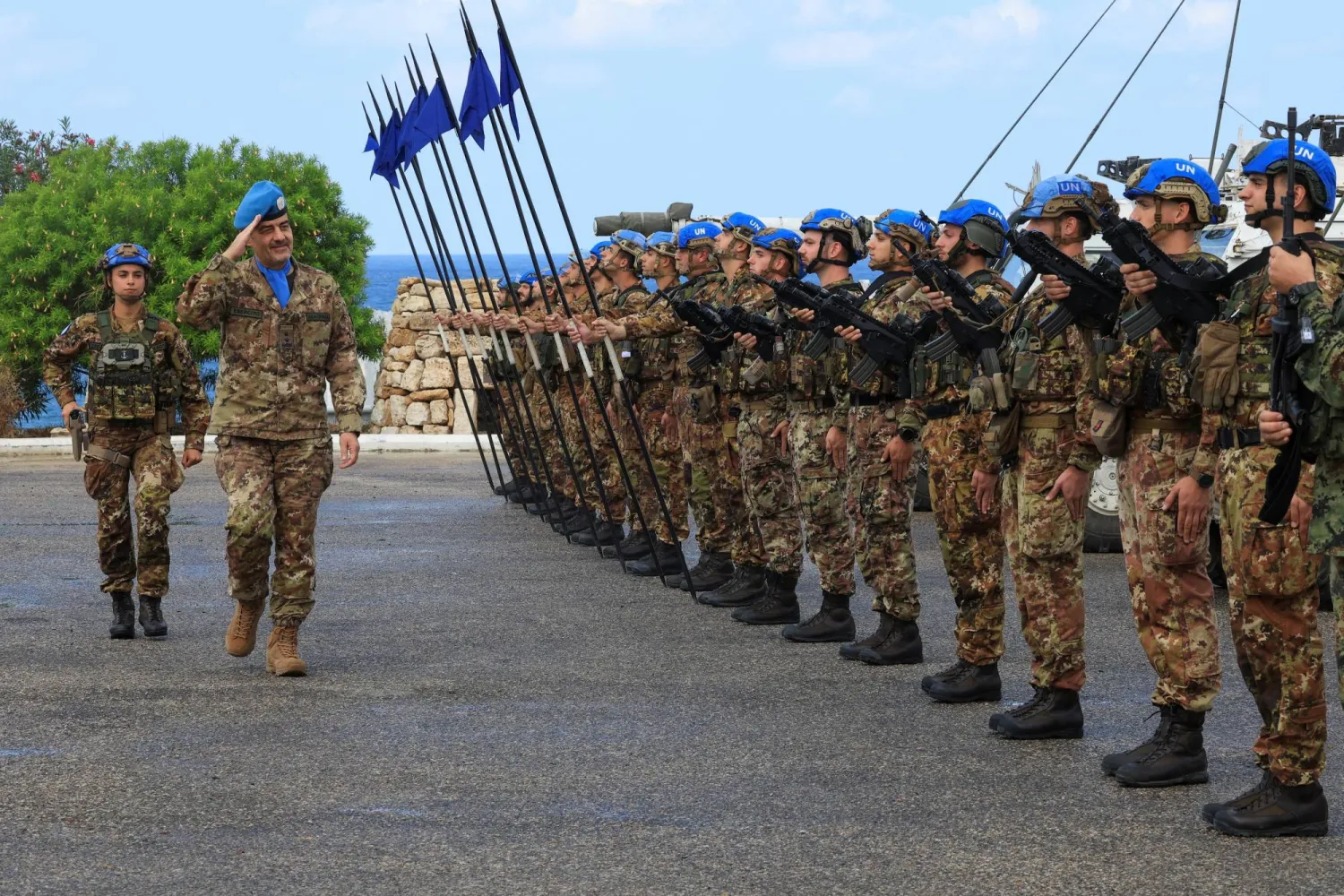
Lebanon's Prime Minister Nawaf Salam insisted at the UN Friday on the need to "avert the vacuum" that would be caused by withdrawing the UN peacekeeping mission deployed in the south of his country without a viable replacement.

"What we wish to stress here and today is the need to avert the vacuum that UNIFIL's withdrawal could create, were it to take place without agreement on a new international force to replace it," he said.


Yemen's Message to the World: Implement Your Decisions and Stop Arming the Houthis

Yemen’s Vice President Abdullah Abdulkader Al Alimi-Bawazir walks to the podium to address the 81st United Nations General Assembly at UN headquarters in New York City, US, September 24, 2026. REUTERS/Eduardo Munoz
TT

Yemen's Message to the World: Implement Your Decisions and Stop Arming the Houthis

Yemen’s Vice President Abdullah Abdulkader Al Alimi-Bawazir walks to the podium to address the 81st United Nations General Assembly at UN headquarters in New York City, US, September 24, 2026. REUTERS/Eduardo Munoz

Yemeni Presidential Leadership Council member Abdullah Al-Alimi called on the international community to move from a policy of "crisis management" to a strategic partnership with Yemen, stressing that Yemenis are not asking the world to fight their battle on their behalf, but to implement its own decisions, stop the flow of weapons and technology to the Houthis, and support the capabilities of the Yemeni state and its economy.

Speaking on behalf of Yemen at the 81st session of the United Nations General Assembly in New York, Al-Alimi said the Yemeni government is capable of ending the Houthi threat and protecting the country's ports and territorial waters. He called on the international community to fulfill its responsibilities toward Yemen, the region, and international peace and security.

Al-Alimi placed the call for an international partnership at the center of his message, stressing that international resolutions alone cannot create peace unless there is the will to implement them. He said peace "is not a wish to be hoped for," but requires firm resolve and action to deter those who threaten the security and stability of states.

He criticized what he described as the absence of an effective and decisive international position toward the Houthis, saying this had contributed to the group's expanding influence and threat. He also linked the continuation of the crisis to Iranian support, which he said the Houthis receive in the form of weapons, expertise, and military technology.

He said Yemenis have endured 12 years of war, displacement, poverty, child recruitment, landmines, and the seizure of rights, freedoms, and public resources. He said the government had dealt responsibly with international and regional initiatives and made concessions for the sake of peace, while the Houthis, according to his account, responded to those efforts with intransigence and used periods of truce to strengthen their military arsenal.

Global Threat

The Yemeni Presidential Leadership Council member devoted a significant part of his speech to the security of the Red Sea and Bab el-Mandeb, stressing that the Houthis' use of maritime security as a means of exerting pressure is not a threat to Yemen alone, but affects the global economy.

Al-Alimi said securing the sea begins with addressing the source of the threat on land, warning that protecting ships does not eliminate the threat as long as an armed group outside the authority of the state remains on the shores of the maritime routes.

He directly linked restoring state authority with the security of Bab el-Mandeb, saying the two issues are "one issue, not two," and that supporting the Yemeni government and strengthening its economic, security, and military capabilities represents an investment in the future of global security and safety.

He also hailed Saudi Arabia's initiative to establish a multinational maritime defense coalition, saying it reflects, according to his speech, a shared responsibility to protect maritime navigation, deter threats, and combat smuggling.

Restoring the State

The Yemeni Presidential Leadership Council member said his government remains committed to peace, but will not accept an armed coup becoming a fait accompli, stressing that "peace requires actions from the Houthis, not words."

He said the Yemen issue is not only about how to end the war, but also about what kind of Yemen will be built afterward. He spoke of a secure, stable, and prosperous state that rebuilds its economy, provides education, employment, and security, and becomes a partner to its neighbors and a bridge for trade and cooperation between the Arabian Peninsula, the Horn of Africa, and the wider world.

Addressing Yemenis in areas under Houthi control, he stressed that the government's fight is not against citizens, regions, or sects, but against an "armed coup that has seized the state and its institutions." He said restoring the state is not a victory for one Yemeni side over another, but the restoration of the right of all Yemenis to their state and institutions.