Israel Obliterates South Lebanon's Architectural Heritage

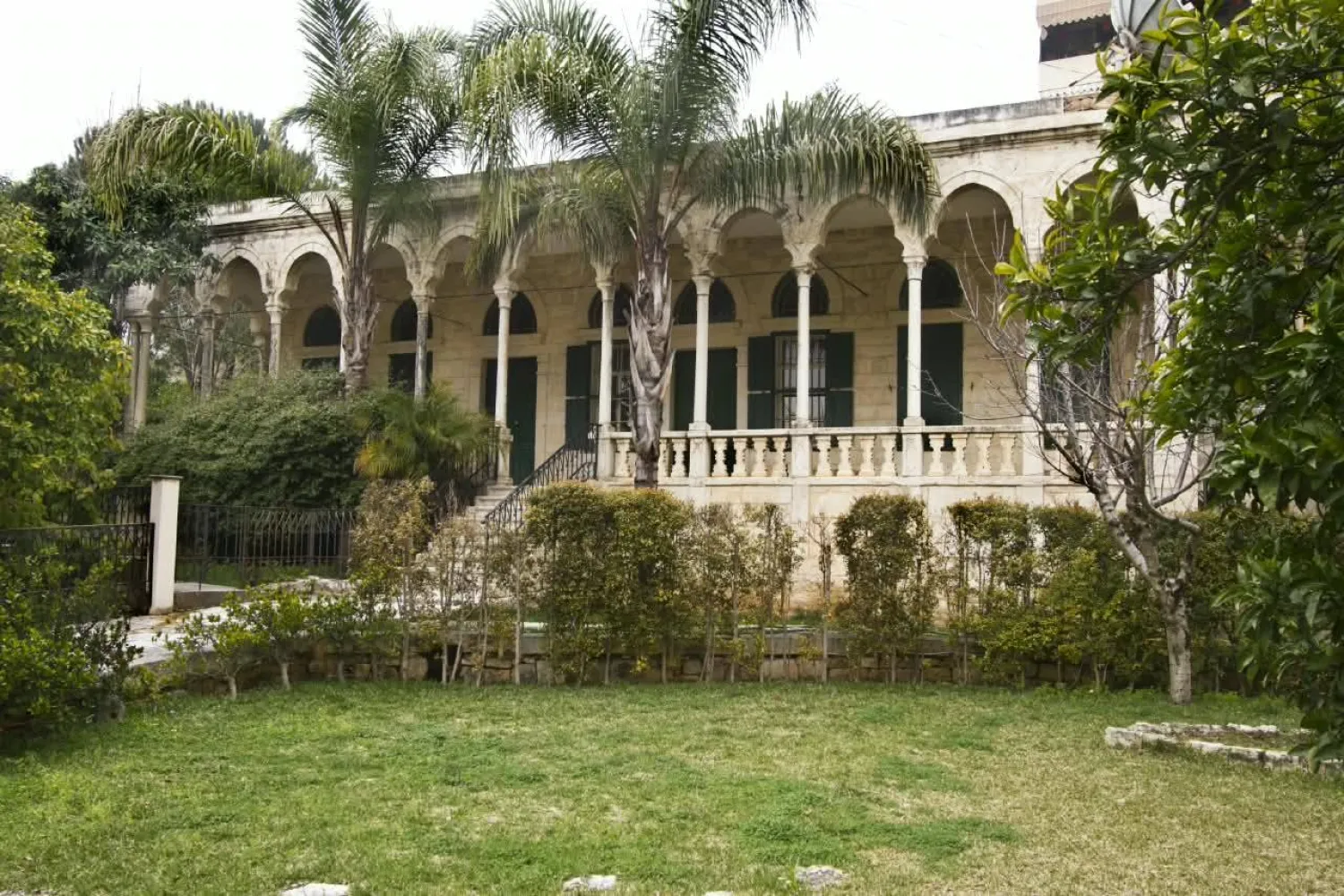
The residence of Said Shahine, father of Ghaleb and Fahmi Shahine, which was completely destroyed in the city of Nabatieh (Kamel Jaber archive)
TT

Israel Obliterates South Lebanon's Architectural Heritage

The residence of Said Shahine, father of Ghaleb and Fahmi Shahine, which was completely destroyed in the city of Nabatieh (Kamel Jaber archive)

Daily attacks around the city of Nabatieh and the town of Kfar Rumman have not stopped the Zein family from launching work to restore “what can be restored” of the home of Youssef Bek Zein, which was damaged by intensive Israeli strikes several months ago.

Descendants of one of Nabatieh’s best-known political families see preserving their heritage as an act of defiance against Israel, which they say is erasing physical traces and memories from the land and seeking to eliminate historic homes with distinctive architecture, political family residences, and urban and historical landmarks of all kinds across South Lebanon.

During the two large-scale wars Israel waged on South Lebanon, airstrikes and demolitions wiped out dozens of heritage landmarks, including political family homes whose architecture and libraries documented periods of Jabal Amel’s political history over the past two centuries.
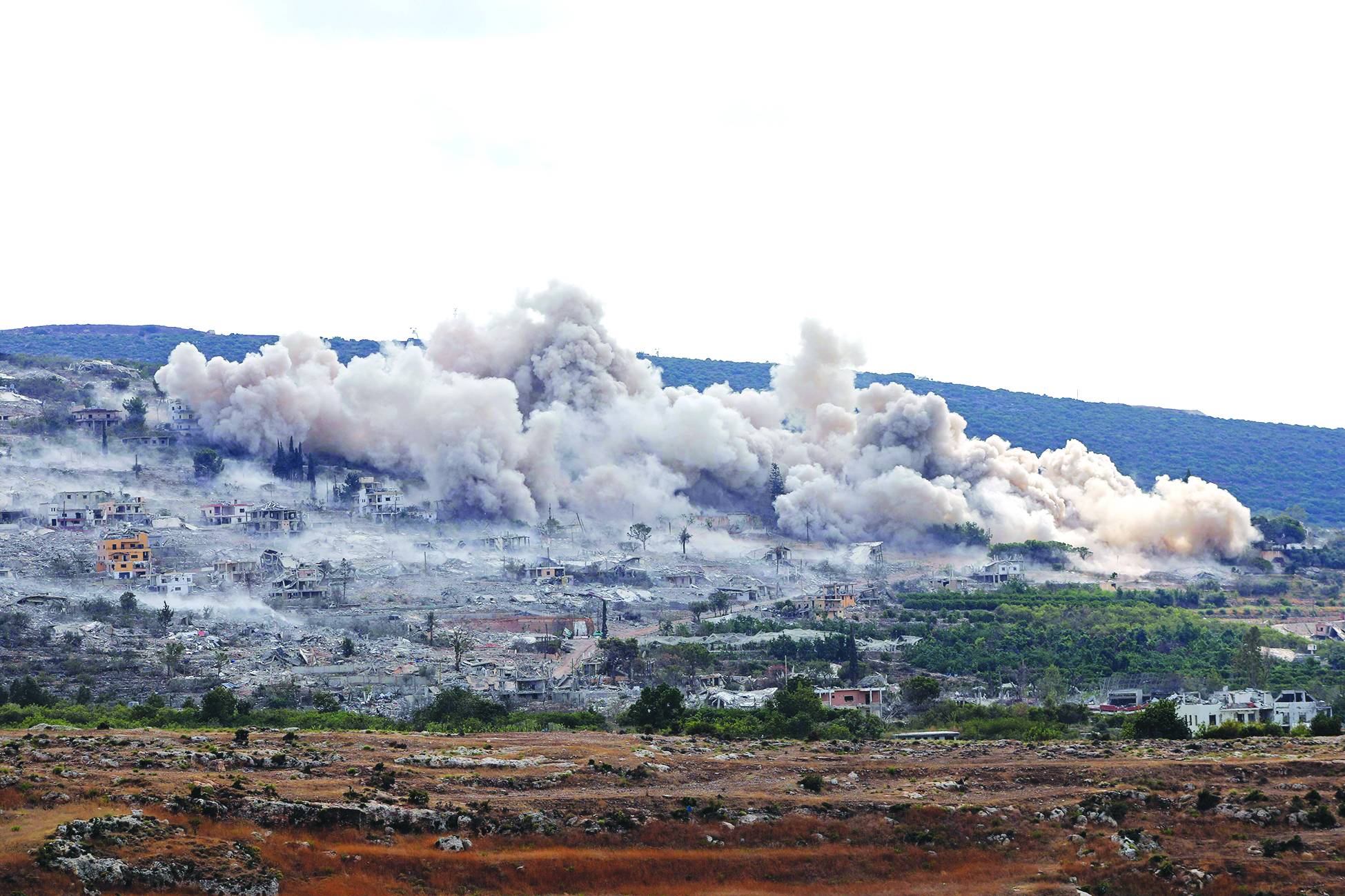
This photograph taken from the southern Lebanese village of Hanniyeh shows smoke rising from the site of a series of Israeli controlled explosions in the nearby village of al-Mansouri on September 28, 2026. (Photo by Kawnat HAJU / AFP)

In Nabatieh alone, Israeli bombardment razed 147 homes between 80 and 110 years old. Some had developed from houses originally built 200 years ago. They included heritage properties belonging to local political leaders, ministers and lawmakers who had played roles in Nabatieh and its surroundings over past decades.

The damage also extended to political family residences around Nabatieh, including the Asaad family home in Taybeh. Local activists say many old houses were razed along with it, including the home of Khalil Abdallah in Khiam, one of the region’s most prominent historical leaders, built in 1862.

Abdel Aziz Zein’s Home: A Cultural Role

The home of Youssef Bek Zein, heavily damaged by Israeli bombardment, is now among the last remaining heritage landmarks and architectural witnesses in the Nabatieh area following the loss of the Abdel Aziz Zein residence.

In recent years, that residence had become a cultural hub in the region. His son, Dr. Saad Zein, expanded it to host cultural and community activities.

“My family home, the Abdel Aziz Zein residence, was more than 80 years old,” Dr. Saad Zein told Asharq Al-Awsat. “An Israeli strike completely demolished the house and wiped out all its features — not only its architecture, but also its cultural role.”
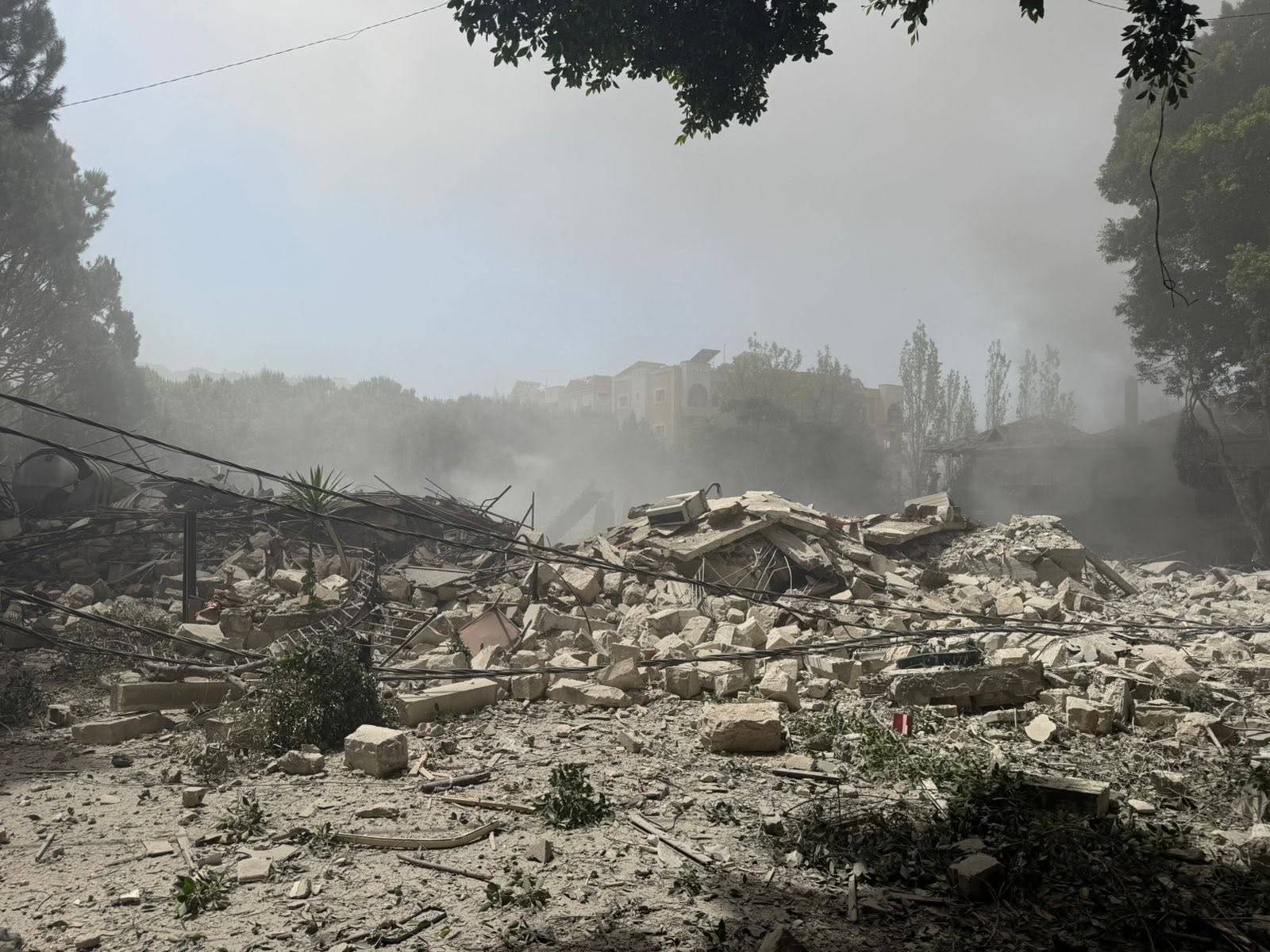
The Abdel Aziz Zein residence (Saad Zein archive)

Zein said the house had served as a venue for cultural and social activities since at least 2000. He had established a small museum there documenting the history of Jabal Amel, and the house “became a cultural destination in the region.”

The residence was later expanded to include gardens and a diwaniya, a traditional reception space that is a central feature of southern Lebanese architecture. In recent years, it became known as the “Saad Zein House.”

The strike on the large residence also damaged the adjoining Zein family home. That residence had been a center of political and social leadership for more than a century. Built 150 years ago, it housed the Ottoman governor in the 19th century before ownership passed to the Zein family and Youssef Bek Zein took up residence there.

Even the Family Tombs Were Hit

Zein entered parliament after the proclamation of Greater Lebanon in 1924, and his family became one of Jabal Amel’s most prominent political families during the last century. Its parliamentary representation continued uninterrupted until 2018.

“The Youssef Bek Zein residence was severely damaged. The roof, courtyard and family tombs were hit, including Youssef Bek’s grave,” Dr. Saad Zein stated.

“We are now working intensively and quickly to restore the house so it can be usable again and remain a witness to a political era, given that the family is one of Jabal Amel’s founding families and has maintained a cultural, developmental and social presence — a role that continues with me and my uncle.”

Zein stressed that the targeting of political homes and urban and historical landmarks “aims to erase traces and memories from the land in order to sever the Lebanese people’s connection to their homes, land and heritage.”

Deliberate and Systematic Destruction

Cultural and social figures in Nabatieh broadly agree that what occurred during the wars of 2024 and 2026 amounted to the “systematic destruction of memory without any actual justification.”

They argue that the concentrated bombardment and leveling of longstanding family homes historically associated with political positions opposed to Hezbollah contradicts the Israeli military’s assertion that its strikes target only Hezbollah facilities and headquarters.

One particularly notable case was the leveling of the home of former lawmaker Habib Sadek, founder of the Cultural Council for South Lebanon, in Kfour, west of Nabatieh.

Sadek was among South Lebanon’s best-known political and cultural activists. He served in parliament in 1992 and was one of the most prominent chroniclers of Israeli violations in the south since the 1940s. He encouraged the publication of works sponsored by the Cultural Council and combined a political career with his work as a writer, poet and thinker.

Manuscripts Documenting Violations

Kamel Jaber, head of the Cultural Council’s Nabatieh branch, told Asharq Al-Awsat that after Sadek’s home in Khiam was demolished in 1977, the area remained under occupation until 2000 and the family was forced to live between Beirut and Nabatieh.

“The family was determined to build a house outside the city resembling the homes of southerners — meaning it would have a garden surrounded by pine trees, with roses blooming in it,” Jaber said.

“Sadek paid particular attention to a diwaniya on the lower floor of the house, where he kept many of the manuscripts he had presented through various radio programs, as well as writings from the 1960s and 1970s. He also created extensive libraries in the diwaniya containing books, manuscripts and the rest of his cultural legacy.”

Jaber said Sadek was “one of the most prominent cultural figures who wrote and published works and books about the south, documenting violations and various forms of Israeli occupation, whether related to ambitions over water, geography or other issues, and produced studies showing the harm inflicted on the south through occupation.”

From that perspective, Jaber said the targeting of the house “was a targeting of Habib Sadek, his role, legacy and career.” He ruled out any security-related reason for striking the house, which he said was “closed and checked daily by a caretaker.”

Erasing Architectural and Political Heritage

The devastation is viewed locally as part of an effort to eliminate Nabatieh’s urban, architectural and political heritage.

After the 2024 war, cultural figures in the city launched an initiative, involving civil society groups in cooperation with the municipality, to document heritage buildings lost to Israeli bombardment. The survey was updated just two weeks before this article was written.

It found that 147 homes had been completely razed, leaving only a very small number of such buildings standing.

During the 2026 war, what remained of the Fadl al-Fadl house in the Manshieh district was demolished. The house was built late in the last century and designed by an Egyptian architect. General Gouraud visited it in the 1920s during a trip to the south while serving as French high commissioner in Lebanon.

The home of former lawmaker Mohammed Bek al-Fadl, meanwhile, lost large sections after strikes hit its surroundings in 2024. The house is 102 years old. Jaber, who works to document local memory through a civil society organization in Nabatieh, said its new owner had decided to restore it.
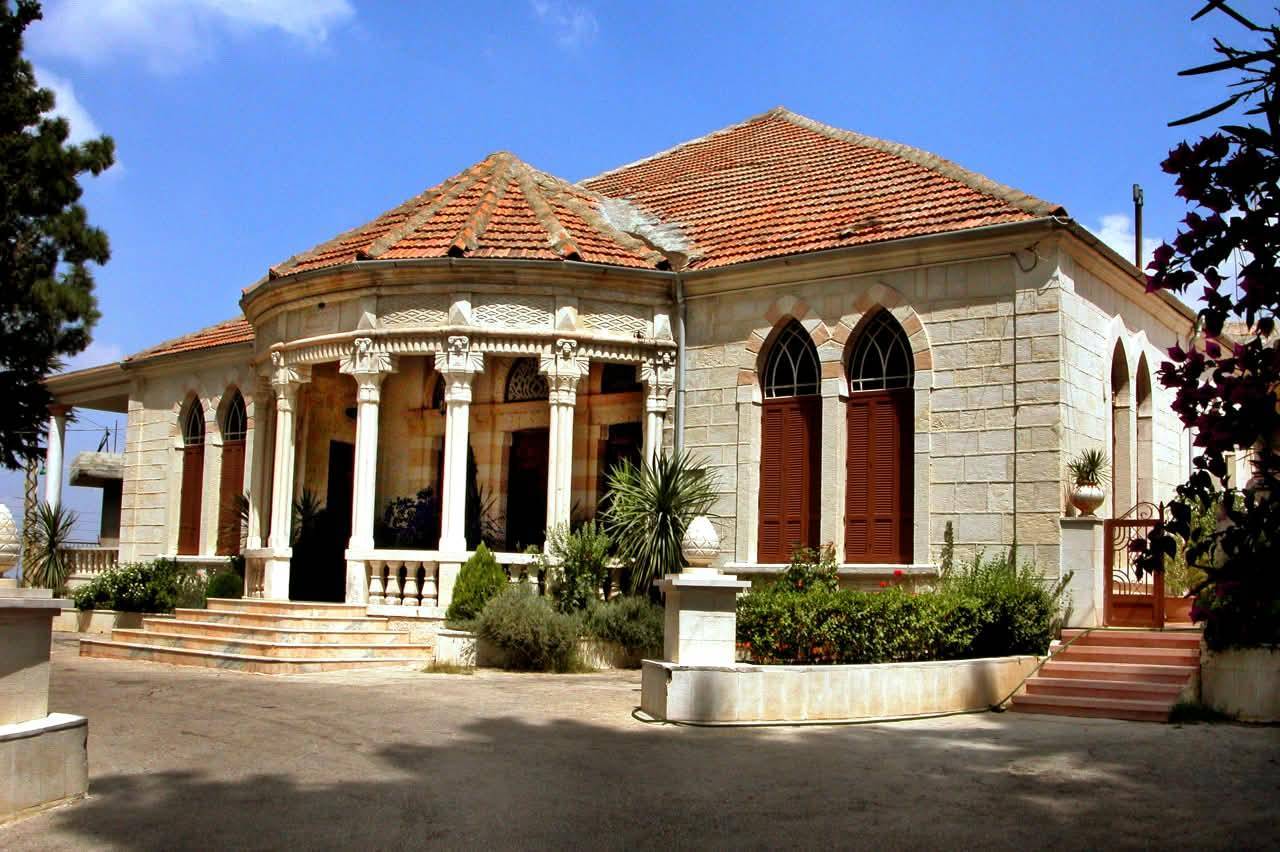
The home of Mohammed Bek al-Fadl (Kamel Jaber archive)

Erasing Cultural Memory

Nabatieh residents see the campaign as targeting architecture that embodies the area’s cultural heritage and its social, political and urban memory.

In Nabatieh, Israeli strikes completely leveled the residence of the late minister and lawmaker Rafik Shahine, as well as the home of Said Shahine, father of lawmakers and ministers Ghaleb and Fahmi Shahine.

Other buildings lost in the strikes had been regarded as architectural masterpieces, including the palace of Dr. Bahjat al-Mirza, considered one of the city’s most beautiful homes because its facades featured carvings in stone. Mirza was among Nabatieh’s first physicians in the 20th century to open his home to provide medical care to residents.

Mahmoud Shahine’s house was also razed in 2026. The building had served as a school during the last century and was among the houses constructed on the remains of older homes built some 200 years ago.

On Sept. 6, 2026, an Israeli strike leveled the home of Dr. Adnan Sharif, a century-old architectural landmark.
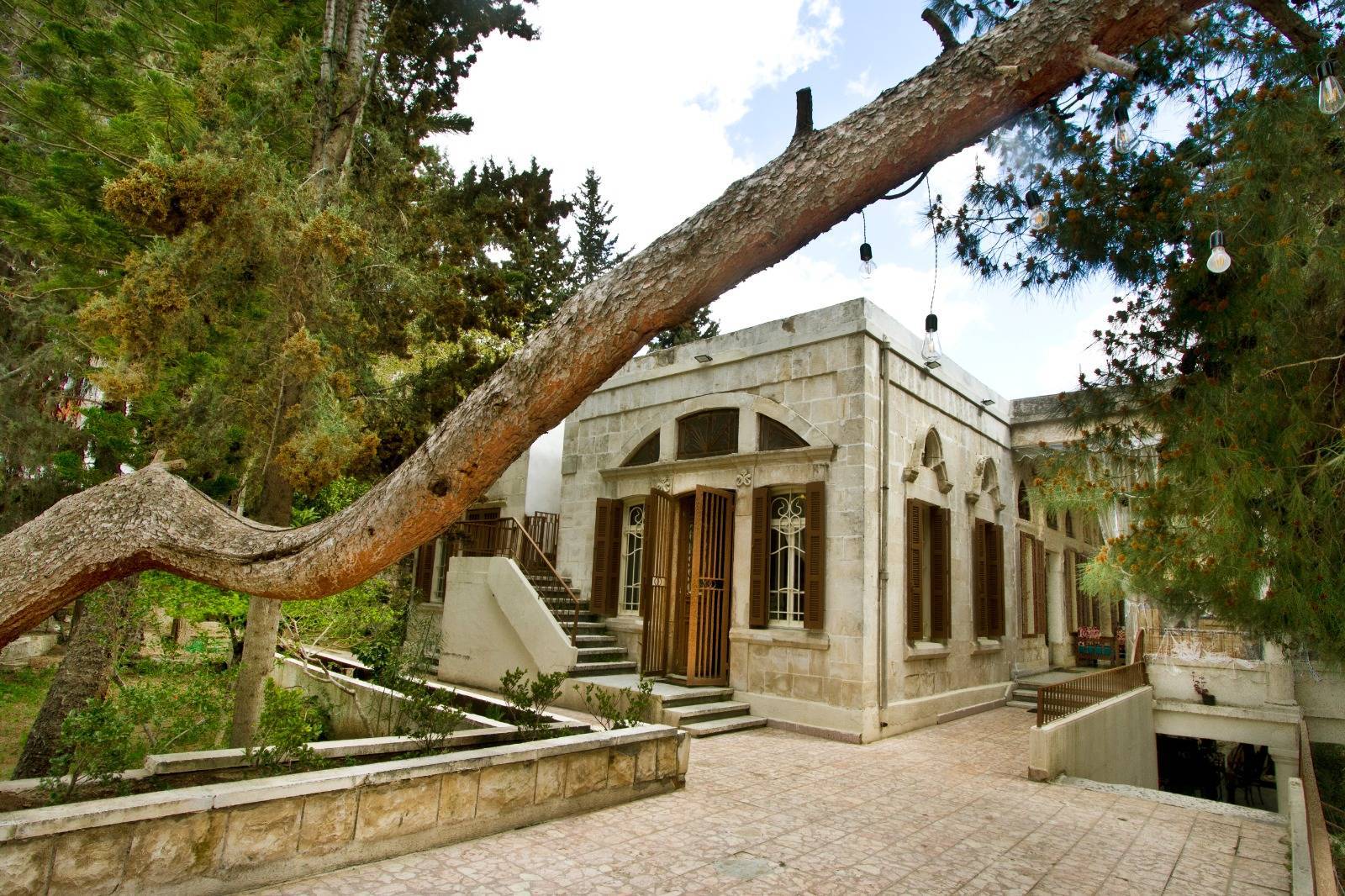
The home of Dr. Adnan Sharif (Kamel Jaber archive)

The home of former lawmaker Anwar Sabbah, father of Sadek Sabbah, director of Sabbah Brothers television production company, was also demolished. Built on a hill in Nabatieh in the early 1990s, it was separate from the family residence in the city, which remained standing.

Strikes also razed Ghandour Hospital, one of the main hospitals that provided medical services to the Nabatieh area during the period of occupation beginning in the 1980s.

A War on History

Israeli strikes did not only target houses and mansions but also hit archaeological and heritage sites across the south.

A market dating to the Mamluk era in Nabatieh was heavily bombarded, leaving part of it in ruins. The capital of an ancient column was dislodged at a UNESCO-listed site in the southern coastal city of Tyre.

A religious site known as “Shamoun al-Safa,” visited by both Muslims and Christians in the southern town of Shamaa, was also razed, as was Shamaa’s Crusader castle.

There is also no information about the condition of “Ain al-Fawqa” in Taybeh after the area surrounding it in the town square was devastated. The water collection spring was built in a spiral form and contains architectural features resembling examples from the Roman and Byzantine periods. It was restored during the Ottoman era.

Culture Minister Ghassan Salame told Reuters last month that historic towns outside the designated area were pummeled with airstrikes, including Tyre and Nabatieh.

Heavy bombing hit the town of Tebnin, prompting fears that its Crusader fortress was also damaged, Salame said.

"Heritage is not only Roman and Phoenician antiquities,” he added. “Heritage is also historic buildings, archaeological sites, and buildings with a cultural function."

He expressed concern that the Israeli campaign could completely erase centuries of Lebanese history.

UNESCO, meanwhile, said in a statement that it was concerned about the situation in Tyre, a World Heritage site under the agency’s enhanced protection.

It added it was deeply concerned by reports of damage to Shamaa Castle in South Lebanon and fighting near Beaufort Castle, denouncing what it described as “unlawful attacks on cultural property.”


‘A Moral Red Line’? World on Cusp of Autonomous Weapons Revolution

Pedestrians look on as a van, displaying a screen asking for a Treaty on AI Weapons, drives through Westminster in London, Wednesday, Nov. 11, 2026. (AP)
TT

‘A Moral Red Line’? World on Cusp of Autonomous Weapons Revolution

Pedestrians look on as a van, displaying a screen asking for a Treaty on AI Weapons, drives through Westminster in London, Wednesday, Nov. 11, 2026. (AP)

Lethal autonomous weapons powered by artificial intelligence are set to revolutionize warfare but there is no proper regulatory or legal framework governing the new technology.

A conference starting Monday at the United Nations in Geneva will discuss how to establish curbs and prohibitions on such weapons, called killer robots by some.

But some analysts doubt the discussions at the Convention on Certain Conventional Weapons (CCW) will keep pace with the fast-changing weapons.

AFP looks at three key questions ahead of the conference.

- What are LAWS? -

Lethal Autonomous Weapons Systems (LAWS) "can identify, select, and engage a target without the intervention of a human operator in the execution of these tasks," said Jean-Marc Rickli, head of global and emerging risks at the Geneva Centre for Security Policy.

Autonomous weapons have long existed. An anti-personnel mine "is an autonomous weapon in the sense that it explodes when someone steps on it," said Laure de Roucy-Rochegonde of the Centre for Geopolitics of Technology at the French Institute of International Relations (IFRI).

But with the proliferation of AI-enhanced drones, such weapons are now "capable of selecting and engaging a target that was not predetermined, adapting to their environment without human intervention," said Rickli.

So the critical issue for potential regulators lies in determining the level of human control over the decision to employ such a weapon.

The United States refers to an "appropriate levels of human judgement" in the use of autonomous weapons.

France maintains that a human must remain in the decision-making loop and bans "lethal autonomous weapons systems" (LAWS) but permits "partially autonomous" systems known as PLAWS.

"The human role is always ensured through what is termed 'appropriate control' by a military commander -- a concept that varies in scope depending on the system's criticality and the operational context," said Rear Admiral Vincent Sebastien, deputy director of the French defense ministry's Agency for Defense Artificial Intelligence (AMIAD).

- The ethical issues?

"We are now dangerously close to crossing a moral red line: the autonomous targeting of humans by machines," UN Secretary General Antonio Guterres, and International Committee of the Red Cross president Mirjana Spoljaric warned in a joint statement in August.

But analysts said the Geneva discussions, while important, will touch only part of the issue.

Today, the diminishing role of humans is being driven by the growing use of AI in analysis and targeting.

Rickli said the scope of the agenda in Geneva is "very narrow".

"It fails to encompass the full range of issues surrounding AI on the battlefield" -- an area where its use is expanding, particularly in target generation.

He said this was seen in the US-Israeli war against Iran this year "where the Americans engaged as many as 1,000 targets per day" inside Iran.

"There are a host of problems and unacceptable risks associated with targeting and decision-support systems," added de Roucy-Rochegonde. "Part of this debate concerns systems that are already widely deployed on the battlefield."

"What kind of human supervision is required to ensure that the operator is genuinely exercising their own judgement rather than simply providing a rubber stamp for the machine's recommendations?" she asked.

- How quickly is the situation changing?

The autonomous weapons to be discussed in Geneva are not yet in widespread use, although analysts have noted that they have been deployed by Russia in its invasion of Ukraine, as well as US attacks in Iran.

But the spread is inevitable.

"Autonomy will very quickly become a reality on the battlefield," warned rear admiral Sebastien.

"Autonomous weapon systems are not part of a distant future -- a race towards greater autonomy in weapons systems is already well underway," Guterres and Spoljaric said in their statement.

Yet significant doubts and dangers remain, Dario Amodei, head of the AI giant Anthropic, warned this year: "Today, frontier AI systems are simply not reliable enough to power fully autonomous weapons."

But ultimately, the incentive for major powers is too strong.

Swarms of autonomous drones -- which "aim to neutralize an adversary through saturation" -- would be highly effective, and some states view them as a crucial strategic advantage, said Rickli.

In January, the Chinese defense ministry described swarms of autonomous drones as the "new face of warfare."

"In an era of sharp military competition, the first state to normalize fully autonomous lethal strikes will reset expectations for everyone else," said Gerald Mako, a research affiliate of Cambridge University in the Small Wars Journal.


In Taiwan, Jensen Huang’s ‘Flawless’ Image Damaged by Affairs

Photos of Nvidia CEO Jensen Huang during a previous visit are displayed at a local snack shop in Taipei on November 13, 2026. (AFP)
TT

In Taiwan, Jensen Huang’s ‘Flawless’ Image Damaged by Affairs

Photos of Nvidia CEO Jensen Huang during a previous visit are displayed at a local snack shop in Taipei on November 13, 2026. (AFP)

Taiwan-born Jensen Huang, the former boss of Nvidia, was feted like a rock star on visits to his birthplace, posing for selfies with fans and being mobbed by journalists.

His spectacular downfall might change that.

Huang's once "flawless" image in Taiwan has been shattered by revelations of two extramarital affairs -- including one with a woman accused of being a Chinese spy -- that forced him to resign from the company he founded.

"I thought he had the persona of a devoted husband, and it turns out he's kind of a scumbag," Ivan Liang, 28, told AFP during his lunch break on Friday.

Huang has been a source of pride and inspiration for many Taiwanese. While other tech titans kept a low profile, Huang was chatty and charming in public, readily signing autographs and posing for photos.

"I definitely think my perception of him has changed because, after all, he originally had that 'nation's dad' image," said Leo Fu, a 42-year-old import distributor.

"I feel like that image of him has probably taken a hit in the eyes of the general public in Taiwan."

Dessert shop owner Jane Hsieh, 70, still has fond memories of Huang visiting her store on multiple occasions for one of her traditional tofu puddings.

"Before this, he felt like such a flawless person," Hsieh told AFP in her shop where photos of her and her husband posing with the leather-jacketed Huang, his wife Lori, and son Spencer, are proudly displayed.

"It's just a shame because he gave everyone the impression that he was a really great guy, and he was always very polite when he came here," she said.

While her feelings about Huang have changed as a result of the affairs, Hsieh said she would not remove the photos from her shop.

"Why kick someone when they're down?" she said.

- 'Pretty outrageous' -

At the Chinese restaurant where one of Huang's lovers -- identified as suspected Chinese spy Alice Huang -- was filmed kissing him on the cheek in May 2025, a plate signed by Huang on the same night is still on display.

Staff were reluctant to talk about the infamous evening to AFP on Friday, only saying they were always focused on serving their customers.

"I think it's pretty outrageous," 38-year-old Chen Yu-ting, who works in finance, said of Huang's affair with someone believed to have spied for Beijing.

"If the other person really was trying to use him, it seems like he was just way too easily deceived," she said.

"Given his status, he really should be paying much closer attention to the people around him and who he associates with."

While Huang's affairs have tarnished his reputation, some Taiwanese are more concerned about the impact the scandal could have on Taiwan's economy and stock market.

Huang has generated huge amounts of wealth for the island at the centre of the global artificial intelligence (AI) technology boom.

Nvidia's advanced chips critical to the AI buildout are made by Taiwanese tech titan TSMC and have helped drive Taiwans' stocks to record highs and push its economy into double-digit growth.

Ivan Liang, who works in imports and exports, said he was "very worried".

"The market crashed... a few days ago, and then Nvidia's stock price just kept dropping and dropping and dropping," Liang said.

"I don't trade US stocks myself, but the US and Taiwan stock markets definitely move in tandem and affect each other," he said.

"Whatever he does is none of my business -- I only care about my money."


Can One Security Force Implement Resolution 1701 and the Framework Agreement in Southern Lebanon?

A UNIFIL military vehicle patrols the southern Lebanese town of Ibl al-Saqi (AFP)
TT

Can One Security Force Implement Resolution 1701 and the Framework Agreement in Southern Lebanon?

A UNIFIL military vehicle patrols the southern Lebanese town of Ibl al-Saqi (AFP)

Countries involved in Lebanon are considering a security force to replace the United Nations Interim Force in Lebanon (UNIFIL) when its mandate expires at year-end.

The force would support the Lebanese army in implementing agreements and international resolutions in southern Lebanon. But can a new force enforce both UN Security Council Resolution 1701 and the US-brokered framework agreement between Lebanon and Israel?

Talks have produced broad agreement on the need for such a force, but its composition, mandate, operating procedures and participating countries remain undecided.

The uncertainty was reflected in a statement by Group of Seven foreign ministers after their Nov. 9-10 meeting in Paris. They called for a robust, credible, and long-lasting security architecture in Lebanon to support the Lebanese Armed Forces, in line with Resolution 1701 and to advance implementation of the Trilateral Framework.

No further agreements were announced.

US envoy to visit Beirut

Attention now turns to a visit to Beirut on Monday by US Ambassador to the United Nations Mike Waltz, who is due to meet with President Joseph Aoun.

Recent media reports suggest Washington is moving to replace UNIFIL in southern Lebanon with a verification committee and substitute the framework agreement for Resolution 1701.

The resolution ended a 33-day war between Israel and Hezbollah in 2006. Its main provisions included an Israeli withdrawal from Lebanon and the deployment of additional UN troops to monitor the cessation of hostilities alongside the Lebanese army.

Lebanon, Israel and the United States signed the Trilateral Framework Agreement in Washington on June 26, setting out a phased process to end the conflict and restore Lebanese sovereignty over the country's entire territory.

Under the agreement, the Lebanese army would gradually assume security control of designated "pilot zones" as non-state armed groups are disarmed and their military infrastructure dismantled, paving the way for a phased Israeli withdrawal.

The agreement also calls for a US-backed military coordination group to oversee and verify implementation.

It remains unclear whether separate international forces would replace UNIFIL and oversee the framework agreement, whether the two mandates could be merged, or whether Resolution 1701 would be dropped in favor of the agreement, with a single force assigned to implement it.

'Complicated' transition

A diplomatic source described the situation as "complicated," saying the current transition differs from the circumstances surrounding Resolution 1701.

At the time, a new military and political reality had emerged that the parties sought to preserve, the source told Asharq Al-Awsat.

Today, the source said, the mandate, powers, composition and operating procedures of any force replacing UNIFIL remain unclear.

The framework agreement also presents a legal obstacle.

"It is an understanding between three parties and cannot be imposed on the international community or assumed to have its automatic endorsement," the source said.

Turning it into a Security Council resolution would be difficult, the source added, because some member states could object.

Israel's position

Israel appears reluctant to accept a new international force to replace UNIFIL, which it accuses of having allowed Hezbollah to expand toward its border.

According to details emerging from recent negotiations over the framework agreement's implementation, Israel wants direct oversight of efforts to verify that the pilot zones are free of Hezbollah weapons and military infrastructure.

It favors a mechanism giving it a continuing monitoring and operational role rather than relying on reports from an independent international body.

Fundamental differences

Military and strategic expert Brigadier General Khalil Helou said UNIFIL's departure would render Resolution 1701 meaningless, effectively allowing the framework agreement to take its place.

"Resolution 1701 contains clear provisions and has a legal dimension, unlike the US-sponsored framework agreement, which requires negotiations to implement each of its provisions," Helou told Asharq Al-Awsat.

Merging the two would therefore be difficult, he said.

The framework agreement also makes no provision for foreign forces to implement it. Instead, it outlines understandings between Lebanon and Israel, with a military annex setting out reciprocal steps, he added.

Legal obstacles

Legally, a single force could implement both Resolution 1701 and the framework agreement. But constitutional and legal expert Adel Yamin said the nature of its mandate would pose further obstacles.

"Verifying disarmament is more intrusive than providing conventional support to the army," Yamin told Asharq Al-Awsat.

Such a mission could require clearer rules of engagement, raising questions about the host state's consent, he said.

Yamin also cited reports that Israel opposed an international force including French troops and that Washington considered Resolution 1701 obsolete, favoring the framework agreement as a basis for direct communication between the Lebanese and Israeli militaries.

One option, he said, would be a UN force or mission to implement Resolution 1701 alongside a multinational mechanism to oversee the framework agreement.

But that would risk overlapping powers and conflicting reports.

UN umbrella for framework agreement

International efforts are also being discussed to bring the framework agreement under UN auspices, potentially superseding Resolution 1701.

Yamin outlined several legal routes.

One would be to register the agreement with the UN Secretariat under Article 102 of the UN Charter, provided it qualifies as a treaty.

Registration would not give the agreement effective UN backing but would allow it to be invoked before UN bodies, he said.

Another option would be for the parties to send identical letters seeking Security Council endorsement, followed by a presidential statement or resolution welcoming the agreement.

The council could also endorse the agreement and annex it to a resolution, or establish a new force or expand an existing mandate to implement it, following the model of the United Nations Disengagement Observer Force (UNDOF).

But Yamin warned that UN backing would be a double-edged sword.

It would internationalize Israel's withdrawal obligations rather than leave them dependent solely on US guarantees. At the same time, it would place Lebanon's commitments to bring weapons under exclusive state control under tighter international scrutiny.

Yamin also cautioned against incorporating into a UN resolution any provisions that could cast doubt on Israel's obligation to withdraw immediately from Lebanon.

Such provisions should not gain international legal cover, he said, arguing that any clause undermining Lebanon's sovereignty or territorial integrity would violate both the UN Charter and the Lebanese Constitution and would be automatically void.