Lebanon Urges US Pressure on Israel, Seeks Army Support and Commits to Reforms

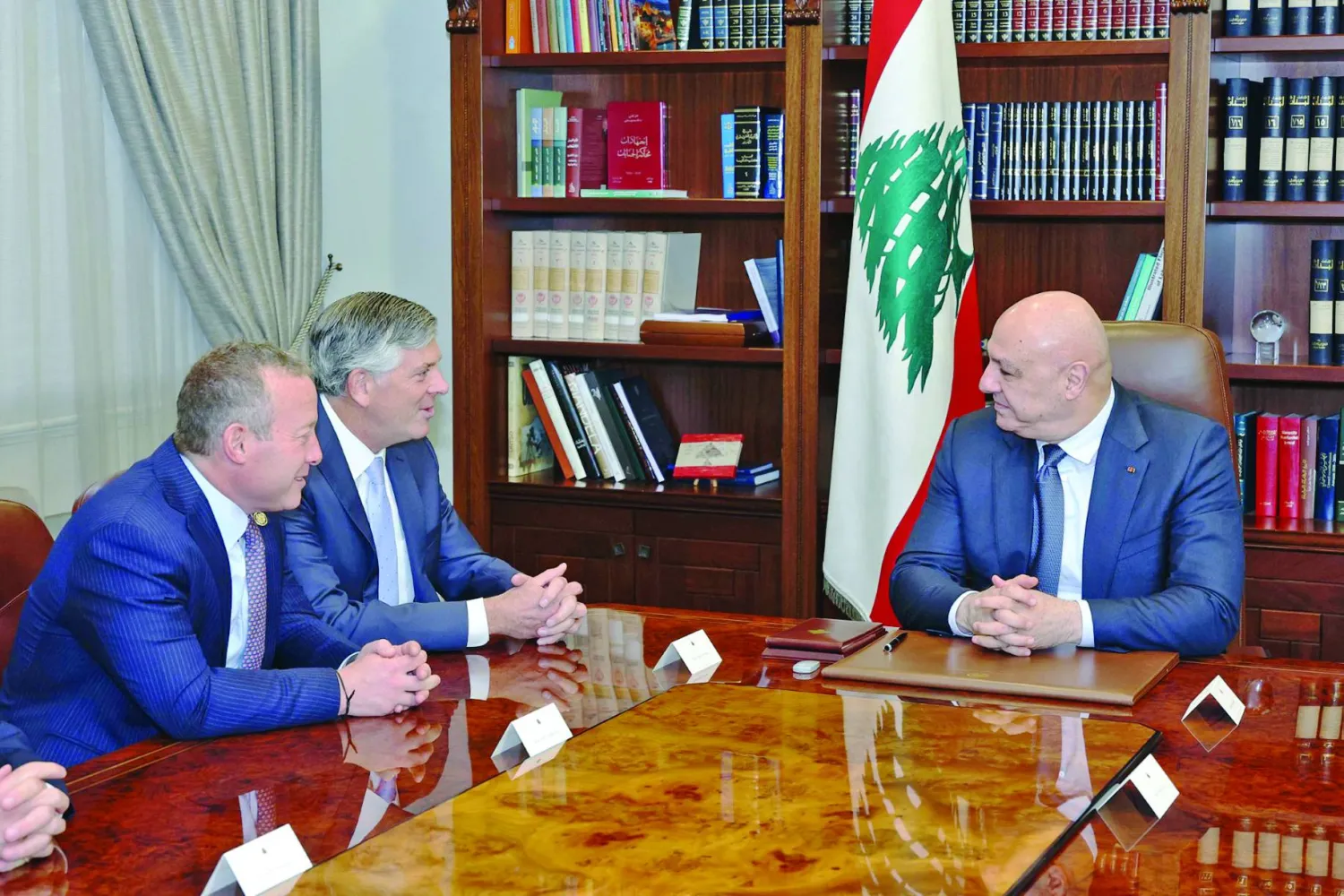
President Joseph Aoun welcoming US Congress members Darin LaHood and Josh Gottheimer (Lebanese Presidency)
TT

Lebanon Urges US Pressure on Israel, Seeks Army Support and Commits to Reforms

President Joseph Aoun welcoming US Congress members Darin LaHood and Josh Gottheimer (Lebanese Presidency)

Lebanon’s top leaders urged Washington to pressure Israel to implement agreements and halt its operations in South Lebanon, while stressing the need for continued support for the Lebanese Army and pledging to press ahead with economic, financial and political reforms.

The messages emerged from President Joseph Aoun’s and Parliament Speaker Nabih Berri’s meetings with US Reps. Darin LaHood and Josh Gottheimer, as well as Prime Minister Nawaf Salam’s talks in Washington.

Aoun told the US lawmakers that Lebanon was placing considerable importance on Washington pressuring Israel to implement the “framework agreement” reached through Lebanese-US-Israeli negotiations in Washington.

Lebanon remains fully committed to the agreement, while Israel continues to disregard its provisions, Aoun stressed, according to a Lebanese presidency statement.

He stressed the need to halt demolition, bulldozing and destruction activities in the southern villages occupied by Israel, arguing that implementing the agreement required accelerating the return of Lebanese prisoners, resolving disputed points along the Blue Line and a gradual Israeli withdrawal from Lebanese territory alongside Lebanese Army deployment up to the internationally recognized southern border.

Aoun warned that continued delays would prolong tensions in the south and hinder the state’s ability to extend its authority throughout its southern territory, remove armed manifestations and return displaced residents to their villages and towns.

He also underscored the need to provide the Lebanese Army with the resources required to carry out its wide-ranging duties, from combating terrorism and smuggling and securing borders to protecting institutions and maintaining civil peace.

On domestic affairs, Aoun reaffirmed the government’s commitment to financial, economic and judicial reforms, pointing to legislation including amendments to the banking secrecy law, bank restructuring and the media law.

LaHood described the current situation as an opportunity to restore stability to Lebanon and the wider region and affirmed continued US assistance to Lebanon and its army through military aid provided by the administration with congressional approval.

Berri, meanwhile, focused on the continuing Israeli operations in Lebanon, arguing that Israel’s failure to fulfill its obligations under agreements reached to end the war was the main obstacle to their implementation.

He reiterated that the US administration and President Donald Trump had the ability to pressure Israel to halt its war on Lebanon, warning that its continuation would undermine efforts by the state and its institutions to carry out their roles, according to a statement from the parliament speaker’s office.

Berri welcomed assistance to the Lebanese Army but stressed the need to avert a failure to renew the mandate of the UN Interim Force in Lebanon, or UNIFIL, noting that there was still time to prevent such a step.

During a separate meeting with a British military delegation, he emphasized the importance of maintaining a UN umbrella and flag for any force assisting the Lebanese Army after Israel withdraws from occupied Lebanese territory.

Deputy Prime Minister Tarek Mitri also presented Berri with a documented report on crimes committed by Israeli forces in South Lebanon. Berri maintained that Lebanon’s right to pursue Israel over those acts was a “sovereign right” that could not be relinquished.

In Washington, Salam discussed economic and financial relations with US Treasury Secretary Scott Bessent, along with financial and banking reforms, negotiations with the International Monetary Fund and cooperation with the World Bank.

Salam outlined government measures to address the repercussions of Lebanon’s financial crisis and rebuild the banking sector, while seeking US support for reforms and economic recovery. Discussions also covered efforts to curb the cash economy and strengthen transparency, compliance and measures against money laundering and terrorism financing.

Meeting young Lebanese in Washington, Salam linked domestic reform with full state sovereignty, stressing that state-building rested on two inseparable tracks.

“There can be no state with two armies, and no state with two decision-making authorities,” he declared, reaffirming the government’s determination to pursue reforms and extend state authority across all Lebanese territory.

Salam stressed that government success should be measured not only by laws and projects but by its ability to build a country where young people see a future, making the return of Lebanese from abroad “a choice, not a sacrifice.”

He called for a state that respects its citizens and provides a trustworthy judiciary, a productive economy and an effective administration, urging Lebanese abroad to remain engaged through their expertise, investments and connections.

“Judge us by our work; judge us by the results,” Salam concluded.


France Says to Hold Conference for Lebanese Forces after Israeli Elections

French President Emmanuel Macron gestures as he speaks to members of the media on the day of the 9th Annual One Planet Sovereign Wealth Funds (OPSWF) Summit, in Lusail, Qatar, 21 October 2026.  EPA/BENOIT TESSIER
French President Emmanuel Macron gestures as he speaks to members of the media on the day of the 9th Annual One Planet Sovereign Wealth Funds (OPSWF) Summit, in Lusail, Qatar, 21 October 2026. EPA/BENOIT TESSIER
TT

France Says to Hold Conference for Lebanese Forces after Israeli Elections

French President Emmanuel Macron gestures as he speaks to members of the media on the day of the 9th Annual One Planet Sovereign Wealth Funds (OPSWF) Summit, in Lusail, Qatar, 21 October 2026.  EPA/BENOIT TESSIER
French President Emmanuel Macron gestures as he speaks to members of the media on the day of the 9th Annual One Planet Sovereign Wealth Funds (OPSWF) Summit, in Lusail, Qatar, 21 October 2026. EPA/BENOIT TESSIER

French President Emmanuel Macron said on Wednesday that this country will organise a conference to support the Lebanese armed forces after the Israeli elections this month, as truce talks between the two sides stall.

"We will also coordinate to carry out this work of support for the Lebanese armed forces and a conference will be set up in the coming weeks by France... I think it is useless to do it before the Israeli elections, but we will organise such a conference because it is unavoidable," he told reporters in Qatar.

Israel goes to the polls on October 27.

Lebanese authorities last year committed to disarming Hezbollah after months of cross-border hostilities culminated in a 2024 war between the group and Israel.

But Hezbollah drew Lebanon into the Middle East war this year by attacking Israel, which responded with heavy strikes and a ground invasion.

In June, Lebanese and Israeli authorities signed a framework agreement which involves the disarmament of Hezbollah, a gradual Israeli withdrawal from territories it occupies, and the deployment of the Lebanese army to the area.

Hezbollah has rejected surrendering its weapons and the direct negotiations with Israel.


Syria: Israeli Forces Shell Quneitra Countryside

An Israeli military vehicle is seen near the border between the Israeli-occupied Golan Heights and Syria, May 4, 2025. REUTERS/Shir Torem/File Photo
TT

Syria: Israeli Forces Shell Quneitra Countryside

An Israeli military vehicle is seen near the border between the Israeli-occupied Golan Heights and Syria, May 4, 2025. REUTERS/Shir Torem/File Photo

Israeli forces fired several artillery shells on Wednesday at the area around eastern Tell al-Ahmar in the southern Quneitra countryside in southern Syria.

The Syrian Arab News Agency (SANA) said that “occupation forces fired two projectiles that landed on agricultural land around eastern Tell al-Ahmar, causing no injuries".

Israel continues to violate the 1974 Disengagement Agreement through repeated incursions into southern Syria, raids on and arrests of civilians, land bulldozing and shelling, among other attacks, the agency said.

Syria has repeatedly called for Israeli forces to withdraw from its territory, stressing that all measures taken by Israel are null and void and have no legal effect under international law. Damascus has also urged the international community to fulfil its responsibilities and compel Israel to withdraw fully from southern Syria.


Report: Baghdad Closes Border Crossing with Iran Under US Pressure

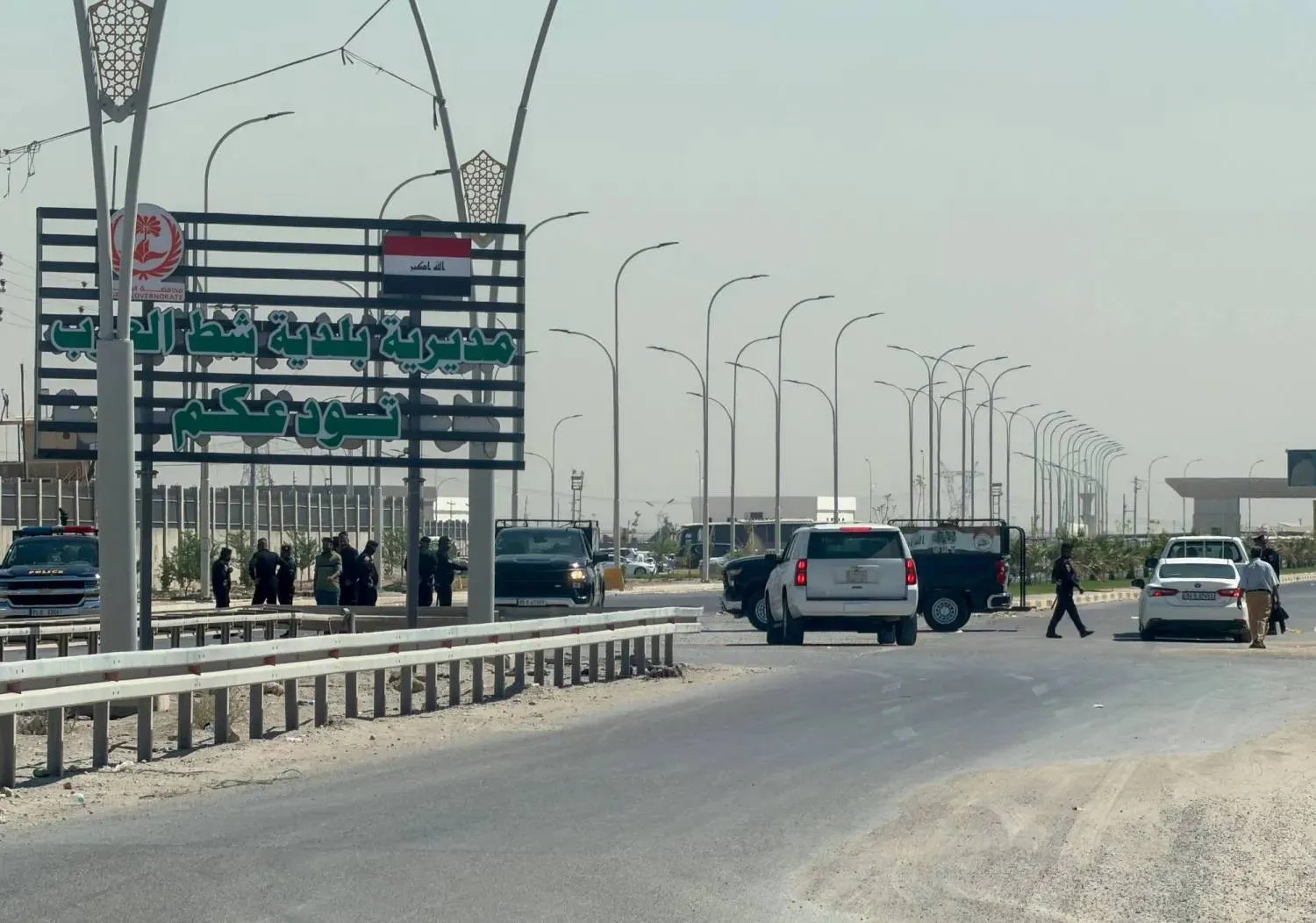
 Security personnel stand near the Shalamsheh border crossing between Iraq and Iran, after Iraqi authorities ordered its closure as a precautionary measure following the latest drone attacks on Saudi Arabia, in Basra, Iraq, September 12, 2026. (Reuters)
Security personnel stand near the Shalamsheh border crossing between Iraq and Iran, after Iraqi authorities ordered its closure as a precautionary measure following the latest drone attacks on Saudi Arabia, in Basra, Iraq, September 12, 2026. (Reuters)
TT

Report: Baghdad Closes Border Crossing with Iran Under US Pressure

 Security personnel stand near the Shalamsheh border crossing between Iraq and Iran, after Iraqi authorities ordered its closure as a precautionary measure following the latest drone attacks on Saudi Arabia, in Basra, Iraq, September 12, 2026. (Reuters)
Security personnel stand near the Shalamsheh border crossing between Iraq and Iran, after Iraqi authorities ordered its closure as a precautionary measure following the latest drone attacks on Saudi Arabia, in Basra, Iraq, September 12, 2026. (Reuters)

Iraqi authorities on Wednesday closed a border crossing with Iran "until an unspecified date", an Iraqi source told AFP, with two other sources saying the US is pressuring Baghdad to close more crossings in order to tighten the screws on Tehran. 

A source at Iraq's border crossings authority told AFP Wednesday that the al-Sheeb crossing "has been closed since this morning until an unspecified date", without specifying the reason. 

The Iranian judiciary's Mizan Online website confirmed the closure, adding that it came "following a decision by the Iraqi prime minister's office". 

The two countries are bound by close political, religious and economic ties and share a border of more than 1,400 kilometers (850 miles) with at least eight official crossings. 

Washington has been seeking to increase economic pressure on Iran since the outbreak of the Middle East war in February, and has imposed sanctions on entities it accuses of being linked to Tehran. 

Two political sources told AFP that the United States is pressuring the Iraqi government to close all border crossings with Iran. 

One of the sources said "the US Treasury Department raised this with (Prime Minister Ali) al-Zaidi when he was in New York" last month to attend the UN General Assembly. 

The source said "all border crossings will be closed except for one crossing in federal territory and one crossing in the Kurdistan region", which is semi-autonomous. 

The second source added that "the United States has asked all countries bordering Iran to do the same". 

Iranian authorities have acknowledged disruptions on the border with Pakistan. 

"Regarding Pakistan, yes, there have been disruptions to border exchanges with some neighboring countries," Iranian interior ministry spokesperson Ali Zeinivand said on Wednesday. 

"Some of these disruptions are naturally occurring and happen in various periods, even when there is no war or sanctions."