Di Maio Tells Asharq Al-Awsat: Saudi Summit to Drive More Ambitious Gulf-EU Partnership

Geopolitical shifts call for stronger cooperation between Europe and Gulf states, Di Maio says (Gulf Research Center)
TT

Di Maio Tells Asharq Al-Awsat: Saudi Summit to Drive More Ambitious Gulf-EU Partnership

Geopolitical shifts call for stronger cooperation between Europe and Gulf states, Di Maio says (Gulf Research Center)

The upcoming Gulf-EU summit in Saudi Arabia carries added weight amid regional turmoil, with both sides seeking a stronger partnership spanning security, defense, the economy, new technologies and artificial intelligence, said Luigi Di Maio, the European Union’s special representative for the Gulf region.


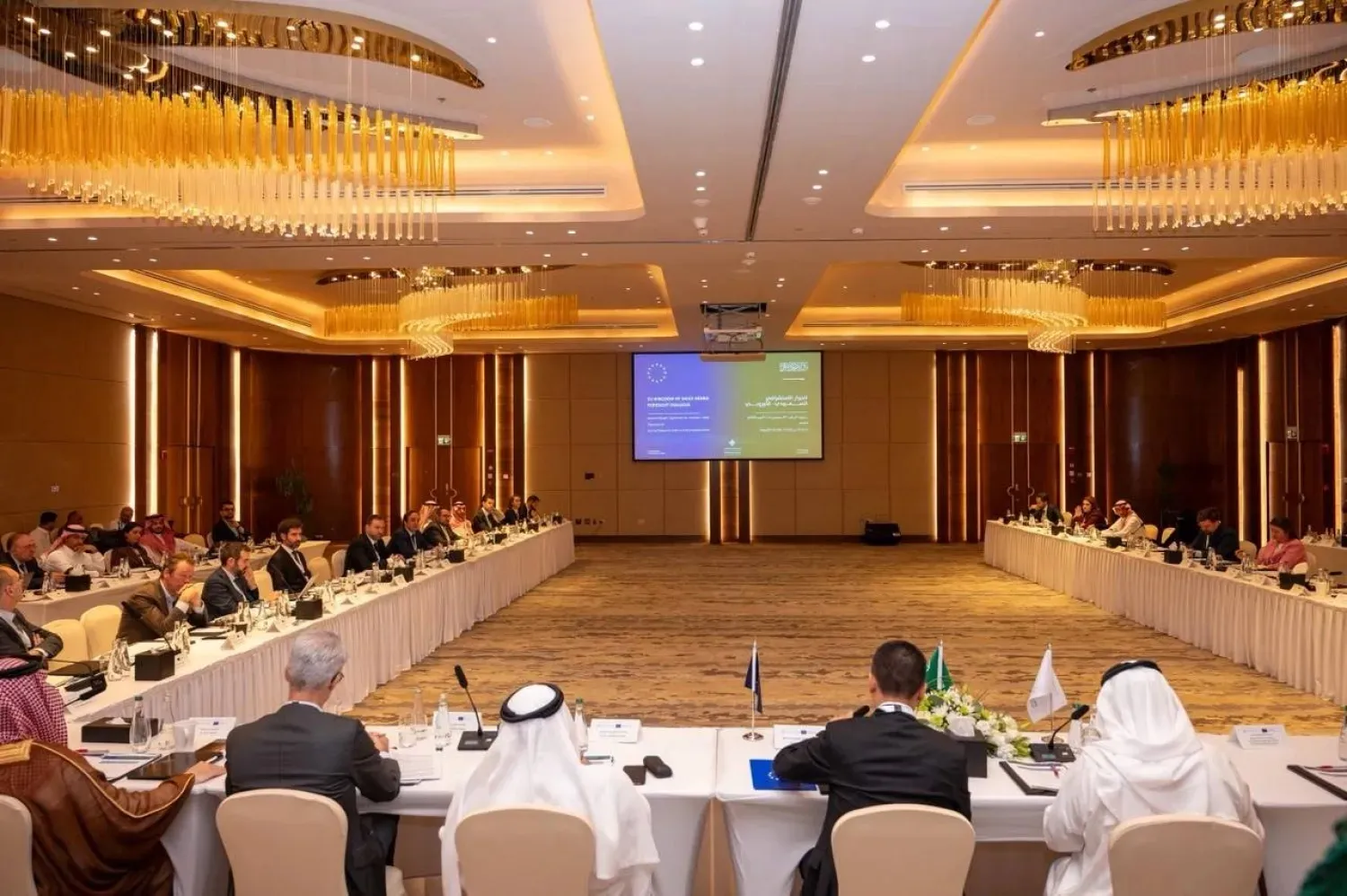
Speaking to Asharq Al-Awsat on Wednesday at the Saudi-European Foresight Dialogue in Riyadh, organized by the Gulf Research Center and the EU, Di Maio said European leaders’ attendance would underscore the importance both sides placed on their ties.


It would also signal solidarity and political support for countries in the region, particularly Saudi Arabia, amid current developments.


Riyadh will host the second Gulf-EU summit in October, bringing together monarchs and heads of state and government from both sides.


Di Maio said regional conditions made the summit all the more important, with European leaders’ participation demonstrating both the strength of the relationship and support for Gulf countries, especially Saudi Arabia.


High ambitions


The summit comes two years after the first meeting of the Gulf Cooperation Council and EU leaders in Brussels, which set the stage for regular summits.


Di Maio said that the meeting established a two-year cycle, with Saudi Arabia set to host the second summit.


He declined to disclose the main agenda items while preparations and negotiations were underway, but said both sides wanted a highly ambitious summit.


Geopolitical upheaval


Di Maio linked closer Gulf-EU ties to rapid shifts in the international order, saying the two regions faced shared security challenges that demanded stronger cooperation.


He described a new era in which the world was moving from multilateralism toward a multipolar order, exposing Europe and the Gulf to upheaval from accelerating geopolitical changes.


Both regions would be better placed to confront those challenges together, he said, with each needing stronger cooperation with the other.


From defense to AI


Di Maio said the scope for cooperation extended well beyond politics and security, encompassing the economy, defense, ties between people and modern technologies.


He called for stronger partnerships across those fields, including the race in artificial intelligence, as well as closer links between universities and businesses in the two regions.


Many initiatives were already underway among European and Gulf institutions, companies and communities, he said.


The time had come to bring them into a more structured, integrated partnership, building on the strategic partnership for peace and prosperity agreed by leaders at the first summit.


Greater European involvement


Abdulaziz bin Sager, chairman of the Gulf Research Center, called for Gulf-EU agreement on key regional issues.


He pointed to France’s support for Saudi efforts toward a two-state solution and work to advance it in New York, alongside several countries’ recognition of a Palestinian state.


In a separate interview with Asharq Al-Awsat, bin Sager said priorities included building a shared understanding of Gulf security and addressing Iranian attacks on regional countries, the closure of the Strait of Hormuz and Tehran’s use of proxies to obstruct shipping through the Bab al-Mandab Strait.


Those actions affected the global economy, freedom of navigation and political positions, he said.


He called for commitments to translate into active participation in safeguarding maritime navigation. The European Aspides mission was a capable force, he said, but needed to double its capabilities.


“Europeans also benefit from the security of maritime routes. Protecting navigation is an international responsibility, not Saudi Arabia’s alone,” he said.


Saudi Arabia and 17 Arab, Islamic Countries Condemn Israeli Strike on Nasser Medical Complex in Gaza

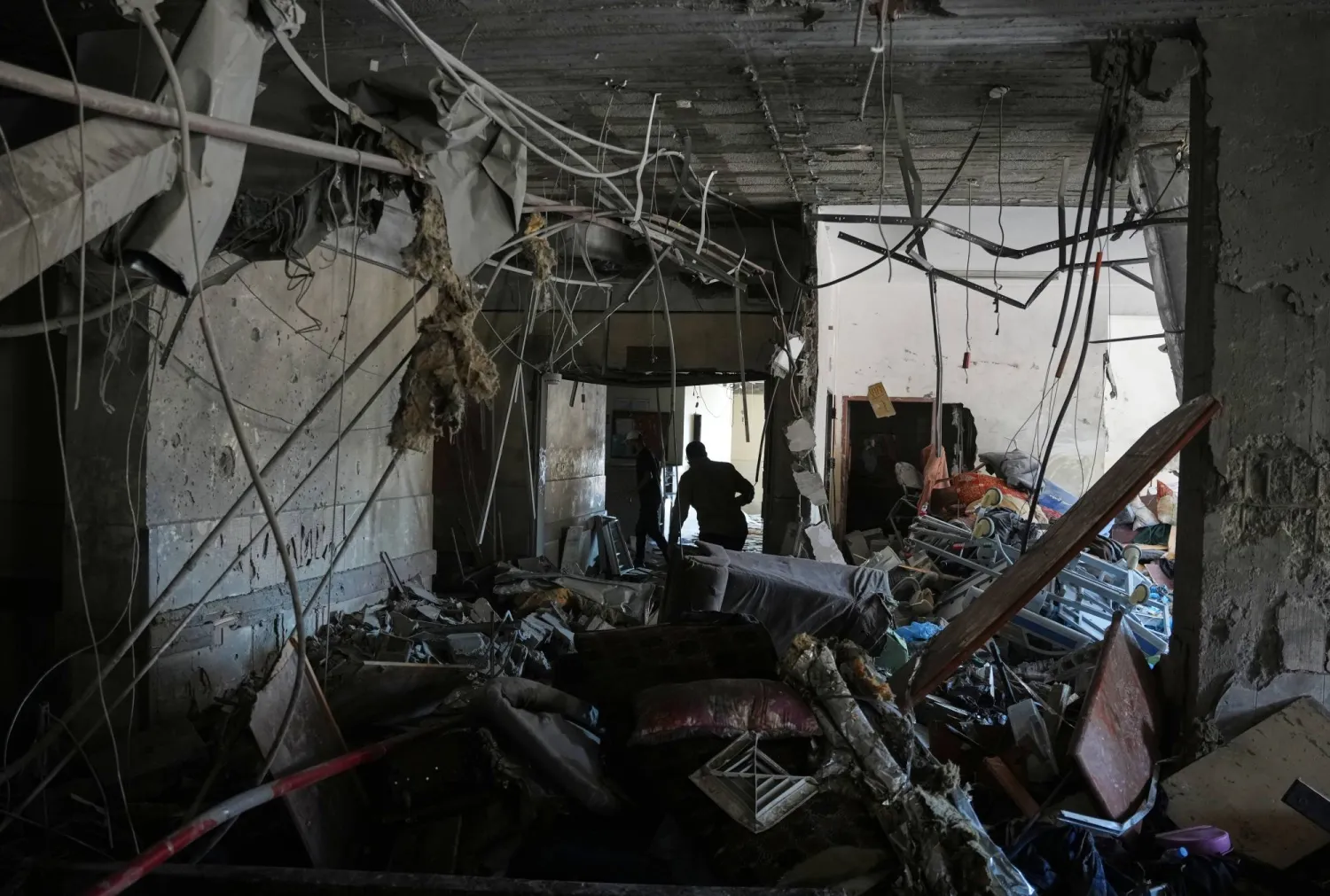
 People inspect damage to Nasser Hospital after it was hit by an Israeli airstrike overnight in Khan Younis, Gaza Strip, Thursday, Nov. 12, 2026. (AP)
People inspect damage to Nasser Hospital after it was hit by an Israeli airstrike overnight in Khan Younis, Gaza Strip, Thursday, Nov. 12, 2026. (AP)
TT

Saudi Arabia and 17 Arab, Islamic Countries Condemn Israeli Strike on Nasser Medical Complex in Gaza

 People inspect damage to Nasser Hospital after it was hit by an Israeli airstrike overnight in Khan Younis, Gaza Strip, Thursday, Nov. 12, 2026. (AP)
People inspect damage to Nasser Hospital after it was hit by an Israeli airstrike overnight in Khan Younis, Gaza Strip, Thursday, Nov. 12, 2026. (AP)

Saudi Arabia and 17 Arab and Islamic countries strongly condemned on Saturday the Israeli on the Nasser Medical Complex in Khan Younis earlier this week.

The foreign ministers of Saudi Arabia, Egypt, Sudan, Libya, Palestine, Djibouti, Somalia, Oman, Mauritania, Jordan, Qatar, Kuwait, the United Arab Emirates, Türkiye, Pakistan, Indonesia, Lebanon, and Algeria slammed the attack “as a violation of international humanitarian law, which affords special protection to medical facilities and healthcare workers.”

In a statement, they also condemned “continued Israeli attacks on Palestinian civilians, including strikes on tents and other sites sheltering displaced persons.”

“These attacks undermine the ceasefire and efforts to restore security and stability in Gaza and are inconsistent with President Trump’s Comprehensive Plan,” they added.

An Israeli airstrike hit one of the main hospitals still operating in the Gaza Strip on Thursday, killing six people and wounding 28 others.

The Israeli military said the strike on Nasser Hospital in southern Gaza targeted an unidentified Hamas commander and other fighters, without providing evidence.

The FMs expressed on Saturday “grave concern that continued Israeli restrictions on humanitarian aid, shelter materials, including tents, caravans and mobile homes, as well as medical supplies are deepening Gaza's humanitarian catastrophe as winter approaches.”

“Inadequate shelter and deteriorating water, sanitation and healthcare services put civilian lives at grave risk, particularly those of children and infants, who could once again die from exposure to freezing temperatures,” they warned.

The FMs called on Israel “to heed appeals from the international community and the Board of Peace, for increased aid and to fulfil immediately and in full its obligations under the Sharm El-Sheikh Agreement, President Trump's Comprehensive Plan and United Nations Security Council Resolution 2803.”

“Israel must uphold the ceasefire, protect civilians and medical facilities, and ensure the safe, sustained and unimpeded delivery of humanitarian aid in sufficient quantities, including shelter and early recovery supplies and equipment to restore essential infrastructure,” they demanded.

“It must also allow UN agencies and humanitarian organizations to carry out their mandates without obstruction,” they said.

“These first-phase commitments were due to take effect upon signature. Israel must implement them without further delay or additional conditions, including political and security conditions, that impede humanitarian access,” they continued.

“Urgent humanitarian assistance must proceed independently of progress on subsequent phases. The ministers called on the United States and the Board of Peace, within their respective roles, to intensify their efforts to ensure Israel's full implementation of these commitments and the lifting of all restrictions on the entry of humanitarian aid, thereby preserving the credibility of the agreements and consolidating the ceasefire,” they stressed.

The ministers reaffirmed their determination “to work with regional and international partners to consolidate the ceasefire, implement all phases of the Plan and scale up humanitarian assistance to alleviate the suffering of the brotherly Palestinian people.”


Coalition Destroys 2 Houthi Drones Fired at Riyadh, Southern Regions

Saudi air defenses. (Saudi Ministry of Defense)
TT

Coalition Destroys 2 Houthi Drones Fired at Riyadh, Southern Regions

Saudi air defenses. (Saudi Ministry of Defense)

The Coalition to Restore Legitimacy in Yemen announced on Saturday the interception and destruction of two drones in the Riyadh and Southern Regions launched by the terrorist Houthi militia toward Saudi Arabia.

In Yemen, the army announced that it had carried out 723 strikes and targeting operations "hitting Houthi militia sites, gatherings, fortifications, firing positions, vehicles, and combat equipment."

According to an army statement, the operations included "37 airstrikes by warplanes, 56 targeting operations by drones, 89 by rocket launchers, and 541 by field artillery."

Internationally, the United Nations Security Council condemned earlier this week the Houthi attacks on Saudi Arabia and their threats to commercial vessels in the Bab al-Mandeb Strait and the Red Sea, affirming the Kingdom's right to self-defense.

The Council unanimously adopted Resolution 2837, which calls for an immediate halt to the attacks, intensified efforts to combat weapons smuggling to the group, and stricter oversight on its access to drone and ballistic missile components, alongside tasking the Panel of Experts with tracking the group's funding sources and revenues.

The Gulf Cooperation Council welcomed the resolution, calling for it to be translated into a concrete commitment that protects civilians, facilities, and the safety of international navigation.


Türkiye, Qatar Sign Mutual Defense Agreement

Turkish President Recep Tayyip Erdogan meets with Qatar's Emir Sheikh Tamim bin Hamad Al Thani in Istanbul, Türkiye, November 13, 2026. (Murat Cetinmuhurdar/Turkish Presidential Press Office/Handout via Reuters)
TT

Türkiye, Qatar Sign Mutual Defense Agreement

Turkish President Recep Tayyip Erdogan meets with Qatar's Emir Sheikh Tamim bin Hamad Al Thani in Istanbul, Türkiye, November 13, 2026. (Murat Cetinmuhurdar/Turkish Presidential Press Office/Handout via Reuters)

Türkiye and Qatar announced on Friday that they signed a mutual defense agreement, which they said was aimed at adopting a "unified position" in the face of an external attack.

The announcement came after Turkish President Recep Tayyip Erdogan met Qatari Emir Sheikh Tamim bin Hamad Al Thani in Istanbul.

Erdogan had said the agreement would further strengthen ties between them, according to his office.

Qatar's ruler travelled to Istanbul after attending the United Nations COP31 climate summit in southern Türkiye.

"The two parties hailed the signing of the mutual defense agreement between Qatar and Türkiye," according to a joint statement carried by Qatar's state news agency.

The agreement was "aimed at bolstering collective defense and achieving regional security and stability, as well as adopting a unified position in the face of any external armed attack targeting either or both parties", the statement said.

"The two parties agreed to hold consultations on threats to their security... and to strengthen cooperation through joint military exercises, collaboration in the field of defense industries, and the exchange of personnel training."

Erdogan's office had earlier announced the agreement, without going into the details of its contents.

"A mutual defense agreement signed by Türkiye and Qatar today will add a new dimension to the brotherly ties between the two countries," Erdogan said during the meeting, according to the statement from his office.

Erdogan also said Türkiye and Qatar would expand cooperation in the defense industry.