Sunken Silk Road City Reveals Central Asia's Lost History

Little is known about the history of the settlement under Kyrgyzstan's largest lake. Vyacheslav OSELEDKO / AFP
TT

Sunken Silk Road City Reveals Central Asia's Lost History

Little is known about the history of the settlement under Kyrgyzstan's largest lake. Vyacheslav OSELEDKO / AFP

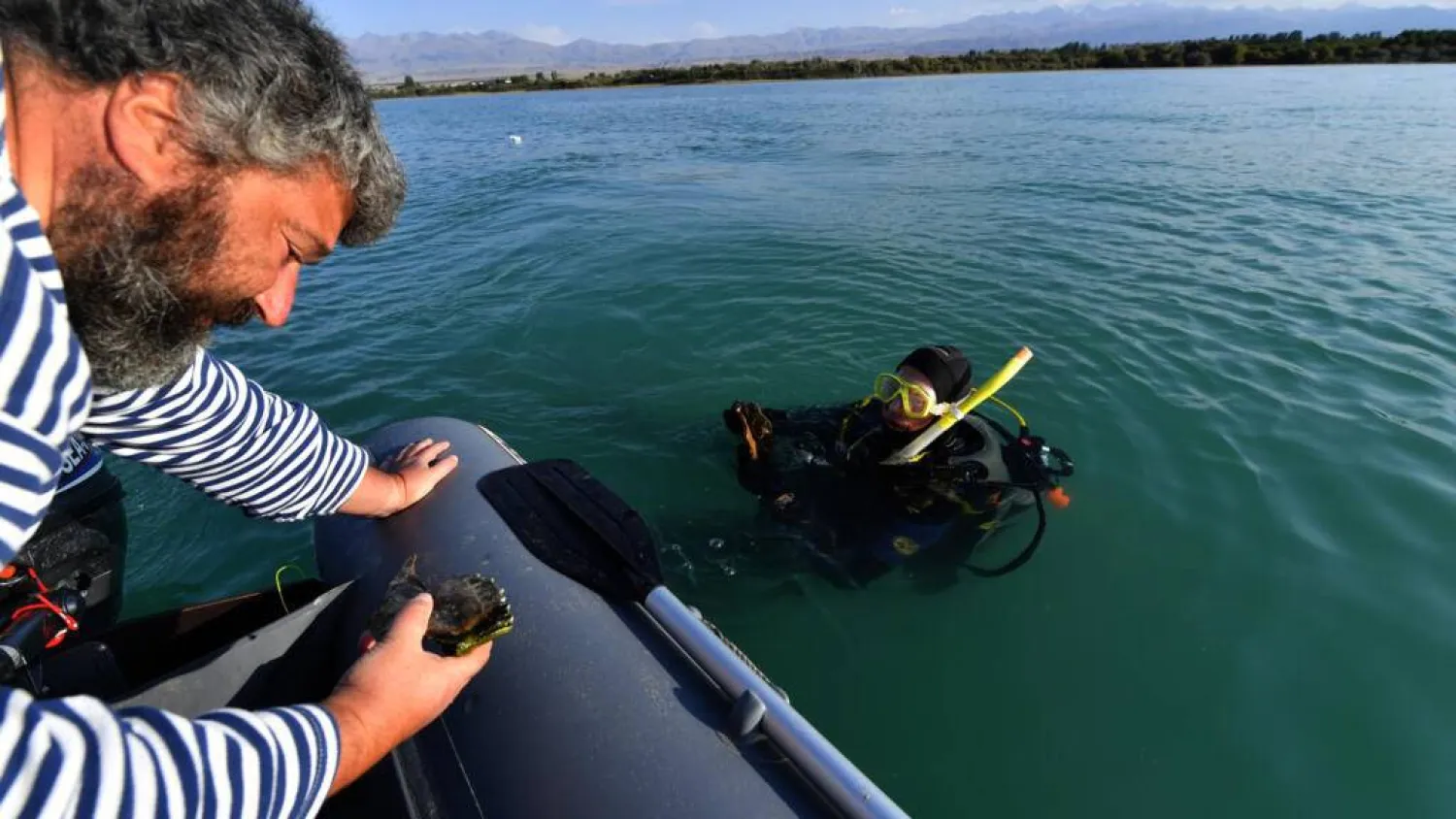
The sun had barely risen, but diving volunteer Elizaveta Bodrova was already raring to plunge into the cold waters of Lake Issyk-Kul, where the ruins of a once-thriving city have lain submerged for centuries.

Situated on an ancient trading route between China and Europe, little is known about the history of the settlement under Kyrgyzstan's largest lake or how it came to be flooded an estimated 800 years ago.

Together with a team of around 20 scientists, Bodrova is helping uncover its past, findings that could shape our understanding of the history of Central Asia and beyond.

"The visibility isn't very good today, but I hope we'll still be able to find the boundary of the settlement," the 42-year-old told AFP with a smile, before hopping off a motorboat into the depths below.

The project, which began in 2024 and is funded by the Russian Academy of Sciences, is the first major exploration of the site since it was rediscovered in the 19th century.

- 'Blind spot' -

The settlement is located at the heart of what was once the Silk Road, a trading route that linked China to the Mediterranean from the 2nd century BC until the mid-15th century.

Although often associated with nomads, what is now Kyrgyzstan has been inhabited by multiple civilizations throughout its history, among them Turkic dynasties that traded between Europe and China.

"This is actually a blind spot in history, even though it is right in the center of Central Asia," expedition director Maxim Menshikov, who was steering the boat, said of the ruins.

"It is a very important chapter in the history of humankind, because it was the period that linked East and West during the Middle Ages. The Silk Road is not merely the history of a single region, it is the history of Eurasia as a whole," he added.

The section of Silk Road that passed through the settlement during its existence is thought to have been under the control of the Karakhanids, a Turkic dynasty that controlled much of Central Asia from the 9th to early 13th centuries.

Researchers believe the city, the name and population of which are not known, may have covered up to five square kilometers (nearly two square miles).

Accurately dating the remains has been difficult.

But traces of two cemeteries discovered at the site suggest they were built during the early Islamization of the region.

Among the discovered remains was a decorated public building, possibly a mosque, public bath or religious school.

- Like 'Pompeii' -

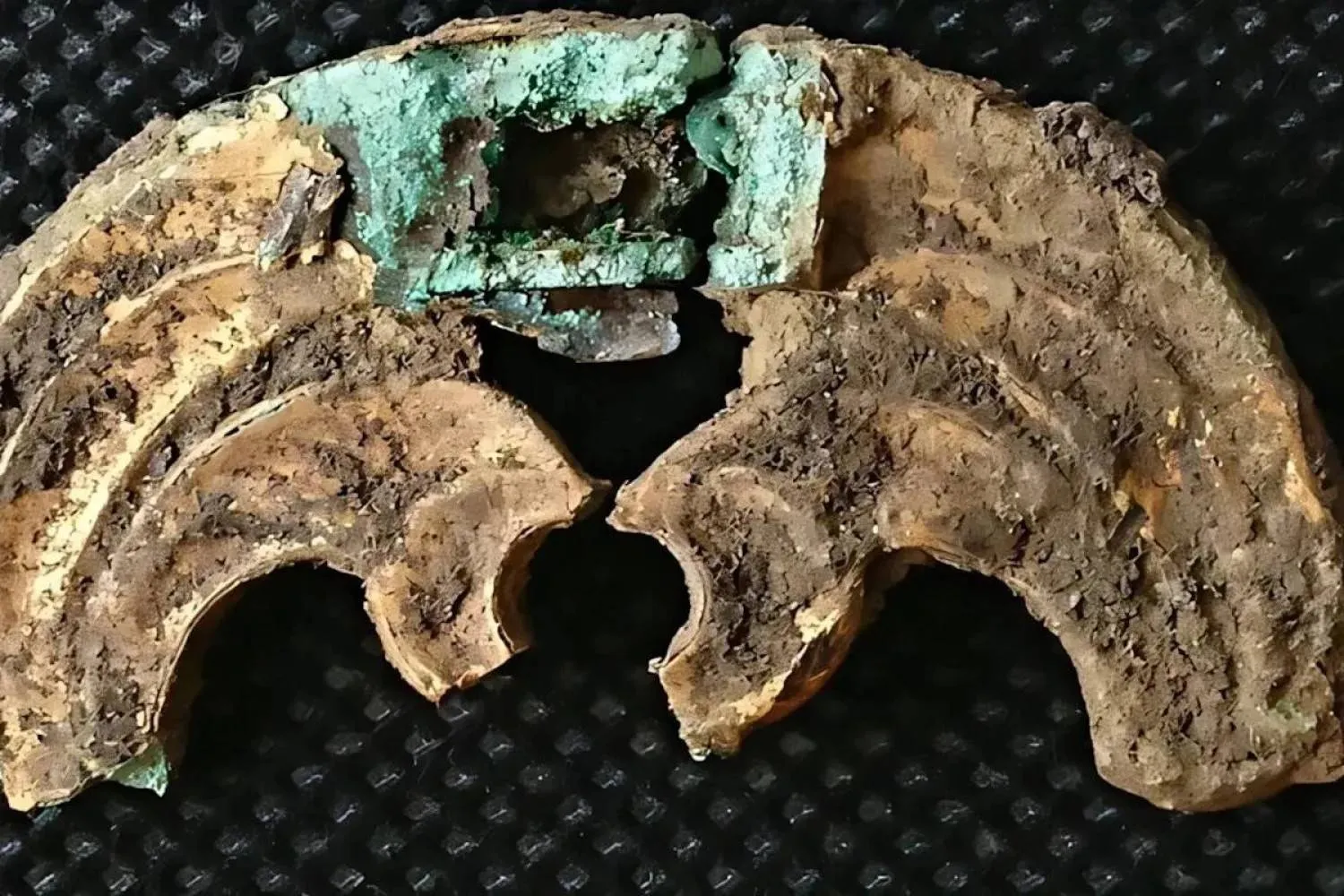
After several hours scouring the lakebed, the divers returned to dry land with their spoils: the remains of animal bones and pottery shards.

"The bones that have been found will enable archaeologists to determine their diet and age of the remains, as well as the diet of the people who lived in this region," said Viktor Pozdnyakov, a diver and laboratory assistant on the expedition team.

"The pottery will enable us to date the finds and determine the approximate period more precisely. And, of course, to understand where it was produced, how and by what method," the 22-year-old added.

Back at base, the artefacts are carefully preserved, catalogued and recorded.

Among those in better condition was a child's chamber pot, known as a "tuvaq".

"In fact, these are still in use today in Central Asia and the Caucasus," said Menshikov, pointing to it as evidence of the daily life in the city.

Although known to researchers since the 19th century, the site has only been systematically explored in recent years by Russian and Kyrgyz teams.

The researchers hope their work will improve understanding of Central Asian history.

"You could compare this research to that of Pompeii," said Menshikov, referring to the largely preserved ruins of an ancient Roman city buried by an eruption of Mount Vesuvius in 79 AD.

"They had a highly developed civilization and culture. And in an instant, nature simply destroyed it all," he said.

What submerged the city under Issyk-Kul remains a mystery.

Among the theories is that the settlement sank to the bottom of the lake following a landslide, or that it was gradually flooded by a "tectonic dam" -- a natural damming of a water body that could have occurred following an earthquake.

The probable cause was a "past seismic disaster," said Andrei Strelnikov, a geologist with the Russian Academy of Sciences.


A Long-Buried Ancient Library in Rome Opens to the Public After Restoration

 Marble archaeological remains from the western library of Trajan's Forum, which archaeologists believe may have housed the ancient Bibliotheca Ulpia, one of ancient Rome's most important libraries, are displayed during a press preview of the restored site in Rome, Thursday, Nov. 19, 2026. (AP)
Marble archaeological remains from the western library of Trajan's Forum, which archaeologists believe may have housed the ancient Bibliotheca Ulpia, one of ancient Rome's most important libraries, are displayed during a press preview of the restored site in Rome, Thursday, Nov. 19, 2026. (AP)
TT

A Long-Buried Ancient Library in Rome Opens to the Public After Restoration

 Marble archaeological remains from the western library of Trajan's Forum, which archaeologists believe may have housed the ancient Bibliotheca Ulpia, one of ancient Rome's most important libraries, are displayed during a press preview of the restored site in Rome, Thursday, Nov. 19, 2026. (AP)
Marble archaeological remains from the western library of Trajan's Forum, which archaeologists believe may have housed the ancient Bibliotheca Ulpia, one of ancient Rome's most important libraries, are displayed during a press preview of the restored site in Rome, Thursday, Nov. 19, 2026. (AP)

The famed Alexandria Library in Egypt may have been lost, but another of the ancient world's repositories for texts has been restored in Rome and is reopening to the public this week.

The ruins of the Ulpia library are located in Emperor Trajan’s Forum, just next to the iconic column that celebrates his victorious campaigns against the Dacians and the Roman conquest of what is modern-day Romania. It remained inaccessible for almost a century.

“After the Alexandria Library of Egypt, after the Library of Pergamon in Asia Minor, this one in the Trajan’s Forum was certainly one of the most important, given both the number of ‘volumina,’ as books were called in ancient times, and the quantity of documents," Claudio Parisi Presicce, an archaeologist and Rome's superintendent for cultural heritage, said in an interview with The Associated Press.

The place was in a state of ruin when discovered in 1932 during clearing works by Benito Mussolini's government for the road that became the famous Via dei Fori Imperiali. Later, it was covered in concrete and used as a storage room for some of the countless pieces from Trajan's Forum, the last and greatest of the imperial fora, built in 112 AD.

But the niches in its walls were evidently spots to set cabinets for scrolls, signaling that this was one of the two, two-story buildings comprising the Ulpia library referenced in ancient texts, Presicce said.

Archaeologists from Rome's superintendency for cultural heritage identify it as the Ulpia library's western building, which ancient texts indicate stored Greek-language scrolls.

The new permanent exhibition offers visitors an idea of the space as it used to be, featuring the remains of some of the library’s rich marble decorations — white for the walls, and different colors for its floor and columns. Immersive videomapping is also projected on its walls, showing the history of the library and its discovery. Instead of scroll-filled cabinets, spread throughout the space today are broken Corinthian columns and pieces of sculptures.

The library was a fundamental part of the Forum, and a place that for centuries attracted citizens from all over Rome with its vast collection of edicts and documents.

“The libraries were used by both common citizens, those who could afford a certain cultural level and a better education than those from the lower classes, but also by magistrates who needed access to older documents, or needed to check the norms that regulated the life of the community,” he said.

Restoration started in 2025, and lasted about a year. The 1.75-million-euro cost ($1.92 million) came from the European Union’s pandemic recovery funds — just one of many restoration projects Rome is carrying out across the city with EU money.

It will initially be opened to visitors only on Fridays, Saturdays and Sundays. Visits are scheduled every 40 minutes, 20 people at a time.

The library's eastern building remains buried beneath an 18th-century church, on the other side of Trajan's Forum, and stored Latin-language scrolls. There are no plans for its excavation.


Afghan Tradition Keeps Grapes Fresh for Winter Treat

This photograph taken on November 10, 2026 shows Afghan farmer Muhammad Saber Shojaei seal packing grapes in mud-and-straw discs known as Kanginas before storing them in a dark room in the Kalakan district of Kabul province. (AFP)
TT

Afghan Tradition Keeps Grapes Fresh for Winter Treat

This photograph taken on November 10, 2026 shows Afghan farmer Muhammad Saber Shojaei seal packing grapes in mud-and-straw discs known as Kanginas before storing them in a dark room in the Kalakan district of Kabul province. (AFP)

On the outskirts of Afghanistan's frenetic capital Kabul, Muhammad Saber Shojaei is carrying out a centuries-old task of preserving fistfuls of grapes to be eaten when winter bites.

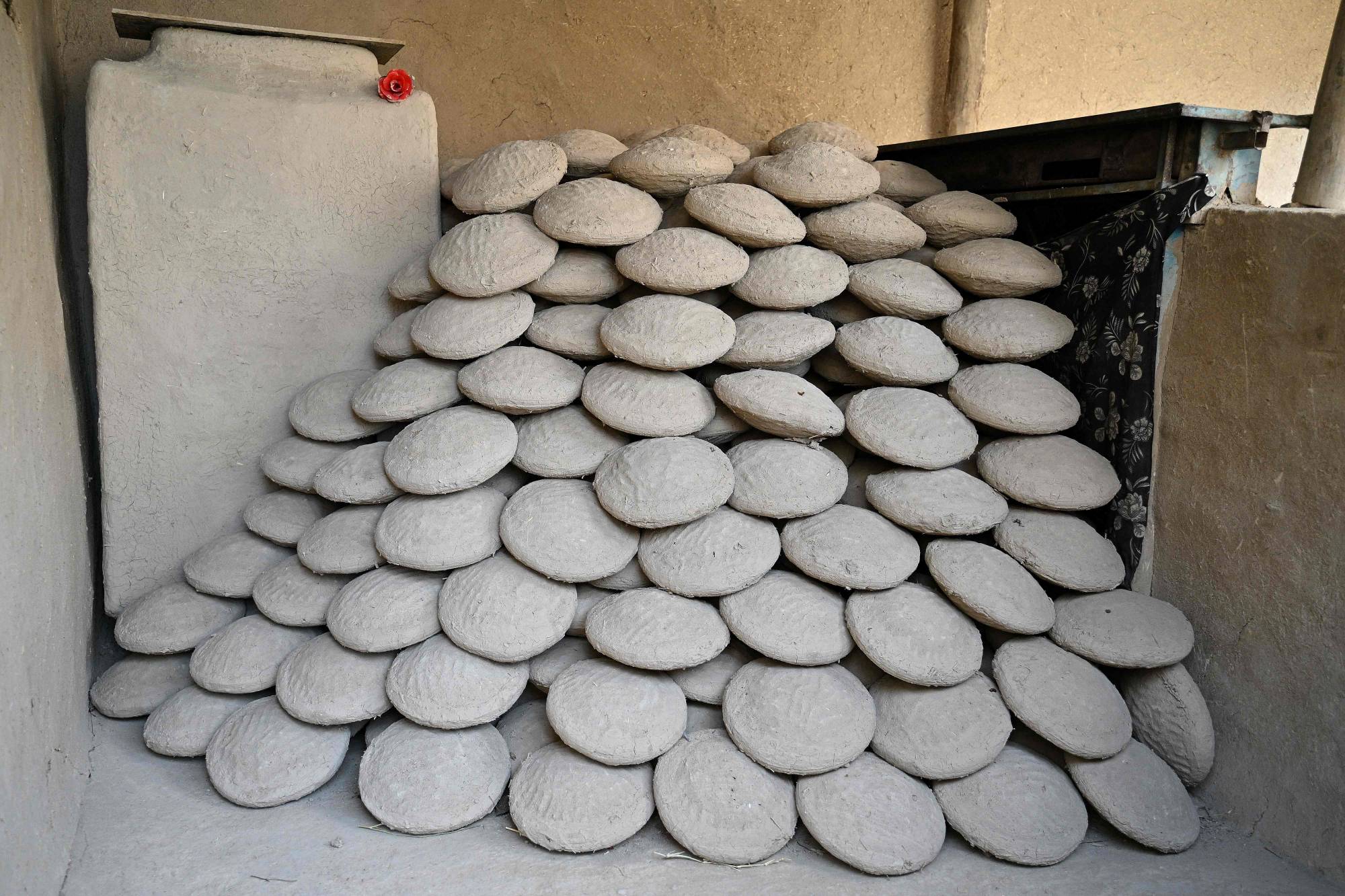
Crouched in front of dozens of "kanginas", clay-and-straw discs containing grapes, Shojaei recalls his father, who taught him the technique.

"I remember the old days, when we sat together around the sandali (stove), eating kangina grapes and enjoying those happy moments," said the 47-year-old from Kalakan district.

Carefully putting a bunch of grapes in one of the discs, Shojaei added a second disc on top and sealed the kangina with mud before placing it in a dark storage room.

"In this way, kanginas can keep grapes fresh from now until the spring," said the farmer, who makes about 700 each year to sell by the roadside.

No one knows quite how long kanginas have been used in Afghanistan, with estimates starting at "centuries" and the knowledge passed down through the generations.

This photograph taken on November 10, 2026 shows Kanginas, a traditional preserving method made from clay mud and straw used to keep grapes fresh for up to six months, in a storage inside of a house in the Kalakan district of Kabul province. (AFP)

During harvest season, grapes for sale can be seen bundled in big plastic bags, or piled high onto trucks as they're taken to markets further afield.

But such abundance comes with problems in Afghanistan, where cold storage to keep produce fresh is severely limited and the export route to Pakistan has been cut off by cross-border conflict.

Farhad Ezati, a 21-year-old trader, said "farmers can't even cover their costs" this year as grape prices have plummeted by 70 percent due to the border closure causing a supply glut.

Standing in a bright green field while laborers packed grapes into cardboard boxes, Ezati said competition among sellers is incredibly tough.

"Afghan grapes are the best," he said, his face brightening. "They're really high in quality... and have a really good taste."

- 'Keep our culture alive' -

Labor-intensive and fragile, kanginas cannot overcome large-scale storage or trade problems.

But in the depths of winter, Afghans living near the vineyards can buy them along the roadside or in nearby markets, and farming families can crack them open and enjoy fresh grapes.

Gulagha Frotan, a community leader in Kalakan, said people wait until snow or rain to enjoy them.

"We don't wash the grapes because they might lose their natural quality. We only blow away the dust, or shake them gently, and then they're ready to eat," the 61-year-old told AFP.

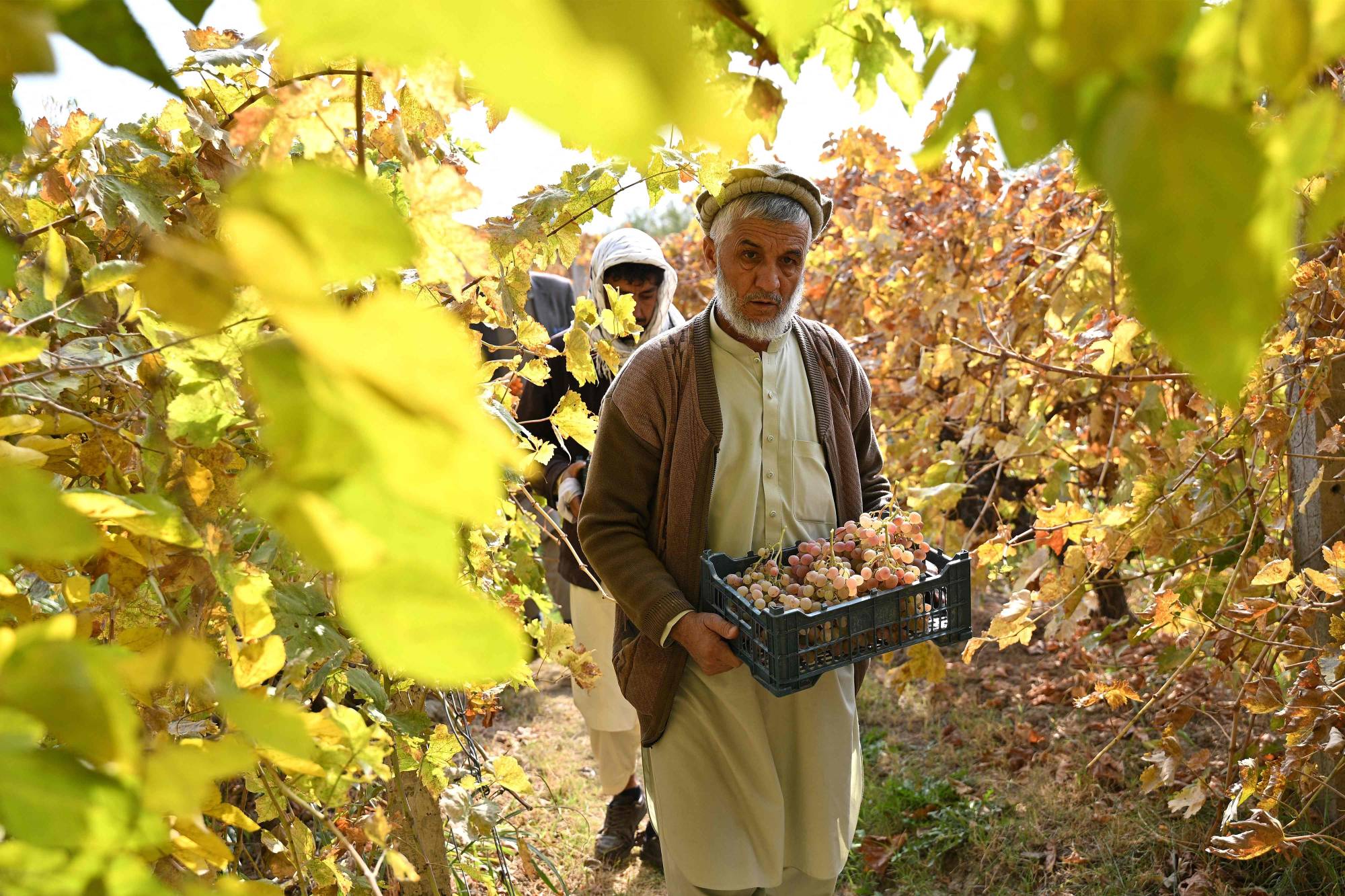
This photograph taken on November 10, 2026 shows an Afghan farmer carrying harvested fresh Taifi grapes in a vineyard in the Kalakan district of Kabul province. (AFP)

Despite its long history in the Kabul area, the practice is currently only being used in one other province, neighboring Parwan, according to the UN's Food and Agriculture Organization (FAO).

The agency's Ezatullah Noori said that, along with the cool weather, the large population in the area means that farmers don't have to travel far to sell the kanginas.

"There's potential for farmers to sell some of their grapes, rather than to lose them during the peak production season," said Noori, FAO's emergency and resilience team leader in Afghanistan.

He called for scientific research to better understand such unique heritage, as well as an organized effort to help farmers cooperate to sell their kanginas on a larger scale.

"I am afraid that one day this will disappear from our country and nobody will know how to make it," Noori told AFP.

"We should keep our culture alive."


Roman Treasure Trove Found During Excavation in Britain

Roman peltate cavalry dangler (The Archaeological Practice Ltd via Newcastle University)
TT

Roman Treasure Trove Found During Excavation in Britain

Roman peltate cavalry dangler (The Archaeological Practice Ltd via Newcastle University)

Archaeology students doing their first excavation found a major Roman-era treasure trove in UK’s Northumberland, shedding more light on life at the northernmost edge of the ancient empire.

The quantity and quality of the treasure, unearthed earlier this year, was a surprise even to experienced researchers, archaeologists from Newcastle University said, according to The Independent.

One of the most remarkable items in the trove was a gold-chain section measuring about 7cm.

It was so well preserved that, if it were complete, it could still be worn today, researchers said.

The chain was likely made using the sophisticated loop-in-loop technique, a hallmark of high-quality Roman goldsmithing. Its individual rings were carefully pinched into figure-eight shapes, folded, and then interwoven to create the chain.

Such chains were typically made from pure gold and associated with elite jewelry, military amulets, or special fittings for high-ranking officers and their families.

“Finding the gold chain was really surreal, especially given that it was the first day of my first dig. I didn't expect to find anything like that in my whole career, so it was definitely a surprise,” archaeology student Elise Zallu said.

“Finding a gold artifact is something many archaeologists can go an entire career without experiencing,” said Eric Tourigny of Newcastle University. “For a first-year student to discover a beautifully preserved Roman gold chain on their first day in the trench is truly remarkable.”

Another student, Shannon Wood, unearthed a folded piece of lead bearing traces of a Latin inscription.

The object was most likely a seal associated with trade, taxation, ownership, or the movement of goods through the Roman military supply network, researchers said. It functioned as a personal message or a “curse tablet.”

In the Roman Empire, people scratched prayers, grievances, requests, and even curses onto thin sheets of lead and deposited them in sacred places.