Israel Extends ‘Sufa 53’ Project in Southern Quneitra, Seizing Farmland

Israeli soldiers during a reconnaissance operation in the occupied Syrian Golan Heights (File photo - Reuters) 
TT

Israel Extends ‘Sufa 53’ Project in Southern Quneitra, Seizing Farmland

Israeli soldiers during a reconnaissance operation in the occupied Syrian Golan Heights (File photo - Reuters) 

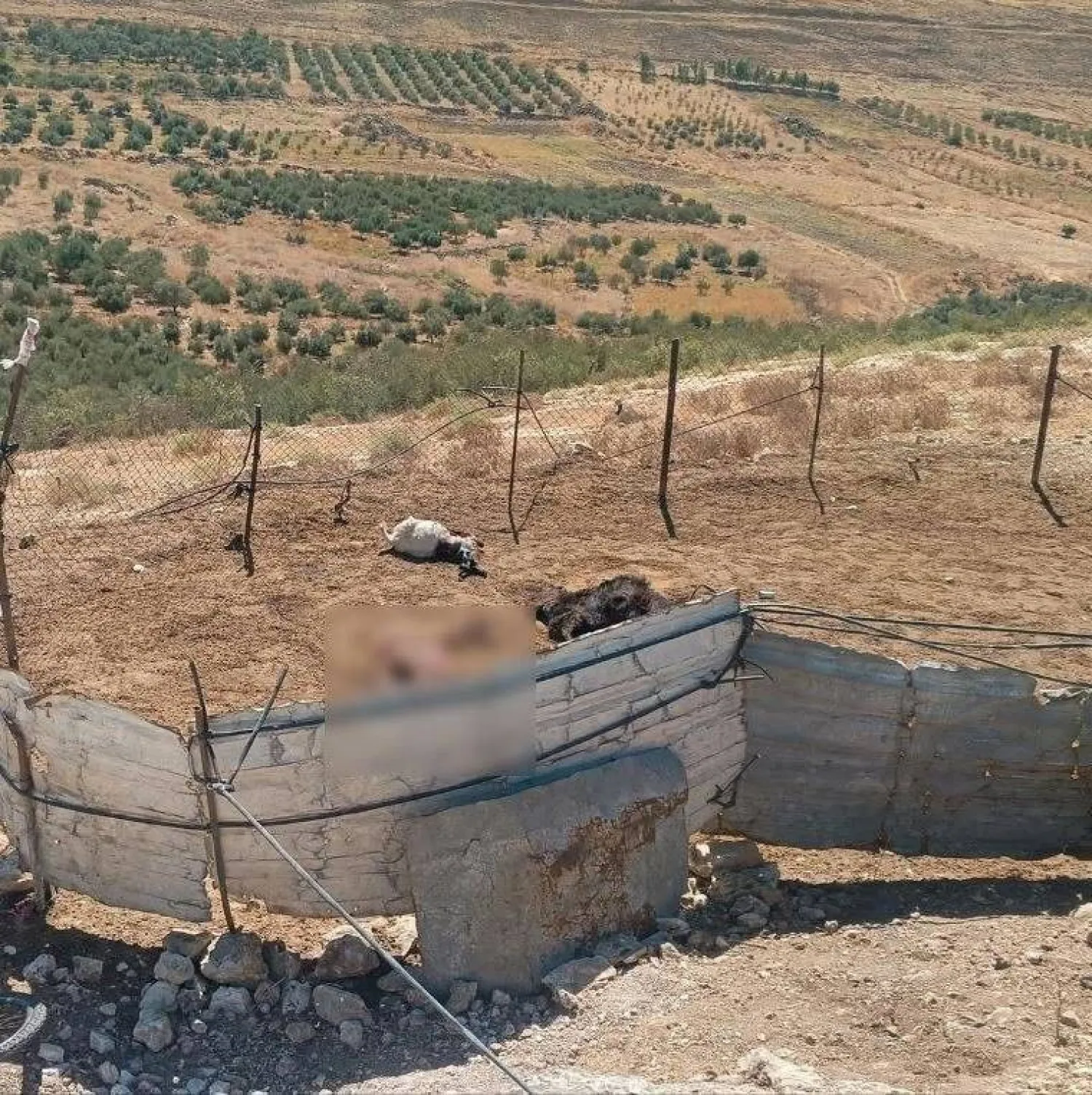
Israeli forces began work Monday on the “Sufa 53” line in the southern countryside of Syria’s Quneitra province, within the Syrian buffer zone bordering the occupied Golan Heights, after completing the project in the northern and central sectors and seizing thousands of dunams of farmland.

The move comes amid an escalation in Israeli attacks, incursions and violations of Syrian territory in Quneitra and Daraa provinces overlooking the ceasefire line. Such operations have intensified and become almost daily since the fall of the former government in late 2024.

A government source in southern Quneitra said Israeli military vehicles began excavation work west of al-Asha village, near al-Rafid, and at what is known as “Point 80,” belonging to the United Nations Disengagement Observer Force (UNDOF), which monitors the ceasefire line with Israel.

The work is part of efforts to complete Sufa 53 project, the source told Asharq Al-Awsat.

The source estimated that implementing the project in southern Quneitra, home to numerous villages including al-Muallaqa, al-Mushayda, al-Zaaroura, al-Ramthaniyah, al-Razaniyah, Abu Madhra, Ain al-Qadi and al-Asha, would result in Israel seizing more than 1,000 dunams of residents’ farmland, cutting off their source of livelihood.

Syria’s Foreign Ministry on Sunday condemned continuing Israeli violations of Syrian territory, most recently the work on Sufa 53, calling it a breach of the 1974 Disengagement of Forces Agreement and international resolutions.

It warned that continued Israeli attacks and ground incursions posed a direct threat to regional security and stability and undermined international law. The ministry called for international measures to halt such actions and reaffirmed Syria’s right to exercise full sovereignty over all its territory.

Sufa 53 project

Work on the Sufa 53 project in southern Quneitra follows Israel’s completion of the project in the province’s northern and central sectors in November 2022.

Local sources said the project resulted in the seizure of 4,000 dunams of residents’ land in Bir Ajam and the villages of Ruwayhinah, Zubayda and Bariqa in central Quneitra, while between 8,000 and 10,000 dunams were seized from Jubata al-Khashab alone in the north.

Mohammed al-Saeed, director of Quneitra’s media directorate, told Asharq Al-Awsat that Israel was seeking through Sufa 53 to impose a new reality and alter the geographical and security features of the Syrian buffer zone bordering the disengagement line.

Al-Saeed said the escalation in southern Syria was “not exceptional,” noting that Israeli incursions and violations had intensified since Syria was freed from the former government nearly two years ago. He suggested the latest escalation could be linked to upcoming Israeli elections, an effort to establish new facts on the ground, or an attempt to change the rules of engagement in order to alter the terms of negotiations and the 1974 agreement.

Israel began implementing Sufa 53 inside the Syrian buffer zone in mid-2022. Running alongside the disengagement line, the 70-kilometer (43-mile) route stretches from the outskirts of Hader through Jubata al-Khashab, al-Hamidiyah, al-Qahtaniyah, Ruwayhinah, Bir Ajam and Bariqa to al-Asha and the Yarmouk Basin in western Daraa.

The project involves an eight-meter-wide road fortified with five-meter-high earthen berms and equipped with observation posts and trenches along its route, ostensibly to prevent potential threats from Iran and its regional proxies, according to Israeli media reports.

A Quneitra-based journalist, who requested anonymity for security reasons, told Asharq Al-Awsat that completing Sufa 53 around al-Rafid was part of Israel’s continuing violations since the fall of the former government and was aimed at increasing pressure on Damascus to sign a security agreement based on Israel’s vision and eventually overlook the issue of the occupied Golan Heights.

The journalist added that the project would also restrict local residents by denying livestock herders access to grazing land and farmers access to their fields, as part of what he described as a policy aimed at depopulating the area.


EU Urges ‘Immediate, Unimpeded’ Flood Aid to Gaza

 Displaced Palestinians walk through a rain-soaked tent camp following heavy rainfall in Deir al-Balah, central Gaza Strip, Saturday, Nov. 7, 2026. (AP)
Displaced Palestinians walk through a rain-soaked tent camp following heavy rainfall in Deir al-Balah, central Gaza Strip, Saturday, Nov. 7, 2026. (AP)
TT

EU Urges ‘Immediate, Unimpeded’ Flood Aid to Gaza

 Displaced Palestinians walk through a rain-soaked tent camp following heavy rainfall in Deir al-Balah, central Gaza Strip, Saturday, Nov. 7, 2026. (AP)
Displaced Palestinians walk through a rain-soaked tent camp following heavy rainfall in Deir al-Balah, central Gaza Strip, Saturday, Nov. 7, 2026. (AP)

The European Union on Saturday demanded Israel grant urgent access for aid groups to Gaza to help the victims of devastating floods there.

"We urge Israel to allow immediate, unimpeded access and sustained distribution of humanitarian assistance and early recovery support at scale, and to reopen all Gaza border crossings," it said in a statement.


Israeli Drone Strike Kills 2 Palestinians in Gaza

 Palestinians walk through a tent camp housing displaced people amid buildings destroyed by Israeli strikes during the Israel-Hamas war in Gaza City, Sunday, Nov. 8, 2026. (AP)
Palestinians walk through a tent camp housing displaced people amid buildings destroyed by Israeli strikes during the Israel-Hamas war in Gaza City, Sunday, Nov. 8, 2026. (AP)
TT

Israeli Drone Strike Kills 2 Palestinians in Gaza

 Palestinians walk through a tent camp housing displaced people amid buildings destroyed by Israeli strikes during the Israel-Hamas war in Gaza City, Sunday, Nov. 8, 2026. (AP)
Palestinians walk through a tent camp housing displaced people amid buildings destroyed by Israeli strikes during the Israel-Hamas war in Gaza City, Sunday, Nov. 8, 2026. (AP)

An Israeli drone strike killed two Palestinians in the Gaza Strip on Saturday, hospital officials said.

The drone struck two Palestinians walking down a street in Jabaliya, on the northern edge of Gaza City, said Mohamed Abu Selmiya, director of Shifa Hospital in Gaza City, where the casualties were taken.

The American field hospital said several other people were wounded but did not provide a number.

Asked about the attack, the Israeli military said it had struck two Hamas fighters in the area.

Near-daily Israeli fire and airstrikes have continued in Gaza more than a year after Israel and Hamas reached a ceasefire deal.

At least 1,600 Palestinians have been killed since the ceasefire, according to Gaza’s Health Ministry. The ministry, part of the Hamas-run government, maintains detailed records and is seen as generally reliable by UN agencies and independent experts. It does not distinguish between civilians and combatants in its toll but says women and children make up around half the dead.


Thousands Mourn al-Alwani as Lebanese Probe Awaited

Relatives receive former MP Ahmed al-Alwani's coffin upon its arrival at Baghdad airport on Saturday. (X)
TT

Thousands Mourn al-Alwani as Lebanese Probe Awaited

Relatives receive former MP Ahmed al-Alwani's coffin upon its arrival at Baghdad airport on Saturday. (X)

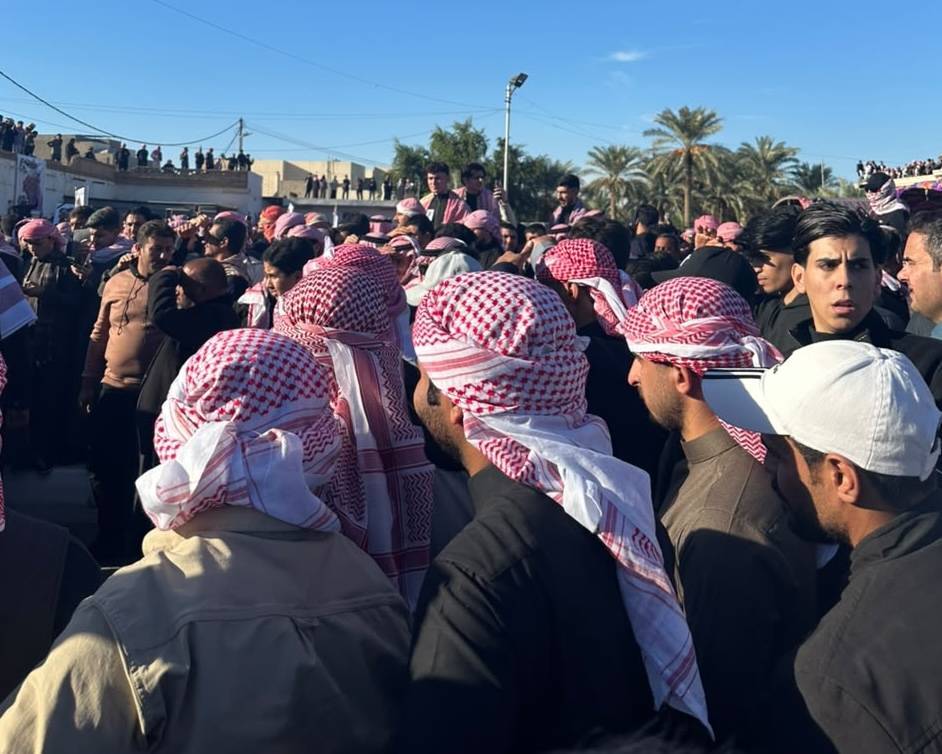
Thousands of Iraqis on Saturday escorted the body of former MP Ahmed al-Alwani from Baghdad Airport to Ramadi in Anbar Governorate, where tribespeople and residents from across the province awaited his arrival amid scenes of grief and anger.

Meanwhile, the circumstances surrounding his killing in Beirut remain under investigation, even as Lebanese authorities have made progress in identifying two suspects.

A private jet carrying al-Alwani's body from the Lebanese capital landed at Baghdad Airport in the morning, with large crowds of mourners gathering at the airport.

Local media reported that Iraqi politician Khamis al-Khanjar, head of the Sovereignty Alliance, covered the cost of transporting the body aboard the private aircraft.

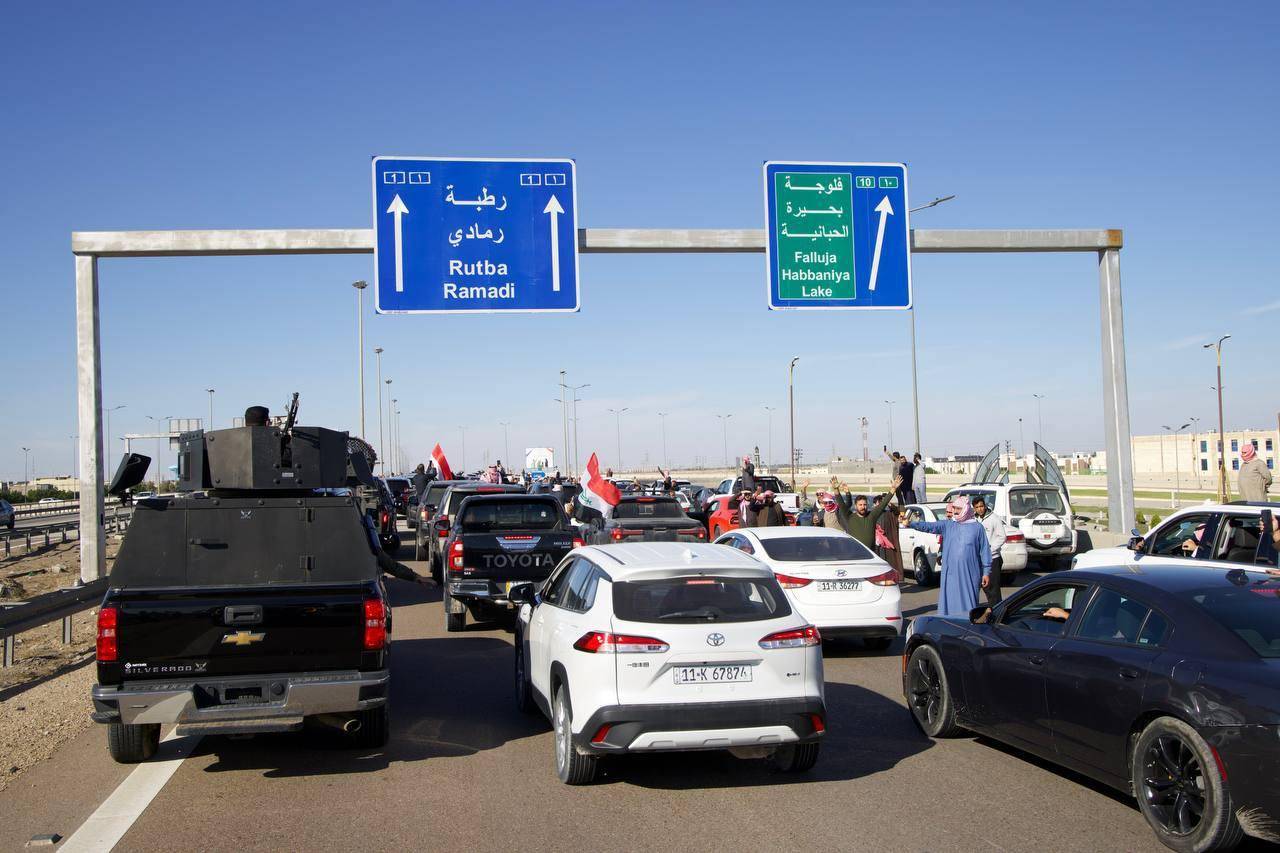
The funeral procession traveled toward Ramadi, located 110 kilometers from Baghdad, under heavy security and accompanied by military vehicles.

Mourners are seen at al-Alwani's funeral on Saturday. (Asharq Al-Awsat)

The Security Media Cell had urged the public to await the investigation's findings and refrain from reading broader motives into the case before it concludes, noting the ongoing coordination between the Iraqi Embassy in Beirut, Lebanese judicial and security authorities, and the Iraqi National Intelligence Service.

Al-Alwani's killing has sparked uproar across Iraq, particularly in his home province of Anbar. Discussion of the case has been accompanied by political debates and sectarian commentary on social media, amid demands to identify those responsible for his death.

Kamel al-Dulaimi, former head of the Iraqi Presidential Diwan, told Asharq Al-Awsat that the circumstances and motives behind the crime still require clear and transparent disclosure to the public, underscoring the Iraqi state's responsibility to uncover the truth.

The funeral procession traveled toward Ramadi, located 110 kilometers from Baghdad, under heavy security and accompanied by military vehicles. (Asharq Al-Awsat)

He added that the case requires security and judicial cooperation among Iraq, Lebanon, and Syria to track down the perpetrators and those behind them, particularly if the investigation calls for cross-border coordination.

He warned that the sectarian rhetoric surrounding the incident reflects a persistent tendency to view national issues through a narrow lens, emphasizing that the matter concerns the sanctity of Iraqi blood and must not be reduced to the affiliation of an individual or a governorate.

Legal researcher Saif al-Saadi, who hails from Anbar, said al-Alwani was not merely a former lawmaker, but a prominent tribal, social, and political figure in the province, adding that the funeral reflects the depth of grief and anger across Anbar's cities.

Al-Alwani, who rose to prominence during the late 2013 Anbar protests, was arrested in December of that year and sentenced to death in 2014 after being convicted of killing two soldiers during clashes accompanying his arrest.

He was released in April 2025 after spending more than 11 years in prison, following the withdrawal of a complaint by one of the victims' families and his inclusion under the General Amnesty Law.