‘The Eye of Goliath’, A Novel That Recalls Jekyll and Hyde

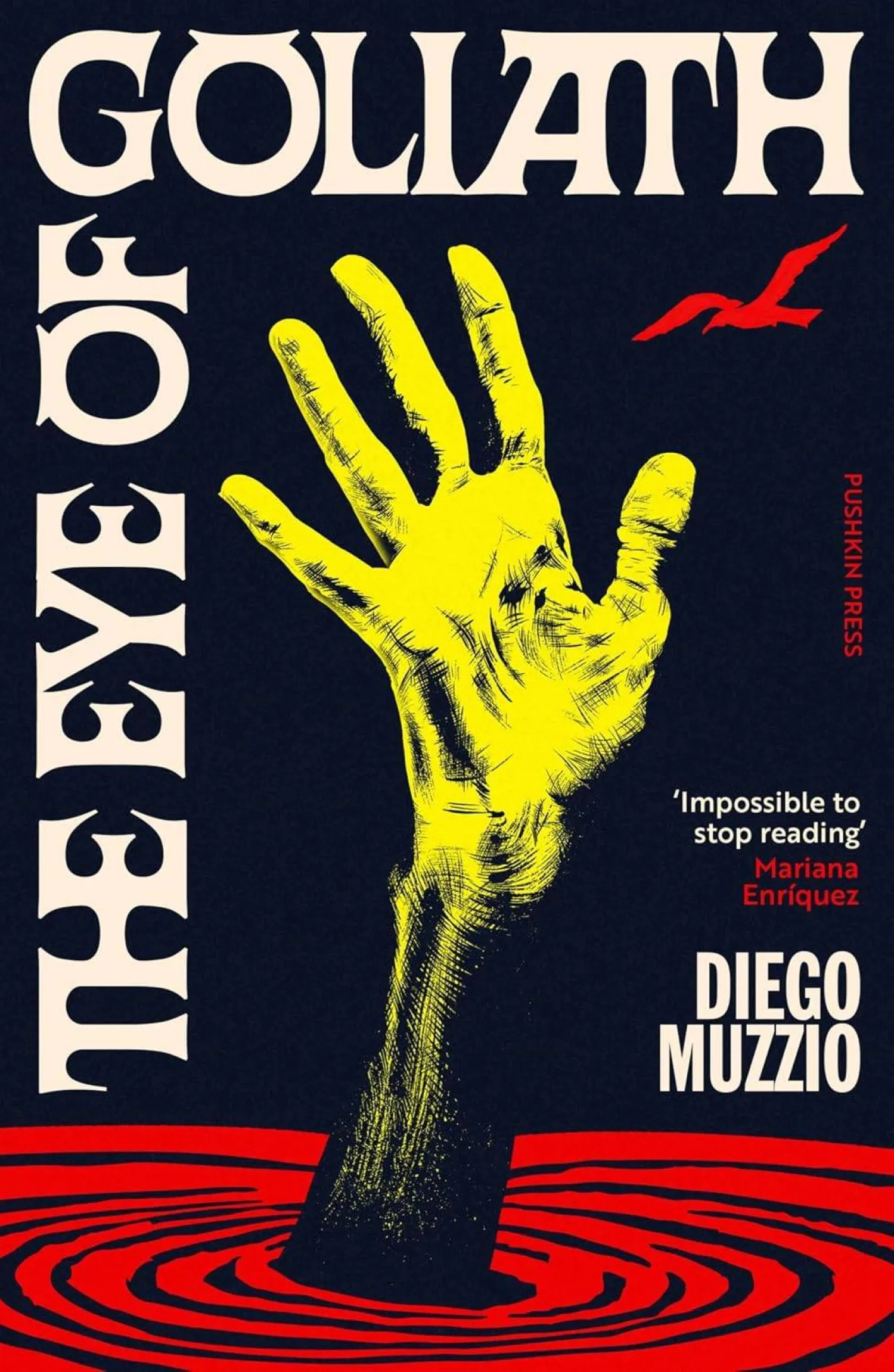
Cover of “The Eye of Goliath” book
TT

‘The Eye of Goliath’, A Novel That Recalls Jekyll and Hyde

Cover of “The Eye of Goliath” book

By Dexter Palmer* 

“The Eye of Goliath”, the Argentine writer Diego Muzzio’s dark-humored, macabre puzzle box of a novel, is set just after World War I, in an Edinburgh sanitarium that “harbored a select group of the many mentally ill people who had come back from the war.”

The institution’s psychiatrist, Edward Pierce, conducts controversial research into hypnosis as a means of treating mental illness. His peers think his experiments are “destined to fail before too long,” while Pierce finds their “methods, based on pharmacology and electricity, to be ineffective and obsolete.”

A new patient, an engineer named David Bradley, arrives at the sanitarium after being stranded on an island with an abandoned lighthouse, which he was sent to assess by his employers.

Pierce sees a chance to prove the viability of his innovative psychiatric procedures.

Traumatized and unable to speak, Bradley is possessed by a need to swim at all times. He has documented his time on the island in a diary, which makes up the second part of the book and details his descent into madness and persistent terror. Muzzio then returns to Pierce and the treatment of his perplexing patient.

This complexly plotted novel is deeply intertextual, and Muzzio uses other writers’ themes as a hip-hop producer might use samples, crafting new tunes by borrowing fragments of familiar melodies and arranging them in new ways.

Allusions abound to Lewis Carroll’s “Alice’s Adventures in Wonderland,” Dante’s “Inferno,” the first Book of Samuel, the work of the writer and naturalist William Henry Hudson and Coleridge’s “The Rime of the Ancient Mariner.”

The most significant influence, however, is Robert Louis Stevenson’s Gothic novella “Strange Case of Dr Jekyll and Mr Hyde.”

A few mentions function as blinking neon signposts (Pierce has a copy of the book in his bedroom; the lighthouse engineer David Alan Stevenson, Robert’s real-life cousin, makes an appearance), but subtler engagements with the novella also come into view.

Pierce’s neuralgia, a condition of crippling headaches caused by shrapnel lodged in his head, is kept in check by increasingly frequent doses of morphine.

His habit echoes Dr Jekyll’s dependence on his secret elixir, which he first imbibes to deliver his evil alter ego, Hyde, to the world (and then takes to restrain Hyde from appearing on his own).

An act carried out on a pair of corpses is viewed from two perspectives, one that regards it as a desecration and the other as a performance of remorse; where one person might see a Hyde, another might see a Jekyll. Twins and duplicates appear throughout, including one clever moment when the book itself becomes doubled. In its elegant, sometimes playfully quaint prose (ably translated from the Spanish by Rahul Bery) and in its structure, particularly the documents that make up Bradley’s section, the novel gestures toward the Gothic without wholly turning into pastiche.

Behind Pierce’s and Bradley’s plotlines are memories of the recently ended war, which both men would prefer to forget.

Flashbacks to the phantasmagoria of trench warfare, a “fabulous catalyst for insanity,” are the novel’s most unsettling passages.

Pierce views the personification of war as a grotesque distortion of Carroll’s Alice, a girl with “glimmering eyes who went about with a jingling bunch of keys, opening all the chambers of the mind where legions of babbling demons had been shut away.”

The trenches are where every man is forced by circumstance to bring forth a Hyde, not for the pleasure that Stevenson’s Hyde takes in violence, but for mere survival. In this compelling novel, the fates of both Pierce and Bradley suggest that no matter how justified one may be for letting Hyde run riot the first time, it is extremely difficult to contain him again.


*The New York Times


A Long-Buried Ancient Library in Rome Opens to the Public After Restoration

 Marble archaeological remains from the western library of Trajan's Forum, which archaeologists believe may have housed the ancient Bibliotheca Ulpia, one of ancient Rome's most important libraries, are displayed during a press preview of the restored site in Rome, Thursday, Nov. 19, 2026. (AP)
Marble archaeological remains from the western library of Trajan's Forum, which archaeologists believe may have housed the ancient Bibliotheca Ulpia, one of ancient Rome's most important libraries, are displayed during a press preview of the restored site in Rome, Thursday, Nov. 19, 2026. (AP)
TT

A Long-Buried Ancient Library in Rome Opens to the Public After Restoration

 Marble archaeological remains from the western library of Trajan's Forum, which archaeologists believe may have housed the ancient Bibliotheca Ulpia, one of ancient Rome's most important libraries, are displayed during a press preview of the restored site in Rome, Thursday, Nov. 19, 2026. (AP)
Marble archaeological remains from the western library of Trajan's Forum, which archaeologists believe may have housed the ancient Bibliotheca Ulpia, one of ancient Rome's most important libraries, are displayed during a press preview of the restored site in Rome, Thursday, Nov. 19, 2026. (AP)

The famed Alexandria Library in Egypt may have been lost, but another of the ancient world's repositories for texts has been restored in Rome and is reopening to the public this week.

The ruins of the Ulpia library are located in Emperor Trajan’s Forum, just next to the iconic column that celebrates his victorious campaigns against the Dacians and the Roman conquest of what is modern-day Romania. It remained inaccessible for almost a century.

“After the Alexandria Library of Egypt, after the Library of Pergamon in Asia Minor, this one in the Trajan’s Forum was certainly one of the most important, given both the number of ‘volumina,’ as books were called in ancient times, and the quantity of documents," Claudio Parisi Presicce, an archaeologist and Rome's superintendent for cultural heritage, said in an interview with The Associated Press.

The place was in a state of ruin when discovered in 1932 during clearing works by Benito Mussolini's government for the road that became the famous Via dei Fori Imperiali. Later, it was covered in concrete and used as a storage room for some of the countless pieces from Trajan's Forum, the last and greatest of the imperial fora, built in 112 AD.

But the niches in its walls were evidently spots to set cabinets for scrolls, signaling that this was one of the two, two-story buildings comprising the Ulpia library referenced in ancient texts, Presicce said.

Archaeologists from Rome's superintendency for cultural heritage identify it as the Ulpia library's western building, which ancient texts indicate stored Greek-language scrolls.

The new permanent exhibition offers visitors an idea of the space as it used to be, featuring the remains of some of the library’s rich marble decorations — white for the walls, and different colors for its floor and columns. Immersive videomapping is also projected on its walls, showing the history of the library and its discovery. Instead of scroll-filled cabinets, spread throughout the space today are broken Corinthian columns and pieces of sculptures.

The library was a fundamental part of the Forum, and a place that for centuries attracted citizens from all over Rome with its vast collection of edicts and documents.

“The libraries were used by both common citizens, those who could afford a certain cultural level and a better education than those from the lower classes, but also by magistrates who needed access to older documents, or needed to check the norms that regulated the life of the community,” he said.

Restoration started in 2025, and lasted about a year. The 1.75-million-euro cost ($1.92 million) came from the European Union’s pandemic recovery funds — just one of many restoration projects Rome is carrying out across the city with EU money.

It will initially be opened to visitors only on Fridays, Saturdays and Sundays. Visits are scheduled every 40 minutes, 20 people at a time.

The library's eastern building remains buried beneath an 18th-century church, on the other side of Trajan's Forum, and stored Latin-language scrolls. There are no plans for its excavation.


Afghan Tradition Keeps Grapes Fresh for Winter Treat

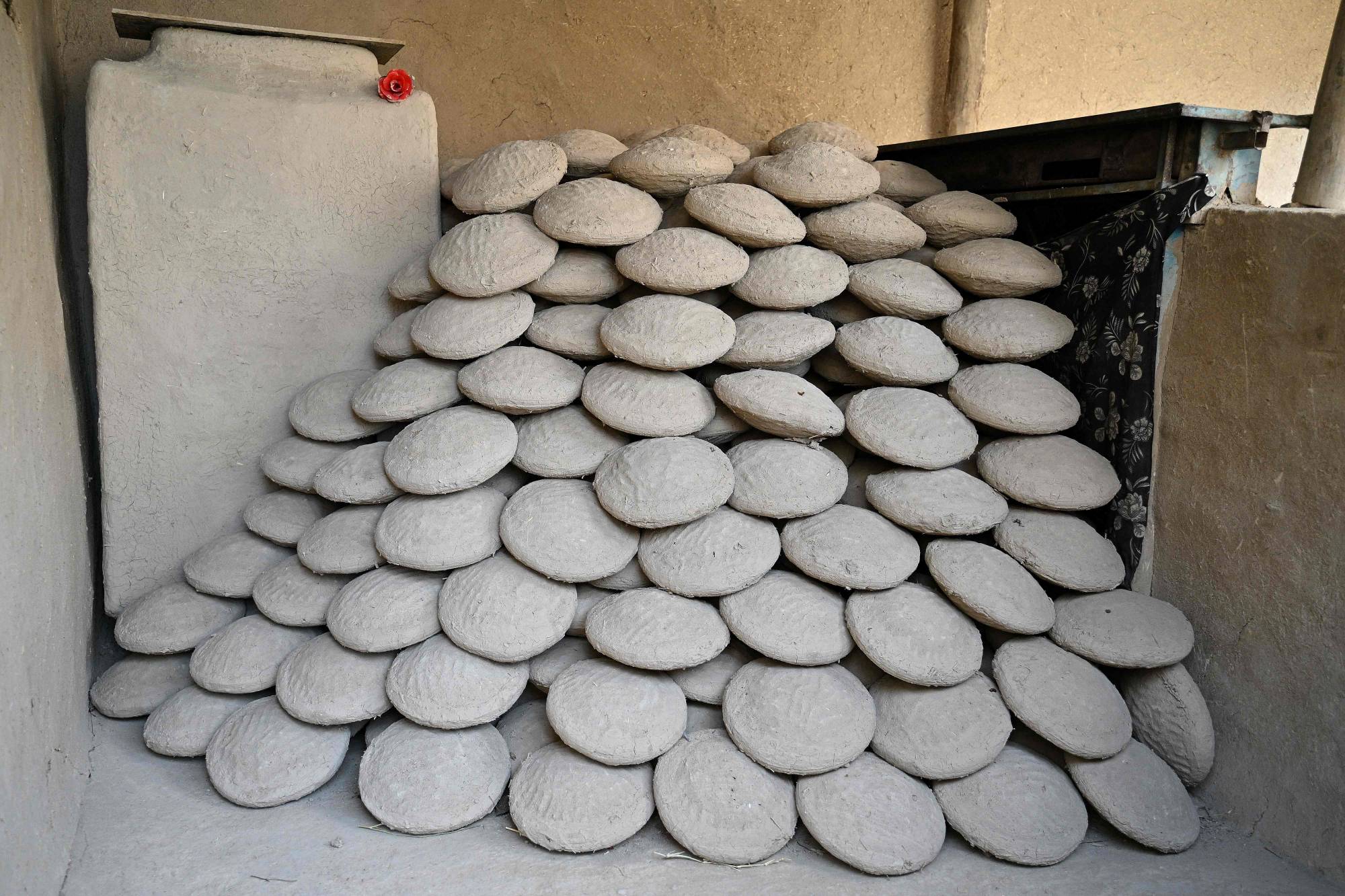
This photograph taken on November 10, 2026 shows Afghan farmer Muhammad Saber Shojaei seal packing grapes in mud-and-straw discs known as Kanginas before storing them in a dark room in the Kalakan district of Kabul province. (AFP)
TT

Afghan Tradition Keeps Grapes Fresh for Winter Treat

This photograph taken on November 10, 2026 shows Afghan farmer Muhammad Saber Shojaei seal packing grapes in mud-and-straw discs known as Kanginas before storing them in a dark room in the Kalakan district of Kabul province. (AFP)

On the outskirts of Afghanistan's frenetic capital Kabul, Muhammad Saber Shojaei is carrying out a centuries-old task of preserving fistfuls of grapes to be eaten when winter bites.

Crouched in front of dozens of "kanginas", clay-and-straw discs containing grapes, Shojaei recalls his father, who taught him the technique.

"I remember the old days, when we sat together around the sandali (stove), eating kangina grapes and enjoying those happy moments," said the 47-year-old from Kalakan district.

Carefully putting a bunch of grapes in one of the discs, Shojaei added a second disc on top and sealed the kangina with mud before placing it in a dark storage room.

"In this way, kanginas can keep grapes fresh from now until the spring," said the farmer, who makes about 700 each year to sell by the roadside.

No one knows quite how long kanginas have been used in Afghanistan, with estimates starting at "centuries" and the knowledge passed down through the generations.

This photograph taken on November 10, 2026 shows Kanginas, a traditional preserving method made from clay mud and straw used to keep grapes fresh for up to six months, in a storage inside of a house in the Kalakan district of Kabul province. (AFP)

During harvest season, grapes for sale can be seen bundled in big plastic bags, or piled high onto trucks as they're taken to markets further afield.

But such abundance comes with problems in Afghanistan, where cold storage to keep produce fresh is severely limited and the export route to Pakistan has been cut off by cross-border conflict.

Farhad Ezati, a 21-year-old trader, said "farmers can't even cover their costs" this year as grape prices have plummeted by 70 percent due to the border closure causing a supply glut.

Standing in a bright green field while laborers packed grapes into cardboard boxes, Ezati said competition among sellers is incredibly tough.

"Afghan grapes are the best," he said, his face brightening. "They're really high in quality... and have a really good taste."

- 'Keep our culture alive' -

Labor-intensive and fragile, kanginas cannot overcome large-scale storage or trade problems.

But in the depths of winter, Afghans living near the vineyards can buy them along the roadside or in nearby markets, and farming families can crack them open and enjoy fresh grapes.

Gulagha Frotan, a community leader in Kalakan, said people wait until snow or rain to enjoy them.

"We don't wash the grapes because they might lose their natural quality. We only blow away the dust, or shake them gently, and then they're ready to eat," the 61-year-old told AFP.

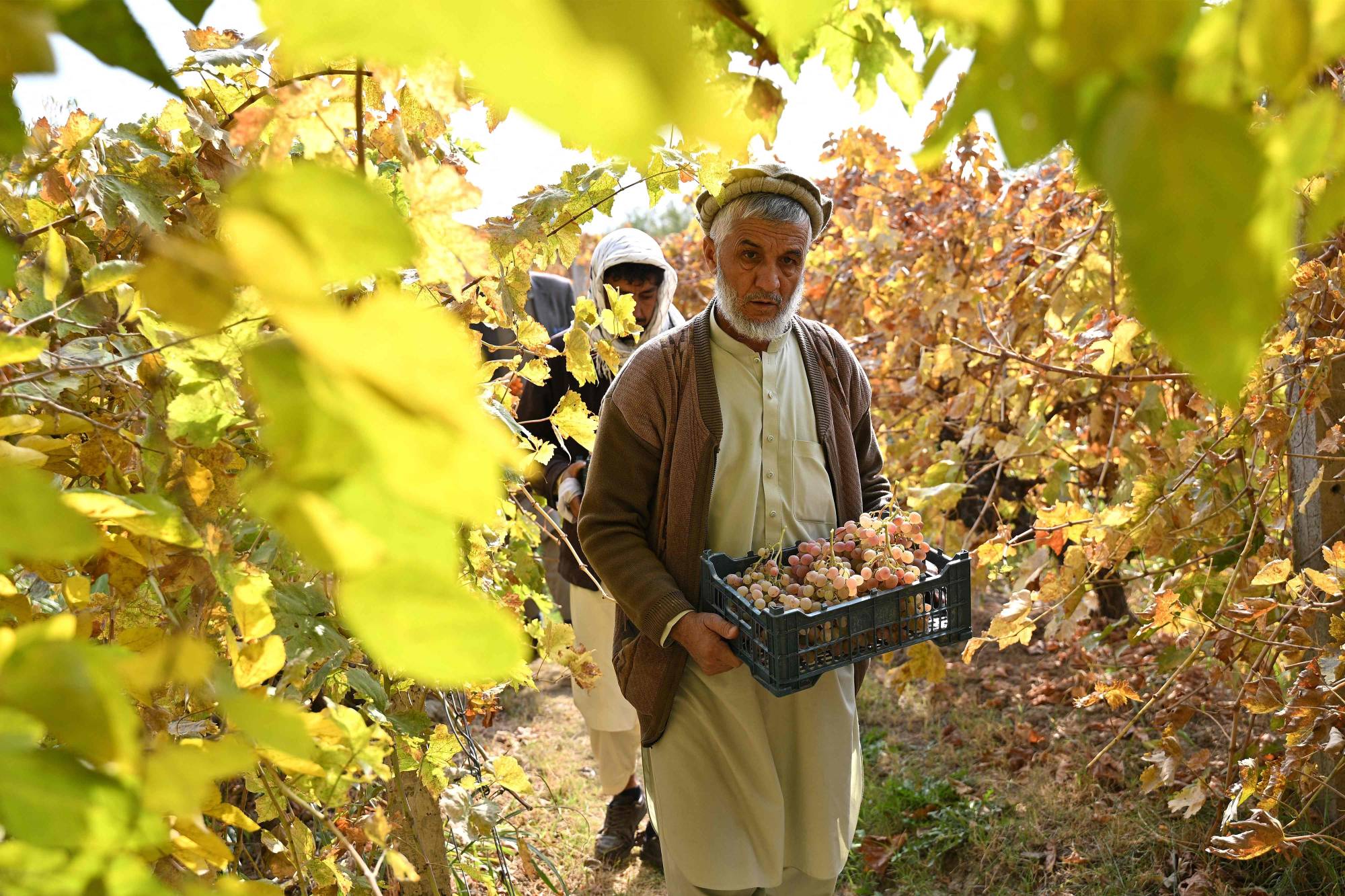
This photograph taken on November 10, 2026 shows an Afghan farmer carrying harvested fresh Taifi grapes in a vineyard in the Kalakan district of Kabul province. (AFP)

Despite its long history in the Kabul area, the practice is currently only being used in one other province, neighboring Parwan, according to the UN's Food and Agriculture Organization (FAO).

The agency's Ezatullah Noori said that, along with the cool weather, the large population in the area means that farmers don't have to travel far to sell the kanginas.

"There's potential for farmers to sell some of their grapes, rather than to lose them during the peak production season," said Noori, FAO's emergency and resilience team leader in Afghanistan.

He called for scientific research to better understand such unique heritage, as well as an organized effort to help farmers cooperate to sell their kanginas on a larger scale.

"I am afraid that one day this will disappear from our country and nobody will know how to make it," Noori told AFP.

"We should keep our culture alive."


Roman Treasure Trove Found During Excavation in Britain

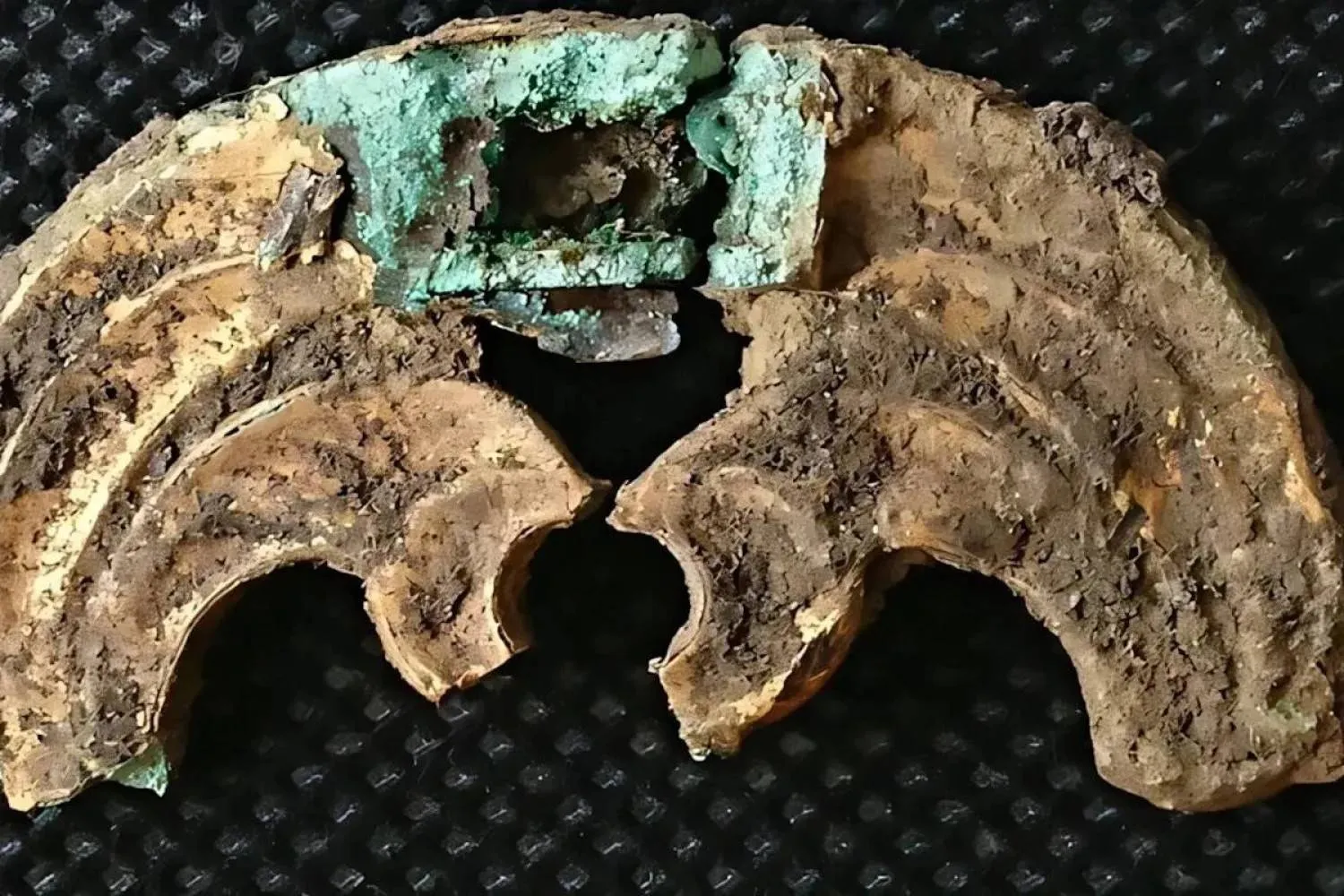
Roman peltate cavalry dangler (The Archaeological Practice Ltd via Newcastle University)
TT

Roman Treasure Trove Found During Excavation in Britain

Roman peltate cavalry dangler (The Archaeological Practice Ltd via Newcastle University)

Archaeology students doing their first excavation found a major Roman-era treasure trove in UK’s Northumberland, shedding more light on life at the northernmost edge of the ancient empire.

The quantity and quality of the treasure, unearthed earlier this year, was a surprise even to experienced researchers, archaeologists from Newcastle University said, according to The Independent.

One of the most remarkable items in the trove was a gold-chain section measuring about 7cm.

It was so well preserved that, if it were complete, it could still be worn today, researchers said.

The chain was likely made using the sophisticated loop-in-loop technique, a hallmark of high-quality Roman goldsmithing. Its individual rings were carefully pinched into figure-eight shapes, folded, and then interwoven to create the chain.

Such chains were typically made from pure gold and associated with elite jewelry, military amulets, or special fittings for high-ranking officers and their families.

“Finding the gold chain was really surreal, especially given that it was the first day of my first dig. I didn't expect to find anything like that in my whole career, so it was definitely a surprise,” archaeology student Elise Zallu said.

“Finding a gold artifact is something many archaeologists can go an entire career without experiencing,” said Eric Tourigny of Newcastle University. “For a first-year student to discover a beautifully preserved Roman gold chain on their first day in the trench is truly remarkable.”

Another student, Shannon Wood, unearthed a folded piece of lead bearing traces of a Latin inscription.

The object was most likely a seal associated with trade, taxation, ownership, or the movement of goods through the Roman military supply network, researchers said. It functioned as a personal message or a “curse tablet.”

In the Roman Empire, people scratched prayers, grievances, requests, and even curses onto thin sheets of lead and deposited them in sacred places.