


China to Resume October Fuel Exports after Holiday Pause

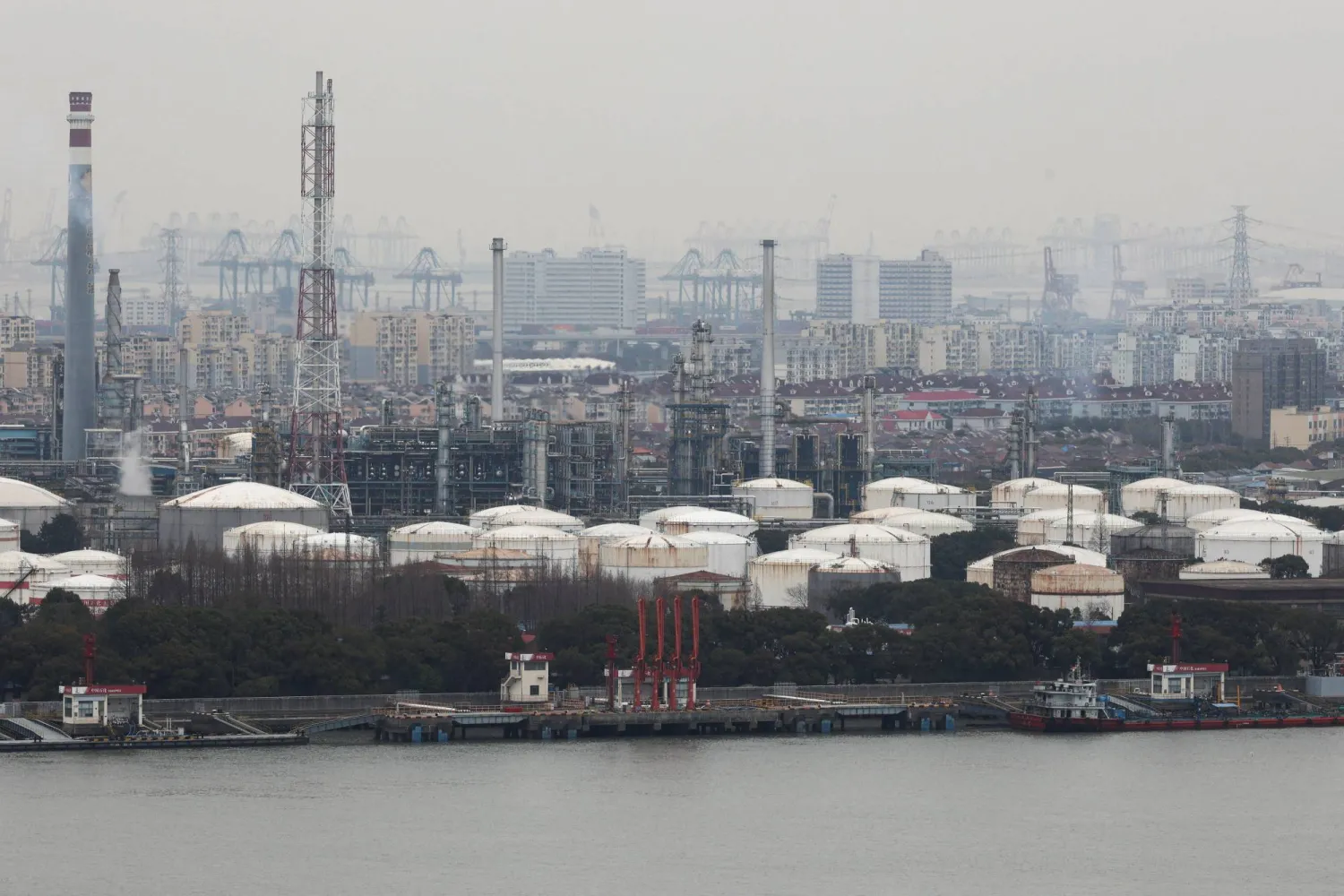
FILE PHOTO: Oil storage tanks and facilities of a Sinopec plant in Shanghai, China, March 26, 2026.  REUTERS/Go Nakamura/File Photo
FILE PHOTO: Oil storage tanks and facilities of a Sinopec plant in Shanghai, China, March 26, 2026. REUTERS/Go Nakamura/File Photo
TT

China to Resume October Fuel Exports after Holiday Pause

FILE PHOTO: Oil storage tanks and facilities of a Sinopec plant in Shanghai, China, March 26, 2026.  REUTERS/Go Nakamura/File Photo
FILE PHOTO: Oil storage tanks and facilities of a Sinopec plant in Shanghai, China, March 26, 2026. REUTERS/Go Nakamura/File Photo

China is set to resume October refined fuel exports after a brief halt during its Golden Week holiday, a move that will help ease tight global diesel, gasoline and jet fuel markets, four traders familiar with the matter said on Friday.

China has approved October exports of the three fuels at around 3.7 million metric tons combined, according to two other industry participants.

Chinese refiners were expected to export slightly more than 4 million tons of gasoline, diesel and ⁠jet fuel in ⁠September, Reuters reported early last month.

The world's biggest oil importer began curbing fuel exports in March to safeguard domestic fuel supplies as the US-Israeli war on Iran disrupted crude oil flows and refinery production, but relaxed controls between July and September.

China's National Development and Reform Commission and the Ministry of Commerce did not immediately respond to requests for comment.

The Middle East war and the Ukraine-Russia ⁠conflict have disrupted refined fuel output globally and caused prices to rise, particularly for diesel fuel.

China has the world's largest refining capacity, and though its fuel export volumes have typically lagged behind India and South Korea among Asian processors, its refined products are sought after because of the disruptions, particularly in Asia.

However, market analysts said China's move would only modestly ease the fuel market tightness, Reuters reported.

"It will be limited as markets remain tight overall and Middle Eastern supplies are still disrupted," said Stuti Jhunjhunwala, an oil market analyst at Energy Aspects based in Kolkata, India.

June Goh, senior analyst at Sparta Commodities, said Beijing's resumption of ⁠exports was expected ⁠but the volumes were lower than anticipated.

While Beijing typically regulates fuel exports through a quota system, it has recently tightened oversight by vetting shipments on a month-by-month basis.

However, China started its week-long National Day holiday on October 1 without giving major refiners in the world's largest refining hub a green light to export fuel products to regions other than Hong Kong and Macau in October, Reuters reported last week.

Amid the refined fuel tightness, this week the International Energy Agency, which advises industrialized countries on energy policy, agreed to accelerate the release of oil stocks and prioritize diesel supplies under a plan launched in March.


China and EU Trade Envoys Seek Ways to Ease Tensions over Growing Imbalances

EU and Chinese flags are seen in this illustration taken, March 20, 2025. REUTERS/Dado Ruvic/Illustration
TT

China and EU Trade Envoys Seek Ways to Ease Tensions over Growing Imbalances

EU and Chinese flags are seen in this illustration taken, March 20, 2025. REUTERS/Dado Ruvic/Illustration

The top trade envoys for China and the European Union were wrapping up two days of talks Friday aimed at calming escalating tensions over growing imbalances between the two giant economies.

EU trade chief Maros Sefcovic traveled to Beijing saying it was crucial that the negotiations deliver “tangible outcomes” in rebalancing trade between China and the 27-nation bloc.

It was unclear, however, if the two sides would find the will to resolve key factors behind China’s growing trade surplus, which hit 360 billion euros ($410 billion) last year.

China is pushing for the EU to stop blocking its imports of advanced computer chipmaking machines, restrictions imposed on national security grounds at Washington's behest.

Sefcovic said the talks this week were the culmination of three months of intensive work. He had set an October deadline for meaningful results on trade rebalancing.

Earlier in the week, the Chinese Commerce Ministry issued a statement urging the EU to avoid protectionist measures, warning that such moves could backfire.

Trade tensions have grown in recent months, with both sides imposing or considering curbs on each other’s imports.

The EU has moved to limit imports of Chinese-made electric vehicles and EV batteries and enacted measures to protect the European steel industry. It also is limiting duty-free imports of e-commerce small parcels, essentially targeting Chinese fast fashion firms.

Last week, China launched an anti-dumping investigation into imports from the EU of p-nitrotoluene, a chemical compound used in dyes and pharmaceuticals.

Chinese officials and businesses have raised concerns over reports some EU members are pushing for new measures to protect local industries.

Worries over surging Chinese exports to Europe and other parts of the world in what some are calling a China shock 2.0 have deepened as the US, especially since President Donald Trump returned to the White House, has raised tariffs and enacted other measures to try to reduce its own huge trade deficit with Beijing.

Despite the backlash from some of its trading partners, China's global trade surplus hit $1.2 trillion in 2025 and is forecast to surpass $1 trillion again this year.

The EU's trade deficit with China widened to 103.34 billion euros (about $116 billion) in the April-July quarter, as imports rose to 153.63 billion euros ($172.3 billion) ,while European exports to China climbed to 50.3 billion euros ($56.4 billion), according to EU statistics.


Gold Rises More Than 1%, Fed Outlook in Focus

FILE PHOTO: A man works on a gold and diamond ornament inside a Senco Gold & Diamonds jewellery workshop in Kolkata, India, January 29, 2026. REUTERS/Sahiba Chawdhary/File Photo
TT

Gold Rises More Than 1%, Fed Outlook in Focus

FILE PHOTO: A man works on a gold and diamond ornament inside a Senco Gold & Diamonds jewellery workshop in Kolkata, India, January 29, 2026. REUTERS/Sahiba Chawdhary/File Photo

Gold rose more than 1% on Friday, helped by a softer US dollar and lower oil prices, while market players weighed lingering inflation concerns and the outlook for Federal Reserve interest rates.

Spot gold rose 1.4% to $4,190.57 per ounce by 0630 GMT after hitting a two-month low on Wednesday. Prices headed for a weekly gain.

US gold futures for December delivery gained 1.4% to $4,215.30, Reuters reported.

The dollar rally took ⁠a breather, making ⁠greenback-priced bullion more affordable for holders of other currencies.

Oil prices fell as Middle East supply concerns eased somewhat after President Donald Trump said the US will not launch an attack on Iran before November's US midterm congressional elections amid productive talks to end their war.

"Possible tightening later ⁠on could keep gold at risk... Looking ahead, traders will watch upcoming economic data that could provide further monetary policy clues and influence sentiment ahead of the Federal Reserve’s October meeting," said Tony Sage, CEO of Critical Metals.

"Softer numbers or guidance could push yields to the downside and support gold."

Last month, the US central bank voted unanimously to raise the policy rate by a quarter of a percentage point.

St. Louis Fed President Alberto Musalem said the US ⁠central bank will ⁠need to hike rates again to bring inflation back to its 2% target, although he declined to say what policymakers should do at their meeting later this month.

Traders are pricing in a 17% chance of a rate hike in October and an 83% probability of an increase in December, according to CME's FedWatch tool.

Gold is traditionally seen as a hedge against inflation, but higher interest rates diminish the appeal of the non-yielding asset.

Among other metals, spot silver rose 1.5% to $60.22, platinum gained 2.7% to $1,677.80 and palladium climbed 3.3% to $1,159.70.


SAMA Governor: Saudi Arabia Maintains Considerable Economic Resilience Despite Regional Tensions

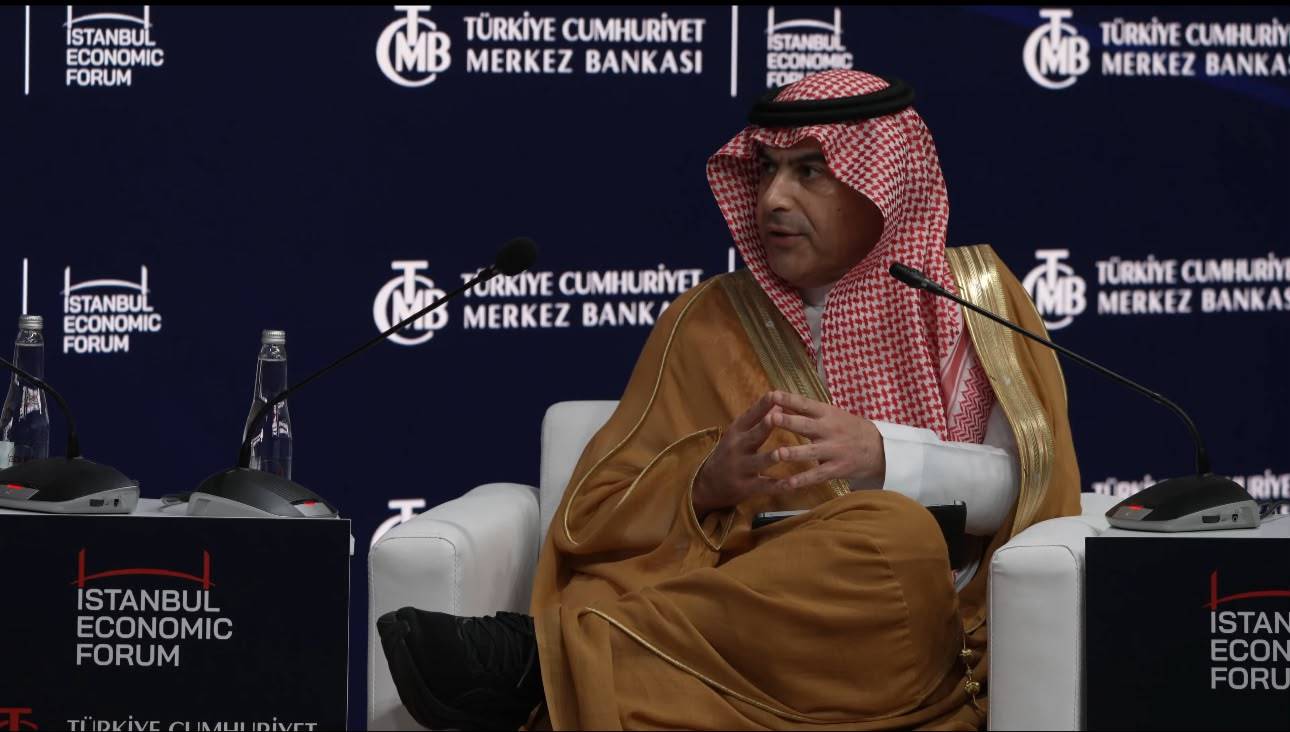
Ayman Alsayari during his participation in the Istanbul Economic Forum (Asharq Al-Awsat)
TT

SAMA Governor: Saudi Arabia Maintains Considerable Economic Resilience Despite Regional Tensions

Ayman Alsayari during his participation in the Istanbul Economic Forum (Asharq Al-Awsat)

Saudi Central Bank (SAMA) Governor Ayman Alsayari said the global economy has shown considerable resilience despite successive geopolitical shocks, but warned that continued conflict in the region was complicating the outlook for growth and inflation.

Speaking at the Istanbul Economic Forum on Thursday, Alsayari said global economic growth was projected at approximately 3% in 2026, following repeated downward revisions, with a recovery expected in 2027. Global inflation, meanwhile, was forecast at around 4.7%, raising concerns about renewed price pressures after a period of easing inflation since 2024.

Turning to Saudi Arabia, Alsayari said the Kingdom had maintained considerable economic resilience despite its proximity to regional tensions, supported by strong foreign reserves and assets, long-term infrastructure investments and economic diversification under Vision 2030.

He highlighted the importance of investments in energy infrastructure, particularly the East-West Pipeline, and in maintaining oil exports amid disruptions affecting the Strait of Hormuz and the Red Sea.

The pipeline has helped Saudi Arabia continue meeting customer demand, he said.

Ayman Alsayari speaking during a session at the Istanbul Economic Forum (Asharq Al-Awsat)

Alsayari said Saudi Aramco had prepared for potential disruptions by establishing oil reserves in different parts of the world, allowing it to continue supplying customers during the conflict.

The governor stressed that recent developments demonstrated the importance of investing in critical infrastructure during periods of stability to strengthen the economy's capacity to absorb unexpected shocks.

The SAMA governor said Saudi banks had maintained their financial resilience since the beginning of the regional conflict, supported by strong liquidity and capital positions.

According to June 2026 data, the banking sector's liquidity coverage ratio stood at 170%, its capital adequacy ratio at 20.9%, and its net stable funding ratio at 114.6%.

He said Saudi banks continued to benefit from the Kingdom's A+ sovereign credit rating, which supported their access to international financing markets despite rising risk premiums.

Domestic liabilities accounted for 87.1% of total liabilities at Saudi banks, significantly limiting their exposure to capital outflow risks.

Alsayari said the Saudi economy recorded negative growth for two consecutive quarters in 2026, largely reflecting weakness in the oil sector.

However, non-oil economic activity continued to expand, growing by approximately 2% in the first quarter and 1% in the second quarter.

He attributed the resilience of domestic demand partly to population growth and record-low unemployment among Saudi nationals, alongside the progress achieved through the Kingdom's economic diversification program.

Inflation in Saudi Arabia remained moderate at 1.8% as of mid-August 2026, supported by government measures, including domestic fuel price caps, and the Saudi riyal's peg to the US dollar.

Alsayari said the currency peg had helped limit imported inflation, given the structure of the Saudi economy.
