Operation ‘Dawn of Yemen’ Clears Bab al-Mandab and its Islands of Remaining Houthi Forces

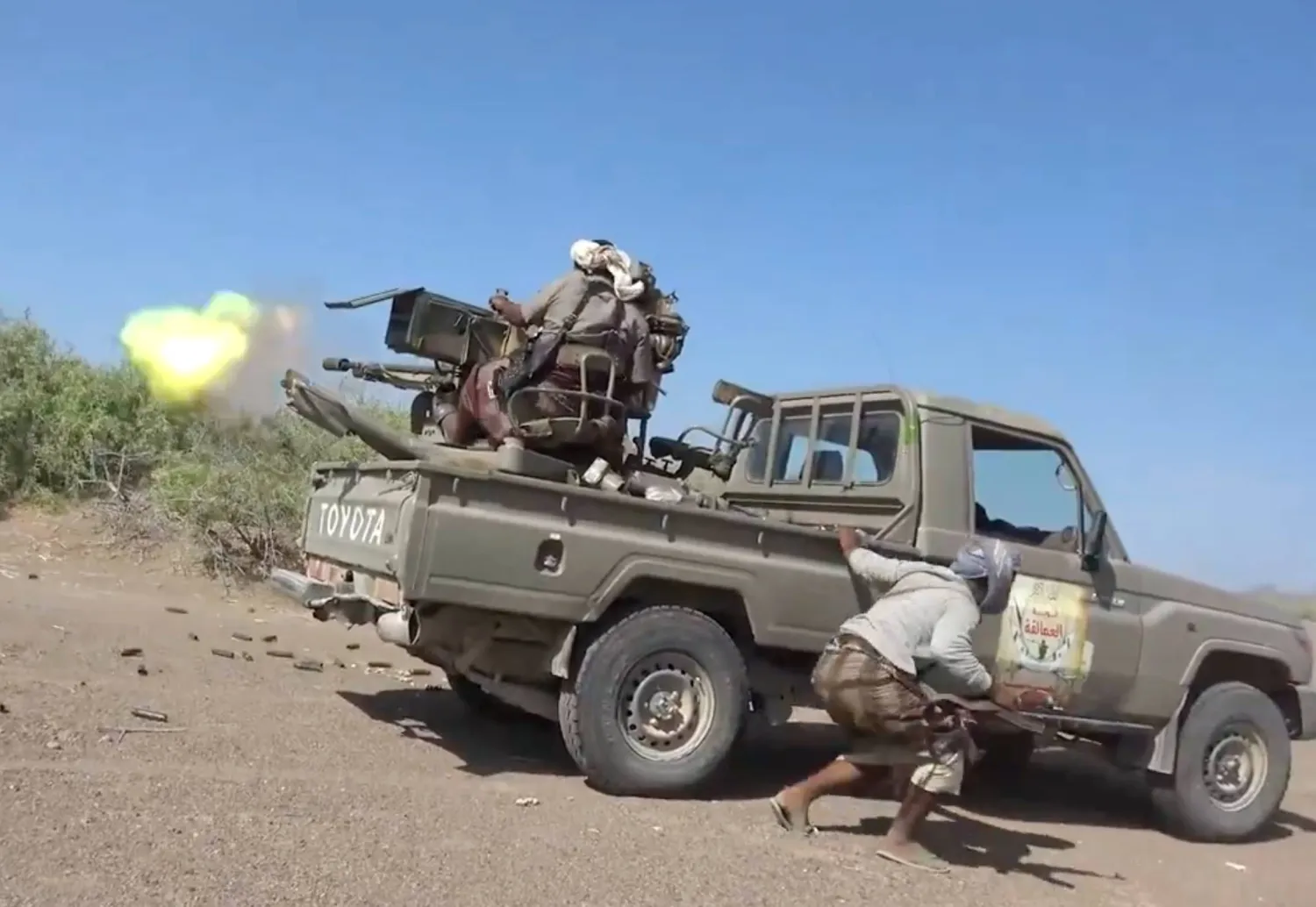
Members of Yemeni government forces during confrontations with the Houthis (AP)
TT

Operation ‘Dawn of Yemen’ Clears Bab al-Mandab and its Islands of Remaining Houthi Forces

Members of Yemeni government forces during confrontations with the Houthis (AP)

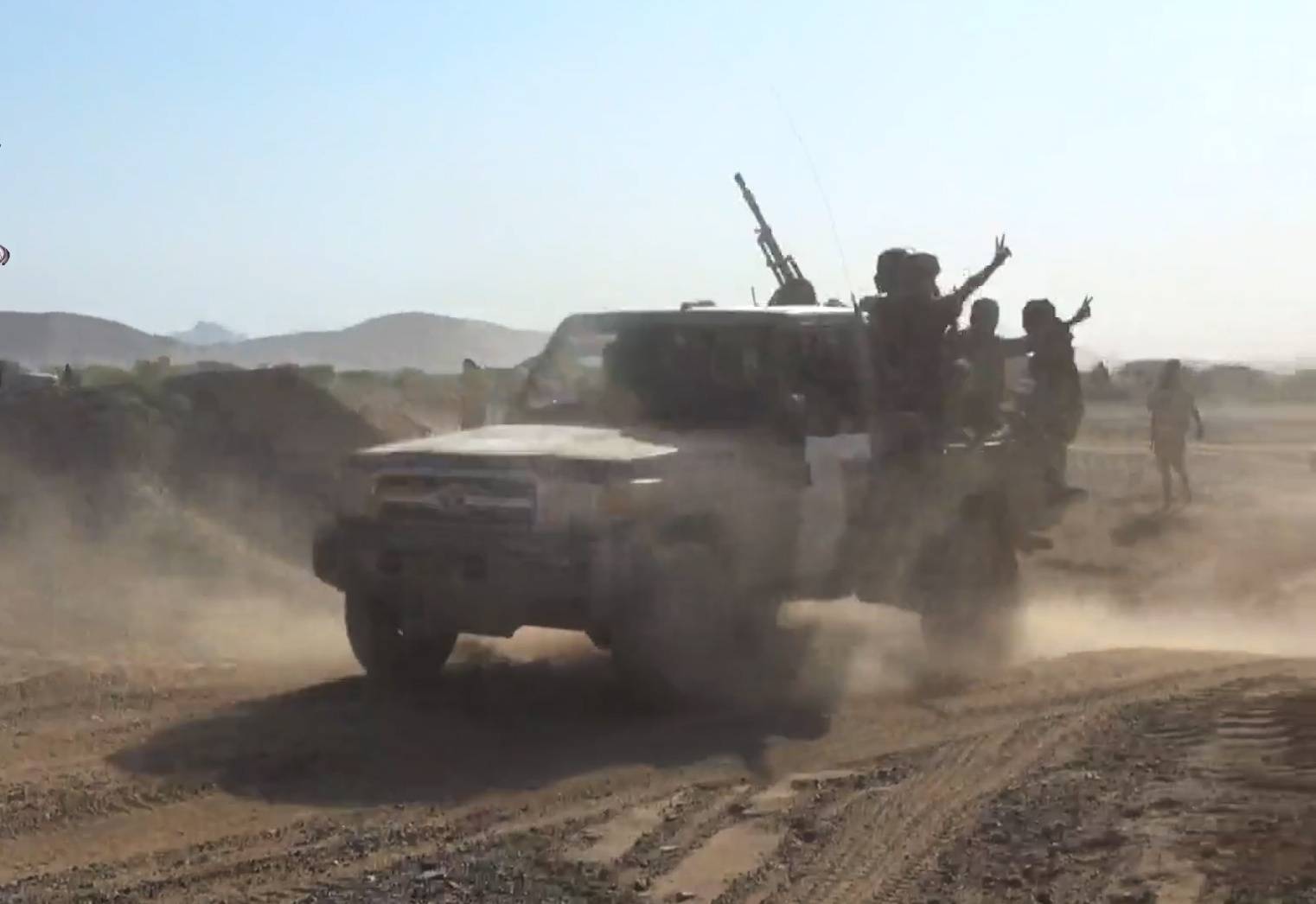
The military operation “Dawn of Yemen” entered its fifth day on Friday, as government forces completed the clearing of the Bab al-Mandab Strait and the strategic Mayyun Island, while consolidating their positions on the highlands overlooking the international shipping route.

The development strengthens government gains along the western coast, even as fighting continues in the southern and western countryside of Taiz, alongside an expanding aerial campaign targeting Houthi militia positions and movements across several parts of the country.

Military sources said that the Giants Brigades and Nation Shield Forces, backed by air support from the coalition supporting Yemen’s internationally-recognized government, had established full control over Bab al-Mandab, the Al-Ardi military camp, coast guard observation posts, Mayyun Island, and the mountain ranges surrounding the strait, including positions overlooking the vital maritime corridor.

Yemeni government forces advance in Al-Wazi'iyah and push to complete the cleansing of Bab al-Mandab (EPA)

According to the sources, government forces carried out a surprise maneuver that bypassed the Houthis’ frontline defenses and reached their newly established trenches and tunnels. The clashes reportedly resulted in dozens of Houthi fighters being killed, while others surrendered.

If the announced control is maintained, securing the strait and Mayyun Island would mark a significant turning point in operations along the western coast, given the area’s strategic location at the southern entrance to the Red Sea and its importance to international navigation.

The latest developments follow the government forces’ announcement that they had seized the Kahboub Heights, which overlook vast areas surrounding Bab al-Mandab.

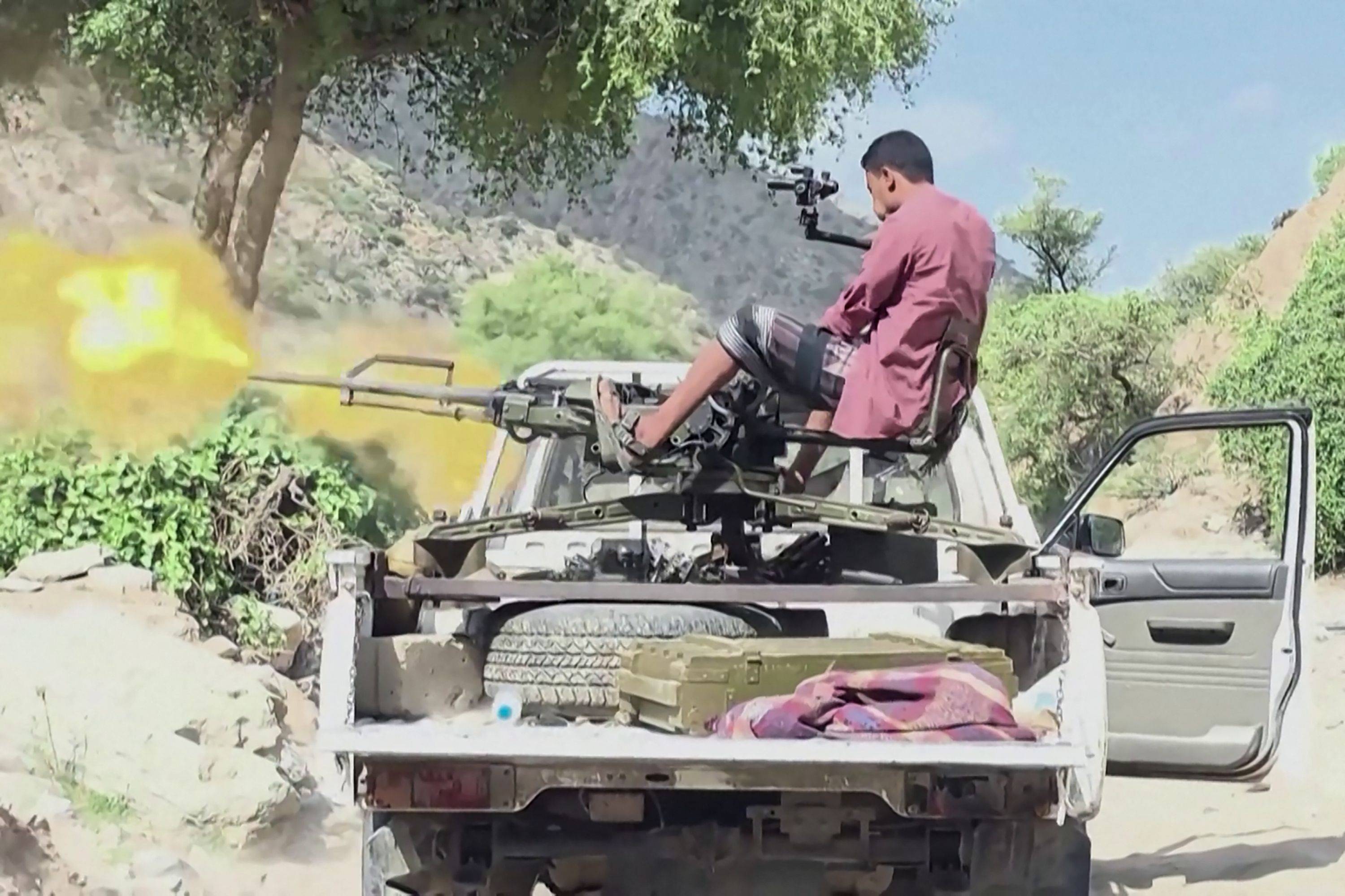
A member of Yemeni government forces on the southern Taiz fronts (AFP)

Advance Toward Al-Wazi’iyah

After consolidating their new positions, Yemeni government forces continued operations on the Al-Wazi’iyah front west of Taiz, aiming to secure the district’s eastern highlands and tighten the encirclement of Houthi positions around Dhubab and Al-Omari Camp, paving the way for a broader advance toward Mokha, according to field reports.

The operations were accompanied by airstrikes targeting Houthi military sites and movements in Al-Wazi’iyah, Al-Shamayatayn, and Jabal Habashi, as well as positions in Sharjab, Al-Turbah, and Jabal Qaham, which overlooks the districts of Al-Maqatirah and Al-Ahkoum along the border between Taiz and Lahj.

Field sources reported that Houthi vehicles and reinforcements were targeted in the Al-Haql and Al-Qahaf areas of Jabal Habashi district. Meanwhile, the media center of the government’s Taiz Military Axis stated that one airstrike neutralized or wounded 23 Houthi fighters. Additional strikes hit positions in the Numan Mountains, Al-Saybara, Al-Harthah, and Jardad in Al-Shamayatayn district.

On the other hand, Houthi forces continue to pressure rural areas south and west of Taiz in an effort to retain their positions. Local sources reported that the group had taken control of Al-Mahsha, Al-Adaf, and Al-Armah in Jabal Habashi district on the western front and was advancing toward the Al-Shariq area. A schoolteacher was reportedly killed in Al-Mahsha.

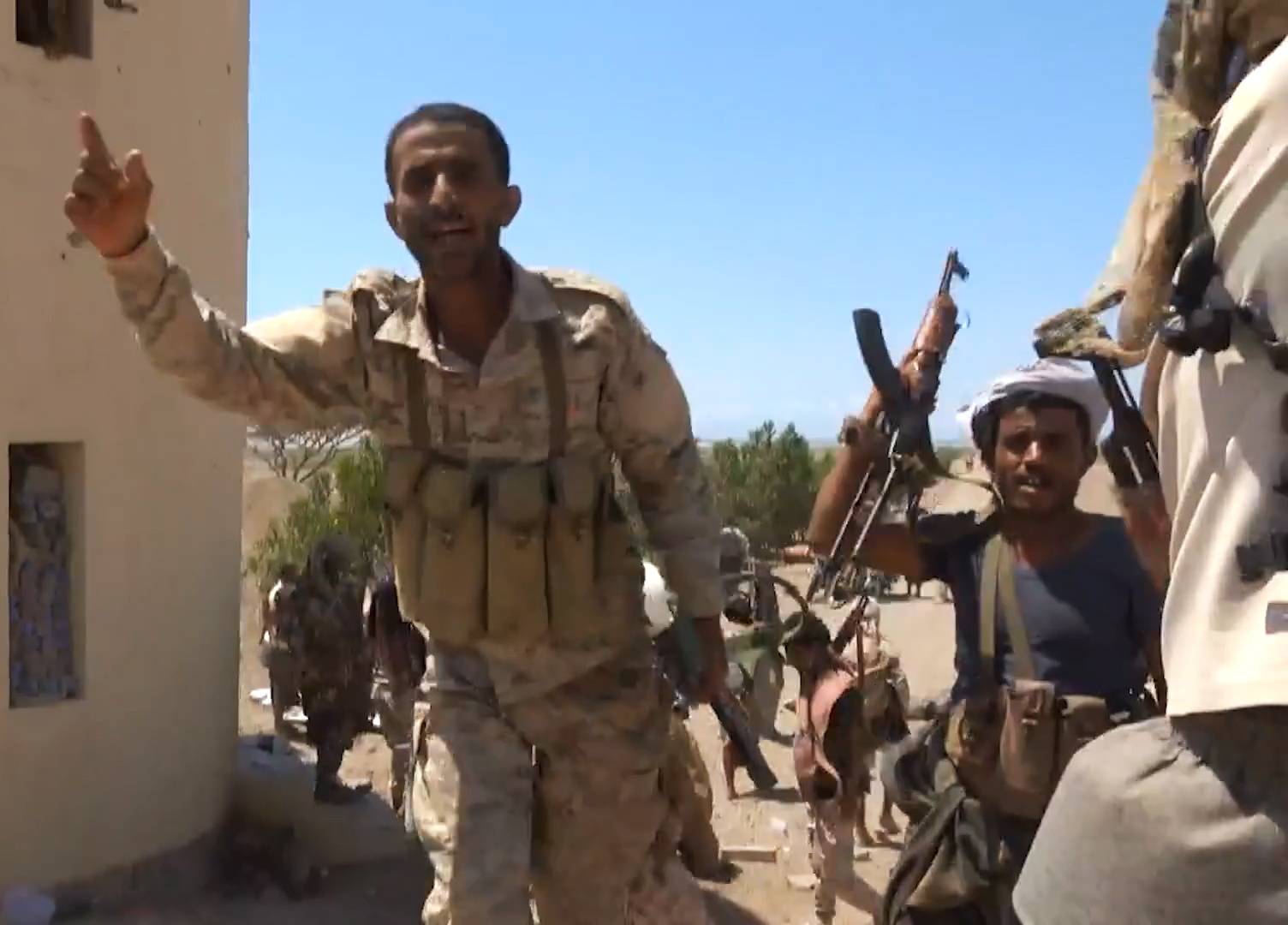
Fighters from the Giants Brigades on the Bab al-Mandab front (EPA)

1,729 Military Strikes

In a sign of the widening scope of military operations, Colonel Majed Al-Nuzaili, spokesman for the Yemeni Armed Forces, announced on Thursday that 1,729 precision strikes had been carried out against Houthi military targets across various fronts as part of Operation Dawn of Yemen.

Al-Nuzaili said the operations resulted in the neutralization of 1,370 Houthi fighters and the destruction or disabling of 300 military vehicles and pieces of equipment, in addition to strikes against military positions, observation posts, command-and-control centers, weapons depots, supply lines, and reinforcements.

At the same time, airstrikes expanded into eight governorates: Taiz, Ibb, Al-Bayda, Abyan, Saada, Sanaa, Raymah, and Al-Hodeidah, according to local reports. Targets included sites in the Houthi-held capital Sanaa, a Houthi camp in Yarim in Ibb, positions in Al-Siyani district, sites in Bani Matar west of Sanaa, locations in Kismah district in Raymah governorate, and positions in the Jamil, Jarjarah, and Al-Nasreen mountain areas of Al-Bayda. Other strikes targeted Tharah Pass and locations in Al-Hodeidah and Saada.

In Lahj, government forces announced that they had repelled a Houthi attack targeting the areas of Al-Aghbarah, Al-Muhawalah, and Al-Mashamirah northwest of Al-Mudarabah district, and had regained positions on Jabal Saif with the support of tribal reinforcements. Meanwhile, clashes, reciprocal shelling, and drone operations continued on the fronts south of Marib and in Al-Jawf, while airstrikes targeted Mas Camp and positions in the Al-Labanat area.


Nearly 10,000 Casualties in Yemen Escalation as Taiz Health System Struggles to Survive

Houthis repeatedly target ambulances in Taiz (AFP)
TT

Nearly 10,000 Casualties in Yemen Escalation as Taiz Health System Struggles to Survive

Houthis repeatedly target ambulances in Taiz (AFP)

Nearly 10,000 people have been killed or wounded in Yemen's latest military escalation, pushing the country's battered health system to the brink of collapse as a Houthi siege tightens around its third-largest city.

The crisis, the worst in years, has pushed Yemen's healthcare system into what international agencies now classify as a complex emergency that can no longer be contained.

Yemen's Health Ministry warned of an imminent collapse in healthcare services in Taiz province, where stocks of medicines, medical supplies and oxygen have reached critical lows after nearly three months of escalating Houthi military operations and attacks on civilians and infrastructure, compounded by an unprecedented plunge in international funding.

The southwestern city of Taiz remains under Houthi siege as fighting intensifies across the city and surrounding districts. Continued shelling has forced more than 250,000 people to flee rural areas of Taiz and neighboring Lahj province.

The latest verified field data from the World Health Organization (WHO) put the toll from the recent escalation at 9,072 casualties, recorded through the country's remaining health surveillance systems.

The toll includes 1,677 deaths directly linked to hostilities and 7,395 wounded, overwhelming trauma and emergency centers and stretching the surgical capacity of an already crippled health system beyond its limits.

Health authorities in Taiz accused Houthi forces of targeting an ambulance on Wednesday as it attempted to evacuate a wounded civilian from a village under heavy shelling in the Al-Awat area of Sabir Al-Mawadim district, south of the city.

It was the second reported attack on an ambulance during the current escalation. A strike the previous week killed an ambulance driver and a wounded girl being transported for treatment after an earlier shelling attack, and injured a nurse accompanying them.

Press authorities in the province also accused the Houthis of looting 15 ambulances from health offices and medical centers in rural districts.

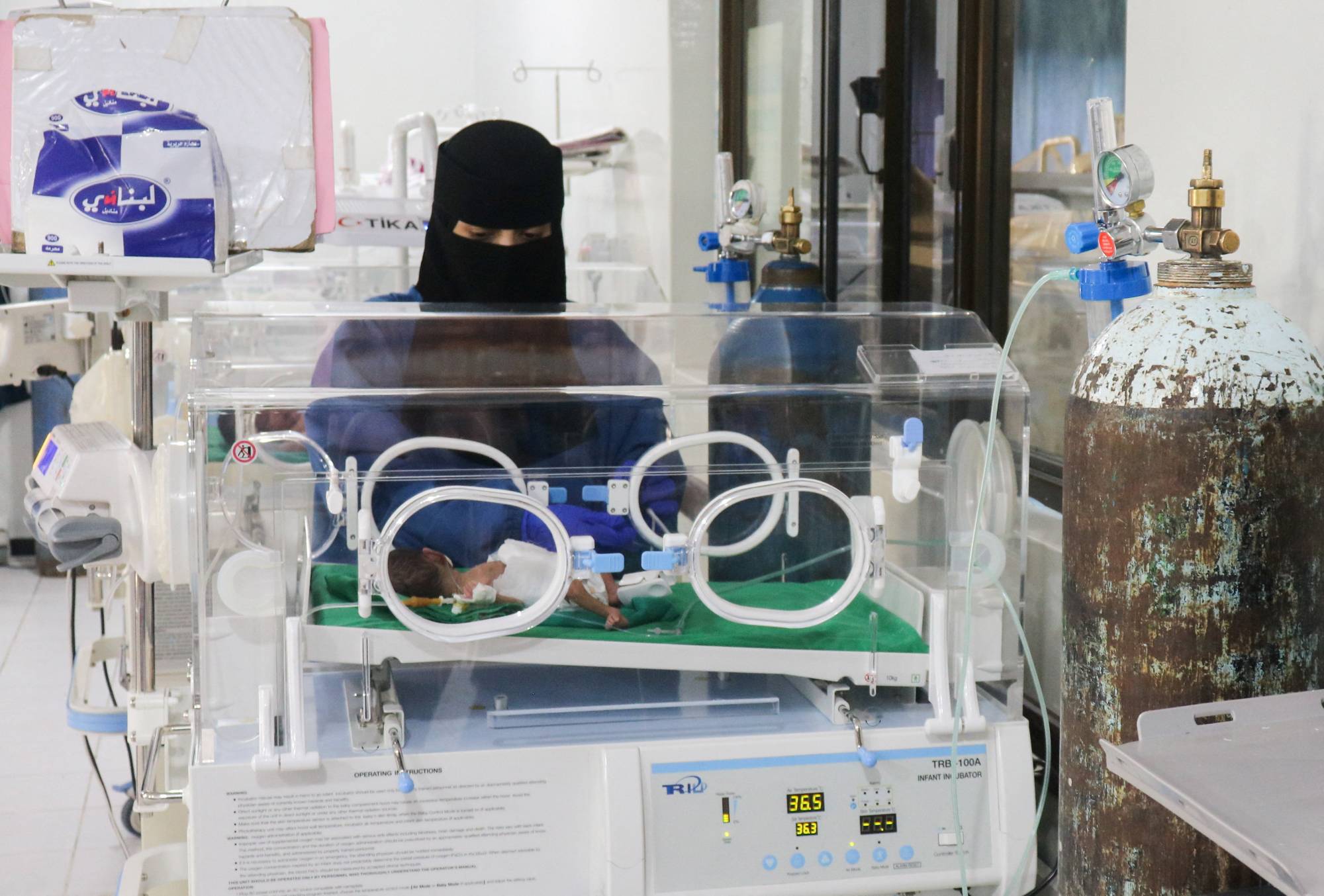
A nurse attends to a newborn baby inside an incubator at a hospital in the southwestern city of Taiz, Yemen, October 23, 2026. REUTERS/Ebrahim al-Suhaibi

A final plea for help

In besieged Taiz, the health crisis is nearing breaking point.

According to Yemen's Health Ministry, 42 healthcare facilities across the province could shut down completely within days as supplies of medicines, lifesaving medical equipment and medical oxygen cylinders run out.

The looming closures threaten services with no ready alternatives, including neonatal incubators, intensive care units and regular dialysis sessions for hundreds of patients.

The crisis has deepened as healthcare facilities continue to come under direct attack. In the latest incident, Houthi gunmen opened fire on Al-Thawra General Hospital, wounding patients and medical staff.

Public health officials are also warning of a cholera outbreak spiraling out of control, with infection rates tripling in just weeks as destroyed water and sewage networks and deteriorating sanitation services fuel the spread of the disease.

The outbreak is colliding with a severe malnutrition crisis. Thousands of displaced children lack the basic immunity needed to fight bacteria transmitted through contaminated water, pushing death rates among children under five to record highs.

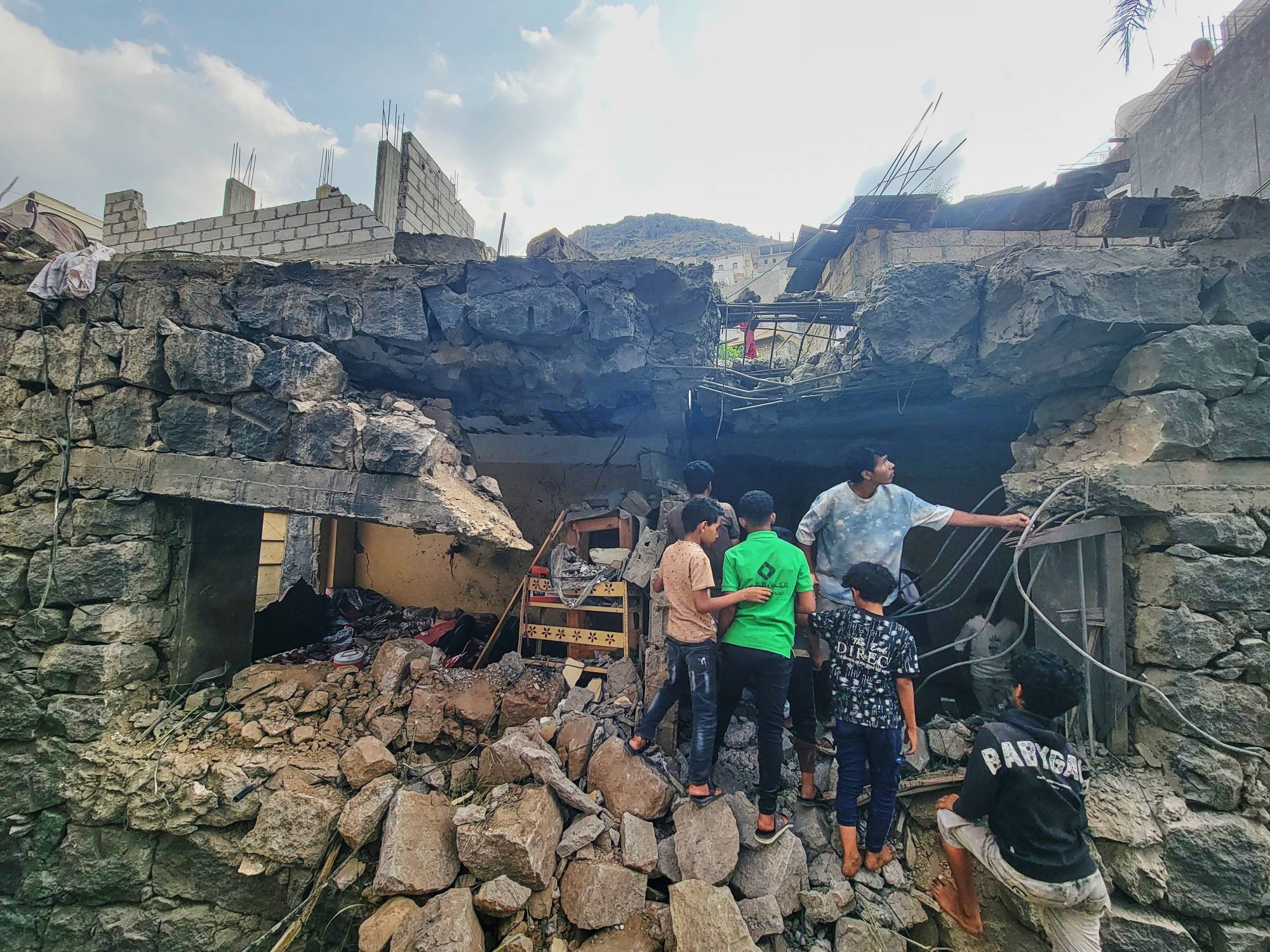
Residents walk amid debris from their homes after a missile strike in Seina, Taiz, Yemen, Tuesday, Oct. 20, 2026. (AP Photo/Marzouq Al Jabri)

Funding dries up as needs surge

As humanitarian needs soar, international and local relief operations are running into what aid officials describe as a crippling funding drought.

Earlier this month, the WHO issued an urgent appeal for $31 million to keep essential healthcare operations running across Yemen. Donors have provided just $2.1 million, leaving a staggering 93% funding gap.

The consequences have been swift. Fifteen vital healthcare facilities have closed permanently, while dozens of mobile medical teams have been disbanded, cutting off what had been the only lifeline for remote communities and displacement camps in conflict-hit provinces such as Marib.

International and local humanitarian groups agree that time has effectively run out.

Without immediate international pressure to halt hostilities, open safe humanitarian corridors to restore the flow of supplies into besieged Taiz and release emergency funding, Yemen faces the prospect of the worst healthcare collapse in its modern history.


550 Private Schools in Sanaa Come Under Houthi Recruitment Pressure

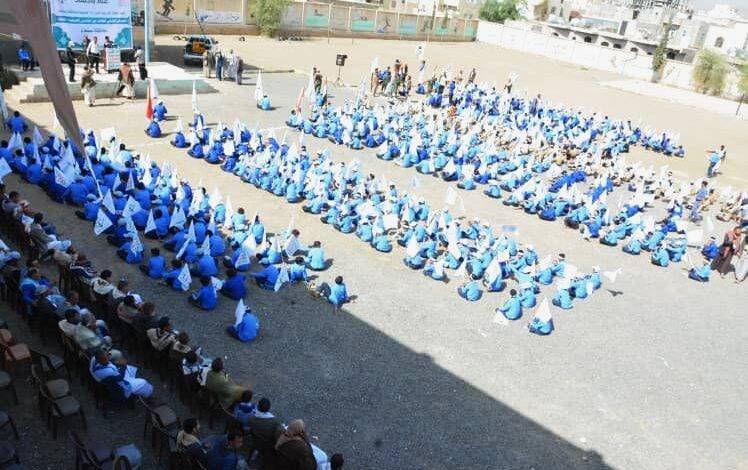
Houthis continue to recruit children and transform schools into training centers (local media)
TT

550 Private Schools in Sanaa Come Under Houthi Recruitment Pressure

Houthis continue to recruit children and transform schools into training centers (local media)

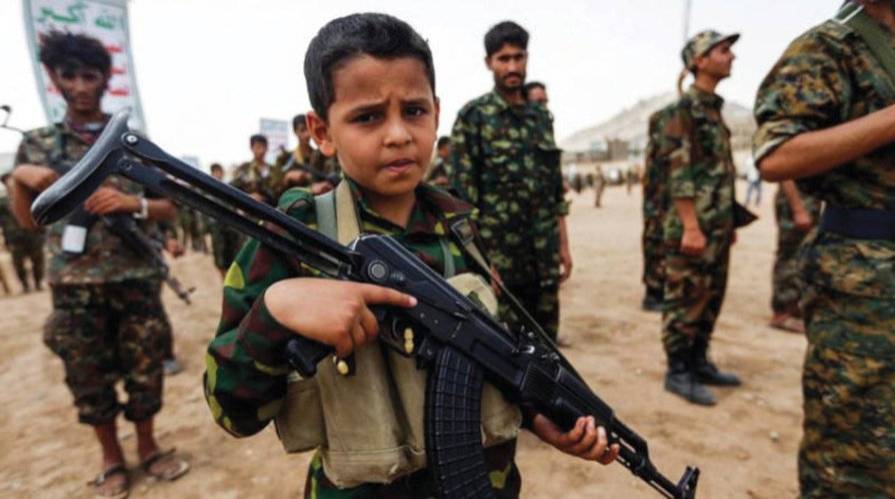
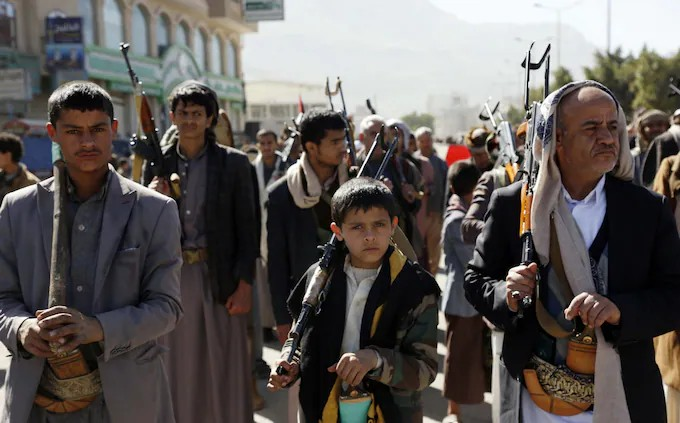
The Houthi militias have escalated their campaigns to recruit students from private schools in Sanaa, exploiting educational institutions to supply its battlefronts with new fighters and offset its ongoing human losses.

The group is reportedly forcing students to attend military training courses while threatening school administrations with closure, fines, and other penalties.

Educational sources in Sanaa told Asharq Al-Awsat that the group's so-called "Jihadist Department," in coordination with the Ministry of Education in its unrecognized government, recently launched a campaign targeting more than 550 private schools in Sanaa and its outskirts.

A Yemeni child carries his weapon during a gathering of new Houthi fighters in Sanaa (AFP)

The move marks a new escalation in the group's use of the education sector to advance its military and ideological agenda.

According to the sources, Houthi supervisors have, in recent days, conducted field visits to schools in ten districts across Sanaa, ordering each school administration to select five students to enroll in military training courses.

They warned that institutions refusing to comply could face closure, punitive measures, and financial penalties.

The campaign has sparked widespread anger and concern among teachers, students, and parents, who view it as part of the group's long-standing effort to undermine the educational process. For years, they say, the Houthis have subjected curricula and school activities to ideological indoctrination and turned educational institutions into tools serving their military project.

Houthis encourage families to take pride in their sons as fighters or martyrs (Getty)

Forced Military Courses

Parents who spoke to Asharq Al-Awsat said their children were taken from classrooms without their families' knowledge and transported to undisclosed locations, where they were subjected to ideological indoctrination and military training.

This has heightened fears that the activities are a prelude to recruiting students and sending them to the front lines.

As a result, some families have stopped sending their children to the targeted schools for fear of forced recruitment.

Several private schools have reported declining attendance, amid growing concerns over continued Houthi pressure and raids on educational institutions, which many believe are being transformed into recruitment channels rather than centers for learning.

Abdullah, the father of four students from the Maeen district in central Sanaa, said he had been forced to keep two of his children, who are in middle and high school, at home out of fear they would be recruited.

He said he no longer trusts the school administration's ability to protect them from Houthi pressure, leaving him with the painful choice of either depriving them of an education or risking their military indoctrination.

He added that most families now fear sending their children to school because educational institutions have, in his words, become recruitment gateways where students are subjected to military indoctrination.

"We sent our children to school to learn and build their future, not to be pushed into military courses and battlefronts," he said.

He noted that the group's actions now go beyond imposing its views on curricula and school activities, extending to pressuring school administrations to hand over students to organizers of combat training programs.

Houthi militias have coerced schools in Sanaa into sectarian programs and mobilization for combat (X)

Pressure on Schools

A teacher at a private school in the Al-Sabeen district south of Sanaa, speaking on condition of anonymity, said private school administrations across Sanaa and its suburbs are facing mounting pressure from the group's cultural supervisors to implement directives aimed at recruiting students and sending them to military training courses at the expense of their education.

The teacher stressed that schools, which should provide a safe environment for learning and future-building, are facing growing interference in their internal affairs as pressure increases to pull students out of classrooms and involve them in activities unrelated to education.

These developments come as the education system in Houthi-controlled areas continues to deteriorate.
Tens of thousands of teachers and education workers have gone unpaid for years, while policies pursued by the group have worsened living conditions and weakened schools' ability to fulfil their educational mission.


How Can Gaza's Children Make Up for Years of Lost Education?

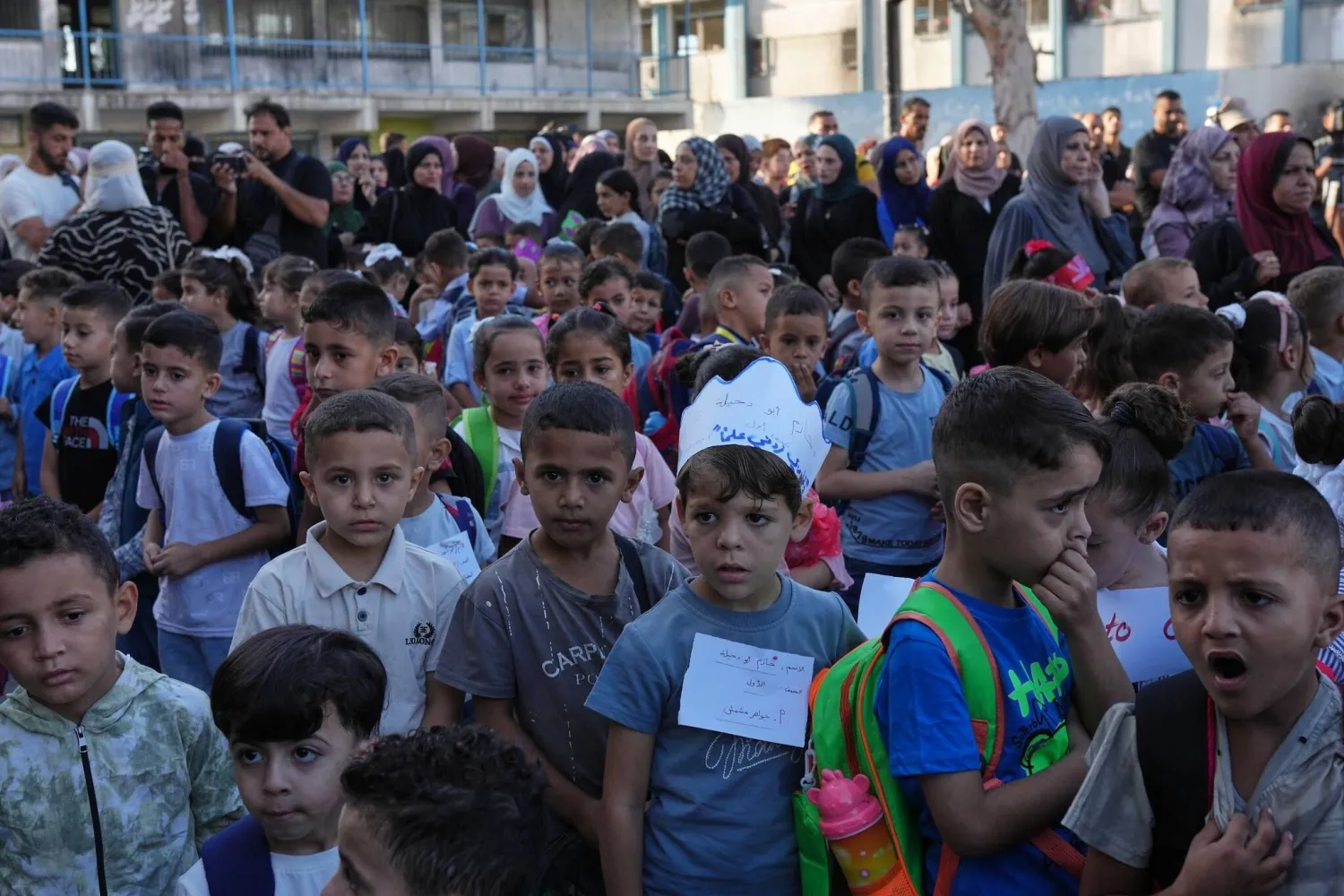
Palestinian children line up on the first day of the new school year at a UN-run school in Nuseirat, central Gaza Strip, on September 19, 2026 (AP)
TT

How Can Gaza's Children Make Up for Years of Lost Education?

Palestinian children line up on the first day of the new school year at a UN-run school in Nuseirat, central Gaza Strip, on September 19, 2026 (AP)

After nearly three years of war, children in the Gaza Strip face a long road to recovering lost learning, with significant gaps in reading, writing and mathematics, destroyed schools, and psychological and living conditions that make regular attendance difficult.

Two education experts who spoke to Asharq Al-Awsat said addressing the learning losses suffered by Gaza's children could require programs lasting several years, beginning with assessments of what each child already knows and what they still need to learn.

Reading and Writing Difficulties

While in Gaza, Dr. Ahmed Kamal Junina, head of the English Department at Al-Aqsa University, witnessed the effects of disrupted education through his own children and conversations with relatives and parents of schoolchildren.

He found that one of the most serious problems was that many children lacked even basic reading and writing skills.

"I believe we are facing profound learning losses that continue to accumulate over time, with the extent varying from one child to another," Junina, currently a fellow-in-residence at Harvard University's Radcliffe Institute for Advanced Study, told Asharq Al-Awsat.

The prospect of returning to school after nearly three years of war raises questions about children's actual learning levels, the limited hours available for instruction and how to design programs that allow them to continue their education without falling further behind.

The gaps include skills children previously acquired but have since lost through lack of practice, as well as foundational skills others never had the opportunity to develop.

Even when students are promoted to higher grades, weak reading skills can prevent them from keeping up with other subjects, allowing new difficulties to accumulate on top of unresolved learning gaps.

According to Junina, children have also lost the structure of school routines and daily interaction with teachers and classmates, experiences that help shape their personalities and develop social and life skills.

To illustrate the limited learning opportunities available, Junina cited a UNICEF survey conducted between December 2025 and January 2026, covering 2,071 households in Gaza.

The survey found that 68% of children aged five to 11 had participated in educational activities for three months or less between October 2023 and the time of the survey.

That figure reflects the duration of children's participation in education, however, rather than the extent of their learning losses, which would require direct assessment.

Needs That Must Be Addressed Before Learning Can Begin

A child's ability to benefit from education can be undermined by unaddressed physical or psychological needs.

Junina cited a case documented by War Child, a Netherlands-based organization supporting children affected by conflict, involving Karim, a seven-year-old Palestinian boy in Deir al-Balah, central Gaza.

After losing his father and home, Karim struggled to participate in activities and remain at a learning center.

With psychological support, group activities, remedial education and eyeglasses to address a vision problem, he gradually began participating with greater confidence.

Junina said the case illustrates the importance of addressing needs that can determine whether a child is able to engage with teachers and benefit from lessons.

The UNICEF survey provided further evidence of such challenges, with parents reporting sleep disturbances, social withdrawal and behavioral changes among their children, underscoring the need to consider their psychological and social well-being when schooling resumes.

"I don't think we can understand what a child experiences in the classroom without considering the circumstances of their life outside it," Junina said.

Where a child sleeps, whether they feel safe, whether they have space to study and whether someone is available to help with schoolwork all influence their ability to concentrate and continue learning.

Junina also witnessed the effects of instability among his university students.

Some had their studies repeatedly disrupted by displacement, while others waited until nighttime to find a quiet environment in which to work. They also struggled to obtain internet access, charge their phones and access educational materials.

Although these experiences relate to university education, they illustrate how difficult simply accessing a lesson has become, even before students can begin following and understanding it.

Lessons From Earlier Programs and the Limits of Comparison

Previous experiences suggest that remedial education can produce substantial improvements in foundational skills.

Junina cited a UNICEF-documented program from 2021, completed by 5,000 children in grades one through four in Gaza.

Participants' average mathematics test scores rose from 37% before the program to 95.5% afterward.

However, the differences between conditions during that program and the current situation mean its results cannot be used to estimate how long educational recovery will take today.

"We are dealing with an education system that has lost most of its schools and facilities, in addition to the killing, displacement, bereavement, hunger and harsh living conditions experienced by teachers, children and their families," Junina explained.

"We therefore cannot use the 2021 experience to estimate how long children will need to recover from the effects of the current war."

The program nevertheless demonstrates the potential benefits of remedial interventions, provided that recovery efforts are designed to continue for years, with their objectives and outcomes regularly reviewed.

Junina warned against turning the process into a race to complete curricula, administer examinations and promote students to higher grades.

"The goal is for children to genuinely learn and acquire the skills they need to continue their education without accumulating further gaps," he said.

Teachers as Partners in Recovery

Such programs require teachers who can continue working despite facing the effects of war, displacement, loss, financial hardship and psychological pressure themselves.

Junina considers stable incomes and psychological and professional support for teachers essential to restoring education, enabling them to work consistently with children and respond to the traumatic experiences they have endured.

According to Junina, the first priority for educational recovery is "ending the ongoing attacks and killings, ensuring the safety of children and teachers, and providing safe places they can reach and where they can learn."

He said education should continue in temporary learning spaces while damaged schools are repaired and children's basic needs are met, allowing them to attend classes regularly.

Developing and implementing recovery plans also requires meaningful participation by local education professionals.

"Most importantly, Palestinian teachers and educational institutions must play a central role in developing and implementing recovery plans, with the participation of students' families, because they understand children's needs and living conditions better than anyone," Junina said.

When Lessons Are Consumed by Revision

In classrooms and temporary learning spaces, everyday challenges can prevent remedial education plans from translating into sustained progress.

Raed Abu Makhda, a specialist in school administration and education in emergencies, explained to Asharq Al-Awsat how interruptions in attendance prevent teachers from building on skills children have already learned.

"We begin teaching a skill, then attendance is interrupted, so we have to review it instead of building on it. A large part of the available time ends up being spent revisiting material that has already been taught," he said.

For this reason, simply counting missed school days is not enough to measure a child's learning losses.

Even on days when classes take place, lessons may be short or irregular, while children may arrive exhausted, hungry or frightened, reducing their ability to benefit from the available instruction time, Abu Makhda explained.

Teachers face additional constraints in temporary learning spaces.

"Noise and the close proximity of different groups can make listening and concentrating difficult, while limited space restricts activities, group work and the ability to give each child individual attention," he said.

Tents also provide inadequate protection from changing weather conditions and may lack desks, blackboards, textbooks, teaching materials and suitable sanitation facilities.

Shortened school days further reduce the time available for instruction, practice and assessment. Lessons may end before teachers can establish whether children have understood the material or provide additional support to those who are struggling.

Abu Makhda summarized the limitations of this approach: "A tent may provide a place for lessons, but it cannot, on its own, provide the conditions of a school capable of addressing accumulated learning losses."

Grouping Children by Skill Level

Abu Makhda believes educational recovery should begin with diagnostic assessments of children's reading, writing and mathematics skills.

Children should then be grouped according to their abilities and provided with regular remedial instruction, clear learning objectives and continuous monitoring of their progress.

This approach requires training teachers to manage students with different learning levels, providing appropriate educational materials and allowing sufficient time for practice and assessment.

A child's age or assigned grade should not be taken as proof that they possess the corresponding skills without first establishing what they can actually do.

The ability to recover lost learning varies according to age, previous educational attainment, the length of interrupted schooling, and psychological and living conditions.

Certain skills may improve within months if children can attend classes consistently, while addressing accumulated learning gaps could take several years.

Abu Makhda stressed that these are conditional educational estimates, not guaranteed timelines for recovery.

Consistent schooling remains essential to preserving any progress.

"Continued interruptions mean that a child is trying to recover lost learning while simultaneously falling further behind," he said.

Who Faces the Greatest Risks?

Learning gaps have different consequences depending on a child's age and educational stage.

In the early grades, weak foundational skills affect performance across other subjects. Simply understanding a question can become an obstacle to following a lesson or completing a test.

As Abu Makhda explained: "A child who cannot read the question will be unable to demonstrate what they know, even if they understand some of the content."

Older students face different risks.

According to Abu Makhda, the need to work, family responsibilities or losing hope of completing their education may cause them to leave school permanently.

Children with disabilities, as well as those who have experienced injuries, bereavement or repeated displacement, face additional difficulties because of shortages of specialized services.

For these reasons, Abu Makhda believes remedial education programs must include efforts to identify and follow up with children who have stopped attending school or are at risk of dropping out.

Success should be measured by what children have actually learned to read, write and understand, alongside their attendance and continued participation, rather than relying solely on enrollment figures or the number of lessons delivered.

"Recovering lost learning requires time, stability and resources," Abu Makhda said.

"Talking about educational recovery without providing these conditions places responsibility on children and teachers for circumstances they have no power to change."