Judicial Source: Lebanon Arrests 2 Suspected Hezbollah Members over Explosives

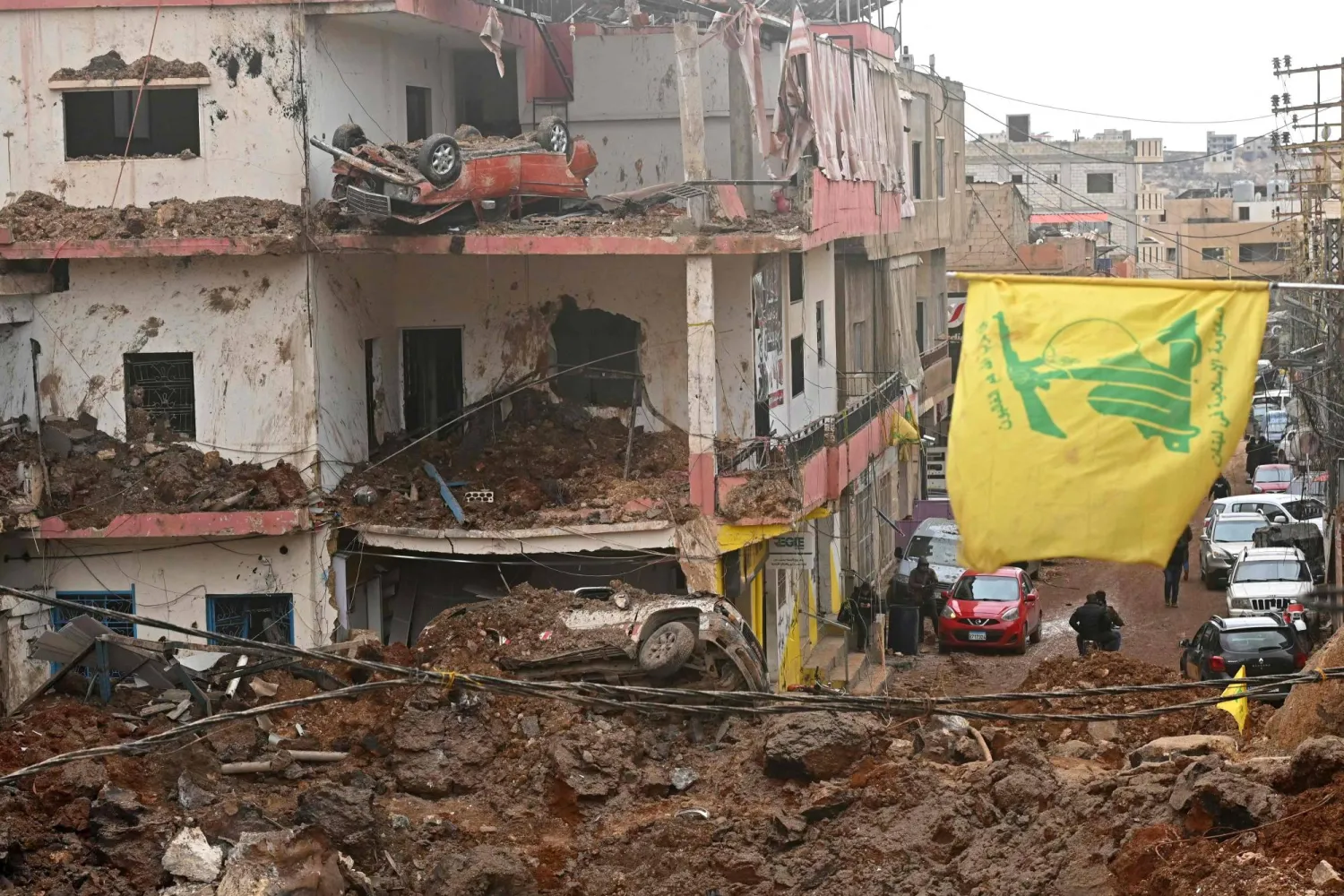
This photograph taken during a media tour organized by Hezbollah shows a flag of Hezbollah installed on the balcony of a damaged building at Nabi Sheet town after an Israeli military operation in the Bekaa Valley of Lebanon, on March 7, 2026. (Photo by FADEL itani / AFP)
TT

Judicial Source: Lebanon Arrests 2 Suspected Hezbollah Members over Explosives

This photograph taken during a media tour organized by Hezbollah shows a flag of Hezbollah installed on the balcony of a damaged building at Nabi Sheet town after an Israeli military operation in the Bekaa Valley of Lebanon, on March 7, 2026. (Photo by FADEL itani / AFP)

Lebanese authorities arrested two suspected Hezbollah members accused of secretly transporting half-a-ton of explosives, a judicial source told AFP on Saturday.

According to the source, who spoke on condition of anonymity, the two men were caught Thursday afternoon at a security checkpoint in Dahr al-Baidar in Lebanon's east, near a road linking the country with Syria.

They were in a car heading towards Beirut.

After searching the vehicle, security forces seized "250 kilograms of TNT-type explosives and 250 kilograms of C4-type, a highly explosive substance,” the source said.

Based on initial investigations, one of the suspects is the son of a Hezbollah official and the other is also a member of the group, according to the source.

The explosives' destination remains unknown, the source added.

Lebanese authorities have not confirmed the source's information.

But Justice Minister Adel Nassar vowed on X Saturday that "the investigation into the seized explosives, and everything that follows from it, will continue to the very end.”

He insisted that work toward "disarming illegal groups, combating terrorism and prosecuting all outlaws is... irreversible and speeding up.”

Lebanon approved a plan to disarm Hezbollah in 2025, following a ceasefire the previous November that ended a devastating war between the group and Israel.

However, the conflict flared back to life in March this year when Hezbollah attacked Israel in support of Iran in the Middle East war.

Israel invaded in response and now occupies a band of territory in Lebanon's south.

A new ceasefire was struck in June, and Israel and Lebanon have agreed to a framework deal that involves Hezbollah's disarmament, a gradual Israeli withdrawal and the deployment of the Lebanese army to the region.


Houthis Commit More Violations in Taiz and Lahj, Drawing EU Condemnation

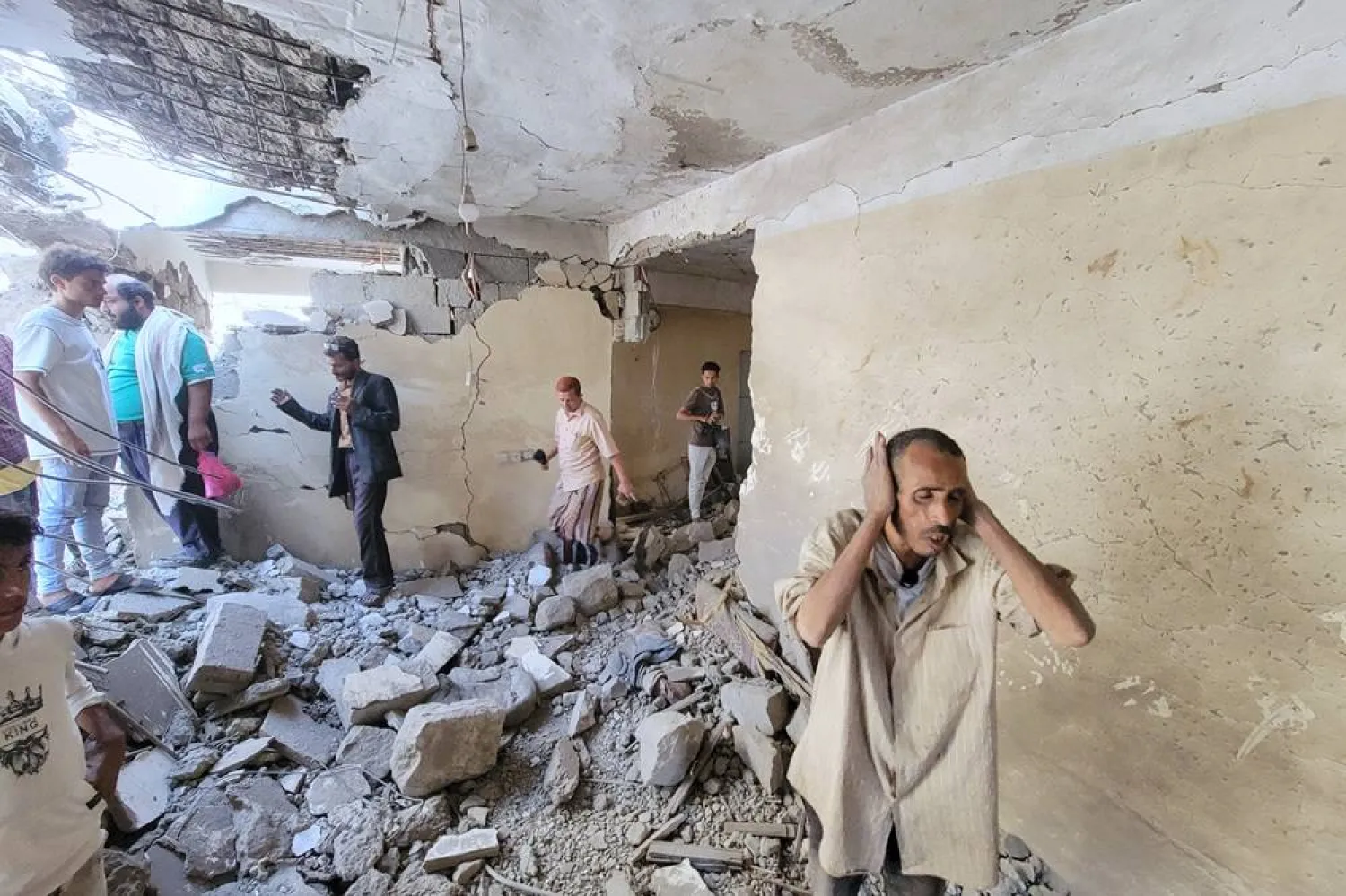
 Residents walk on debris of their homes at Seina district in Taiz, Yemen, after a missile strike, Tuesday, Oct. 20, 2026. (AP)
Residents walk on debris of their homes at Seina district in Taiz, Yemen, after a missile strike, Tuesday, Oct. 20, 2026. (AP)
TT

Houthis Commit More Violations in Taiz and Lahj, Drawing EU Condemnation

 Residents walk on debris of their homes at Seina district in Taiz, Yemen, after a missile strike, Tuesday, Oct. 20, 2026. (AP)
Residents walk on debris of their homes at Seina district in Taiz, Yemen, after a missile strike, Tuesday, Oct. 20, 2026. (AP)

The Yemeni Network for Rights and Freedoms documented 164 crimes and violations committed by the terrorist Houthis within 48 hours across the Taiz and Lahj governorates, reflecting the widening scope of their targeting of civilians and vital infrastructure in southwestern Yemen.

The attacks involved firing around 450 projectiles at populated areas, killing 28 civilians and injuring 57 others. The surge in violence coincided with the targeting of a health center in Lahj and a popular market in Taiz, drawing sharp condemnations from government officials, human rights organizations, and the European Union.

This Houthi offensive comes amid mounting humanitarian pressure on local populations, particularly in Taiz, which continues to endure a relentless blockade alongside severe restrictions on the delivery of supplies and aid.

Meanwhile, military clashes are expanding across the southern and western fronts of the governorate, as civilian and medical facilities are increasingly transformed into targets.

In its report on Tuesday, the Network stated that the death toll reached 28 civilians, including five children and three women. Furthermore, 57 others were injured, including 14 children and six women, with 10 healthcare workers among the casualties.

According to the report, the Houthi violations included killing and injuring individuals through shelling and sniper fire, committing two massacres against civilians, abduction, and detention. The acts also involved targeting residential neighborhoods, public roads, ambulance crews, and private vehicles, alongside recruiting young people from marginalized groups and subjecting them to enlistment programs.

Among the most prominent incidents documented by the rights network was the Houthi targeting of the Al-Saqiya health center in the Al-Mudharaba district in Lahj on Monday with a ballistic missile.

The attack caused deaths and injuries among medical personnel and triggered a wave of official condemnations, as it was a direct assault on a facility providing humanitarian services to civilians.

The Ministry of Public Health and Population announced that the attack resulted, according to an initial toll, in the death of five people, including three members of the medical team working at the center, and the injury of 15 others, including seven healthcare workers.

It said the attack was a blatant violation of humanitarian, international laws and norms that guarantee the protection of medical facilities, their workers, patients, and visitors, warning of the dangerous repercussions of such attacks on the capacity of health facilities, which are already limited, to continue providing their services.

It called on the United Nations, the international community, and humanitarian organizations, foremost among them the World Health Organization and the International Committee of the Red Cross, to condemn the attack, investigate it, hold those responsible accountable, and work toward providing the necessary protection for health facilities, medical personnel, and ambulance crews.

Yemeni Prime Minister Shaya Al-Zindani described the attack as a "full-fledged terrorist crime" and a violation of international humanitarian law.

It reveals a pattern of targeting civilian and medical facilities, and an assault on citizens' rights to life and medical treatment, he said in a telephone call with Lahj Governor Murad Al-Halimi.

European condemnation

In a statement on Monday, the European Union “strongly condemned the Houthis' continued military escalation in Yemen and their attacks against Saudi Arabia, particularly those targeting civilians and civilian infrastructure.”

“We express our full solidarity with the legitimate Government of Yemen and the Kingdom of Saudi Arabia and their people,” it declared.

“The recent attacks against Aden’s Al-Maashiq palace, the continued siege of Taiz, the military action along Yemen's west coast, and attacks against Saudi Arabia, were heinous acts. All Houthi military action must end immediately,” it demanded.

“We call on all actors, including Iran to cease all military support to the Houthis, in violation of several United Nations Security Council resolutions,” it added.

“The EU reaffirms its firm commitment to Yemen's unity, sovereignty, independence and territorial integrity. We remain fully committed and will increase our support to the legitimate Government of Yemen and the Presidential Leadership Council, including in their efforts to advance reforms, strengthen governance and address the deteriorating economic, humanitarian and human rights situation,” it said.

“The EU reiterates that there can be no military solution to the conflict in Yemen and reaffirms its full support to the UN Special Envoy and for UN-led peace efforts in Yemen, in line with relevant UN Security Council Resolutions, including UNSCR 2216, aimed at achieving an inclusive, sustainable, Yemeni-led and Yemeni-owned political settlement,” it stressed.

It continued: “The Houthis’ military escalation and the crisis of access and affordability of essential goods across the country compound an already catastrophic humanitarian situation, worsening food insecurity and lack of access to healthcare and safe water, with more than 22 million people in need of assistance.”

The city of Taiz currently shelters 800,000-950,000 civilians, including displaced persons.

“The city is once again under siege, threatened by a major Houthi military build-up. The use of starvation of civilians as a method of warfare is prohibited under international law. Civilians must not be used as a shield for military objectives or operations. We call on the Houthis to urgently open a humanitarian corridor in Taiz and ensure safe, rapid and unhindered humanitarian access to all those in need,” said the EU statement.

“The safety and freedom of humanitarian staff to operate must be ensured at all times. All parties to the conflict must comply with international humanitarian and human rights law, including the obligation to protect civilians and civilian infrastructure,” it said.

“We reiterate our call for the immediate and unconditional release of all humanitarian personnel including the 70 UN staff who remain arbitrarily detained by the Houthis in Sanaa.”


French Judges Probe War Crimes Complaint against Israeli Army in Lebanon

File: Israeli heavy machinery bulldozes houses in Mansouri, as seen from Hinniyeh, Southern Lebanon, September 19, 2026. (Reuters)
TT

French Judges Probe War Crimes Complaint against Israeli Army in Lebanon

File: Israeli heavy machinery bulldozes houses in Mansouri, as seen from Hinniyeh, Southern Lebanon, September 19, 2026. (Reuters)

France has opened a judicial investigation into a war crimes complaint over an Israeli strike on a residential building in Lebanon, a lawyer told AFP on Tuesday.

French-Lebanese artist Ali Cherri, whose parents were killed in the Beirut strike in 2024, filed the complaint as a civil party this year with the International Federation for Human Rights, Cherri's lawyer Clemence Bectarte explained.

The crimes against humanity unit of the Paris Judicial Court has appointed two investigating judges to the case, she added, hailing the move as "a first".

Lebanese militant group Hezbollah, an ally of Palestinian militants Hamas, opened a front against neighboring Israel at the start of the Gaza war after Hamas attacked Israel on October 7, 2023.

The hostilities, which escalated into open war in September 2024, have left more than 4,000 dead in Lebanon and forced more than a million people to flee.

Seven civilians, including Cherri's father and mother, aged 87 and 77, were killed in the bombing of their 12-storey apartment building in central Beirut on November 26, 2024, according to the complaint seen by AFP. Three floors were destroyed.

The strike occurred "just a few hours before the ceasefire agreement between Israel and Hezbollah came into effect," the complaint stated, citing detailed research by Amnesty International and Forensic Architecture into the incident.

AFP has reached out to the Israeli military for comment.

Cherri told AFP he had taken legal action "for the dignity of all civilian victims".

"For nearly two years, I have been fighting... to ensure that the Israeli bombing that killed my parents and five other civilians does not go unpunished," he said.

"What happened to my parents is not an isolated case... I hope this investigation will help break the impunity enjoyed by Israeli officials responsible for attacks against civilians in Lebanon and Palestine," he added.

- Several investigations underway -

While the judicial investigation marks a first over alleged war crimes by Israeli forces in Lebanon, other cases are pending.

French-Lebanese man Mohamad H., represented by lawyer Emmanuel Daoud, has sought action after losing his mother, sister, and two nephews in strikes on the southern city of Tyre during the night of April 16-17.

In another case, a French entrepreneur born in Lebanon has accused the Israeli army of uprooting 600-century-old olive trees belonging to his family in a village in southern Lebanon.

France's National Anti-Terrorism Prosecutor's Office (PNAT), which handles war crimes, has opened an investigation into allegations of torture and war crimes related to the Israeli forces' interception of humanitarian flotillas bound for Gaza in 2025 and 2026.

The PNAT also asked a Paris judge to open a war crimes investigation into the deaths of two French children in an Israeli bombing in Gaza in October 2023, while ruling out charges of genocide and crimes against humanity, according to sources close to the case.


Sudan Files Complaint Against Ethiopia at UN Security Council Over Drone Attacks

UN Secretary-General Antonio Guterres meets Sudanese Foreign Minister Mohieddin Salem in New York on September 24 (UN). 
TT

Sudan Files Complaint Against Ethiopia at UN Security Council Over Drone Attacks

UN Secretary-General Antonio Guterres meets Sudanese Foreign Minister Mohieddin Salem in New York on September 24 (UN). 

Sudan has filed complaints against Ethiopia with the UN Security Council and the African Union Peace and Security Council over what Khartoum described as attacks on civilian facilities by drones launched from Ethiopian territory, according to a statement from the Sudanese Foreign Ministry.

Khartoum accuses Addis Ababa of siding with the Rapid Support Forces (RSF), which have been fighting the Sudanese army for more than three years, leaving the country divided into areas controlled by the rival forces.

Ethiopia, for its part, accuses Sudan of supporting rebels in its Tigray region.

The attacks exchanged between the two sides have fueled unprecedented tensions between the neighboring countries, raising fears that Sudan’s war could spill across its borders.

Sudan’s Foreign Ministry declared that “the terrorist militia’s use of Ethiopian territory to target Sudanese territory constitutes a hostile act that places Ethiopia before international law.”

Sudan’s Sovereignty Council, headed by army chief Abdel Fattah al-Burhan, had previously reported that more than 180 drones launched from Ethiopian territory had attacked Sudan this year.

According to a council report, the attacks killed or wounded around 500 civilians, striking residential areas, hospitals, power stations and fuel facilities.

Both sides in Sudan’s war rely heavily on drones, with direct confrontations declining as aerial attacks intensify in the country’s west and south.

The United Nations has warned of an increase in drone attacks, which have killed more than 1,100 people since the beginning of the year, including more than 300 in the past month alone.

The war, now in its fourth year, has killed tens of thousands of people and displaced millions within Sudan and beyond its borders, while famine has spread across several areas.

Recent attacks on power stations in army-controlled areas have caused widespread electricity outages in Khartoum, Al-Jazira, White Nile and Gedaref states.

Reports indicated that around 15 power stations were targeted between October 20 and November 1, while the Emergency Lawyers group announced on Sunday that 15 stations had been targeted in October alone.