Bones from Iraqi Cave Hint at Violence and Compassion in Neanderthals

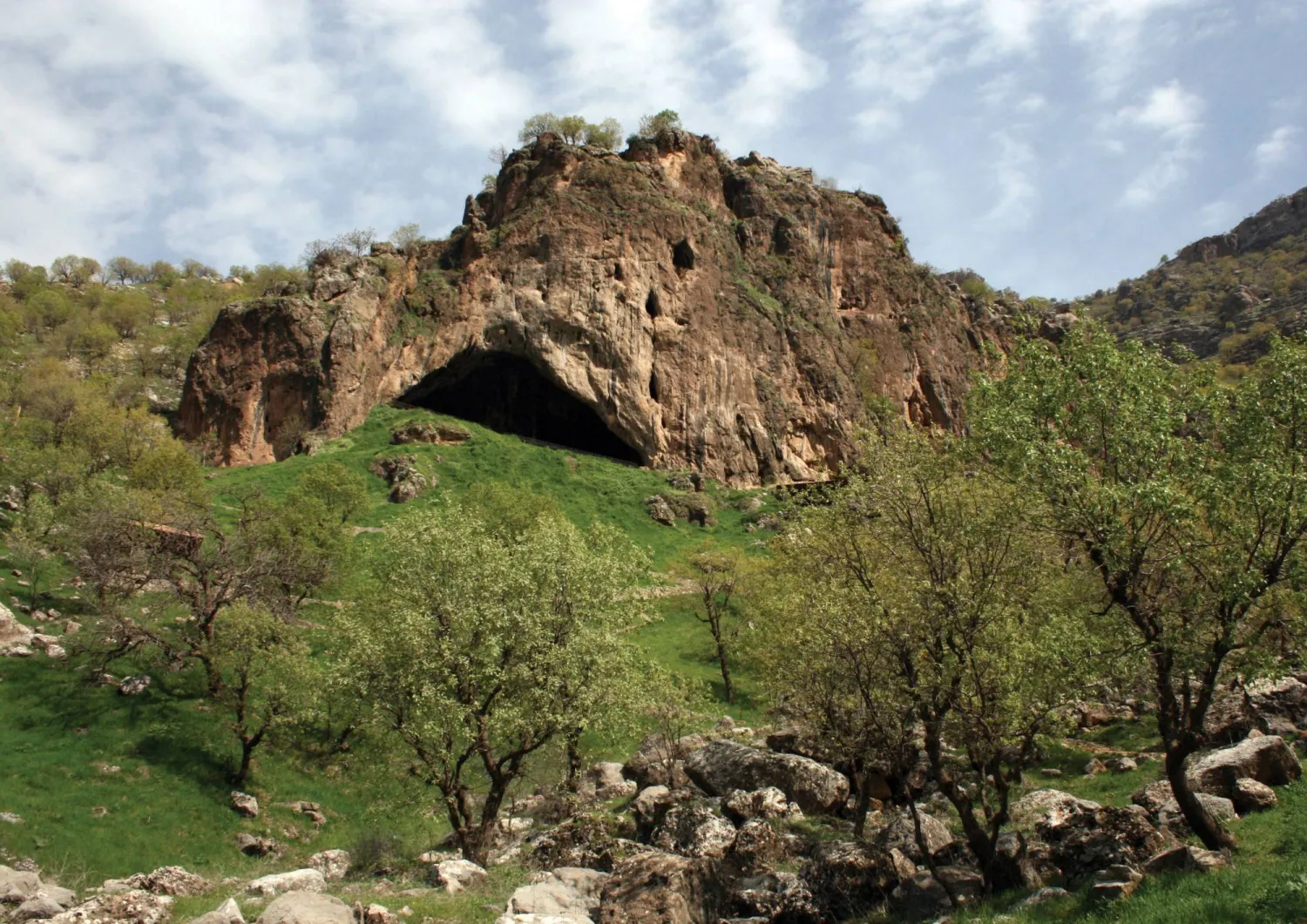
The entrance to Shanidar Cave in Iraq's Kurdistan region, a site of important Neanderthal remains, is seen in an undated photograph released on October 15, 2026. Prof Graeme Barker/Handout via REUTERS
TT

Bones from Iraqi Cave Hint at Violence and Compassion in Neanderthals

The entrance to Shanidar Cave in Iraq's Kurdistan region, a site of important Neanderthal remains, is seen in an undated photograph released on October 15, 2026. Prof Graeme Barker/Handout via REUTERS

The bones of a Neanderthal from a cave in Iraq's Kurdistan region are offering evidence of both violence and compassion in the closest evolutionary cousins of our species, exhibiting a wound apparently from a fatal spear attack as well as signs of an earlier nonfatal injury that may have elicited kindly care.

Researchers have discovered at Shanidar Cave in the Zagros Mountains of northern Iraq a partial skeleton of a Neanderthal, aged in the mid-40s, that included a left shoulder blade, or scapula, with a circular hole six-tenths of an inch (15 mm) wide indicative of a deeply penetrating stab.

The bones of this individual, who they call Shanidar A, were unearthed from under about 25 feet (7.5 meters) of rocks and sediment inside the cave and date to about 75,000 years ago.

The researchers were unable to determine Shanidar A's sex.

According to Reuters, the researchers said the injury's shape suggests it was caused by a forceful thrust using a sharpened wooden spear, a type of weapon Neanderthals are known to have used, rather than a spear with a stone tip. It was a weapon employed in hunting large mammals that were an important food source.

"The ⁠spear would have ⁠gone through the skin and major muscles, especially the pectoralis, as well as the ribcage and muscles between the ribs, and the lung," said biological anthropologist Emma Pomeroy of the University of Cambridge in England, lead author of the study published on Thursday in the journal Scientific Reports.

"The location could be like the kind of 'heart shot' hunters use to kill animals quickly by puncturing the heart, but that is a bit speculative. We do see heart shots as a hunting strategy both today and in the archaeological record. Neanderthals would have known this would lead to a quick death," Pomeroy said.

University of Cambridge archaeologist and study co-author Graeme Barker, who has led Shanidar Cave excavations since 2015, said the likeliest scenario ⁠is interpersonal violence.

The researchers said the violence probably occurred either between members of a particular Neanderthal group or between members of rival Neanderthal groups, calling a Homo sapiens attack or an accidental injury less likely.

The researchers found shards of bone displaced by the weapon. The injury indicated that the spear entered from above with a downward trajectory, penetrating the left chest cavity from the front and traveling through the body before punching the hole in the scapula, causing quick death.

In addition to the scapula, the researchers found some ribs, a nearly complete right hand and seven teeth, mostly from the front of the lower jaw, belonging to Shanidar A. The teeth bore evidence that this Neanderthal had survived brutal injury at least a year before death — a blow to the face resulting in front teeth being smashed and lost. One tooth was split, with half remaining rotated in the mouth and others pushed out of position.

"The pain would have been extreme, and basic needs like eating and drinking would have been difficult, perhaps meaning Shanidar A needed food mashing and being able ⁠to rest. It's likely that Shanidar ⁠A did need some care from members of the group for some basic needs during recovery," Pomeroy said.

Shanidar A was one of five Neanderthals, four adults and one infant, whose bodies were carefully tucked behind a rock pillar in the cave in a burial cluster within a generation or so of each other. The cave was occupied by Neanderthals for tens of thousands of years as a seasonal campsite, and later by Homo sapiens.

Neanderthals were more robustly built than Homo sapiens, with larger brows. They lived as hunter-gatherers and inhabited Eurasia from the Atlantic coast to the Ural Mountains from about 400,000 years ago until a bit after 40,000 years ago, disappearing after Homo sapiens became established in the region.

The two species interbred, with modern non-African human populations bearing residual Neanderthal DNA.

The cave, overlooking the Great Zab river valley, has been a source of information about Neanderthals since the 1950s, with Shanidar A now offering new insight into their behavior.

"We see evidence of two contrasting facets of human nature – care and violence – juxtaposed in the same individual," Pomeroy said.

"We see evidence all around us today that violence and care are both aspects of how we humans behave, and we see this here in Shanidar A, too. Neanderthals were like us in many respects, both the good and the bad, and this find really highlights that, going against stereotypes of Neanderthals as unintelligent, uncaring cavemen and cavewomen," Pomeroy said.


Historic Jeddah Offers Rich Heritage, Diverse Cultural Experiences

Historic Jeddah is among the destinations featured in the Saudi Winter program. (SPA)
TT

Historic Jeddah Offers Rich Heritage, Diverse Cultural Experiences

Historic Jeddah is among the destinations featured in the Saudi Winter program. (SPA)

Historic Jeddah is among the destinations featured in the Saudi Winter program, offering visitors a mix of heritage attractions, museums, traditional markets, and cultural activities. The UNESCO World Heritage Site is known for its distinctive architecture and mild winter weather, the Saudi Press Agency reported on Wednesday.

The district's historic buildings, intricately crafted wooden rawashin, and narrow alleyways reflect Jeddah's past as a gateway to the Two Holy Mosques. Landmarks such as Nassif House, Bab Makkah, and Bait Al-Sharbatly offer a glimpse into the city's social life and architectural heritage over the centuries.

The Red Sea Museum, housed in the historic Bab Al-Bunt building, explores the Red Sea's history and its role in trade and cultural exchange. The Tariq Abdulhakim Museum highlights Saudi Arabia's musical heritage. Traditional markets, including Souq Al Alawi, offer local products, handicrafts, and traditional foods.

Cultural venues such as Zawiya 97 host exhibitions and activities showcasing traditional crafts, helping preserve these skills and pass them on to younger generations.

These experiences complement the Ministry of Culture's efforts to revitalize Historic Jeddah, safeguard its cultural and architectural identity, and develop it into an international tourism destination.


Saudi Arabia Marks 80 Years of Partnership with UNESCO

 Saudi Arabia's partnership with UNESCO has been marked by several major international milestones - SPA
 Saudi Arabia's partnership with UNESCO has been marked by several major international milestones - SPA
TT

Saudi Arabia Marks 80 Years of Partnership with UNESCO

 Saudi Arabia's partnership with UNESCO has been marked by several major international milestones - SPA
 Saudi Arabia's partnership with UNESCO has been marked by several major international milestones - SPA

Saudi Arabia marks the 80th anniversary of its membership in the United Nations Educational, Scientific and Cultural Organization (UNESCO) on November 4, having joined the organization in 1946.

Over eight decades of partnership and international cooperation, the Kingdom's role has evolved from membership and participation in UNESCO's activities to helping shape the organization's policies and strategic direction, while strengthening Saudi Arabia's presence in education, science, culture, and communication and information, SPA reported.

Throughout this period, the Kingdom has continued to support UNESCO and its programs through its assessed contributions to the organization's budget, alongside targeted contributions supporting its priorities and initiatives, reflecting its belief in the role of education, science, and culture in promoting peace, mutual understanding, and human solidarity.

Building on this commitment, Saudi Arabia hosts three UNESCO-affiliated centers: the Regional Center for Dialogue and Peace (RCDP), which promotes a culture of dialogue and tolerance through capacity building, training, research, and knowledge exchange; the International Center for AI Research and Ethics (ICAIRE), which specializes in research, ethics, and governance and supports the responsible use of emerging technologies; and the UNESCO Regional Center for Quality and Excellence in Education (RCQE), which works to enhance the quality of general education and develop education policies in Arab countries.

The Kingdom has also strengthened its participation in UNESCO's committees and councils and supported international awards and initiatives, including the UNESCO-Al Fozan International Prize for the Promotion of Young Scientists in Science, Technology, Engineering and Mathematics (STEM) and the Global Award for Quality and Excellence in Education (GAQEE). In digital empowerment, ICAIRE has helped train more than 6,000 women across 119 countries in artificial intelligence and emerging technologies.

Nonprofit and charitable institutions in the Kingdom have also played a role in this partnership, launching targeted initiatives to strengthen the international presence of the Arabic language and Arab culture. Among the most prominent is the Prince Sultan Bin Abdulaziz Program for the Arabic Language at UNESCO, launched in 2007.

Education has long been a key area of cooperation between Saudi Arabia and UNESCO. The Kingdom has participated in high-level education committees concerned with achieving Sustainable Development Goal 4 (SDG 4), supporting the development of global education policies and strategies, improving education quality, training teachers, promoting lifelong learning, and advancing digital transformation. It has also enabled male and female students to participate in regional and international competitions and forums.

In this context, eight Saudi cities have joined the UNESCO Global Network of Learning Cities: Riyadh, Madinah, AlUla, Yanbu Industrial City, Jubail Industrial City, King Abdullah Economic City, Al-Ahsa, and Riyadh Al-Khabra. The Kingdom also hosts several UNESCO Chairs under the UNITWIN/UNESCO Chairs Program, launched in 1992. In addition, several Saudi schools have joined the UNESCO Associated Schools Network, established in 1953.

In the natural sciences, Salma UNESCO Global Geopark in Hail Region and North Riyadh UNESCO Global Geopark in Riyadh Region became the first two Saudi sites to join the UNESCO Global Geoparks Network in 2025. Their inclusion strengthens the Kingdom's efforts to conserve its geological heritage and leverage it for scientific and tourism purposes.

The Farasan Islands Reserve in Jazan Region was designated in 2021 as Saudi Arabia's first biosphere reserve under UNESCO's Man and the Biosphere (MAB) Program. It was followed in 2022 by Harrat Uwayrid Reserve, which is home to 19 endangered animal species, 43 bird species, including eight species of birds of prey, and 55 rare plant species. Imam Turki bin Abdullah Royal Reserve was subsequently designated in 2025. The reserve extends across five administrative regions: Al-Jouf, Qassim, Hail, Northern Borders, and Eastern Region.

As part of its efforts to promote environmental sustainability and water resource management, Saudi Arabia cooperates with UNESCO's Intergovernmental Hydrological Program (IHP) as it prepares to host the 11th World Water Forum in Riyadh in 2027 under the theme “Action for a Better Tomorrow.”

In the field of sport, the Kingdom supports international frameworks aimed at safeguarding the integrity and values of sport through its continued backing of UNESCO's International Convention against Doping in Sport. Saudi Arabia also serves as a Vice-Chairperson of the Bureau of the Conference of Parties to the Convention, representing the Arab Group and reaffirming the role of sport in promoting tolerance, coexistence, and peacebuilding.

Saudi Arabia's partnership with UNESCO has also extended to safeguarding humanity's cultural heritage and enhancing its global visibility. The Kingdom became a party to the World Heritage Convention in 1978, and Hegra Archaeological Site became the first Saudi site inscribed on the UNESCO World Heritage List in 2008. The Cultural Landscape of Al-Faw Archaeological Area was inscribed in 2024 as the Kingdom's most recent addition to the list, bringing the total number of Saudi World Heritage sites to eight, alongside 18 elements inscribed on UNESCO's Lists of Intangible Cultural Heritage.

According to SPA, to support international cultural programs, the Kingdom allocated $25 million under a letter of intent signed on July 12, 2019, which led to the establishment of the Saudi Fund at UNESCO. The fund has launched six flagship projects covering digital technologies, sustainable tourism, sustainable construction, the conservation of World Heritage sites, and the development of creative economies. To date, 136 countries have benefited from its projects.

In partnership with UNESCO, the Kingdom also launched the UNESCO Virtual Museum of Stolen Cultural Objects and the Dive into Heritage platform to help safeguard cultural heritage, support the recovery of stolen objects, and make heritage accessible to future generations. Saudi Arabia is also preparing to host the UNESCO World Conference on Cultural Policies and Sustainable Development (MONDIACULT 2029), which will help shape cultural policy directions and strengthen culture's role in sustainable development.

In the field of communication and information, Saudi Arabia hosted the fourth edition of the UNESCO Global Forum on the Ethics of Artificial Intelligence in September 2026, in cooperation with the Saudi Data and AI Authority (SDAIA) and ICAIRE, to promote the responsible use of artificial intelligence technologies and harness them for the benefit of humanity.

The Kingdom was also elected to the Intergovernmental Council for UNESCO's Information for All Program (IFAP) for the 2025–2029 term, strengthening its participation in guiding the program's work and advancing international cooperation in access to and preservation of information, media and information literacy, and multilingualism in cyberspace.

Saudi Arabia's partnership with UNESCO has been marked by several major international milestones. These include hosting the extended 45th session of the World Heritage Committee in Riyadh in 2023; proposing and chairing the Open-ended Working Group tasked with improving the balance of the World Heritage List; hosting the UNESCO Global Forum on the Ethics of Artificial Intelligence in 2026; and preparing to host the 11th World Water Forum in 2027 and MONDIACULT in 2029.

Eight decades after joining UNESCO, Saudi Arabia continues to strengthen its partnership with the organization by supporting its programs, funding targeted initiatives, expanding its participation in UNESCO's global networks, and hosting international conferences and platforms.

These efforts reflect the evolution of the Kingdom's role from membership to helping shape international efforts, in line with Saudi Vision 2030's objectives of strengthening international cooperation and harnessing it to serve humanity and sustainable development.


Saudi Pavilion Announces Public Program Accompanying Dana Awartani’s Work at Venice Biennale

Saudi Pavilion Announces Public Program Accompanying Dana Awartani’s Work at Venice Biennale
TT

Saudi Pavilion Announces Public Program Accompanying Dana Awartani’s Work at Venice Biennale

Saudi Pavilion Announces Public Program Accompanying Dana Awartani’s Work at Venice Biennale

The National Pavilion of Saudi Arabia at the 61st International Art Exhibition of La Biennale di Venezia “Venice Biennale” has announced the public program accompanying artist Dana Awartani’s work, titled “May Your Tears Never Dry, You Who Weep over Stones.”

The program is curated by Antonia Carver, with Hafsa Alkhudairi serving as assistant curator.

The program will begin in Venice with two new performances on November 20 and 21 at the National Pavilion of Saudi Arabia in the Arsenale. Presented by artist and writer Mohammad Alfaraj and researcher and writer Nouf AlHarthi, the performances respond to the installation’s materials and themes and will be overseen by the curatorial team.

Through storytelling, poetry, and sound, the two performances explore cultural memory, its continuity, and the transmission of cultural heritage across generations.

Alfaraj uses storytelling to explore collective cultural memory and the relationship between people and their environment, while AlHarthi examines the role of language, sound, and listening in expressing memory and place, according to SPA.

The performances also feature sound artist Nadine Lingawi, whose artistic practice combines environmental sounds and electronic elements to explore the relationship between sound and place.

The public program will continue in Saudi Arabia in January 2027, with panel discussions bringing together Awartani, the curatorial team, and several participants. The discussions will explore how knowledge is transmitted through craft practices, the influence of traditional crafts on contemporary artistic production, and the role of storytelling, poetry, and performance in preserving cultural memory and passing it down through generations.

Awartani’s earthen installation comprises 29,221 sun-dried mud bricks, created in collaboration with 32 artisans based in Saudi Arabia. It draws on mosaic patterns inspired by sites of historical significance.

The installation will remain on display at the National Pavilion of Saudi Arabia until November 22. An illustrated book exploring Awartani’s artistic practice is also expected to be published in January 2027. Commissioned by the Visual Arts Commission, the book will be edited by Carver and published by Kaph Books.

The National Pavilion of Saudi Arabia’s participation was commissioned by the Visual Arts Commission, one of the 11 sector-specific commissions under the Ministry of Culture. This marks Saudi Arabia’s fifth participation in the International Art Exhibition of La Biennale di Venezia.