After a Year in Turmoil, the Louvre Faces Uncertain Future

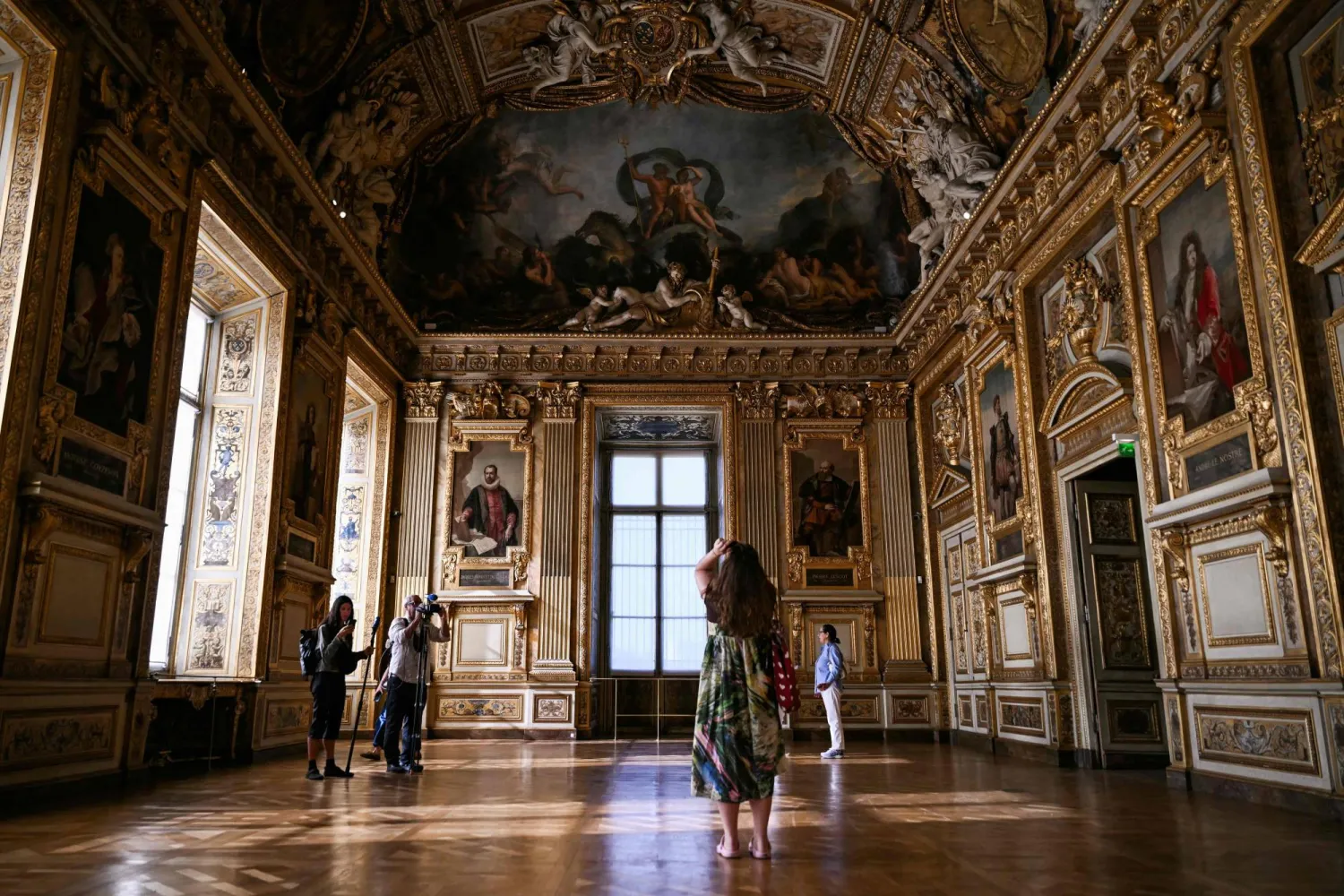
(FILES) Visitors take a picture of the window which was broken during the reopening to the public of the Apollo Gallery, where French crown jewels worth 88 million euros were stolen in 2025 in a brazen heist, at the Musée du Louvre in Paris on July 22, 2026. (Photo by LOU BENOIST / POOL / AFP)
TT

After a Year in Turmoil, the Louvre Faces Uncertain Future

(FILES) Visitors take a picture of the window which was broken during the reopening to the public of the Apollo Gallery, where French crown jewels worth 88 million euros were stolen in 2025 in a brazen heist, at the Musée du Louvre in Paris on July 22, 2026. (Photo by LOU BENOIST / POOL / AFP)

The Louvre is gradually plugging the security gaps exposed by the spectacular burglary of October 19 last year, but its reputation has taken a battering and its creaking infrastructure is a growing source of concern.

The beloved Parisian museum, the most visited in the world, has spent a year as the subject of police investigations, government reports and parliamentary inquiries following the theft of eight crown jewels in broad daylight a year ago.

The heist exposed a string of failures, from old or non-existent CCTV cameras and a chronic shortage of equipment to the lack of a modern security control room and a security director.
"We still feel the trauma of the burglary," Valerie Baud, a workers' representative from the CFDT trade union, told AFP.

Parliament has heard how, in the run-up to the burglary, the institution had spent just three million euros ($3.4 million) out of 83 million euros earmarked for a security masterplan because of administrative delays, management decisions and red tape.

The museum had "prioritized projects that were visible and attractive", the French Court of Auditors found in one of many damning judgements.

That report and others, compounded by a staff strike and a spate of other incidents -- including a water leak and a major ticket-fraud scandal -- hastened the downfall of Louvre president Laurence des Cars, who resigned in February.

"The Louvre needs a change in security culture, which has yet to happen and will take several years," said Laurent Lafon, who is monitoring the museum as chairman of the Senate's culture committee.

"The Louvre's leaders must embrace the idea that security is a priority, which wasn't the case," he told AFP.
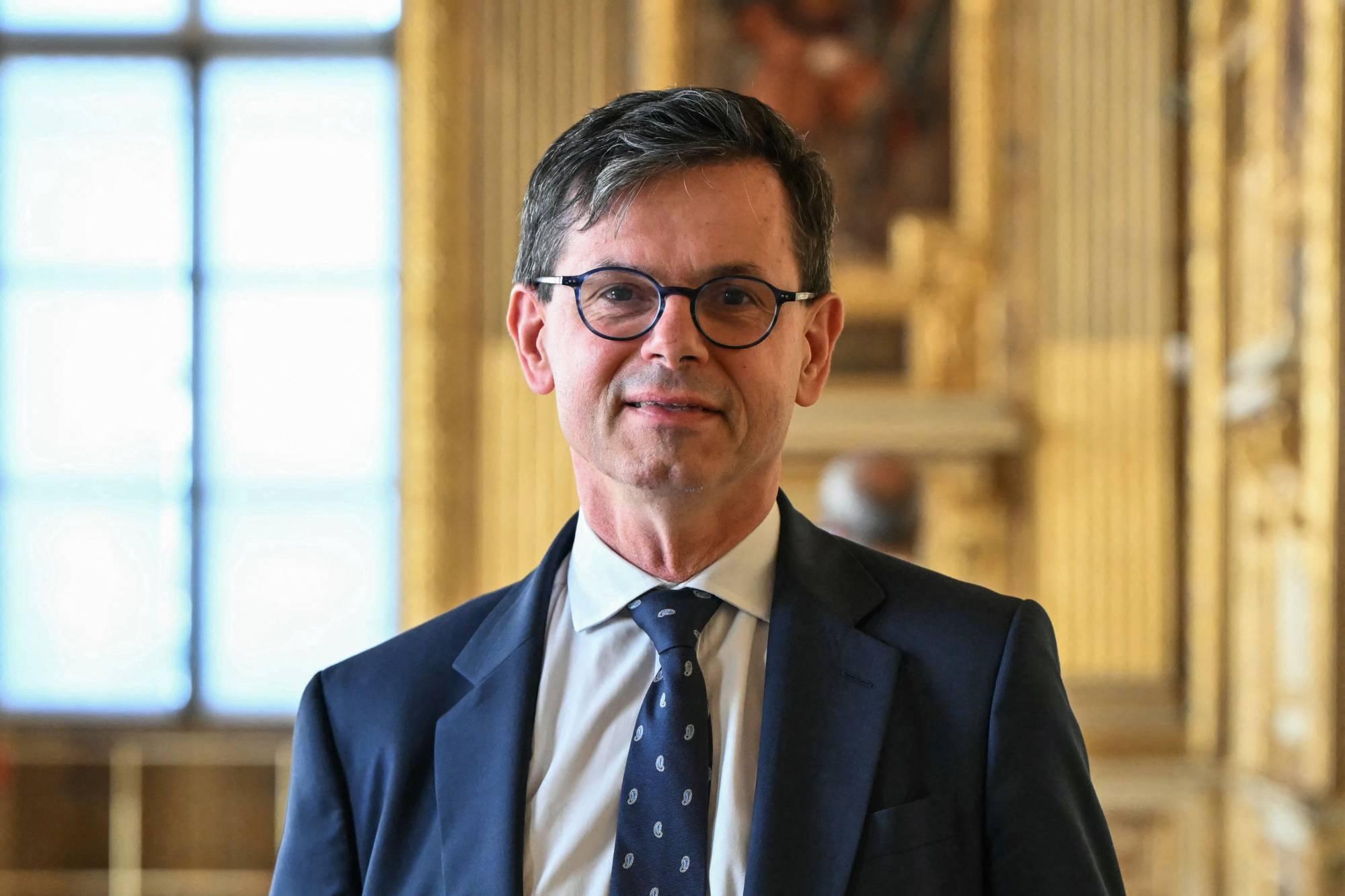
(FILES) Louvre's President Christophe Leribault poses during the reopening to the public of the Apollo Gallery, at the Musee du Louvre in Paris on July 22, 2026. (Photo by LOU BENOIST / POOL / AFP)

New museum chief Christophe Leribault, who replaced des Cars in February, argues that change is taking place.

"The security masterplan is making rapid progress," he told AFP in a written statement, while stressing the "complexity" of carrying out the work while keeping the museum open to the public.

The museum has pledged to invest around 20 million euros a year until 2032 and, since July, has a new dedicated security director.

Short-term worries about security are also giving way to longer-term questions about how to finance a palace-wide modernization program.

Every year, nearly nine million visitors walk the Louvre's galleries, many unaware of the decrepit state of some of the rooms, the ageing plumbing and wiring, as well as poor ventilation in summer and non-existent heating in winter.

Leribault issued his most alarming warning yet earlier this week, telling Le Figaro newspaper "that if the Louvre is not repaired, updated, and transformed, it will very quickly fall behind and will eventually have to close its doors to the public."

French President Emmanuel Macron unveiled his vision -- called "Louvre - Nouvelle Renaissance" -- in January 2025 which included a new entrance and gallery for the Mona Lisa among other changes.

It came with an eye-watering proposed price tag of a billion euros -- which now looks unrealistic for a country facing a severe budget crunch.

Unions accused him and Louvre management of prioritizing grandiose plans for an architectural overhaul instead of more modest changes that would improve the visitor experience.

"We can step up security without going through with this project, which does not address the priorities and states as its goal an unsustainable increase in visitor numbers," said Christian Galani, a representative of the hard-left CGT union.

Leribault remains committed to it, however.

Part of his task as Louvre head is finding new private sources of income from donors who will be invited to sponsor work -- and earn public recognition and perhaps naming rights in return.
Other sources of income could come from further ticket price hikes.

The target is 360 million euros.

"It's a huge challenge, and I don't know whether I'll succeed," he said in June.


RCU Launches ‘An Ongoing Story’ Exhibition

The displayed items include stone tools, inscriptions, coins, pottery, jewellery, books, and historical photographs - SPA
TT

RCU Launches ‘An Ongoing Story’ Exhibition

The displayed items include stone tools, inscriptions, coins, pottery, jewellery, books, and historical photographs - SPA

The Royal Commission for AlUla (RCU) has launched the “An Ongoing Story” exhibition in the AlJadidah Arts District, featuring a collection curated by 16 trainees as part of a training program in museum studies and exhibition curation.

The program was conducted in collaboration with SOAS University of London and supported by the British Council through the AlUla Grants Program, SPA reported.

The exhibition features 25 archaeological and heritage artifacts from the RCU’s collections, highlighting AlUla’s history and cultural heritage across four sections: “Pre-Writing,” “Enduring Words,” “Trade Routes,” and “Documentation and Memory.”

The displayed items include stone tools, inscriptions, coins, pottery, jewellery, books, and historical photographs.

The exhibition marks the practical outcome of the training program and contributes to developing local talent in the museum sector.

It also promotes community engagement in heritage preservation and public presentation, paving the way for the future opening of several museums in AlUla, in line with Saudi Vision 2030.

The exhibition is open to the public free of charge at The Workshop in the AlJadidah Arts District until December 5, 2026. Visiting hours are Wednesday to Sunday, from 3:30 p.m. to 11:00 p.m.


Saudi Pavilion Highlights Ancient Arabian Civilizations and Traditional Woodcraft at Algiers Book Fair

The pavilion also highlighted traditional Saudi woodcraft, featuring live demonstrations by Saudi artisans who introduced visitors to heritage woodworking techniques and historical carving tools - SPA
TT

Saudi Pavilion Highlights Ancient Arabian Civilizations and Traditional Woodcraft at Algiers Book Fair

The pavilion also highlighted traditional Saudi woodcraft, featuring live demonstrations by Saudi artisans who introduced visitors to heritage woodworking techniques and historical carving tools - SPA

The Heritage Commission showcased a curated collection of rare archaeological replicas within the Kingdom of Saudi Arabia's pavilion at the 2026 Algiers International Book Fair, highlighting the depth of the Arabian Peninsula's history and its civilizational diversity spanning millennia.

The exhibits featured replicas of artifacts discovered across various regions of the Kingdom, including BCE inscriptions, petroglyphs, and sculptures that illustrate the ancient commercial and cultural prominence of the Arabian Peninsula.

The collection encompassed historical milestones through rock carvings and inscriptions from Madinah, Tabuk, and Northern Borders, alongside ornamental stonework displaying early Arabian scripts and artistic traditions, underscoring the Kingdom's historic role as a crossroads of civilizations and trade routes, SPA reported.

The pavilion also highlighted traditional Saudi woodcraft, featuring live demonstrations by Saudi artisans who introduced visitors to heritage woodworking techniques and historical carving tools.

The exhibition drew substantial interest from history and heritage enthusiasts as part of the Kingdom's active participation led by the Literature, Publishing, and Translation Commission throughout the fair, which concluded its activities on November 7.


Mercury Contamination Found at More Ancient Maya Sites

Tourists climb the Maya pyramid of Nohoch Mul at the archaeological site of Coba December 15, 2012. (Reuters)
TT

Mercury Contamination Found at More Ancient Maya Sites

Tourists climb the Maya pyramid of Nohoch Mul at the archaeological site of Coba December 15, 2012. (Reuters)

For the ancient Maya, the vibrant red mineral cinnabar held deep sacred meaning, representing blood, life and the soul. They used it widely as pigment in murals and temples while also employing it in ceremonies and funerary rites. What they did not know is that cinnabar is mostly mercury, which can be highly toxic.

Previous research showed how mercury from cinnabar left enduring contamination at the sites of certain ancient Maya cities such as Tikal in Guatemala. A new study reveals that this contamination was more widespread than previously known and documents how mercury, after leaching into the surrounding soil and bodies of water, proved deadly for many aquatic organisms.

Researchers obtained core samples from beneath lakes at two ancient Maya cities on Mexico's Yucatan peninsula — the well-studied site of Coba and the little-known site of Xcach.

The samples showed a mercury spike at Coba beginning around 250 AD ‌and lasting about ‌150 years around the outset of the golden age of Maya civilization, called the ‌Classic ⁠Period. At Xcach, there ⁠was a spike from around 125 AD to 200 AD, shortly before the Classic Period, then a second spike at about the same time as the one at Coba, and a third spike from about 535 AD to 820 AD, running to around the end of the Classic Period.

The study documents mercury contamination in the Maya northern lowlands, a region with previously sparse mercury records, and reveals some of the highest recorded Maya-era mercury concentrations.

Many of the great Maya cities collapsed and were abandoned at the end of the Classic Period. Varying hypotheses have been presented to explain this calamity, including climate change and warfare. The ⁠new research suggests mercury poisoning as one additional factor.

"Our study shows that modern toxicology ‌and pollution regulations were far exceeded at the most toxic levels for centuries ‌around Coba and Xcach," said paleolimnologist Matt Waters, a professor of environmental science at Auburn University in Alabama and lead author of ‌the study published in the journal Science Advances.

"Furthermore, we measured multiple biological markers in the sediments for bacteria, algae, cyanobacteria, ‌shelled organisms and insect midges, which all decreased or vanished in the lakes, meaning the mercury had made its way into multiple levels of the food chain," Waters said.

MERCURY POISONING

Mercury in people can harm the central nervous system, brain, kidneys, lungs and heart.

"While we do not show this in our sediment records, this trophic movement implies that the Maya people might have been exposed to mercury via ‌consumption of water or fish," said study co-author Savanna Wooten, a postdoctoral researcher at the Jones Center at Ichauway research facility in Georgia.

"This research does little to link ⁠mercury directly to the demise of ⁠Classic-era Maya cities. But it does add one more stressor to the growing list of environmental and climatic pressures documented to have co-occurred with the Classic Period Maya," Wooten said.

Coba (pronounced "koh-BAH") is estimated to have had a population of 60,000 to 90,000 people during the Classic Period. It is a well-known jungle archeological site visited by many tourists that features one of the tallest ancient pyramids in the Yucatan.

Less is known about Xcach (pronounced "SCOTCH"), a site on private land featuring multiple pyramids and structures where very little archeological work has been done.

Cinnabar is a naturally occurring mercury sulfide mineral and may have been a major trade commodity in places like Coba and Xcach where it is not found in natural abundance, the researchers said.

The Maya fashioned one of the great civilizations in the pre-Columbian New World, prospering in a broad area of Mexico as well as Guatemala, Belize, Honduras and El Salvador. Among other achievements, they built monumental structures, crafted great works of art, gained a sophisticated understanding of astronomy and mathematics, produced an advanced calendar and developed an intricate writing system.

"Their longevity as a culture and development in science, construction and art is both extensive and elegant. Cinnabar would have been a pigment that added beauty and culture to these people," Waters said.