Shabwa Deputy Governor to Asharq Al-Awsat: Houthis Supplied Terrorist Groups with Drone Technology

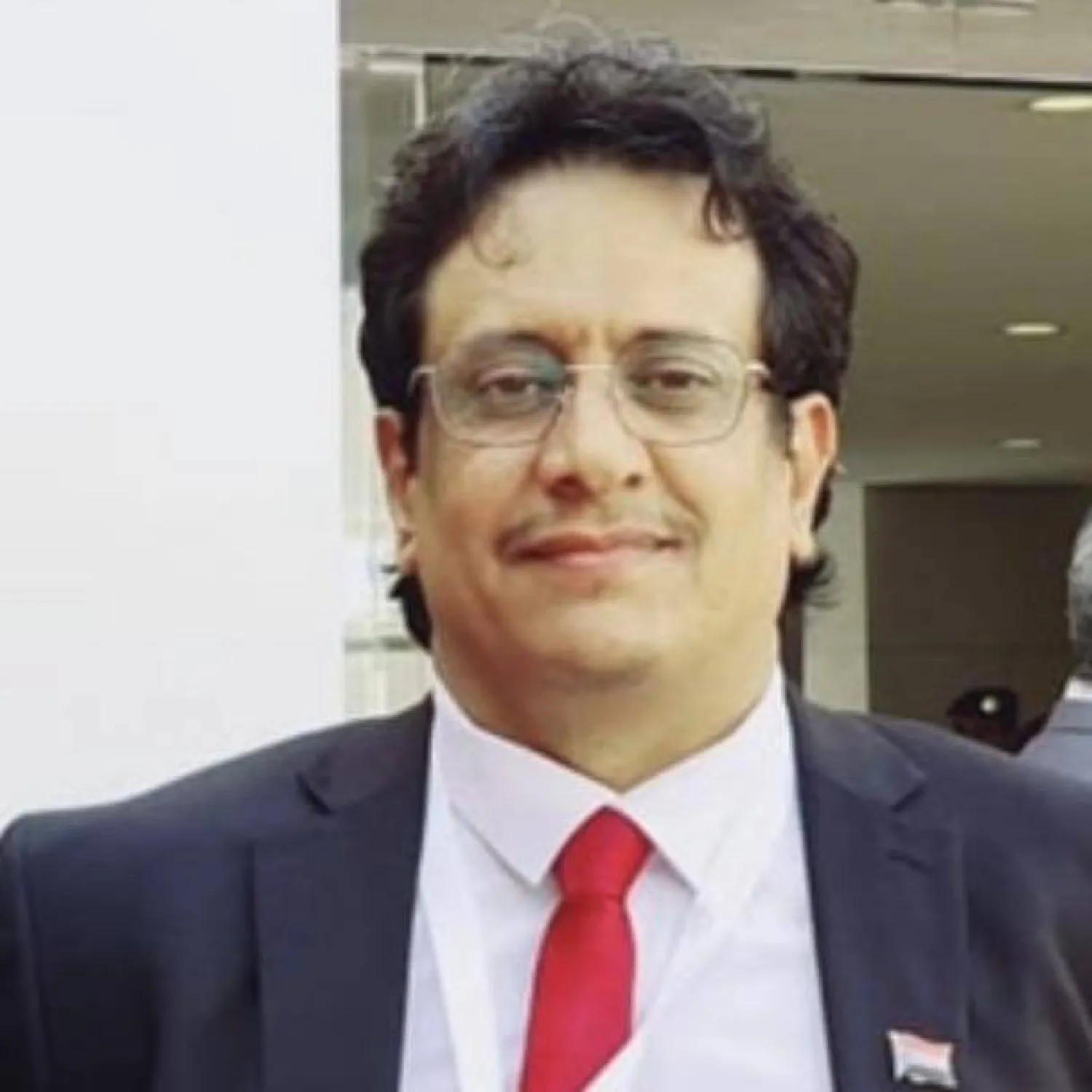
Shabwa Deputy Governor Fahd Al-Khulaifi (Asharq Al-Awsat)
TT

Shabwa Deputy Governor to Asharq Al-Awsat: Houthis Supplied Terrorist Groups with Drone Technology

Shabwa Deputy Governor Fahd Al-Khulaifi (Asharq Al-Awsat)

Fahd Al-Khulaifi, First Deputy Governor of Yemen's Shabwa province, warned that the Houthi group has supplied some terrorist organizations with drone technology as part of what he described as ongoing cooperation between the two sides.

His remarks came after a Houthi missile attack on Monday targeted the Martyr Ahmed Al-Sulaimani Training Center on the outskirts of Ataq, the capital of Shabwa province in southeastern Yemen.

Local authorities reported that the facility was struck by three ballistic missiles while newly recruited internal security personnel were undergoing training, leaving more than 70 people dead and over 200 wounded.

In exclusive remarks to Asharq Al-Awsat, Al-Khulaifi said Houthi attacks would not break the resilience of Shabwa's residents but would instead strengthen their determination to confront the group.

He said local authorities possess information confirming cooperation between the Houthis and terrorist organizations, including Al-Qaeda and ISIS, noting that the Houthis had enabled some of these groups to acquire drone technology.

According to Al-Khulaifi, this cooperation is evident in attacks targeting security forces, the Shabwa Defense Forces and the Nation's Shield Forces as they pass through the province en route to other governorates.

Local authorities announced that those killed would be officially recognized as having died in the line of duty, with their salaries permanently allocated to their families. They also pledged to safeguard the rights and financial entitlements of the wounded and ensure payment without delay, while mobilizing the necessary resources to provide medical care.

Al-Khulaifi said the dead and wounded were newly recruited members of the province's police and security agencies.

He noted that Shabwa Governor Awad bin Al-Wazir had revealed that local authorities possess evidence of cooperation between the Houthis and other terrorist organizations.

Al-Khulaifi added that such coordination had intensified recently and was being monitored by security agencies.

He said the Houthis and terrorist organizations were carrying out direct attacks and planting explosive devices and booby traps along roads and at locations used by security forces and the Shabwa Defense Forces.

He added that their cooperation had expanded to include the use of drones after the Houthis provided some of these organizations with the necessary technology.

Al-Khulaifi stressed that such terrorist acts would not undermine the determination of Shabwa's residents to confront the Houthis.

He called on the Arab Coalition to support the front lines with advanced weapons capable of countering Houthi military capabilities, particularly drones, and to provide ground-based air defense systems to intercept ballistic missiles.

Shabwa's local authorities held the Iran-backed Houthi group fully responsible for the attack and the resulting casualties, describing the targeting of recruits during training as an extremely serious military escalation.

They also called for urgent measures to protect military and security facilities and their personnel.

Meanwhile, Yemeni Presidential Leadership Council Chairman Rashad al-Alimi was briefed on developments following the attack during a telephone call with Shabwa Governor Awad bin Al-Wazir.

Al-Alimi instructed the relevant authorities to provide necessary medical treatment to the wounded, care for the families of those killed, complete procedures to settle their entitlements and ensure payment of their salaries, and take the necessary measures to respond firmly to the sources of the attack.

He said the targeting of recruits reflected what he described as the Houthis' tendency to resort to attacks whenever they faced pressure or setbacks in plans backed by the Iranian regime.

Al-Alimi stressed that such attacks would not deter the state from fulfilling its responsibilities to protect citizens and restore national institutions.

He also vowed that the victims' deaths would not go unanswered, emphasizing that caring for their families and honoring their sacrifices was a national responsibility.


Lewis Hamilton in Egypt to Visit Gaza Humanitarian Aid Facilities

 British Formula One driver Lewis Hamilton, left, listens to Major General Khaled Megawer, governor of North Sinai, during his visit to Egypt's side of the Rafah crossing with Gaza Strip, in Rafah, Egypt, Tuesday, Nov. 10, 2026. (AP)
British Formula One driver Lewis Hamilton, left, listens to Major General Khaled Megawer, governor of North Sinai, during his visit to Egypt's side of the Rafah crossing with Gaza Strip, in Rafah, Egypt, Tuesday, Nov. 10, 2026. (AP)
TT

Lewis Hamilton in Egypt to Visit Gaza Humanitarian Aid Facilities

 British Formula One driver Lewis Hamilton, left, listens to Major General Khaled Megawer, governor of North Sinai, during his visit to Egypt's side of the Rafah crossing with Gaza Strip, in Rafah, Egypt, Tuesday, Nov. 10, 2026. (AP)
British Formula One driver Lewis Hamilton, left, listens to Major General Khaled Megawer, governor of North Sinai, during his visit to Egypt's side of the Rafah crossing with Gaza Strip, in Rafah, Egypt, Tuesday, Nov. 10, 2026. (AP)

Seven-time Formula 1 world champion Lewis Hamilton arrived at Egypt’s Rafah on Tuesday to visit organizations sending humanitarian aid to the war-torn Gaza Strip.

Hamilton has spoken out about humanitarian crises and conflict zones in the region, calling for peace. He has frequently posted on social media about children killed in Israeli airstrikes in Gaza and called for a ceasefire. He has also addressed other conflicts.

“I think we need to make sure we’re pushing to free Congo, free Sudan, free Syria, free Palestine. I think there’s a lot of peace that I’m hoping we get to at some stage,” Hamilton said last month.

While a ceasefire agreement reached last year has halted major combat operations, aid going into Gaza continues to fall far short of the agreed-upon minimum of 600 trucks a day.

Israeli forces have continued to advance into Gaza, expanding their control from 53% of the territory to at least 60%, an independent commission of UN experts said last month.

Israeli airstrikes continue across Gaza, and Israeli fire along the advancing front has killed at least 196 Palestinians, including 18 women, 32 boys and 11 girls, the commission said.

Hamilton toured Egypt’s Rafah border crossing with Gaza before visiting logistics warehouses operated by the Egyptian Red Crescent, which facilitates aid entry into Gaza.

At the crossing, Hamilton greeted aid workers with “Al-Salamo Alaykom,” an Arabic greeting meaning “peace be upon you.” He shook hands and briefly spoke with workers and officials.

Khaled Megawer, the governor of North Sinai, where Rafah is located, said the visit aims to help Hamilton learn about Egypt’s efforts to send aid to Gaza.

The visit comes after Hamilton made his 400th race start on Sunday at the Sao Paulo Grand Prix at Interlagos.

Hamilton, the first Black driver to race in F1, made his debut with McLaren in 2007. He is only the second driver in F1 to start 400 races following his former teammate Fernando Alonso, who achieved the milestone in 2024.


Israeli Fire Kills Father and Son in Gaza, Medics Say

 Palestinians inspect tents buried under rocks and earth a day after a large sandstone slab collapsed at a displacement camp, killing at least five people, including four children, according to health officials, in Deir al-Balah, central Gaza Strip, Monday, Nov. 9, 2026. (AP)
Palestinians inspect tents buried under rocks and earth a day after a large sandstone slab collapsed at a displacement camp, killing at least five people, including four children, according to health officials, in Deir al-Balah, central Gaza Strip, Monday, Nov. 9, 2026. (AP)
TT

Israeli Fire Kills Father and Son in Gaza, Medics Say

 Palestinians inspect tents buried under rocks and earth a day after a large sandstone slab collapsed at a displacement camp, killing at least five people, including four children, according to health officials, in Deir al-Balah, central Gaza Strip, Monday, Nov. 9, 2026. (AP)
Palestinians inspect tents buried under rocks and earth a day after a large sandstone slab collapsed at a displacement camp, killing at least five people, including four children, according to health officials, in Deir al-Balah, central Gaza Strip, Monday, Nov. 9, 2026. (AP)

Israeli forces ‌killed at least three Palestinians, including a father and his 13-year-old son, in the Gaza Strip on Tuesday, local health officials said.

Medics said Fadi Rajab and his son Abubakr were killed in an airstrike that hit the roof of a displacement shelter in the Zeitoun neighborhood in Gaza City, while a ‌third person ‌was killed by gunfire in Khan ‌Younis, ⁠in the south ⁠of the enclave.

The Israeli military did not immediately comment on either of the incidents.

A US-brokered ceasefire last year called for the eventual reconstruction of Gaza, but little progress has been made. Negotiators ⁠have failed to agree on ‌terms for ‌Hamas to disarm or for Israel to withdraw its ‌troops, which control about two-thirds of ‌the territory and from which residents have been ordered to leave.

Israel says Hamas is trying to regroup and refill its arsenal, while ‌Hamas says it is committed to the ceasefire agreement and accuses ⁠Israel ⁠of trying to undermine it.

At least 1,600 Palestinians have been killed in Israeli attacks in Gaza since the ceasefire agreement, according to the territory's health officials, while Israel says four soldiers have been killed.

Palestinian authorities say more than 74,000 people have been killed in Israel's assault on Gaza, launched after Hamas-led fighters killed about 1,200 people in southern Israel on October 7, 2023.


Iraq Reopens Border Crossing with Iran

Stranded Iranians and Iraqis wait at the Iraq-Iran border following the Iraqi government's decision to close the Shalamsheh border crossing in the southern Basra province on September 12, 2026. (AFP)
TT

Iraq Reopens Border Crossing with Iran

Stranded Iranians and Iraqis wait at the Iraq-Iran border following the Iraqi government's decision to close the Shalamsheh border crossing in the southern Basra province on September 12, 2026. (AFP)

Iraqi authorities reopened on Tuesday a border crossing with Iran after closing it last month amid mounting US pressure to isolate Tehran.

The Iraqi government closed the Al-Sheeb crossing in the Maysan province in October. Two political sources told AFP that the US was pressuring Baghdad to close most crossings with neighboring Iran.

The head of Iraq's border crossings authority Alaa al-Waeli told the state news agency (INA) that Al-Sheeb crossing would reopen Tuesday morning after the completion of the "necessary procedures" required to resume operations and "ensure the smooth movement of travelers and goods".

He added that authorities would temporarily close the Al-Mandali border crossing in Diyala province starting on Friday for "maintenance".

The closure of the Al-Sheeb crossing sparked tensions between the central government and local authorities in Maysan, with several protests erupting over the shutdown of a key route.

In September, Baghdad temporarily closed several crossings with Iran after authorities determined that an unclaimed drone attack on a Saudi pipeline originated from an area near Al-Sheeb.

Pro-Iran armed groups have supported Tehran during the Middle East war, claiming hundreds of attacks on US bases in Iraq and across the region.