




Houthi militias are tightening their grip on rural communities in southwestern Yemen, blowing up roads, erecting military barricades and digging trenches as abductions, home raids and attacks on drinking water sources disrupt daily life and raise fears of fresh displacement.
The crackdown is concentrated in the districts of Al-Shamayatayn and Al-Mawasit in Taiz province and neighboring Al-Maqatirah in Lahj, a vast, densely populated area of strategic importance.
The measures contrast sharply with the Houthis' efforts to restore normal life, win public acceptance of their rule and recruit supporters and fighters through various incentives.
The Yemeni army's Tur al-Baha military command said last Saturday that eight of its soldiers had been killed in Houthi shelling in Al-Maqatirah, without providing further details.
Local sources said Houthi fighters in Al-Shamayatayn had fired an artillery shell at soldiers gathered at a military facility.
Residents of Al-Maqatirah told Asharq Al-Awsat that Houthi gunmen had destroyed sections of roads connecting their villages to Al-Shamayatayn and the city of Al-Turbah.
Last Sunday, the Houthis blew up several culverts along the Hayjat al-Abd road, cutting off the main route linking Taiz to Lahj and Aden and forcing travelers and truck drivers onto the Al-Suha-Karbah road.
Five trucks carrying goods and essential supplies overturned on the alternative route on Tuesday, blocking traffic for hours and damaging large quantities of merchandise. The disruption came as areas under Houthi control faced severe food shortages.
The Yemeni government had improved the Al-Suha-Karbah road as an alternative to Hayjat al-Abd, which has repeatedly closed because of Houthi attacks and flooding. But its rugged terrain and narrow stretches make it unsuitable as a permanent replacement.
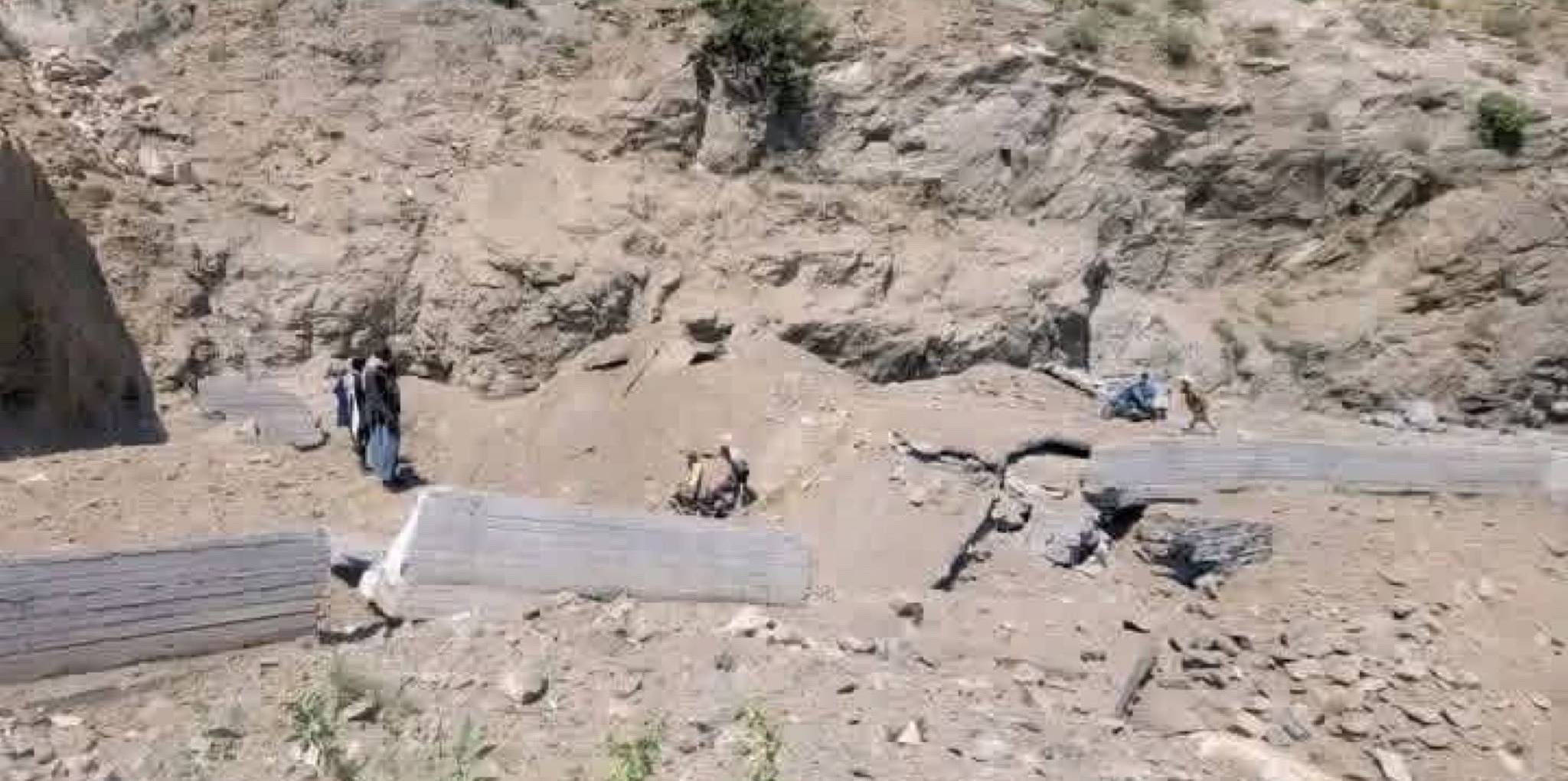
Villages cut off
The Houthis also blew up culverts along Naqil Musayr, a road connecting villages in western Al-Maqatirah to Al-Turbah, the administrative center of Al-Shamayatayn.
Residents must now walk to the city to shop and run errands. Vehicles can reach it only via the rugged Karbah road, a journey of at least three hours.
The group also blew up part of Naqil al-Khazrah, a stone stairway linking Al-Sharaf village and the Al-Jahili area in Al-Shamayatayn to villages in eastern Al-Maqatirah, forcing residents to take lengthy detours.
In Yemen, a naqil is a winding mountain route connecting higher elevations to foothills and valleys. Residents often build long stone stairways along these routes to make travel easier.
The blasts sent huge boulders crashing onto agricultural terraces, damaging farmland and nearby homes.
Residents of both districts told Asharq Al-Awsat that Houthi fighters had erected barricades and military outposts, dug trenches along roads connecting the districts and positioned weapons toward Al-Maqatirah.
The military buildup has left residents fearing they could be targeted on any pretext.
The Houthis have advanced only a few kilometers into Al-Maqatirah along the Hayjat al-Abd road, securing control of the route and blowing up its culverts. They also control the district's eastern areas.
Observers say the group appears satisfied, for now, with its hold over the high ground in Al-Shamayatayn overlooking Al-Maqatirah. Those positions put the district within range of Houthi fire and allow the group to monitor nearby military movements.
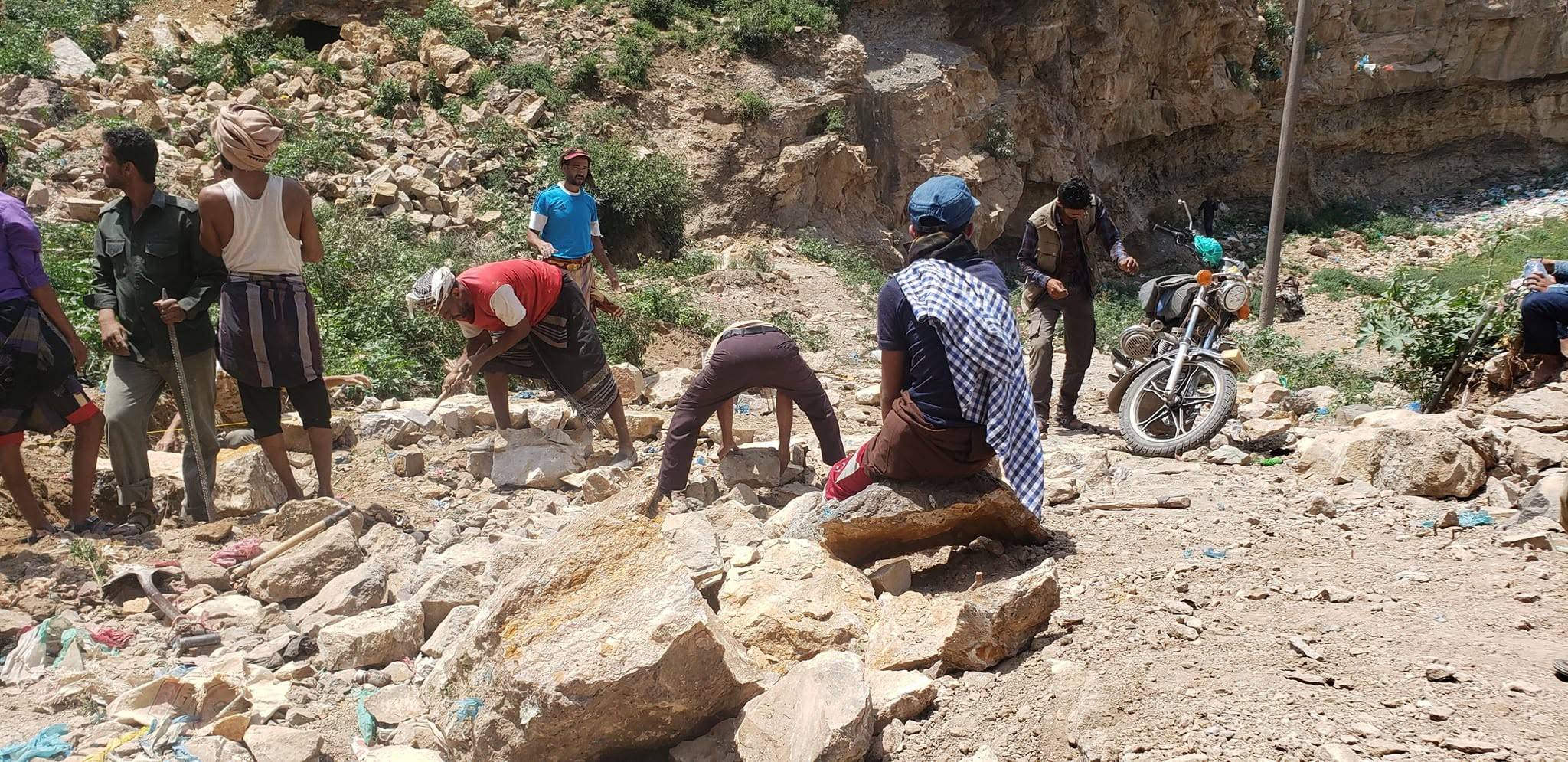
Abductions and home raids
The Houthis abducted about 20 people in Qadas, in Al-Mawasit district, after a vehicle belonging to the group's so-called "Preaching Committee" caught fire.
The committee works to persuade residents to embrace the Houthis' ideology and sectarian views.
The group accused residents of Al-Mukayshah village of setting the vehicle ablaze and launched a manhunt, tightening security across the area.
Dozens of gunmen were deployed and new checkpoints set up, where passersby were forced to open their phones for inspection and explain why they were traveling.
In Al-Alqamah, west of Al-Shamayatayn, Houthi fighters also looted homes abandoned by residents who had fled fighting following the group's advance from Al-Wazi'iyah district.
Residents said the fighters broke down doors and entered the homes, claiming to be searching for weapons and accusing their owners of collaborating with the Yemeni army and the Saudi-led coalition supporting Yemen's internationally recognized government.
But the raids went beyond searches. Fighters seized household belongings and loaded them onto vehicles before taking them out of the area.
The escalating restrictions, raids and abductions have heightened fears across rural Taiz that hundreds more residents could be forced to flee their homes for Lahj and Aden.


