Hezbollah Renews Pledge Not to Intervene in Support of Tehran

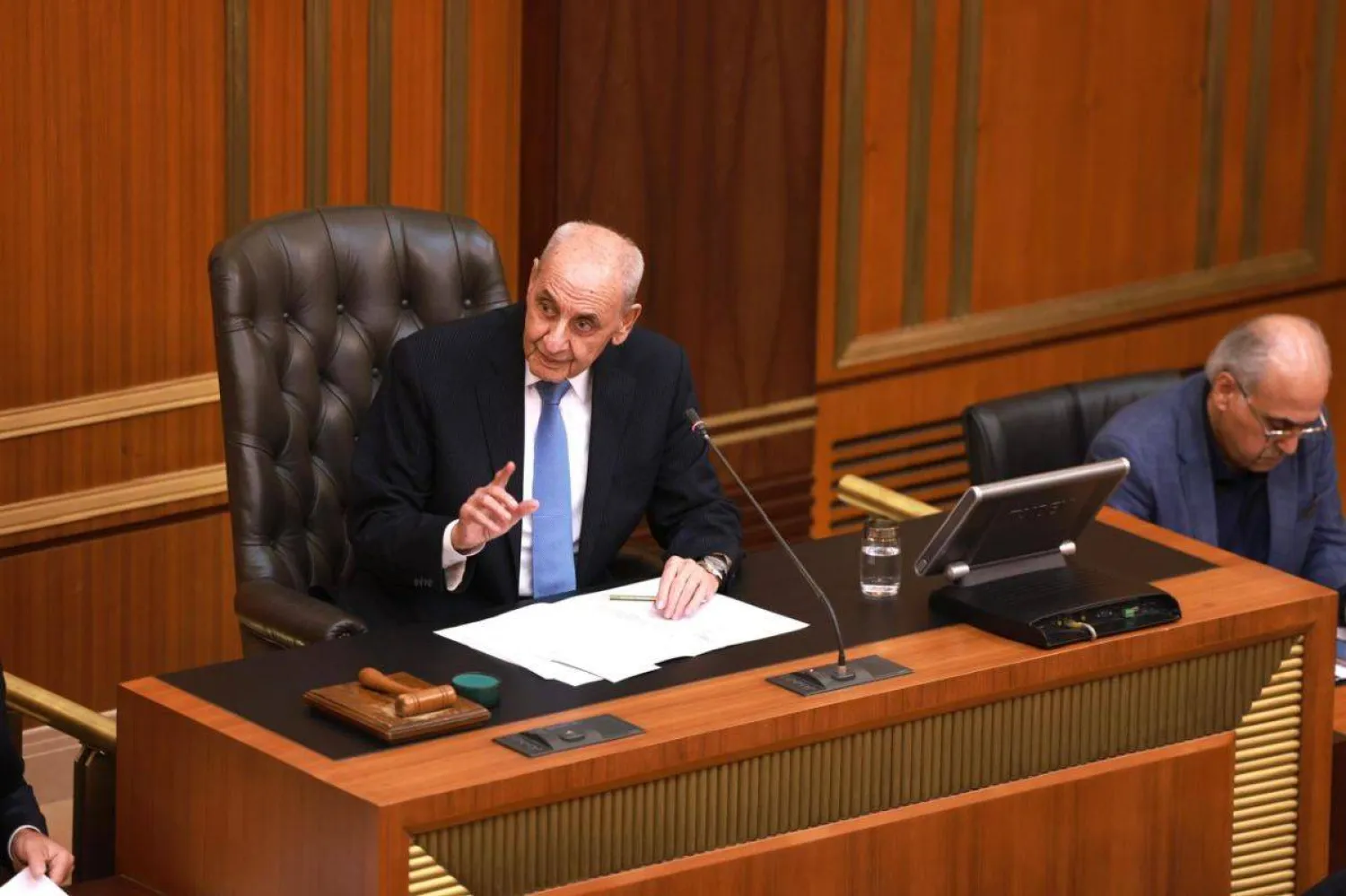
Lebanese Parliament Speaker Nabih Berri during a session to discuss the government (National News Agency)
TT

Hezbollah Renews Pledge Not to Intervene in Support of Tehran

Lebanese Parliament Speaker Nabih Berri during a session to discuss the government (National News Agency)

Lebanese are watching closely to see how Hezbollah will respond if US President Donald Trump follows through on his threat to launch a "devastating" military strike against Iran after the US midterm elections.

The question is whether the Lebanese group will honor its pledge not to intervene in support of Tehran this time or repeat what happened last March, when it fired six rockets at Israel in retaliation for the assassination of Iranian Supreme Leader Ali Khamenei, despite having previously assured Parliament Speaker Nabih Berri that it would stay out of the conflict.

Hezbollah Will Not Intervene to Support Iran

Asharq Al-Awsat has learned that Hezbollah has once again informed Berri that it will not intervene in support of Iran if war breaks out. Berri subsequently conveyed this assurance to President Joseph Aoun.

Iranian Deputy Foreign Minister Saeed Khatibzadeh also told a group of lawmakers aligned with the Shiite duo during his recent visit to Beirut that Tehran would not ask Hezbollah to intervene if the United States attacked Iran in accordance with Trump's threat.

He said Iran was capable of defending itself and had "made considerable progress in preparing to prevent the attack from achieving its objectives."

Lebanese parliamentary sources told Asharq Al-Awsat that Khatibzadeh "was clear that Iran would not seek Hezbollah's assistance given the imbalance of power between the group and Israel, since its intervention would not change the course of the confrontation."

The sources said Khatibzadeh told the lawmakers that Iran understood the delicate situation in Lebanon and had no intention of asking Hezbollah to involve itself in an unequal confrontation.

They pointed to a US warning conveyed to Aoun during a telephone call with Secretary of State Marco Rubio, which the Lebanese president subsequently relayed to Berri and Prime Minister Nawaf Salam.

The sources said Hezbollah could not afford the consequences of a backlash from its own support base, prompting it to exercise caution and align itself with Berri's position.

The group would be unable to absorb another wave of displacement resulting from Israeli Defense Minister Israel Katz's threat to expand the security zone in southern Lebanon, potentially extending attacks to Beirut's southern suburbs and displacing approximately one million Shiites.

Hezbollah is already struggling to accommodate displaced residents, providing financial assistance to ease the pressures they face.

The sources stressed that the broader Shiite community would not remain silent if Hezbollah decided to intervene for a second time in support of Iran, as it did last March in violation of its pledge to Berri.

That reversal embarrassed Berri in his dealings with Aoun and Salam, after he had assured both leaders that Hezbollah would not intervene.

Berri had based those assurances on a message from Hezbollah Secretary-General Naim Qassem, conveyed through regular communication between Qassem's political aide, Hussein Khalil, and Berri's political adviser, MP Ali Hassan Khalil.

Intervention Would Trigger a Crisis Within the Shiite Duo

The sources said Qassem's failure to honor his commitment not to intervene had created a crisis of confidence within the Shiite duo, the alliance between Hezbollah and Berri's Amal Movement.

The dispute became public and raised legitimate questions about who actually makes decisions within Hezbollah and whether the Iranian Revolutionary Guard Corps holds the ultimate authority, given its influence inside the group.

They noted that Hezbollah's leadership had initially informed the relevant parties, particularly Berri, that the group had nothing to do with the rocket launches.

However, it refrained from issuing a public statement to that effect, which could have enabled Washington to intervene with Israel to prevent a retaliatory response.

The sources added that although Hezbollah's leadership had avoided issuing a statement, Berri was surprised when the group's military media office released an announcement claiming responsibility for the rockets in retaliation for Israel's assassination of the elder Khamenei.

Israel subsequently expanded its occupation to include territory south of the Litani River, extending toward Beaufort Castle and the surrounding towns.

No Direct Communication Between Berri and Qassem

The sources also reflected on Berri's remarks that his relationship with Hezbollah had been closer under its former secretary-general, Hassan Nasrallah, and that there was neither an older nor a younger brother in the relationship.

They said Berri had maintained direct communication with Nasrallah, who possessed the ability to intervene with Iran's leadership and secure a response to Berri's concerns about developments in Lebanon and the regional axis of resistance.

The sources explained that Lebanon's current security conditions, particularly the increasing number of Israeli assassinations targeting Hezbollah's political and military leaders, do not permit direct communication between Berri and Qassem.

Instead, communication takes place daily through their respective aides.

This has prevented the relationship from developing the level of personal political chemistry needed to contain emerging disagreements, unlike the relationship that existed between Berri and Nasrallah.

Political Coexistence Within the Shiite Duo

According to the sources, relations between the two pillars of the Shiite duo are governed by a form of political coexistence, or cohabitation, in which both sides maintain their differences while seeking to prevent clashes between their supporters, although such confrontations have occasionally occurred.

The sources said Berri's remarks about his relationship with Hezbollah were also directed at other political forces, encouraging them to meet him halfway rather than treating the Shiite duo as a single political party with which compromise is impossible.

They quoted Berri as telling visitors that Lebanon currently faces two enemies: Israeli occupation and sectarianism.

This, they said, explains his continued emphasis on strengthening domestic stability, avoiding inflammatory rhetoric, preventing divisions among Lebanese communities and addressing the public in a moderate tone.

Berri opposes attempts by political factions to score points against the Shiite duo under the pretext that settling political scores with the alliance is necessary.

Visitors quoted him as saying that resisting Israeli occupation, which could be prolonged, requires all parties to meet halfway and focus on strengthening the domestic front by prioritizing national unity.

That, he argued, requires everyone to move away from the sectarian rhetoric that dominates political discourse.

According to the sources, Berri differs from Hezbollah in both words and actions.

He serves as a political pillar supporting the government's survival and continuity and has not hesitated to intervene when necessary to preserve civil peace, which he considers a red line, alongside the military institution.

This explains his insistence on rejecting the use of street protests to bring down the government, as well as his efforts to encourage Hezbollah to engage in dialogue with Aoun.

Although Berri does not support direct negotiations with Israel, the sources said his position differs from that of his ally in several respects.

Beyond maintaining communication with Aoun and Salam, he rejects threats and accusations of treason.

He has also criticized Hezbollah for failing to respond to calls to withdraw from the Ali al-Taher hills to facilitate the deployment of the Lebanese army.

Other differences include Berri's opposition to Hezbollah's military intervention in support of Gaza and Iran, his support for ministers affiliated with his movement who endorsed the principle of exclusive state control over weapons, and his backing of the ban on Hezbollah's military and security wing.

His parliamentary bloc also voted to grant the government confidence for a third time, unlike Hezbollah lawmakers, who withdrew from the session.

The sources expressed surprise that other political forces had not shown greater openness toward Berri.

They questioned with whom a political settlement could be reached, should conditions eventually allow one to emerge, if Berri continued to be included in the political campaigns directed against Hezbollah.

They argued that engaging with Berri was more necessary than ever, particularly because direct channels of communication with Hezbollah remain severed.

This explains why Arab and foreign envoys visiting Beirut continue to meet him.

It is not because Berri carries a mandate from Hezbollah, which sometimes disregards his commitments, but because of his position within Lebanon's political system and his considerable influence within the Shiite political landscape.

His approach to major issues on Lebanon's political agenda often differs from Hezbollah's.

The latest example was his intervention to prevent an internal government crisis over whether explosives seized in Dahr al-Baydar should be referred to the Judicial Council before investigations were completed.

Berri and his lawmakers refrained from taking a position on the matter out of consideration for Hezbollah.

The question remains: Will Hezbollah honor its pledge this time, or will it once again intervene in support of Iran under pressure from the Iranian Revolutionary Guard Corps?


UNICEF Stresses Need to Allow Humanitarian Aid into Gaza to Save Children

A Palestinian evacuates with their belongings from the remains of their homes, where they had been living near the Yellow Line, east of the Zeitoun neighborhood in eastern Gaza City, 14 November 2026.EPA/MOHAMMED SABER
TT

UNICEF Stresses Need to Allow Humanitarian Aid into Gaza to Save Children

A Palestinian evacuates with their belongings from the remains of their homes, where they had been living near the Yellow Line, east of the Zeitoun neighborhood in eastern Gaza City, 14 November 2026.EPA/MOHAMMED SABER

The United Nations Children’s Fund (UNICEF) Middle East and North Africa Regional Office said the international community must exert pressure on the Israeli occupation to allow more humanitarian aid into the Gaza Strip and ensure access to children throughout the territory. It stressed that children in Gaza are deprived of the most basic necessities of life.

The office said that despite a year having passed since the announcement of the ceasefire, children in the Gaza Strip continue to suffer, SPA reported.

It noted that 360 children had been killed and more than 1,700 seriously injured since the ceasefire was announced, describing this as a flagrant violation of the ceasefire.

It added that conditions in the Gaza Strip are tragic, particularly with the onset of winter and heavy rainfall. The office also indicated that UNICEF had expanded its humanitarian response since the ceasefire and was working to provide healthcare and safe water to more than one million people. However, humanitarian needs in the Gaza Strip remain far greater than the assistance being provided.

The office stressed that the Israeli occupation continues to tighten restrictions and prevent the entry of some essential supplies, including spare parts for water and sewage systems and shelter materials.


Lebanese, Syrian Interior Ministers Hold 'Special' Meeting in Damascus

Syrian Interior Minister Anas Khattab welcomes Lebanese Interior Minister Ahmad al-Hajjar (Lebanese Interior Ministry)
TT

Lebanese, Syrian Interior Ministers Hold 'Special' Meeting in Damascus

Syrian Interior Minister Anas Khattab welcomes Lebanese Interior Minister Ahmad al-Hajjar (Lebanese Interior Ministry)

Lebanese and Syrian officials continued efforts to strengthen communication and coordination on Sunday as Lebanon's Interior and Municipalities Minister Ahmad al-Hajjar visited Damascus and met his Syrian counterpart, Anas Khattab.

The visit marked another step toward reorganizing relations between the two countries, particularly on security and border issues, amid shared challenges and a growing need for cooperation between their respective agencies.

Al-Hajjar met Khattab at the Syrian Interior Ministry headquarters in the first official meeting between the two ministers. Their talks focused on priorities for bilateral cooperation and mechanisms to improve coordination between the relevant authorities.

Syria's Interior Ministry said Minister Anas Khattab had received his Lebanese counterpart and that the meeting reviewed bilateral relations and explored ways to strengthen security cooperation and coordination between the two ministries, serving the interests of both countries and their peoples while reinforcing regional security and stability.

Al-Hajjar arrived at the Syrian Interior Ministry headquarters on Sunday morning, where Khattab welcomed him at an official reception ceremony.

The Lebanese minister was accompanied by Brig. Gen. Sami Nassif, secretary of the Central Internal Security Council, and a delegation from the Ministry of Interior and Municipalities.

Khattab: Committed to Strengthening Relations

Syrian Interior Minister Anas Khattab described the meeting as special, saying the discussions addressed ways to enhance cooperation and coordination on issues of mutual interest.

According to the Syrian Arab News Agency (SANA), Khattab wrote on X that the two sides had reaffirmed the depth of Syrian-Lebanese relations and their shared commitment to developing ties across all fields in ways that would serve the security and stability of both countries and their peoples.

Sources at Lebanon's Interior Ministry said the meeting lasted more than an hour and a half and covered a range of shared issues, particularly security matters.

These included border control, official and unofficial crossings, measures being implemented along the border and the issue of detainees.

Lebanese Interior Minister Ahmad al-Hajjar also wrote on X that he had been honored to accept an invitation from his Syrian counterpart, Anas Khattab, to visit historic Damascus.

He described stops at the Interior Ministry, the streets of Old Damascus, Bab Touma, the Umayyad Mosque and Mount Qasioun as giving the visit a special character.

Al-Hajjar said the trip had provided an opportunity to discuss cooperation and coordination on several issues, particularly security matters.

He reaffirmed that Lebanon and Syria were brotherly countries and expressed his determination to strengthen cooperation in ways that would serve their shared interests.

The visit follows a series of Lebanese-Syrian contacts and meetings in recent months aimed at developing practical mechanisms to address outstanding bilateral issues.

In August, a joint delegation from Syria's Interior and Foreign Ministries met Al-Hajjar and several senior Lebanese officers in Beirut to discuss major issues of mutual concern and ways to strengthen security cooperation between the two countries.

On the eve of his visit to Damascus, Al-Hajjar stressed the importance of improving relations and coordination between Lebanon and Syria, noting that security cooperation had produced positive results in combating drug trafficking and terrorism.

His visit also followed a Lebanese ministerial delegation's trip to Damascus on November 2, led by Deputy Prime Minister Tarek Mitri.

The delegation included Labor Minister Mohammad Haidar, Education and Higher Education Minister Rima Karami, and Social Affairs Minister Hanine El Sayed, along with a technical delegation from the Interior Ministry.

The Lebanese officials discussed several shared issues with their Syrian counterparts, notably Syrian displacement and the return of refugees, regulating the presence of Syrian nationals in Lebanon, and border control, alongside educational, social and labor matters.

Al-Hajjar had initially been scheduled to join the November 2 visit but postponed his trip to Damascus after an emergency prevented his planned meeting with the Syrian interior minister from taking place.


Yemeni Presidency: Redeployment of Forces Near Bab Al-Mandab a 'Calculated Military Move'

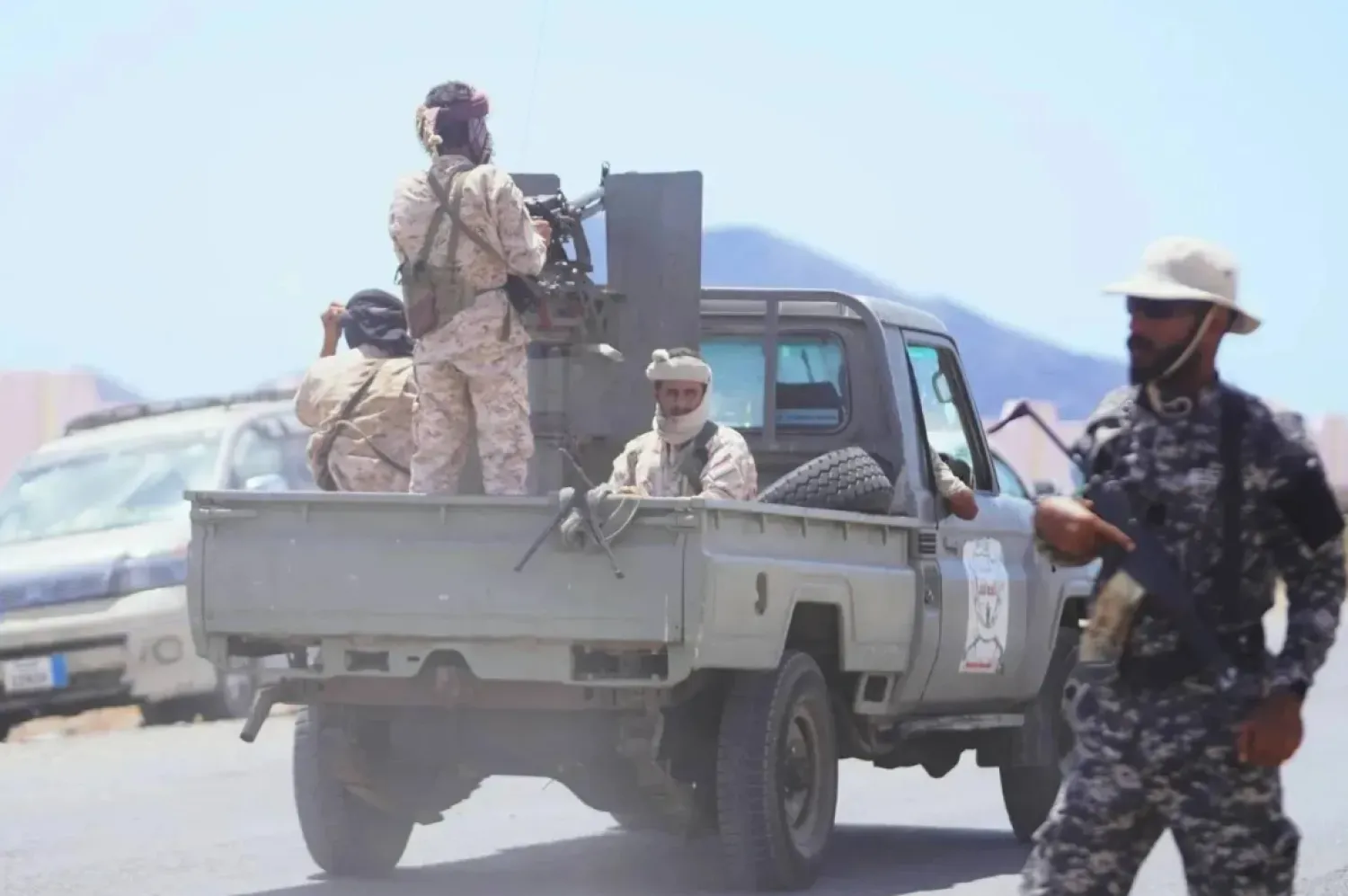
Members of Yemen's Southern Giants Brigades near the Bab Al-Mandab Strait (AP)
TT

Yemeni Presidency: Redeployment of Forces Near Bab Al-Mandab a 'Calculated Military Move'

Members of Yemen's Southern Giants Brigades near the Bab Al-Mandab Strait (AP)

A source in the Yemeni presidency told Asharq Al-Awsat that the Southern Armed Forces' redeployment around Bab Al-Mandab and Dhubab was a calculated military move aimed at achieving three main objectives: protecting Aden, reinforcing the fronts in Lahj and creating the conditions to break the siege of Taiz and liberate the province.

Jaber Mohammed, a media adviser to the Yemeni presidency and former director of the office of Abu Zara'a Al-Muharrami, explained that the redeployment from the vicinity of Bab Al-Mandab and Dhubab should not be interpreted as a withdrawal in the military sense, but rather as a move to redistribute troops and reinforce positions with greater influence over the course of the fighting.

He described the redeployment as a calculated military move intended to protect Aden, strengthen the fronts in Lahj and create the conditions for lifting the siege of Taiz.

Yemeni Armed Forces spokesman Col. Majed Abdullah Al-Nazili said the Southern Forces' commitment to breaking the siege of Taiz represented a national stance at a particularly sensitive stage, stressing that protecting the capital, Aden, and lifting the siege of Taiz were national and moral responsibilities aimed at confronting the threat posed by Houthi militia violations.

According to observers, Aden and its neighboring provinces constitute a strategic hinterland and a major political, economic and population center. Reinforcing defensive lines around the city is therefore closely linked to protecting state institutions and preventing the fighting from spreading toward the capital.

Jaber noted that deploying troops along the exposed coastal strip made them more vulnerable to attack, while the greatest danger lay in the mountainous heights overlooking Bab Al-Mandab, Dhubab and Mayyun Island.

Control of those heights, he explained, would allow the occupying force to threaten the coastline and outflank troops stationed along it.

He added that the Southern Forces had repositioned themselves in the Al-Suqyah area, approximately six to eight kilometers from Bab Al-Mandab, keeping them within the operational area of the front.

A Southern military commander warned that losing the heights overlooking the coast could open the way for an advance toward Lahj and Aden, particularly given the proximity of Ras Al-Arah and Al-Mudaribah to the Al-Buraiqah district of Aden.

He said securing the elevated positions would help protect the coastal strip and allow troops to operate in more militarily advantageous terrain, reducing the strain of maintaining exposed positions.

In a statement, the Southern Armed Forces said the redeployment was a response to changing battlefield priorities and did not represent an abandonment of the fight against the Houthis or efforts to lift the siege of Taiz.

The statement emphasized that protecting Aden, its institutions and its residents remained a priority, alongside reinforcing the front lines and confronting existing threats.

The forces reaffirmed their commitment to continuing operations with the support of the Saudi-led Coalition to Support Legitimacy in Yemen until state institutions were restored and enabled to carry out their responsibilities.

The presidential media adviser said that since the launch of Operation Fajr Yemen on October 5, Southern Forces had advanced toward Dhubab Airport and parts of Bab Al-Mandab and Kahbub.

He noted that Al-Wazi'iyah and the highlands overlooking the coast remained strategically important, adding that, in his assessment, the Kahbub mountains were still under the control of forces affiliated with the Yemeni government.

Jaber Mohammed said assessing the terrain, troop positions, the enemy's weapons and methods of attack was essential to operational planning.

He added that expanding the fighting across multiple fronts could disperse Houthi forces and ease pressure on individual battlefronts.

Meanwhile, Yemeni military sources stressed that Aden's security was nonnegotiable and that any threat to the temporary capital would be met with a firm response.

They said the developments involved more than the redeployment of military units, describing them as part of efforts to prevent new realities from being imposed by force and to safeguard state institutions and national resources.

Yemeni Armed Forces spokesman Al-Nazili had previously emphasized that liberating Bab Al-Mandab and the western coast was an inherent right of the armed forces.

He called on the international community to fulfill its responsibilities by contributing to the liberation efforts, given the strait's vital importance to maritime security and international trade.

Al-Nazili said the armed forces remained united in carrying out their duties to protect the Yemeni people and their resources and confront threats from the Houthi militia.

He reaffirmed that Operation Fajr Yemen would continue pursuing its stated objectives until the threat posed by the Houthis was eliminated.