


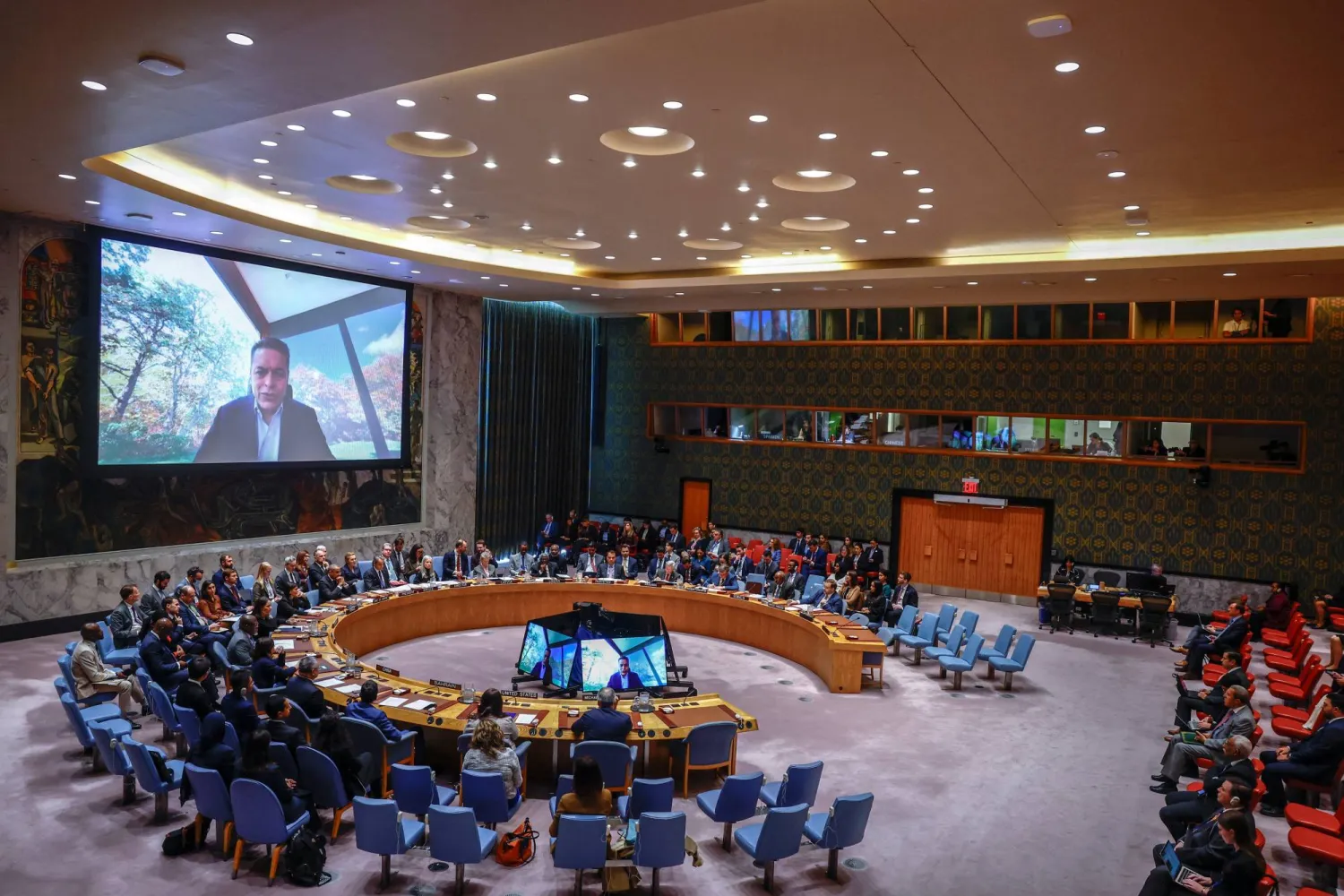

Russia has plunged the Western Sahara dispute into an unprecedented geopolitical impasse after vetoing an amended US-drafted resolution at the United Nations Security Council that sought to fundamentally reshape the longstanding regional conflict.
Although the US draft secured the support of 11 council members, Russia's unexpected veto blocked its adoption.
Washington responded swiftly, using its own veto to block a rival Russian draft resolution that proposed a conventional technical extension of the UN mission's mandate without altering its underlying structure.
The diplomatic confrontation between the two powers prompted Morocco's King Mohammed VI to announce, in an urgent statement issued by the Royal Cabinet, the closure of the chapter on the United Nations Mission for the Referendum in Western Sahara (MINURSO) after 35 years of operations.
The king also called for the issue to be removed entirely and permanently from the Security Council's agenda, describing the existing framework as outdated and ineffective on the ground.
Competing legal frameworks and the legacy of Resolution 2797
At the heart of the dispute between Washington and Moscow are competing legal and institutional frameworks that each side has sought to establish, a confrontation that began taking shape with the adoption of Security Council Resolution 2797 on Oct. 31, 2025.
That resolution marked a significant shift by endorsing Morocco's autonomy proposal as the basis for negotiations.
The latest US draft sought to build on Resolution 2797 by establishing expanded autonomy as the exclusive and definitive framework for resolving the dispute, removing references to a referendum from the UN framework and reducing the mission's military component ahead of its eventual administrative dissolution.
Russia, by contrast, sought to halt that process, which Washington had pursued under the framework established by Resolution 2797.
Moscow's permanent representative to the United Nations objected to what he described as an attempt to override existing balances, while Russia introduced an alternative resolution proposing to extend MINURSO's mandate until Oct. 31, 2027.
The Russian proposal would have retained the mission's name and traditional responsibilities, leaving room for broader interpretations of the political process that could accommodate all parties, including Algeria and the Polisario Front.
What does the shift mean for the parties and their allies?
The change in the international approach to Western Sahara is reshaping the calculations of regional and international powers involved in the dispute.
For Morocco's international allies, the Security Council deadlock presents a new reality.
Major European capitals, including Paris and Madrid, now face pressure to translate their political support for Morocco's autonomy initiative into direct bilateral and economic partnerships with Rabat, rather than relying primarily on diplomatic negotiations and votes at the United Nations.
Moroccan diplomacy has increasingly favored that approach as an alternative to the UN-led framework.
Meanwhile, countries supporting the traditional UN approach, including African governments aligned with Algeria, face a different set of challenges.
Although Russia's veto succeeded in blocking the US attempt to rewrite the legal framework governing the dispute, it also shifted greater responsibility for maintaining stability to regional actors.
Regional alliances may therefore have to reconsider their strategies in dealing with a Morocco seeking to exercise full sovereignty over the territory without UN monitoring, and a Polisario Front searching for alternative diplomatic channels to compensate for the loss of the Security Council framework.
What next for regional stability after the institutional vacuum?
The region is entering a new phase in the management of the Western Sahara dispute following the expiration of MINURSO's mandate without renewal.
The absence of a renewed mandate threatens to end the mission's longstanding role as an international third-party observer monitoring the lines of contact and ceasefire arrangements.
Without that UN framework, the parties could face fewer institutional and diplomatic constraints, leaving developments on the ground increasingly dependent on their respective positions on sovereignty and territorial control.
Morocco views the mission's absence as an opportunity to end what it considers a temporary arrangement and proceed with the administration and development of the territory it claims as its own, without the restrictions associated with UN monitoring and reporting.
The Algeria-backed Polisario Front, meanwhile, faces the prospect of losing a central UN platform through which it has pursued its demand for a referendum on self-determination.
The institutional shift could move the dispute away from the Security Council's negotiating chambers and toward developments on the ground and direct bilateral diplomacy.
The future of stability and sovereignty in North Africa would then depend increasingly on the measures taken by the parties themselves and the regional and international alliances supporting them.


