Iran Says in ‘Intensive’ Negotiations with US to Avert War

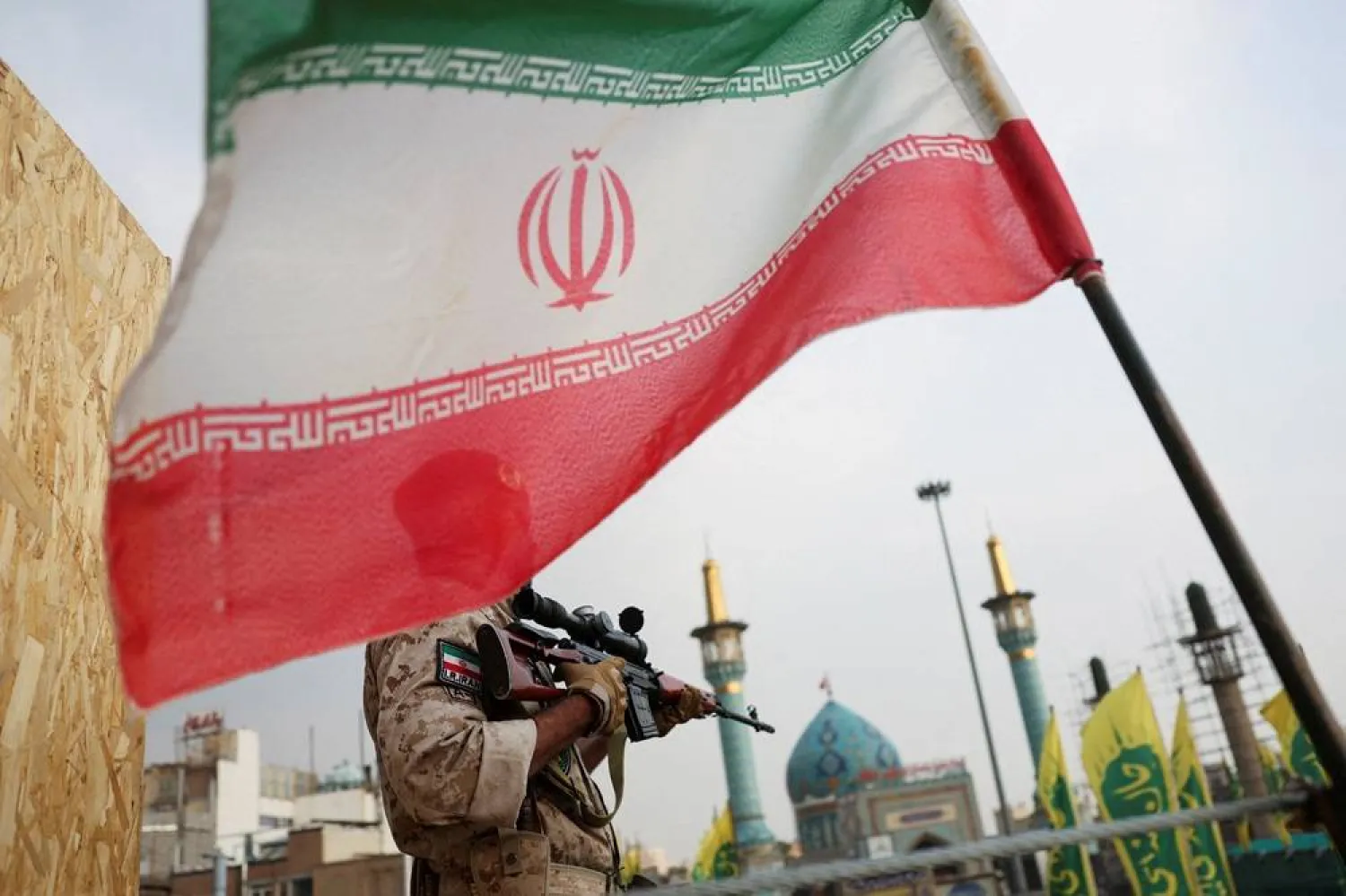
A member of IRGC at a military training center for ordinary citizens at Tajrish Square in Tehran, Iran, November 2, 2026. Majid Asgaripour/WANA (West Asia News Agency) via Reuters
TT

Iran Says in ‘Intensive’ Negotiations with US to Avert War

A member of IRGC at a military training center for ordinary citizens at Tajrish Square in Tehran, Iran, November 2, 2026. Majid Asgaripour/WANA (West Asia News Agency) via Reuters

Iran on Monday said "intensive" exchanges were underway with Washington and offered to reopen the Strait of Hormuz under strict conditions, as efforts escalated to avert a return to war.

Foreign Minister Abbas Araghchi said indirect talks were taking place via mediators. China also urged a return to negotiations, while Iran's security chief discussed the conflict with Russian President Vladimir Putin.

Oil prices, sent rocketing by Iran's blockade of the Strait of Hormuz energy corridor, dropped more than six percent on Monday on optimism over the eight-month-old conflict.

"Given the sensitivity and gravity of the current situation, consultations and deliberations are very intensive," Araghchi said in a video interview with the official IRNA news agency.

"Qatar and Pakistan are playing a very active mediating role in these negotiations."

The Axios news outlet reported that US Vice President JD Vance had sent a letter to Iranian national security chief Mohsen Rezaei about possible new talks, marking the highest-level move in months.

The redoubled diplomatic push comes ahead of Tuesday's US midterm elections, where dissatisfaction over the war and higher fuel prices are weighing on US President Donald Trump's Republicans.

Democrats expect to win at least partial control of Congress and impose political constraints on Trump for the first time in two years.

Iran's First Vice President Mohammad Reza Aref said the messages received from the US were "an acknowledgement of our victory".

But Trump kept up his threats against Iran, telling a campaign rally that at "some point we're going to have to give them the hammer".

- 'Good-faith approach' -

A senior Iranian official said Tehran was ready to open Hormuz, the export highway for the energy-rich Gulf, within two days -- as long as Washington agrees to its list of demands.

In September, Iran proposed a seven-day plan to reopen the strait if the US agreed to demands including ending the war on all fronts, unfreezing Iranian assets, lifting oil sanctions and ending its counter-blockade of Iranian ports.

"The possibility of implementing this plan in two days is another indication of Iran's good-faith approach," foreign ministry spokesman Esmaeil Baqaei told reporters at a briefing.

"We have stated that, if Iran's demands are met, it would be possible to restore security to the Strait of Hormuz and resume the negotiating process within a short period."

Baqaei said "everything depends" on the US side accepting the Iranian demands. "Only then can we discuss the subsequent stages," he added.

Chinese President Xi Jinping discussed the war with Oman's Sultan Haitham bin Tariq in Beijing on Monday -- the first visit to China by the Gulf nation's head of state since diplomatic ties were established.

"The two sides called for resolving disputes through political and diplomatic means, urging the United States and Iran to pursue a peaceful path, achieve a ceasefire (and) prevent war entirely," an Omani statement said.

Beijing supports Tehran in "safeguarding its own sovereignty and security", Foreign Minister Wang Yi told Ali Bagheri, deputy secretary of Iran's Supreme National Security Council, according to a Chinese statement.

Bagheri told Wang that "Tehran's stance on defending its national security, sovereignty, and territorial integrity remains unchanged, and that Iran will make no compromises in this regard", according to state TV.

Russian President Putin also spoke with Iran's security chief Mohsen Rezaei about the war by telephone, Iranian state media said.

- 'Powerful response' -

In an interview with Al Jazeera released on Sunday, Araghchi said Washington must accept a new route agreed between Iran and Oman for transiting the strait.

He said the US must also remove sanctions imposed in recent months and reduce American troop numbers in the region.

Washington has since August rolled out a fresh raft of sanctions, part of what it called "economic asphyxiation" of Iran.

American and Israeli threats to Iran rose in the run-up to the midterms and last week's elections in Israel, where Prime Minister Benjamin Netanyahu failed to secure a majority.

On Saturday, Trump said he still had to "take care" of one or two targets including Pickaxe Mountain in central Iran, a suspected nuclear site which Tehran denies is such a facility.

"Any act of aggression against Iran, any military attack against Iran, by whatever means, will be met with a powerful, immediate and comprehensive response from us," Baqaei said.


Ukraine Says Russian Strikes on Aid Distribution Point Kill 18

A municipal employee works at the site of private houses which were damaged during a Russian drone strike, amid Russia's attack on Ukraine, in Odesa, Ukraine November 2, 2026. (Reuters)
TT

Ukraine Says Russian Strikes on Aid Distribution Point Kill 18

A municipal employee works at the site of private houses which were damaged during a Russian drone strike, amid Russia's attack on Ukraine, in Odesa, Ukraine November 2, 2026. (Reuters)

Russian strikes on a village in Ukraine's southeast killed at least 18 people on Monday, Ukrainian President Volodymyr Zelensky said, as some of the victims were collecting humanitarian aid.

The strikes on Komyshuvakha in the Zaporizhzhia region come as Moscow resumed fighting and attacks on the neighboring Kherson region after a rare local truce brokered to evacuate the Russian-occupied city of Oleshky.

Komyshuvakha "has been hit several times by aerial bombs" since Monday morning, Zelensky said on social media.

He added that the strikes "targeted a school used for humanitarian purposes -- people were receiving humanitarian aid there."

"After the first aerial bomb strike, there was a double-tap strike with nine more bombs, specifically targeting the shelter where people were taking cover. Tragically, 18 people have already been reported killed," he said.

Footage posted by Ukrainian emergency services shows a building reduced to piles of smoldering rubble and rescuers working at the site.

Among the killed are "a police officer and two State Emergency Service rescuers", regional governor Mykhailo Semikin said on Telegram.

"Five people have been wounded. Another 27 are considered missing," Semikin added.

Zelensky said the bombed building was where "every week, local residents who had remained in Komyshuvakha received humanitarian aid" and that "the Russians could not have been unaware" of that.

"After the humanitarian operation in Oleshky, there was a moment when the next steps could have shown that progress toward peace was possible. With these killings, Russia is sending an entirely opposite signal: Russia is counting on more killings," he added.

"This is further proof that Russia wants no de-escalation and no real justice," Zelensky said.


Israel Opposition Bloc to Meet Tuesday for First Time to Push PM Pick

Yashar party leader Gadi Eisenkot addresses his supporters at the election night rally after the first exit polls were announced, in Tel Aviv on early October 28, 2026, during Israel's legislative elections. (AFP)
TT

Israel Opposition Bloc to Meet Tuesday for First Time to Push PM Pick

Yashar party leader Gadi Eisenkot addresses his supporters at the election night rally after the first exit polls were announced, in Tel Aviv on early October 28, 2026, during Israel's legislative elections. (AFP)

Party heads in the diverse Israeli opposition camp, led by Gadi Eisenkot, will meet on Tuesday after they all said they were endorsing the former military chief to become the next prime minister.

Eisenkot's Yashar party said that the leaders of the change bloc would meet "to discuss coordinating the bloc's next steps" in Herzliya on Tuesday morning.

It will be the grouping's first meeting since last week's close-fought election delivered no majority for either Eisenkot's bloc or that of Prime Minister Benjamin Netanyahu.


Iran Says in ‘Intensive’ Negotiations with US to Avert War

A member of IRGC at a military training center for ordinary citizens at Tajrish Square in Tehran, Iran, November 2, 2026. Majid Asgaripour/WANA (West Asia News Agency) via Reuters
TT

Iran Says in ‘Intensive’ Negotiations with US to Avert War

A member of IRGC at a military training center for ordinary citizens at Tajrish Square in Tehran, Iran, November 2, 2026. Majid Asgaripour/WANA (West Asia News Agency) via Reuters

Iran on Monday said "intensive" exchanges were underway with Washington and offered to reopen the Strait of Hormuz under strict conditions, as efforts escalated to avert a return to war.

Foreign Minister Abbas Araghchi said indirect talks were taking place via mediators. China also urged a return to negotiations, while Iran's security chief discussed the conflict with Russian President Vladimir Putin.

Oil prices, sent rocketing by Iran's blockade of the Strait of Hormuz energy corridor, dropped more than six percent on Monday on optimism over the eight-month-old conflict.

"Given the sensitivity and gravity of the current situation, consultations and deliberations are very intensive," Araghchi said in a video interview with the official IRNA news agency.

"Qatar and Pakistan are playing a very active mediating role in these negotiations."

The Axios news outlet reported that US Vice President JD Vance had sent a letter to Iranian national security chief Mohsen Rezaei about possible new talks, marking the highest-level move in months.

The redoubled diplomatic push comes ahead of Tuesday's US midterm elections, where dissatisfaction over the war and higher fuel prices are weighing on US President Donald Trump's Republicans.

Democrats expect to win at least partial control of Congress and impose political constraints on Trump for the first time in two years.

Iran's First Vice President Mohammad Reza Aref said the messages received from the US were "an acknowledgement of our victory".

But Trump kept up his threats against Iran, telling a campaign rally that at "some point we're going to have to give them the hammer".

- 'Good-faith approach' -

A senior Iranian official said Tehran was ready to open Hormuz, the export highway for the energy-rich Gulf, within two days -- as long as Washington agrees to its list of demands.

In September, Iran proposed a seven-day plan to reopen the strait if the US agreed to demands including ending the war on all fronts, unfreezing Iranian assets, lifting oil sanctions and ending its counter-blockade of Iranian ports.

"The possibility of implementing this plan in two days is another indication of Iran's good-faith approach," foreign ministry spokesman Esmaeil Baqaei told reporters at a briefing.

"We have stated that, if Iran's demands are met, it would be possible to restore security to the Strait of Hormuz and resume the negotiating process within a short period."

Baqaei said "everything depends" on the US side accepting the Iranian demands. "Only then can we discuss the subsequent stages," he added.

Chinese President Xi Jinping discussed the war with Oman's Sultan Haitham bin Tariq in Beijing on Monday -- the first visit to China by the Gulf nation's head of state since diplomatic ties were established.

"The two sides called for resolving disputes through political and diplomatic means, urging the United States and Iran to pursue a peaceful path, achieve a ceasefire (and) prevent war entirely," an Omani statement said.

Beijing supports Tehran in "safeguarding its own sovereignty and security", Foreign Minister Wang Yi told Ali Bagheri, deputy secretary of Iran's Supreme National Security Council, according to a Chinese statement.

Bagheri told Wang that "Tehran's stance on defending its national security, sovereignty, and territorial integrity remains unchanged, and that Iran will make no compromises in this regard", according to state TV.

Russian President Putin also spoke with Iran's security chief Mohsen Rezaei about the war by telephone, Iranian state media said.

- 'Powerful response' -

In an interview with Al Jazeera released on Sunday, Araghchi said Washington must accept a new route agreed between Iran and Oman for transiting the strait.

He said the US must also remove sanctions imposed in recent months and reduce American troop numbers in the region.

Washington has since August rolled out a fresh raft of sanctions, part of what it called "economic asphyxiation" of Iran.

American and Israeli threats to Iran rose in the run-up to the midterms and last week's elections in Israel, where Prime Minister Benjamin Netanyahu failed to secure a majority.

On Saturday, Trump said he still had to "take care" of one or two targets including Pickaxe Mountain in central Iran, a suspected nuclear site which Tehran denies is such a facility.

"Any act of aggression against Iran, any military attack against Iran, by whatever means, will be met with a powerful, immediate and comprehensive response from us," Baqaei said.