Houthis Under Govt Pressure in al-Jawf, Lahj

Yemeni troops hold a position during clashes with Iran-backed Houthis in Yemen's northwestern al-Jawf province on November 2, 2026. (AFP)
TT

Houthis Under Govt Pressure in al-Jawf, Lahj

Yemeni troops hold a position during clashes with Iran-backed Houthis in Yemen's northwestern al-Jawf province on November 2, 2026. (AFP)

Yemeni government forces have advanced to a new phase of offensive operations against the Houthis in al-Jawf and Lahj governorates, according to military developments reflecting the expanding scope of Operation Dawn of Yemen.

The shift to offensive maneuvers coincided with government forces thwarting Houthi attempts to recapture previously lost positions in Marib and Taiz.

In the latest field updates, government forces successfully secured their positions across strategic mountain ranges in eastern Al-Jawf. This follows tactical advances into areas formerly controlled by the terrorist Houthi group.

Military officials said the breakthrough reinforces current positions and establishes the necessary conditions to sustain the advance toward al-Hazm, the governorate's capital.

Armed forces spokesman Majed al-Nuzaili said troops managed to recapture positions from the Houthis in several regions in al-Jawf.

He stressed that the operations will continue to reclaim positions from the group.

Government forces have advanced through the al-Dahidha mountain range, breaching Houthi fortifications and seizing military equipment. Airstrikes and drone operations also targeted Houthi strongholds and weapons depots across several locations.
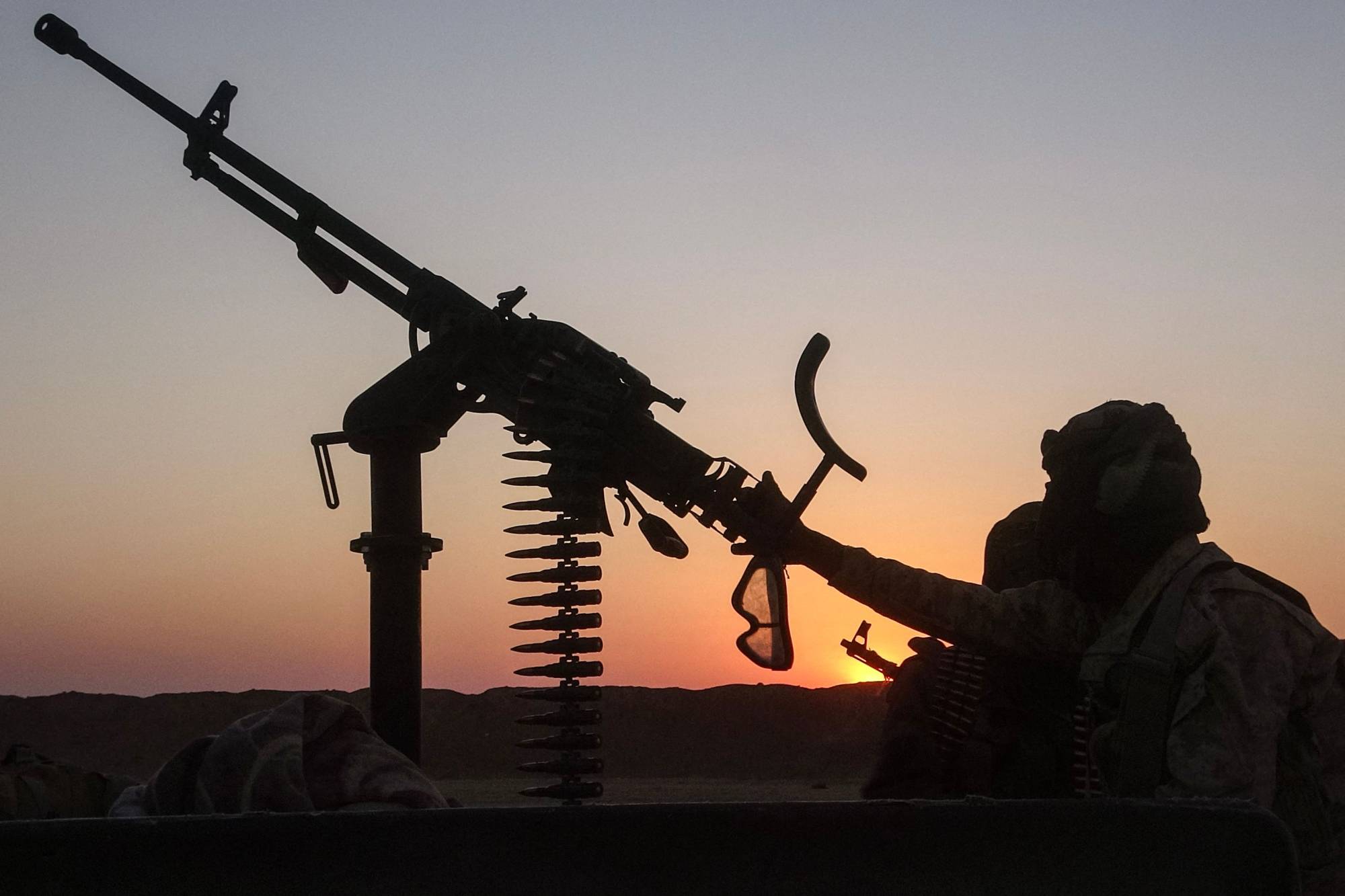
Yemeni forces sit on a pick-up truck mounted with a heavy machine-gun as they hold a position during clashes with Iran-backed Houthis in Yemen's northwestern al-Jawf province on November 2, 2026. (AFP)

This territorial gain holds strategic importance due to the mountainous terrain and its proximity to routes leading to al-Hazm, the Houthis' primary administrative and military hub in the governorate. Government forces are currently working to secure these newly recaptured positions before pressing forward with further operations.

In an attempt to contain this advance, the Houthi group launched a broad attack on government force positions in the Halhalan area. However, government forces managed to repel the assault and force the militants to retreat, said government military sources.

In Lahj, government forces have regained the initiative after reorganizing their military deployment along the Tur al-Baha axis, launching a swift counteroffensive to recapture areas seized by the Houthi group in the al-Maqatirah district.

Supported by warplanes, government troops breached the border of the district and advanced into Bani Abdan village, where heavy fighting continues in the surrounding vicinity. Military operations also expanded to target Houthi positions in the Hayfan and al-Zuraiqah al-Sham regions of the neighboring Taiz governorate.

These latest field updates indicate that government forces have successfully shifted from containing the initial Houthi push in al-Maqatirah to executing direct offensive operations to reclaim lost ground.

Military officials said the transition follows a strategic reinforcement of troops and a reorganization of the military command along the Tur al-Baha axis, effectively shifting the balance of power on this front.


Houthis Under Govt Pressure in al-Jawf, Lahj

Yemeni troops hold a position during clashes with Iran-backed Houthis in Yemen's northwestern al-Jawf province on November 2, 2026. (AFP)
TT

Houthis Under Govt Pressure in al-Jawf, Lahj

Yemeni troops hold a position during clashes with Iran-backed Houthis in Yemen's northwestern al-Jawf province on November 2, 2026. (AFP)

Yemeni government forces have advanced to a new phase of offensive operations against the Houthis in al-Jawf and Lahj governorates, according to military developments reflecting the expanding scope of Operation Dawn of Yemen.

The shift to offensive maneuvers coincided with government forces thwarting Houthi attempts to recapture previously lost positions in Marib and Taiz.

In the latest field updates, government forces successfully secured their positions across strategic mountain ranges in eastern Al-Jawf. This follows tactical advances into areas formerly controlled by the terrorist Houthi group.

Military officials said the breakthrough reinforces current positions and establishes the necessary conditions to sustain the advance toward al-Hazm, the governorate's capital.

Armed forces spokesman Majed al-Nuzaili said troops managed to recapture positions from the Houthis in several regions in al-Jawf.

He stressed that the operations will continue to reclaim positions from the group.

Government forces have advanced through the al-Dahidha mountain range, breaching Houthi fortifications and seizing military equipment. Airstrikes and drone operations also targeted Houthi strongholds and weapons depots across several locations.

Yemeni forces sit on a pick-up truck mounted with a heavy machine-gun as they hold a position during clashes with Iran-backed Houthis in Yemen's northwestern al-Jawf province on November 2, 2026. (AFP)

This territorial gain holds strategic importance due to the mountainous terrain and its proximity to routes leading to al-Hazm, the Houthis' primary administrative and military hub in the governorate. Government forces are currently working to secure these newly recaptured positions before pressing forward with further operations.

In an attempt to contain this advance, the Houthi group launched a broad attack on government force positions in the Halhalan area. However, government forces managed to repel the assault and force the militants to retreat, said government military sources.

In Lahj, government forces have regained the initiative after reorganizing their military deployment along the Tur al-Baha axis, launching a swift counteroffensive to recapture areas seized by the Houthi group in the al-Maqatirah district.

Supported by warplanes, government troops breached the border of the district and advanced into Bani Abdan village, where heavy fighting continues in the surrounding vicinity. Military operations also expanded to target Houthi positions in the Hayfan and al-Zuraiqah al-Sham regions of the neighboring Taiz governorate.

These latest field updates indicate that government forces have successfully shifted from containing the initial Houthi push in al-Maqatirah to executing direct offensive operations to reclaim lost ground.

Military officials said the transition follows a strategic reinforcement of troops and a reorganization of the military command along the Tur al-Baha axis, effectively shifting the balance of power on this front.


Lebanon's Military Judiciary Begins Legal Proceedings in Hezbollah Explosives Case

A Hezbollah flag hangs at the entrance to the town of Zawtar al-Gharbiya in southern Lebanon, from which Israeli troops withdrew under the framework agreement for southern Lebanon. (Reuters)
TT

Lebanon's Military Judiciary Begins Legal Proceedings in Hezbollah Explosives Case

A Hezbollah flag hangs at the entrance to the town of Zawtar al-Gharbiya in southern Lebanon, from which Israeli troops withdrew under the framework agreement for southern Lebanon. (Reuters)

Two Hezbollah members have been ordered detained after questioning by a Lebanese military judge over a truckload of explosives seized at a checkpoint in eastern Lebanon about a month ago.

Ali al-Kurdi and Haitham Amhaz appeared before First Military Investigating Judge Ghada Abu Alwan, who issued arrest warrants for both men following a hearing attended by their lawyer, Maan al-Asaad.

The warrants stem from charges brought by Judge Claude Ghanem, the government commissioner to the military court, against the two men and 11 other Hezbollah members who remain at large.

The charges include offenses against internal state security, violating government decisions, possessing weapons and explosives, and forming "illegal associations" aimed at undermining the state's authority and prestige.

The explosives-laden truck was intercepted at the Dahr al-Baidar checkpoint in eastern Lebanon.

Probe Enters New Phase

The questioning marks a turning point in the case, shifting it from preliminary investigations to formal judicial proceedings and bringing sharper scrutiny to three central questions: Where did the explosives come from, where were they headed and who was responsible for transporting them?

Asaad has also been authorized to represent Hezbollah members and operatives who remain at large, including Ibrahim Hussein, known as "Sajed"; Bilal al-Sabbouri, known as "Dhul Fiqar"; Mohammed Ayoub; Mohammed Zaiter; Mohammed Hazimeh, the truck's owner; and Perina Krishiona, Amhaz's wife.

Five other suspects have been identified only by aliases, with their full identities still unknown. Asaad filed preliminary procedural objections on behalf of the fugitives.

Despite the strict secrecy surrounding the questioning, a judicial source told Asharq Al-Awsat that Kurdi and Amhaz stood by their initial statements to army intelligence, insisting they knew neither the explosives' destination nor their intended use.

The source said the men told Abu Alwan their role was limited to collecting the explosives from "Sajed" in Baalbek, in the Bekaa Valley, and delivering them to "Dhul Fiqar" in Musharrafieh, in Beirut's southern suburbs.

Key Questions Remain Unanswered

The detainees' denials leave critical questions unresolved, particularly the shipment's destination, the circumstances of its transportation and the purpose for which the explosives were intended.

Legal sources following the case said the men's claims of ignorance were not enough to settle the question of responsibility.

"The statements of Kurdi and Amhaz are now being assessed by the investigating judge against all the evidence and information in the case file," the sources told Asharq Al-Awsat.

One potentially significant piece of evidence has yet to reach the judge.

Abu Alwan is still awaiting records of the preliminary investigation conducted by the Internal Security Forces' Information Branch, which analyzed mobile phones belonging to Kurdi, Amhaz and his wife.

The phones are expected to contain important information, the sources said, raising the possibility that Abu Alwan could summon the two detainees for further questioning about material recovered from the devices.

Legal Challenge Delays Questioning of Fugitives

Meanwhile, Asaad filed preliminary procedural objections on behalf of the defendants who remain at large, delaying their questioning until Nov. 17.

Legal sources said the filing was intended to delay formally notifying the defendants and the issuance of arrest warrants in absentia if they refuse to appear for questioning, as expected.

Details of the objections and their legal grounds were not immediately available.

Abu Alwan referred the filing to Ghanem for review and an opinion before ruling on the objections.


Iraq Rejects Use of its Territories to Attack Neighbors

Iraqi Prime Minister Ali al-Zaidi during a visit to the Defense Industries Commission in Baghdad on Thursday. (Government media)
TT

Iraq Rejects Use of its Territories to Attack Neighbors

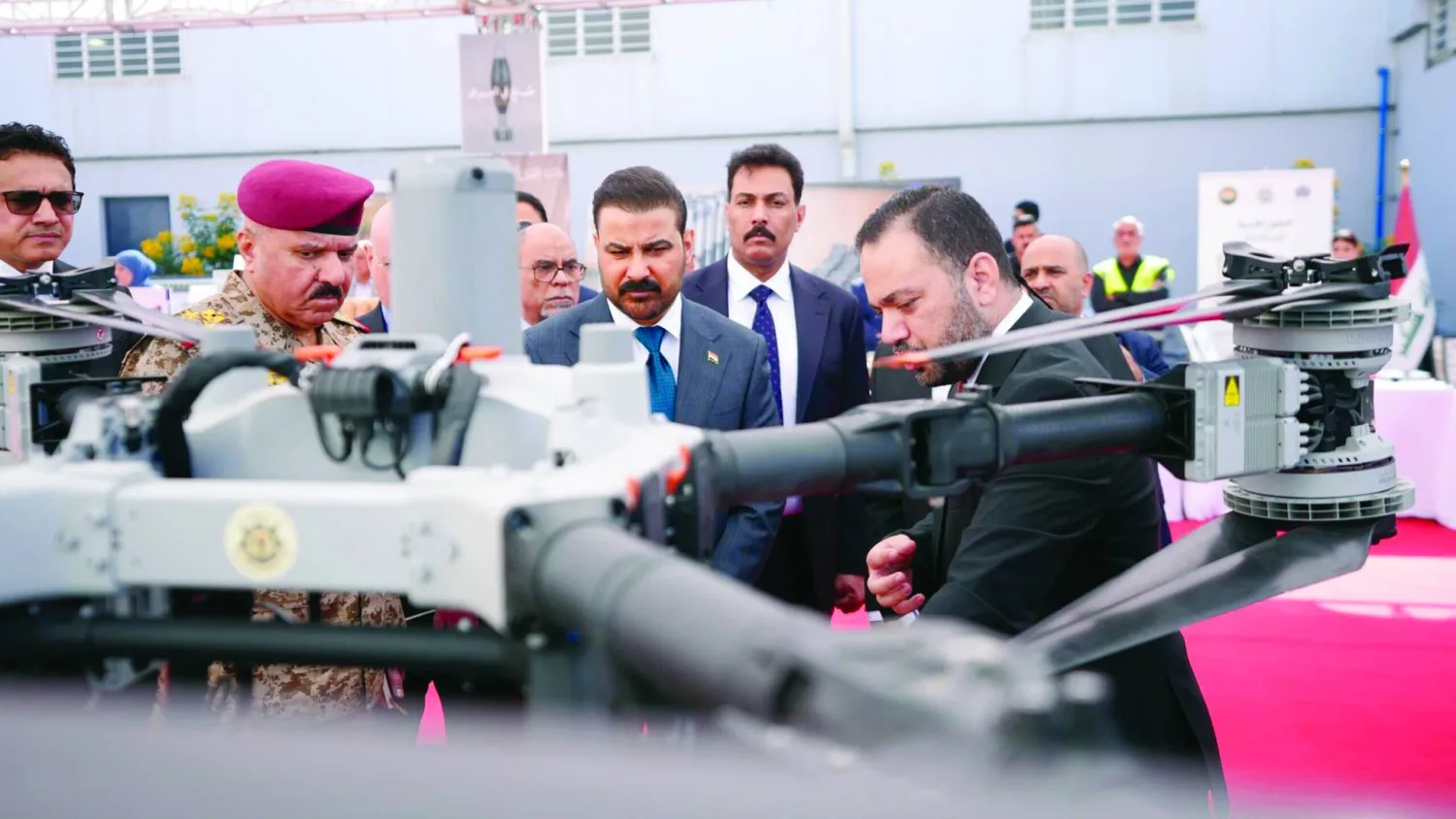
Iraqi Prime Minister Ali al-Zaidi during a visit to the Defense Industries Commission in Baghdad on Thursday. (Government media)

Iraqi Prime Minister Ali al-Zaidi and US President Donald Trump discussed regional developments during a phone call on Thursday, with Baghdad stressing that its territory must not be used to launch attacks against neighboring states.

According to a statement from the Prime Minister's office, al-Zaidi reiterated Iraq’s firm stance calling for the strict respect of state sovereignty. He further stressed that Iraqi territory must not serve as a launchpad for aggression against neighboring countries.

The PM underscored the vital importance of ongoing consultations between Baghdad and Washington on issues of mutual interest. He said that adopting peaceful solutions and engaging in constructive dialogue are necessary measures to maintain regional security.

Both leaders affirmed the importance of working together to confront current challenges. The statement noted that these efforts aim to support regional stability by prioritizing diplomacy and dialogue.

Military deployment

Also on Thursday, Iraq's Defense Ministry announced that it had reinforced its military deployment along a defensive line in the country's west, as the prime minister stressed the need to expand domestic arms production.

Defense Ministry spokesman Major General Yahya Rasool Abdullah said in a statement that troops from the Jazira and West Nineveh Operations Commands had begun strengthening their deployment along the Rawa-Hatra defensive line to maintain security and stability in the Jazira region north of the Euphrates River and toward the provinces of Nineveh and Salahuddin.

The deployment aims to secure desert areas, pursue remaining militant elements and prevent them from using the desert as a haven, he said.

It also seeks to provide a shorter route for civilian travel and commercial transport, helping support investment and agricultural activities.

Rasool said army units would continue securing desert areas within their respective operational sectors to maintain security and stability across the country.

Meanwhile, PM and Commander-in-Chief of the Armed Forces Ali al-Zaidi visited the Defense Industries Commission on Thursday to inspect military equipment that the authority said it had successfully manufactured or developed.

The equipment included various types of ammunition, light, medium and heavy weapons, drone systems, and surveillance and monitoring devices.

According to a statement from his media office, al-Zaidi underlined his support for developing Iraq's domestic defense industry and directed officials to involve the private sector and expand partnerships with specialized companies.

He stressed that Iraq had the capacity to manufacture the weapons and equipment it needs using domestic expertise and labor.

Al-Zaidi described the development of an advanced defense industry as a cornerstone of national sovereignty that would strengthen Iraq's ability to protect its security and interests.

He also underscored the importance of investing in research and development and keeping pace with rapid technological advances in military manufacturing.

Al-Zaidi praised the authority's progress and its capabilities and expertise, which he said positioned it to become an advanced industrial base.

He directed officials to provide the resources and support needed to expand its production and technological capabilities, with the aim of meeting the armed forces' requirements for weapons and military equipment while reducing reliance on foreign supplies.

The Defense Industries Commission, which reports to the commander-in-chief of the armed forces, was recently established to rebuild Iraq's defense industrial base and meet the needs of the armed forces and security agencies.

Iraq's military manufacturing industry, however, dates back to the 1970s and expanded significantly during the 1980s war with Iran.

Much of its arsenal and industrial infrastructure was subsequently devastated during the 1991 Gulf War and by international sanctions imposed throughout the 1990s.