


Fearless German Soccer Coach Christoph Daum Dies after Career of Highs and Lows

Christoph Daum the fearless soccer coach - The AP
TT

Fearless German Soccer Coach Christoph Daum Dies after Career of Highs and Lows

Christoph Daum the fearless soccer coach - The AP

Christoph Daum, the fearless soccer coach who was denied the German national team job after admitting cocaine use, has died. He was 70 years old.

Daum died Saturday at his home in Cologne after a battle with cancer, family members told news agency dpa on Sunday.

“He was a pioneer of the modern game and was controversial and passionate about football until the end,” German soccer federation president Bernd Neuendorf said. “I was able to experience this first hand in a personal meeting a few weeks before his death. He lived football with every fiber of his being.”

Daum’s struggle with cancer was symbolic of his life – even as a skinny young child growing up in the west German city of Duisburg, he picked fights with boys who were bigger and stronger, The AP reported.

As a passionate and demanding coach, he led Stuttgart to the Bundesliga title in 1992. But Daum never lifted the trophy again. Between 1996 and 2000 his Bayer Leverkusen team finished runner-up three times and third once. In 2000, Leverkusen squandered the chance to win the Bundesliga for the first time by losing 2-0 at promoted Unterhaching. Daum said he cried his eyes out.

Leverkusen would have to wait until this year before finally ending its “Neverkusen” moniker. But Daum's contribution arguably laid the foundations for success. He was a guest of honor at the celebrations.

“Christoph changed a lot of things here in terms of processes and internal structure. Under him, Bayer 04 became the biggest competitor to Bayern Munich and Borussia Dortmund," Leverkusen great Rudi Völler said.

Daum was tipped to take over as Germany coach in 2000 after the national team’s disappointing European Championship, but his personal life came under scrutiny when long-time rival Uli Hoeneß of Bayern Munich suggested in an interview that Daum had a drug problem. Media reported cocaine-fueled parties involving prostitutes.

Daum denied drug use and gave hair samples for analysis. The samples showed traces of cocaine.

He was fired as Leverkusen coach as a result, while the scandal also ended his dream of becoming Germany coach.

“It was a big mistake that I acknowledged and apologized for,” Daum said years later. “Who can say that their life has been completely free of mistakes? I certainly cannot. Ultimately, it’s important to recognize mistakes, correct them, and then do better. That’s what it means to be human.”

Daum enjoyed success as coach away from Germany, winning a league and cup double with Austria Vienna in 2003, and Turkish league titles with Fenerbahce in 2004 and 2005. He previously led city rival Besiktas to Turkish cup (1994) and league (1995) titles.

Daum returned to Germany after Fenerbahce and helped Cologne to Bundesliga promotion in 2008.

He also later returned to Fenerbahce, then coached Eintracht Frankfurt, Club Brugge, Bursaspor and Romania.

“Christoph Daum was a true child of the Bundesliga. As a motivator and communicator without a previous professional career, he helped shape the coaching profession and the Bundesliga at the beginning of the media age,” said Marc Lenz, the managing director of the German soccer league.

Lenz said Daum "remained true to himself throughout his career, both in success and after setbacks and mistakes."

For his part, Daum remained philosophical about his highs and lows.

”You can fall. It doesn’t matter how many times you fall,” he said. “You just have to keep getting up again.”



Over 75% of Fans Do Not Support VAR in Premier League, Says FSA Survey

Football - Premier League - Aston Villa v West Ham United - Villa Park, Birmingham, Britain - March 22, 2026 Referee Paul Tierney checks the VAR before overturning an Aston Villa penalty. (Action Images via Reuters)
TT

Over 75% of Fans Do Not Support VAR in Premier League, Says FSA Survey

Football - Premier League - Aston Villa v West Ham United - Villa Park, Birmingham, Britain - March 22, 2026 Referee Paul Tierney checks the VAR before overturning an Aston Villa penalty. (Action Images via Reuters)

More than ‌75% of Premier League fans do not support the continued use of Video Assistant Referees (VAR), a Football Supporters’ Association (FSA) survey showed.

The survey was conducted online between February 26 and March 23 and saw almost 8,000 fans of top-flight clubs participate, the FSA said.

The ‌results showed ‌that 75.7% did not ‌support ⁠the use of ⁠VAR in football, with 91.7% saying VAR had removed the spontaneous joy of goal celebrations.

“These findings back up the FSA’s previous survey in 2021, where fans ⁠expressed misgivings about the introduction ‌of VAR," ‌FSA’s Premier League network manager Thomas Concannon ‌said.

“We have shared the survey ‌results with the Premier League and PGMO (Professional Game Match Officials Limited), and look forward to discussing its findings ‌with them.”

Reuters has requested comment from the Premier League.

Premier League ⁠teams ⁠voted in favor of keeping VAR in June 2024 despite a considerable amount of criticism about the technology-aided officiating system.

"While VAR produces more accurate decision making, it was agreed that improvements should be made for the benefit of the game and supporters," the league said in a statement at the time.


King Kimi, Max Misery, Bearman Smash: Japan GP Talking Points

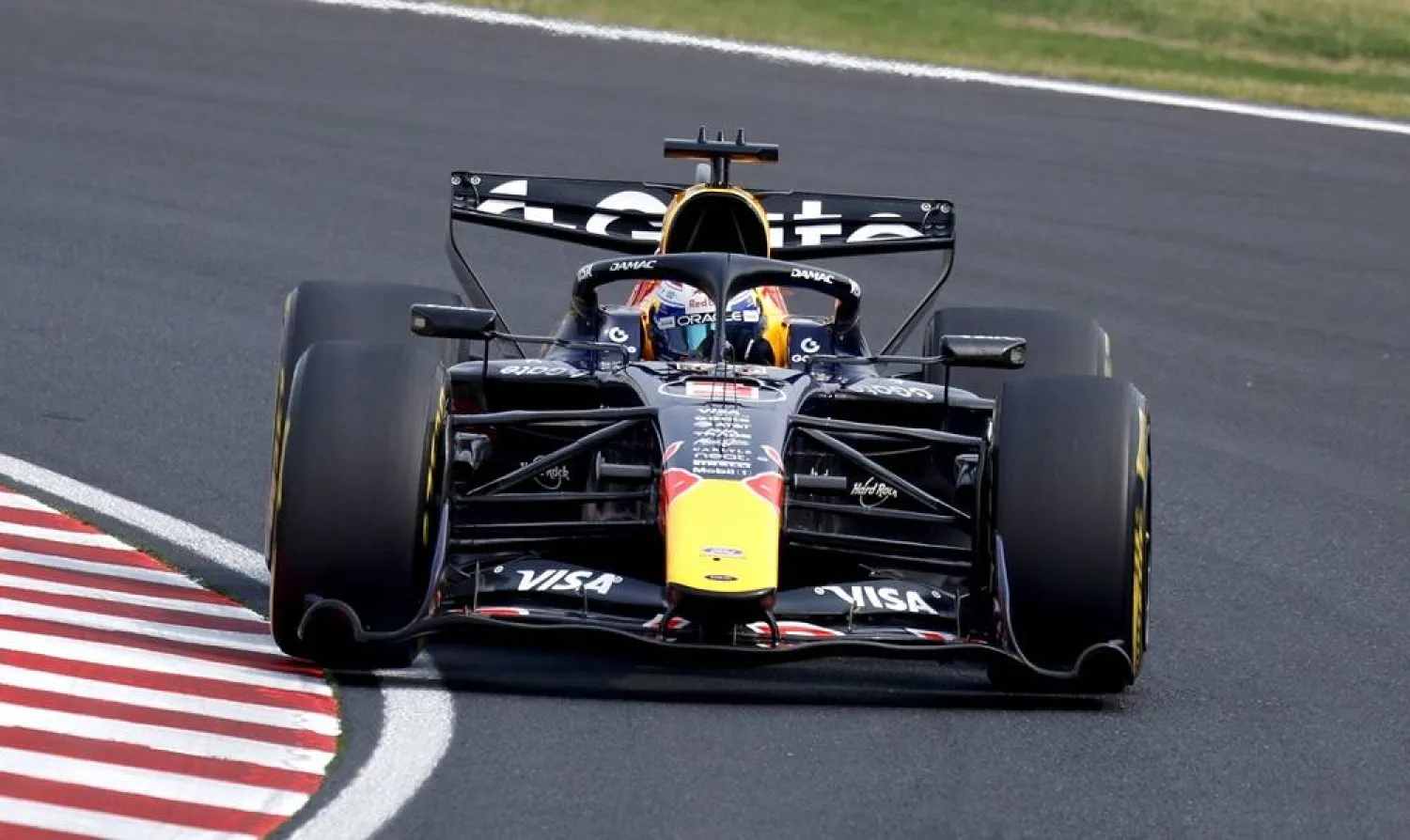
Red Bull Racing driver Max Verstappen of Netherlands in action during the Formula 1 Japanese Grand Prix at the Suzuka International Racing Course racetrack in Suzuka, Japan, 29 March 2026. (EPA)
TT

King Kimi, Max Misery, Bearman Smash: Japan GP Talking Points

Red Bull Racing driver Max Verstappen of Netherlands in action during the Formula 1 Japanese Grand Prix at the Suzuka International Racing Course racetrack in Suzuka, Japan, 29 March 2026. (EPA)

Kimi Antonelli won the Japanese Grand Prix from pole ahead of McLaren's Oscar Piastri as Max Verstappen endured another miserable outing in his Red Bull.

AFP Sport looks at three talking points from the third race weekend on the 2026 Formula One calendar:

- Mercedes protect teen hero -

Antonelli is in only his second season, but already Mercedes are playing down expectations of the 19-year-old -- now the youngest title race leader in Formula One history.

"We need to protect him now from people talking about world championships," said Mercedes team principal Toto Wolff after the race.

Antonelli admitted he had a stroke of fortune with a safety car that enabled him to dive in for fresh tires and emerge in the lead after his rivals had already pitted.

It was the second race in a row where a slow getaway saw him relegated from pole position and having to play catch-up.

"I had a terrible start. I need to check what happened. Then I was lucky with the safety car to be in the lead but then the pace was incredible," said Antonelli

"Luckily, I've got three weeks, so now I can practice some clutch drops just to get a better feel with it.

"It's been a weak point and I need to improve because you can easily win or lose races."

- Verstappen quit threat -

Red Bull's four-time world champion Verstappen openly questioned his future in Formula One after finishing eighth and lashing out again about the new cars and regulations.

"It's really anti-driving," he told the BBC.

"Then at one point, yeah, it's just not what I want to do."

Verstappen had won at Suzuka in each of the previous four years but was way off the pace and even waved goodbye to one car that overtook him, knowing that he did not have any capability to strike back.

The Dutchman said Formula One bosses "know what to do" to address his concerns and added: "You don't need to feel sorry for me, I'll be fine."

- Bearman sparks safety call -

Oliver Bearman escaped serious injury in a horror crash which prompted drivers to call for changes in the regulations.

The 20-year-old's Haas was closing rapidly at high speed on Franco Colapinto and smashed into the barriers after swerving to avoid the Argentine's Alpine.

Drivers and teams complained it had been an accident waiting to happen because of Formula One's new regulations that mean cars can be travelling at drastically different speeds on the track at the same time.

"These kind of closing speeds and these kind of accidents were always going to happen, and I'm not very happy with what we've had up until now," Grand Prix Drivers' Association chief Carlos Sainz told Sky Sports F1.

"Hopefully we come up with a better solution that doesn't create these massive closing speeds and a safer way of going racing," added the Williams driver.

Bearman said: "I think we've, as a group, warned the FIA what can happen, and this has been a really unfortunate result."


Premier League Fans Feel the Pinch from Ticket Price Hikes

Manchester United fans, many wearing black as a protest, display a banner in the crowd against seat prices and the current ownership of Manchester United ahead of the English Premier League football match between Manchester United and Arsenal at Old Trafford in Manchester, northwest England, on March 9, 2025. (AFP)
TT

Premier League Fans Feel the Pinch from Ticket Price Hikes

Manchester United fans, many wearing black as a protest, display a banner in the crowd against seat prices and the current ownership of Manchester United ahead of the English Premier League football match between Manchester United and Arsenal at Old Trafford in Manchester, northwest England, on March 9, 2025. (AFP)

The Premier League's global appeal is built on packed stadiums and electric atmospheres but as the arms race for talent intensifies, fans are feeling the pinch.

A recent UEFA report found English football's "Big Six" -- Arsenal, Chelsea, Liverpool, Manchester City, Manchester United and Tottenham -- earned nearly 20 percent more from selling tickets for home matches in the 2024/25 season than 12 months before.

Revenue from bumper broadcasting deals and commercial sponsorship still provides the vast majority of income for Premier League teams.

But as the growth in TV money has slowed, clubs have focused on increasing matchday revenue, with many investing in stadium renovations and expansions, promising improved facilities and better experiences.

Fans pay the price, particularly local supporters, as clubs target tourists from far and wide who are willing to pay a premium.

In wealthy west London, Fulham boast a rooftop pool and top-grade catering in the hospitality section, but season tickets are among the most expensive in the league, priced at up to £3,000 ($4,000).

"The Riverside stand is a great asset, glad it's at our football club, but it's expensive for your average match-going fan," Simon Duke of the Fulham Supporters' Trust told AFP.

"In having this fantastic asset, thank you owners, but can you please use that to keep football affordable in the other three sides of the ground?"

- Tourist market -

Liverpool sparked outrage last week by announcing that prices will rise in line with inflation for the next three seasons.

Fans group Spirit of Shankly said the club "choose to disregard those who make LFC what it is".

Major expansions of Anfield have increased capacity to 61,000, but there are just 34,000 season tickets available.

That allows the Premier League champions to sell nearly 50 percent of tickets on a match-by-match basis, often targeting day trippers willing to spend more on merchandise, food and drink.

"You look at the yield per fan, per match," said football finance expert Kieran Maguire.

"You're going to get more from a person that's coming for an experience as opposed to some grumpy old bloke who's been doing it for 50 years because the alternative is having to go to IKEA on a Saturday afternoon."

Hospitality packages can cost several thousand pounds per game, with the most expensive option for Manchester City's upcoming clash with Arsenal available for £5,500.

A report by campaign group Fair Game highlighted the long-term risk clubs are taking.

"Some clubs are looking at their stadium and seeing each seat as an individual opportunity to raise money," said CEO Niall Couper.

"If the club wants to be there for the long haul, and to be financially sustainable, then actually keeping ticket prices at an affordable level and allowing access to your local community is a safer way to go."

- 'National religion' -

Supporters, young and old, have also been squeezed by a loss of concessions.

Manchester United are increasing season ticket prices by five percent for the third consecutive year and halving a senior citizens' discount for some fans.

Supporters of United and Liverpool, England's two most successful clubs, joined forces to back the "Stop Exploiting Loyalty" campaign at a match at Anfield last year.

Despite the unrest, Premier League clubs boasted average attendances of just over 40,000 last season, with stadiums nearly 99 percent full.

However, cracks have appeared in recent months.

Tottenham, struggling at the bottom of the table, have failed to sell out their 63,000-capacity stadium on Champions League nights.

"Too many empty seats and too many supporters, particularly young supporters, priced out of attending. Thin the crowd and you thin the noise," the Tottenham Supporters' Trust said in a statement.

But the enduring popularity of football in England during a cost-of-living crisis is testament to its unique place in the national consciousness.

"When I'm making those budgetary decisions -- do we go on holiday this year? Are we going out for more meals? And am I going to renew my season ticket? Season tickets will take priority," said Maguire.