
Digital Clones and Vocaloids May Be Popular in Japan. Elsewhere, They Could Get Lost in Translation 

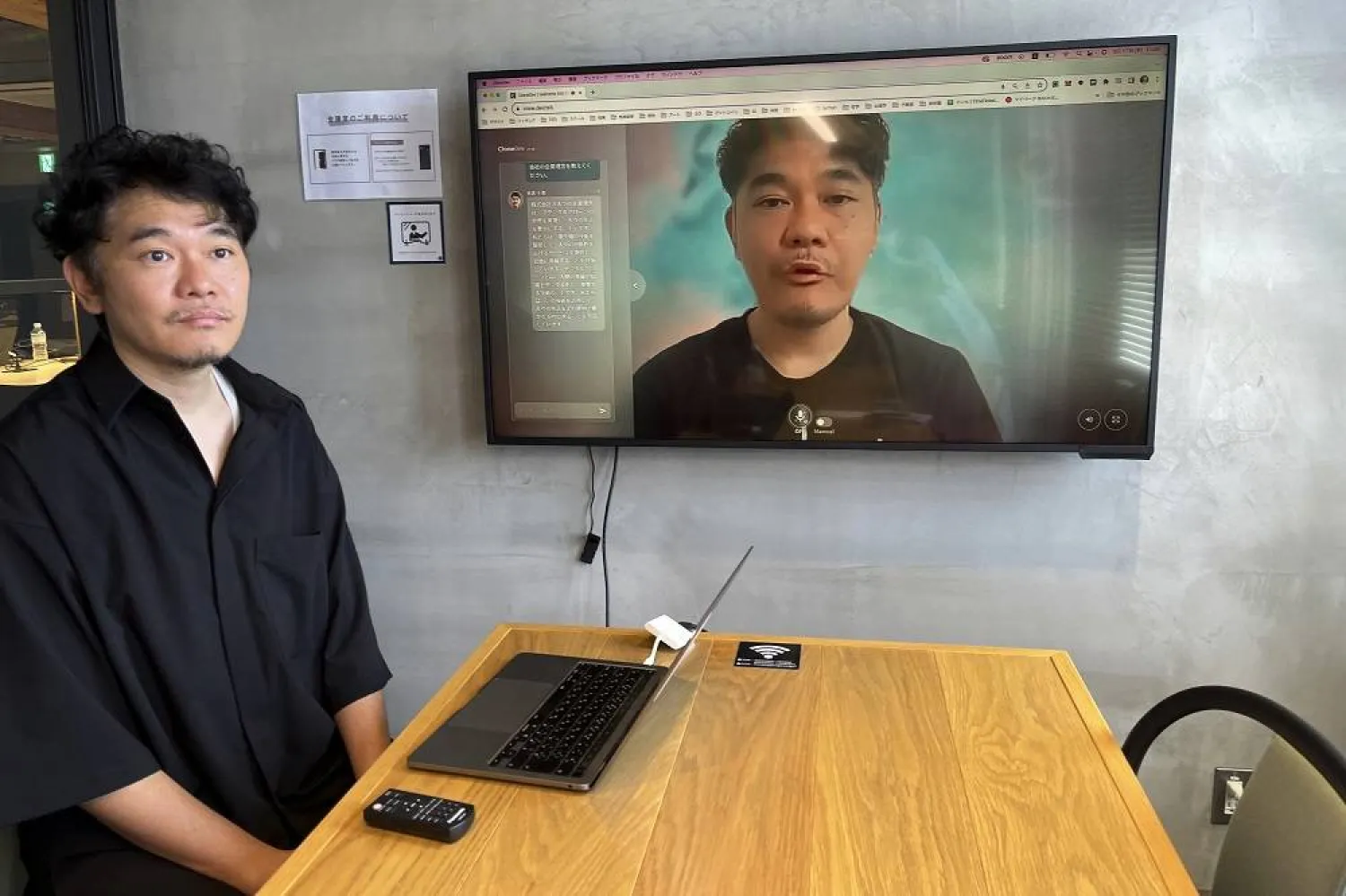
Kazutaka Yonekura, chief executive of Tokyo startup Alt Inc., demonstrates his digital clone on a personal computer at his office in Tokyo, Aug. 17, 2023. (AP)
TT

Digital Clones and Vocaloids May Be Popular in Japan. Elsewhere, They Could Get Lost in Translation 

Kazutaka Yonekura, chief executive of Tokyo startup Alt Inc., demonstrates his digital clone on a personal computer at his office in Tokyo, Aug. 17, 2023. (AP)

Kazutaka Yonekura dreams of a world where everyone will have their very own digital "clone" — an online avatar that could take on some of our work and daily tasks, such as appearing in Zoom meetings in our place.

Yonekura, chief executive of Tokyo startup Alt Inc., believes it could make our lives easier and more efficient.

His company is developing a digital double, an animated image that looks and talks just like its owner. The digital clone can be used, for example, by a recruiter to carry out preliminary job interviews, or by a physician to screen patients ahead of checkups.

"This liberates you from all the routine (tasks) that you must do tomorrow, the day after tomorrow and the day after that," he told The Associated Press as he showed off his double — a thumbnail video image of Yonekura on the computer screen, with a synthesized version of his voice.

When his digital clone is asked "What kind of music do you like," it pauses for several seconds, then goes into a long-winded explanation about Yonekura's fondness for energetic rhythmical music such as hip-hop or rock 'n' roll.

A bit mechanical perhaps — but any social gaffes have been programmed out.

Yonekura, 46, argues that the technology is more personal than Siri, ChatGPT or Google AI. Most importantly, it belongs to you and not the technology company that created it, he said.

For now, having a digital double is expensive. Each Alt clone costs about 20 million yen ($140,000), so it will likely take some time before there's a clone for everyone.

In creating a digital double, information about a person is skimmed off social media sites and publicly available records in a massive data collection effort, and stored in the software. The data is constantly updated, keeping in synch with the owner's changing habits and tastes.

Yonekura believes a digital clone could pave the way for a society where people can focus on being creative and waste less time on tedious interactions.

For many Japanese — the nation that gave the world Pokemon, karaoke, Hello Kitty and emojis — the digital clone is as friendly as an animation character.

But Yonekura acknowledges cultures are different and that Westerners may not like the idea of a digital clone as much.

"I can’t tell you how many times I’ve been asked: Why does it have to be a personal clone, and not just a digital agent?" he said, a hint of exasperation in his voice.

Yonekura’s company has drawn mostly domestic investments of more than 6 billion yen ($40 million), including venture capital funds run by major Japanese banks, while also building collaborative relationships with academia, including the University of Southern California and the University of Tokyo.

But large-scale production of digital doubles is a long way off — for now, the company offers more affordable voice recognition software and virtual assistant technology.

Matt Alt, who co-founded AltJapan Co., a company that produces English-language versions of popular Japanese video games and who has written books about Japan, including "Pure Invention: How Japan Made the Modern World," says the digital clone idea makes more sense culturally in Japan.

Ninjas, the famous feudal Japanese undercover warriors, were known for "bunshin-jutsu" techniques of creating the illusion of a double or a helper in battle to confuse the opponent. The bunshin-jutsu idea has been adopted and is common in modern-day Japanese video games and manga comic books and graphic novels.

"Who wouldn’t want a helping hand from someone who understood them intimately?" Alt said but added that in the West, the idea of an existing double is "more frightening."

"There is the ‘Invasion of the Body Snatchers,’ for instance, or even the brooms that multiply like a virus in Disney’s ‘Fantasia’," he said.

INCS toenter Co., another Tokyo-based startup, has been successful as a production company of computerized music for animation, manga, films, virtual realities and games that uses so-called Vocaloid artists. The synthesized singers or musical acts known as Vocaloid are often paired up with anime- or manga- style characters.

Like Yonekura’s digital clone, Vocaloids are an example of Japanese technology that uses computer software to duplicate human traits or likeness.

Among INCS toenter's hits is "Melt," created on a single desktop in 2007 and performed by a group called Supercell, which has been played 23 million times on YouTube.

A more recent hit is "Kawaikute gomen," which means "Sorry for being so cute," by HoneyWorks, a vocaloid unit. Another is Eve, who performs the theme song of megahit animation series "Jujutsu Kaisen," and has 4.6 million subscribers on his YouTube channel.

Some wonder whether digital clones or Vocaloids could become popular outside Japan. Digital assistant and voice software, as well as computerized music exist in the West, but they are not clones or Vocaloids.

Yu Tamura, chief executive and founder of INCS toenter, says he is encouraged by the increasing global popularity of Japanese animation and manga but that one thing to watch out for is the "Galapagos syndrome."

The term, referring to the isolated Pacific islands where animals evolved in unique ways, is widely used in Japan to describe how some Japanese products, while successful at home, fail to translate abroad.

Overseas consumers could see it as quirky or too cutesy, except for Japanophiles, Tamura said.

"They simply won't get it," he said.


Beijing Says China, US Should Work Together to Promote AI Governance

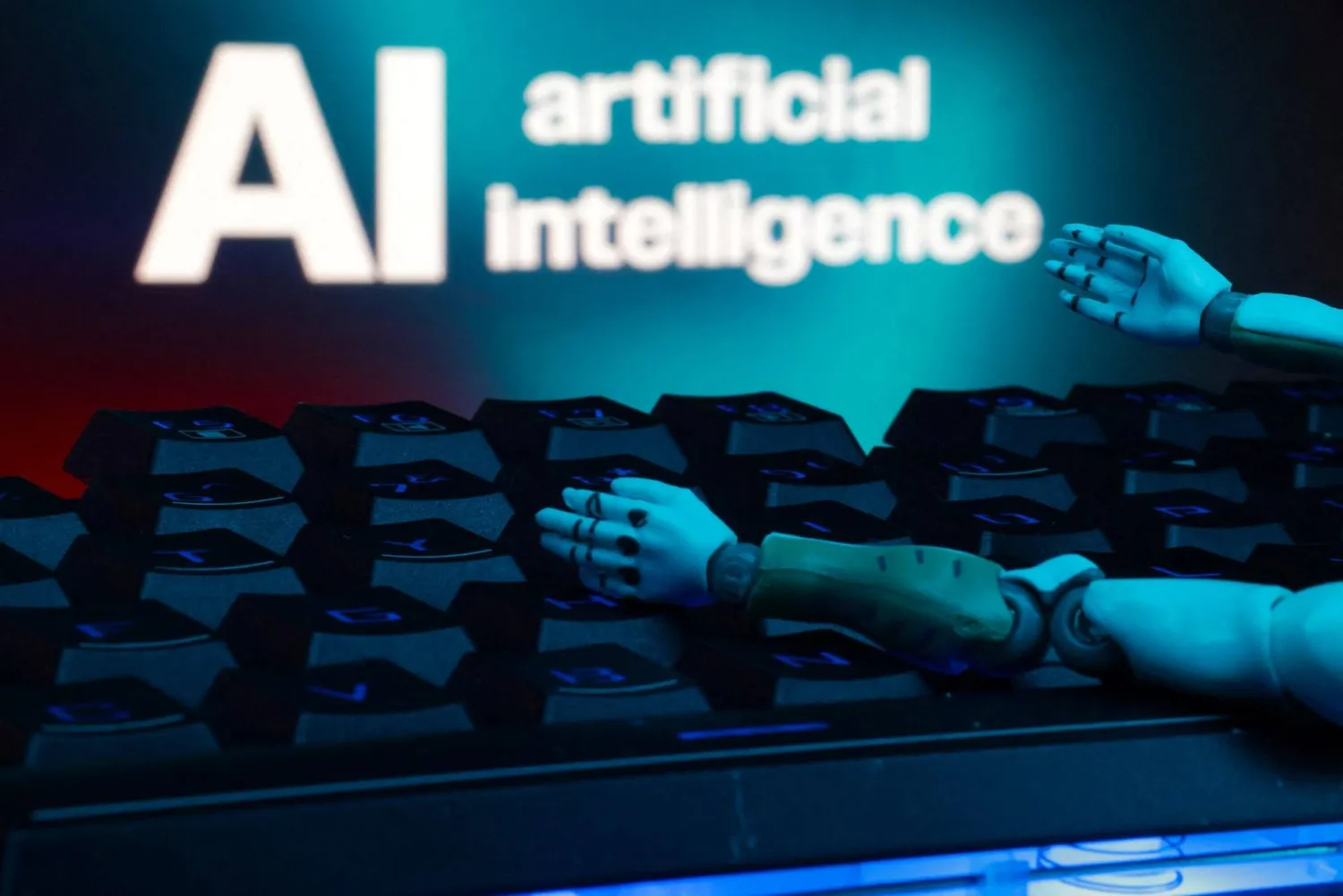
A message reading "AI artificial intelligence", a keyboard, and robot hands are seen in this illustration taken January 27, 2025. (Reuters)
TT

Beijing Says China, US Should Work Together to Promote AI Governance

A message reading "AI artificial intelligence", a keyboard, and robot hands are seen in this illustration taken January 27, 2025. (Reuters)

China and the United States "should work together to promote the development and governance of AI", Chinese foreign ministry spokesman Guo Jiakun said on Tuesday.

Cooperation on artificial intelligence was discussed by US President Donald Trump and China's Xi Jinping at talks in Beijing last week, both sides say, despite their countries' fierce rivalry over the fast-evolving technology.

"The two heads of state held constructive discussions on AI-related issues and agreed to launch an intergovernmental dialogue on artificial intelligence," Guo told a news briefing, confirming previous remarks by US Treasury Secretary Scott Bessent.

As major powers in the field, the countries should also work together "to ensure that AI better serves the progress of human civilization and the common well-being of the international community", Guo added.

Analysts said before the summit that fears over autonomous AI weapons, cybersecurity and the threat of new AI-designed bioweapons were mutual concerns for Xi and Trump.

In 2024, Xi agreed with Trump's predecessor Joe Biden that humans must remain in control of the decision to fire nuclear weapons.

But with China set on narrowing the United States' lead in the strategic sector, until now little further cooperation has followed.

The White House recently accused Chinese entities of "industrial-scale" efforts to steal US technology, while Beijing blocked the acquisition of a Chinese-founded AI agent tool by tech giant Meta.

But at the same time, the AI cybersecurity threat has been highlighted by Mythos, a powerful new model that US startup Anthropic withheld from public release to stop it from being exploited by hackers.

Bessent told CNBC on Thursday that Washington and Beijing would set up a "protocol" on the path forward on AI, particularly "to make sure non-state actors don't get a hold of these models".

The world's "two AI superpowers are going to start talking", Bessent said.

While details on what will be discussed are so far scarce, Sun Chenghao, a senior fellow at Tsinghua University's Center for International Security and Strategy, told AFP that "compared with 2024, the topics to be discussed this time might be broader".

"The two sides could share some best practices and exchange experiences on how to address and manage" AI's impact on society, for example on youth employment, he said.

"Even though China and the United States are in competition in the field of AI, the impact of AI technologies on the entire world -- and on all kinds of actors, whether states, societies, or businesses -- is extremely significant."

However, keeping thorny issues such as the export of high-end US chips that can train and power AI systems for separate meetings "may help create a better atmosphere for talks between the two sides", Sun added.


Musk Loses Blockbuster OpenAI Suit as Jury Says Too Late

Tesla CEO Elon Musk attends a state banquet with US President Donald Trump and Chinese President Xi Jinping at the Great Hall of the People in Beijing, China, May 14, 2026. (Reuters)
TT

Musk Loses Blockbuster OpenAI Suit as Jury Says Too Late

Tesla CEO Elon Musk attends a state banquet with US President Donald Trump and Chinese President Xi Jinping at the Great Hall of the People in Beijing, China, May 14, 2026. (Reuters)

A federal jury ruled Monday that billionaire Elon Musk waited too long to sue OpenAI and its co-founders, delivering a decisive victory to the ChatGPT startup and ending one of Silicon Valley's most closely watched courtroom battles.

The swift decision caps a three-week trial that saw a parade of tech titans take the stand, with Musk arguing that OpenAI's pivot to a profit-driven business betrayed its original nonprofit mandate.

The jury in Oakland federal court found that Musk's claims against OpenAI CEO Sam Altman, President Greg Brockman, The OpenAI Foundation and Microsoft were barred by statutes of limitations, leaving the core arguments of the world's richest person largely unaddressed.

Judge Yvonne Gonzalez Rogers, who had asked the jury to advise her on the matter, accepted and confirmed their decision.

- 'Sabotage' -

The outcome spared OpenAI from a potentially existential legal threat.

Had Musk prevailed, he potentially could have forced the company to revert to its nonprofit structure -- a move that would have derailed its planned IPO and unwound ties to major investors including Microsoft, Amazon and SoftBank.

"The finding of the jury confirms that this lawsuit was a hypocritical attempt to sabotage a competitor," OpenAI attorney William Savitt said outside the courthouse.

"Musk can bring his claims, and he can tell his stories, but what the nine members of this jury found is that his stories were just that -- stories, not facts," he added.

Musk, the chief executive of both SpaceX and Tesla, had sued OpenAI over its transformation from a scrappy nonprofit into the $850 billion juggernaut behind ChatGPT.

He claimed Altman and Brockman improperly used a $38 million donation intended to sustain OpenAI as a research lab devoted to developing artificial intelligence for the benefit of humanity.

But in their deliberations, the jury first had to resolve a threshold issue of whether Musk, who filed suit in 2024 -- four years after his last contribution -- had done so within the statutory time limit.

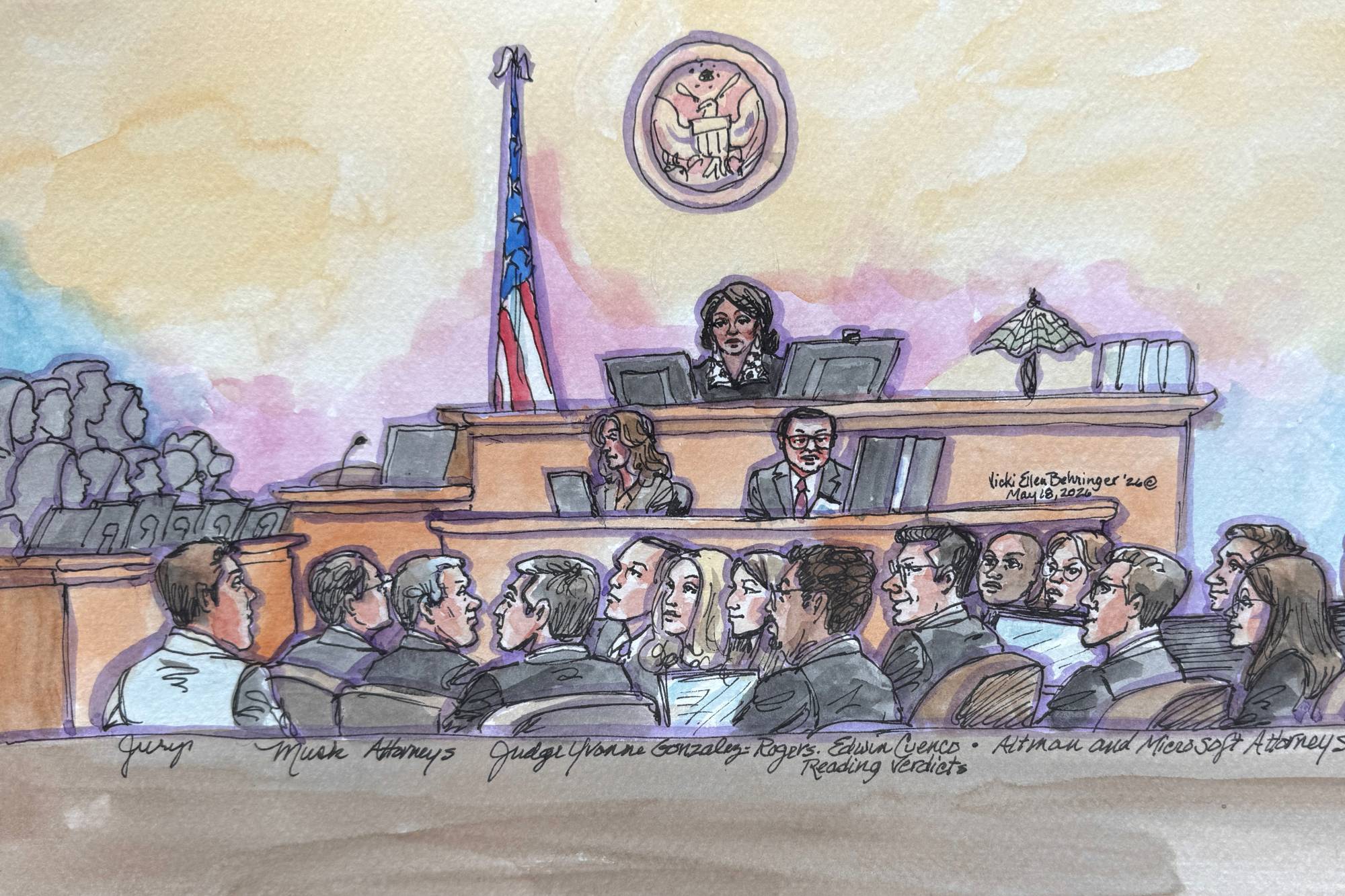
Designated courtroom deputy Edwin Cuenco reads the verdict before US District Judge Yvonne Gonzalez Rogers at Elon Musk's lawsuit trial over OpenAI's for-profit conversion at a federal courthouse in Oakland, California, US, May 18, 2026 in a courtroom sketch. (Reuters)

Musk on X said he would appeal, as the "jury never actually ruled on the merits of the case" and that to "loot charities is incredibly destructive to charitable giving in America."

The tycoon also lashed out at Judge Gonzalez Rogers for setting a "terrible precedent," writing in a since-deleted post accusations that she was an "activist judge" who used the jury as a "fig leaf" for a flawed ruling she could have made herself.

- 'Soap opera' -

The outcome had largely been expected to come down to which of the bickering billionaires the jury would believe.

Testimony centered heavily on Altman's integrity and behind-the-scenes maneuvering that rankled colleagues, many of whom have since left OpenAI.

Attorneys for OpenAI countered with attacks on Musk, pointing to his varying narratives about the early days of the company and parsing testimony from Shivon Zilis -- a business associate with whom he has four children -- who served as an intermediary between the executives.

Altman, fired by OpenAI's board in November 2023 for a lack of candor before being reinstated under employee pressure, emerged with allegations of manipulation and a toxic work culture unresolved.

Microsoft, OpenAI's largest backer with $13 billion committed, was also spared.

"This is an important victory for Altman and OpenAI and clears the path for an IPO by removing this black cloud," Dan Ives of Wedbush Securities told AFP.

"Musk was creating noise around this lawsuit but ultimately it was more of a soap opera than a long-term negative for OpenAI," he added.


China Market for Nvidia AI Chips to Open ‘Over Time’, Says Huang

 CEO of Nvidia Jensen Huang speaking on stage at a Dell Technologies World event happening in Las Vegas on Monday, May 18, 2026. (AP)
CEO of Nvidia Jensen Huang speaking on stage at a Dell Technologies World event happening in Las Vegas on Monday, May 18, 2026. (AP)
TT

China Market for Nvidia AI Chips to Open ‘Over Time’, Says Huang

 CEO of Nvidia Jensen Huang speaking on stage at a Dell Technologies World event happening in Las Vegas on Monday, May 18, 2026. (AP)
CEO of Nvidia Jensen Huang speaking on stage at a Dell Technologies World event happening in Las Vegas on Monday, May 18, 2026. (AP)

Nvidia boss Jensen Huang expects China to eventually open its market to high-end US chips that can train and run artificial intelligence systems.

But he did not discuss sales of the powerful H200 model with top officials in Beijing, the businessman told Bloomberg Television in an interview broadcast Monday.

Huang travelled to the country last week with US President Donald Trump, who met Chinese President Xi Jinping.

The superpowers are in a fierce race for AI supremacy, and the H200 chip had until recently been barred from sale in China by Washington over national security concerns.

However, there is no sign that Chinese tech companies are buying them, as Beijing ramps up domestic chip development in a bid to challenge US dominance in the key sector.

"H200s are licensed to sell to China. But the Chinese government has to decide how much of their local market do they want to protect," Huang said.

"My sense is that over time the market will open," added Huang, CEO of Nvidia -- the world's most valuable company, due to huge demand for its AI hardware.

Trump said in December he had reached an agreement with Xi to ease the restrictions on H200 chips, a move some US lawmakers have warned could help the Chinese military.

Nvidia's most top-of-the-range offerings, the Blackwell and forthcoming Rubin series, remain banned for sale in China.

Xi told a delegation of US business executives on Thursday that China would "open wider" to the world.

"American companies will enjoy even brighter prospects in China," Xi said, Chinese state media reported.

Bloomberg Television asked Huang whether he spoke to Xi and Prime Minister Li Qiang about his chips.

"I didn't discuss directly with them about H200" although "President Trump had some conversations with the leaders", he replied.