South Korea to Toughen Punishments for Technology Leaks in Chips, Displays

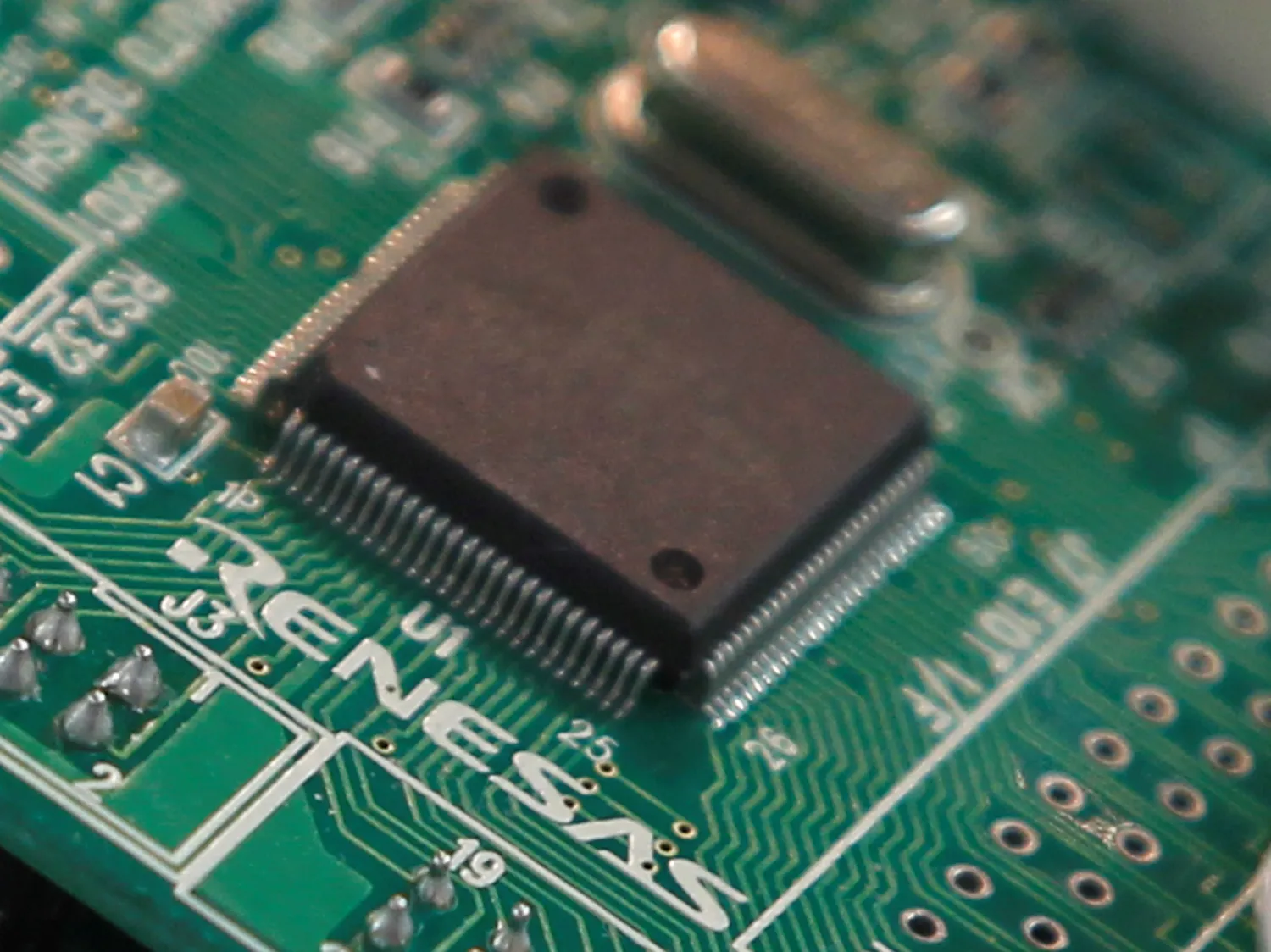
Japanese chipmaker Renesas Electronics Corp's microcontroller is pictured at the company headquarters in Tokyo May 28, 2012. REUTERS/Yuriko Naka
TT

South Korea to Toughen Punishments for Technology Leaks in Chips, Displays

Japanese chipmaker Renesas Electronics Corp's microcontroller is pictured at the company headquarters in Tokyo May 28, 2012. REUTERS/Yuriko Naka

South Korea said on Monday it will toughen sentencing for stealing industrial secrets, after concerns that current regulation was not strong enough to deter attempts to funnel technologies from companies like Samsung .
South Korea has been cracking down on technology leaks in recent months, as the country seeks to maintain its dwindling lead in memory chips and displays against competitors.
South Korea's Sentencing Commission, overseen by the Supreme Court of Korea, decided this month to toughen punishments and lengthen jail times for leaking South Korean technology, the industry ministry said in a statement on Monday. Details on the new sentencing guidelines are expected early next year.
The industry ministry did not say which country it is targeting, but analysts said China is the suspected destination of the bulk of South Korean technology leaks.
Although South Korea's penalties for technology leaks are similar to those in other countries, including jail terms of five years or more for leaking technology with "significant impact on national and economic security", in practice sentencing falls short due to hard-to-meet requirements, the industry ministry said.
Previous rules required prosecutors to prove a suspect's intent to leak secrets for an action to be punished as a core technology leak. This led to acquittal in 30% and suspended sentences in 54% of such cases before South Korean courts, it said.
Rules to block technology leaks that had not been regulated, such as leaks after a foreign private equity fund buys out a South Korean company, will also be included in a revised draft law to be submitted to parliament, the ministry said.
South Korean police said in June they had arrested 77 people in 35 cases of suspected industrial espionage in a nationwide investigation over the past four months.



Microsoft to Invest $10 bn for Japan AI Data Centers

Microsoft's Vice Chair and President Brad Smith (4th L) and (L-R) Sakura Internet Inc President and CEO Kunihiro Tanaka, SoftBank Corp. President and CEO Junichi Miyakawa, Microsoft Japan President Miki Tsusaka, hold a meeitng with Japan's Prime Minister Sanae Takaichi (2nd R) and Vice Minister of Economy, Trade and Industry Toshiro Ino (R) at the Prime Minister's Office in Tokyo on April 3, 2026. Kazuhiro NOGI / POOL/AFP
TT

Microsoft to Invest $10 bn for Japan AI Data Centers

Microsoft's Vice Chair and President Brad Smith (4th L) and (L-R) Sakura Internet Inc President and CEO Kunihiro Tanaka, SoftBank Corp. President and CEO Junichi Miyakawa, Microsoft Japan President Miki Tsusaka, hold a meeitng with Japan's Prime Minister Sanae Takaichi (2nd R) and Vice Minister of Economy, Trade and Industry Toshiro Ino (R) at the Prime Minister's Office in Tokyo on April 3, 2026. Kazuhiro NOGI / POOL/AFP

Microsoft said Friday it will invest $10 billion in Japan over the next four years to build artificial intelligence data centers and related infrastructure.

Power-hungry data centers -- warehouse-like facilities that power AI tools from chatbots to image generators -- are springing up worldwide, and the sector is growing particularly fast in Asia.

Microsoft President Brad Smith met Japanese Prime Minister Sanae Takaichi at her office on Friday to announce the investment, said AFP.

Smith said in a statement that it was a "response to Japan's growing need for cloud and AI services".

Businesses in Japan, the world's fourth-largest economy, are keen to get ahead in the fast-moving AI field.

But data centers expansion there is constrained by limited space and relatively expensive electricity.

The US tech giant will collaborate with Japan's SoftBank Group and Sakura Internet to expand domestic tech infrastructure, it said in a press release.

It follows a $2.9 billion two-year investment Microsoft announced in 2024 to bolster the country's push into AI and strengthen its cyber defenses.

The investment unveiled Friday also includes funds to enhance cybersecurity partnerships with Japanese government agencies, and to train one million engineers in cooperation with telecom and tech giants NTT and NEC.

A rush to build data centers in the Asia-Pacific region, especially in India and Southeast Asia, has sparked concerns over the facilities' environmental impact.

That includes increased demand on electricity grids that are often reliant on fossil fuels, and on local water supplies used to cool the hot servers inside.

Microsoft says it has pledged to become carbon negative, zero-waste and "water positive" by 2030.

On Tuesday, the company announced plans to invest more than $1 billion in cloud and AI data center infrastructure and operations in Thailand over the next two years.


Kia to Sell Lower-priced Electric Vehicle in US

A KIA logo on an electric vehicle is seen on display at the Canadian International AutoShow in Toronto, Ontario, Canada, February 13, 2025. REUTERS/Carlos Osorio
TT

Kia to Sell Lower-priced Electric Vehicle in US

A KIA logo on an electric vehicle is seen on display at the Canadian International AutoShow in Toronto, Ontario, Canada, February 13, 2025. REUTERS/Carlos Osorio

Kia said Wednesday it will begin selling a lower-priced electric vehicle in the United States later this year as automakers work to recharge EV sales.

The Korean automaker said at the New York Auto Show it will offer the EV3 in the US market starting later this year, Reuters reported.

Automakers are facing a tougher EV market in the United States after Congress repealed the $7,500 EV tax credit last year but higher gasoline prices in recent weeks has prompted new interest in the EVs.


Passengers Stranded in Moving Traffic after Robotaxi Outage in China

This file photo taken on August 1, 2024 shows a general view of a driverless robotaxi autonomous vehicle developed as part of tech giant Baidu's Apollo Go self-driving project, in Wuhan, in central China's Hubei province. (Photo by PEDRO PARDO / AFP)
TT

Passengers Stranded in Moving Traffic after Robotaxi Outage in China

This file photo taken on August 1, 2024 shows a general view of a driverless robotaxi autonomous vehicle developed as part of tech giant Baidu's Apollo Go self-driving project, in Wuhan, in central China's Hubei province. (Photo by PEDRO PARDO / AFP)

Some robotaxi passengers were left stranded in the middle of fast-moving traffic in a major Chinese city after their driverless vehicles stopped running, according to police and media reports on Wednesday.

A preliminary investigation indicates more than 100 robotaxis came to a halt because of a “system malfunction,” police in the city of Wuhan said in a statement, without elaborating. No injuries were reported.

One passenger told Chinese media that their robotaxi stopped after turning a corner. An instruction on a screen read: “Driving system malfunction. Staff are expected to arrive in 5 minutes.” After no one showed up, the passenger pushed an SOS button and was told that staff were on their way. The car door could be opened, so the passenger got out on their own.

It is the first time a mass shutdown of robotaxis has been reported in China, The Associated Press said. In December, many of Waymo’s self-driving cars came to a stop in San Francisco because of a power outage.

The taxis in Wuhan are operated by Baidu, a major Chinese internet and AI company that is expanding its Apollo Go robotaxi business to overseas locations in Europe and the Mideast.

Baidu did not have any immediate comment.

Police said reports that taxis were coming to a halt started coming in around 9 p.m., while media reports said multiple people were rescued.

While some passengers were able to exit their taxis on their own, others were afraid to get out because their vehicle had stopped in the middle lane of a ring road with other vehicles passing on both sides, the reports said. Ring roads are elevated roads without traffic lights designed to move traffic quickly in urban areas.

Baidu operates hundreds of robotaxis in Wuhan, which hosted an early pilot project for the company.