



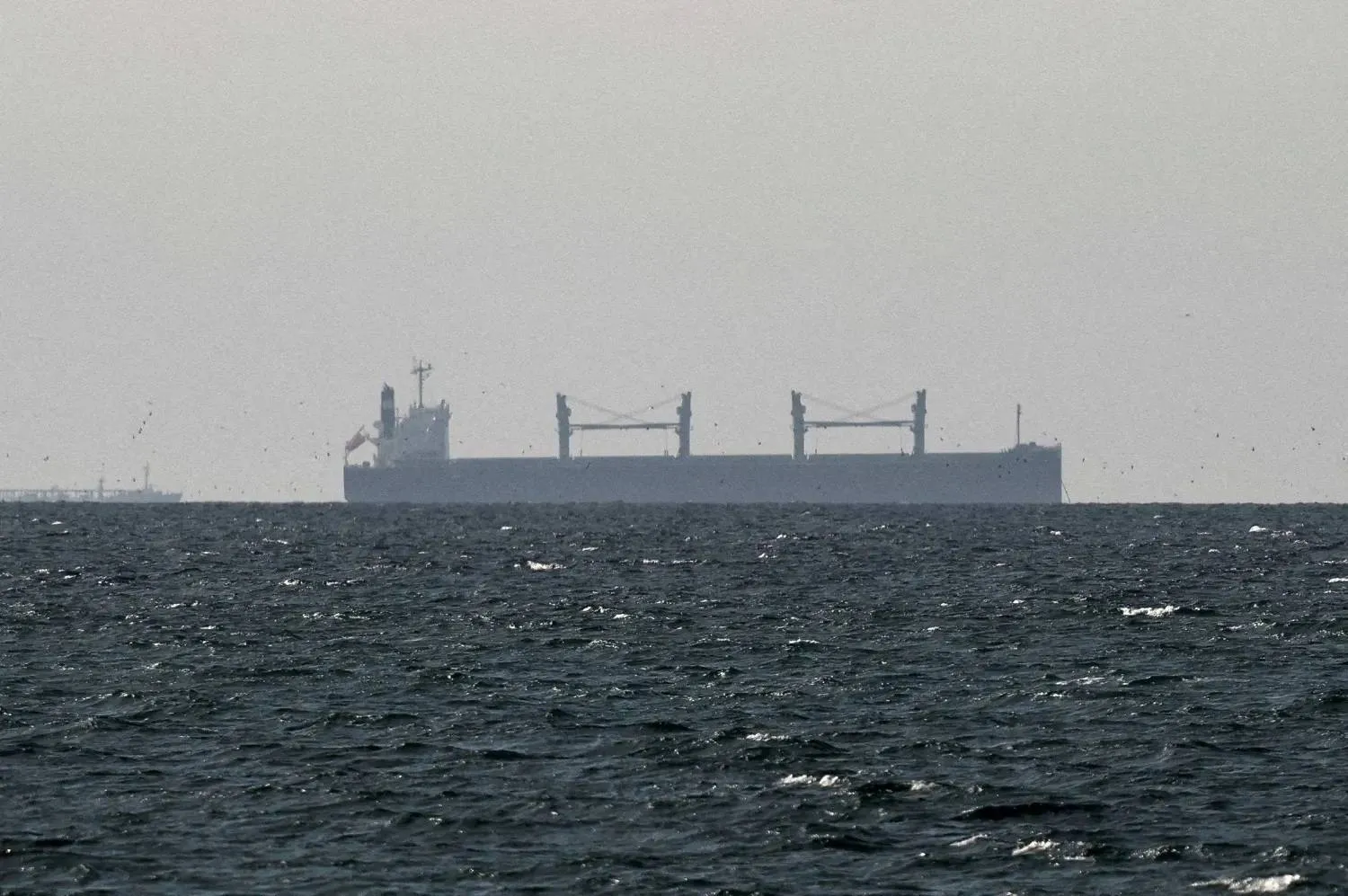

When senior officials from 40 countries met virtually this week to discuss how to bring shipping traffic back to the Strait of Hormuz, Italy’s foreign minister had a proposal. He urged them to establish a “humanitarian corridor” allowing safe passage for fertilizer and other crucial goods headed to impoverished nations.
The plan, described after the meeting by Italian officials, was one of several competing proposals from Europe and beyond that were meant to prevent the Iran war from causing widespread hunger. But it was not endorsed by the envoys on the call, and the meeting ended with no concrete plan to reopen the strait, militarily or otherwise, reported the New York Times.
European leaders are under pressure from US President Donald Trump to commit military assets, immediately, to end Iran’s blockage of the strait and tame a growing global energy and economic crisis. They have refused to meet his demands by sending warships now. Instead, they are hotly debating what to do to help unclog the vital shipping lane once the war ends.
But they are struggling to rally around a plan of action.
That partly reflects the slow gears of diplomacy in Europe and the sheer number of nations, including Gulf states, that are invested in safeguarding the strait once the war ends. Many nations involved in the talks, including Italy and Germany, have insisted that any international effort be blessed by the United Nations, which could slow action further. Military leaders will take up the issue in discussions next week.
More than anything, the struggle reflects how difficult it could be to actually secure the strait under a fragile peace — for Europe or for anyone else. None of the options available to Europe, the Gulf states and other countries look foolproof, even under the assumption that the major fighting will have stopped.
Naval escorts
French officials, including President Emmanuel Macron, have repeatedly raised the possibility that French naval vessels could help escort merchant ships through the strait after the war ends.
American officials have pushed for Europeans and other allies, like Japan, to escort ships sailing under their own countries’ flags.
Naval escorts are expensive. Also, their air defense systems alone might not be sufficient to stop some types of attacks, like drone strikes, should Iran choose to start firing again.
“What does the world expect, what does Donald Trump expect, from let’s say a handful or two handfuls of European frigates there in the Strait of Hormuz,” Defense Minister Boris Pistorius of Germany said last month, “to achieve what the powerful American Navy cannot manage there alone?”
Sweep for mines
German and Belgian officials, among others, say they are prepared to send minesweepers to clear the strait of explosives after the war.
Western military leaders aren’t convinced that Iran has actually mined the strait, in part because some Iranian ships still pass through it. So while minesweepers might be deployed as part of a naval escort, they might not have much to do.
Help from above
Another option is sending fighter jets and drones to intercept any Iranian air assaults on ships. American officials have pushed Europe to do this.
It is quite expensive and still not guaranteed to work. Iran can attack ships with a single soldier in a speedboat, and if just a few attempts succeed, that could be enough to spook insurers and shipowners out of attempting passage.
Diplomacy
Another option are negotiations and economic leverage to pressure Iran to refrain from future attacks, and deploy a variety of military means to enforce that. This effort would go beyond Europe. On Thursday, the German foreign ministry called on China to use its influence with Iran “constructively” to help end the hostilities.
This option is expensive and still not guaranteed. Negotiations seem to have done little to stop the fighting. But this may be Europe’s best bet, for lack of a better one.
What if none of that works?
Iranian officials said this week that they would continue to control traffic through the strait after the war. They have already made plans to make ships pay tolls for passing through the strait, which is supposed to be an unfettered waterway under international law.
A continued blockage risks global economic disaster. Countries around the world rely on shipments through the strait for fuel and fertilizer, among other necessities.
In some regions, shortages loom. In others, like Europe, high oil, gas and fertilizer prices have raised the specter of spiking inflation and cratering economic growth.
“The big threat right now is stagflation,” said Hanns Koenig, a managing director at Aurora Energy Research, a Berlin consultancy. “You’ve got higher prices, and they strangle the tiny growth we would have seen this year.”
*Jim Tankersley for the New York Times


