


Qualcomm to Supply Apple with 5G Chips until 2026 under New Deal

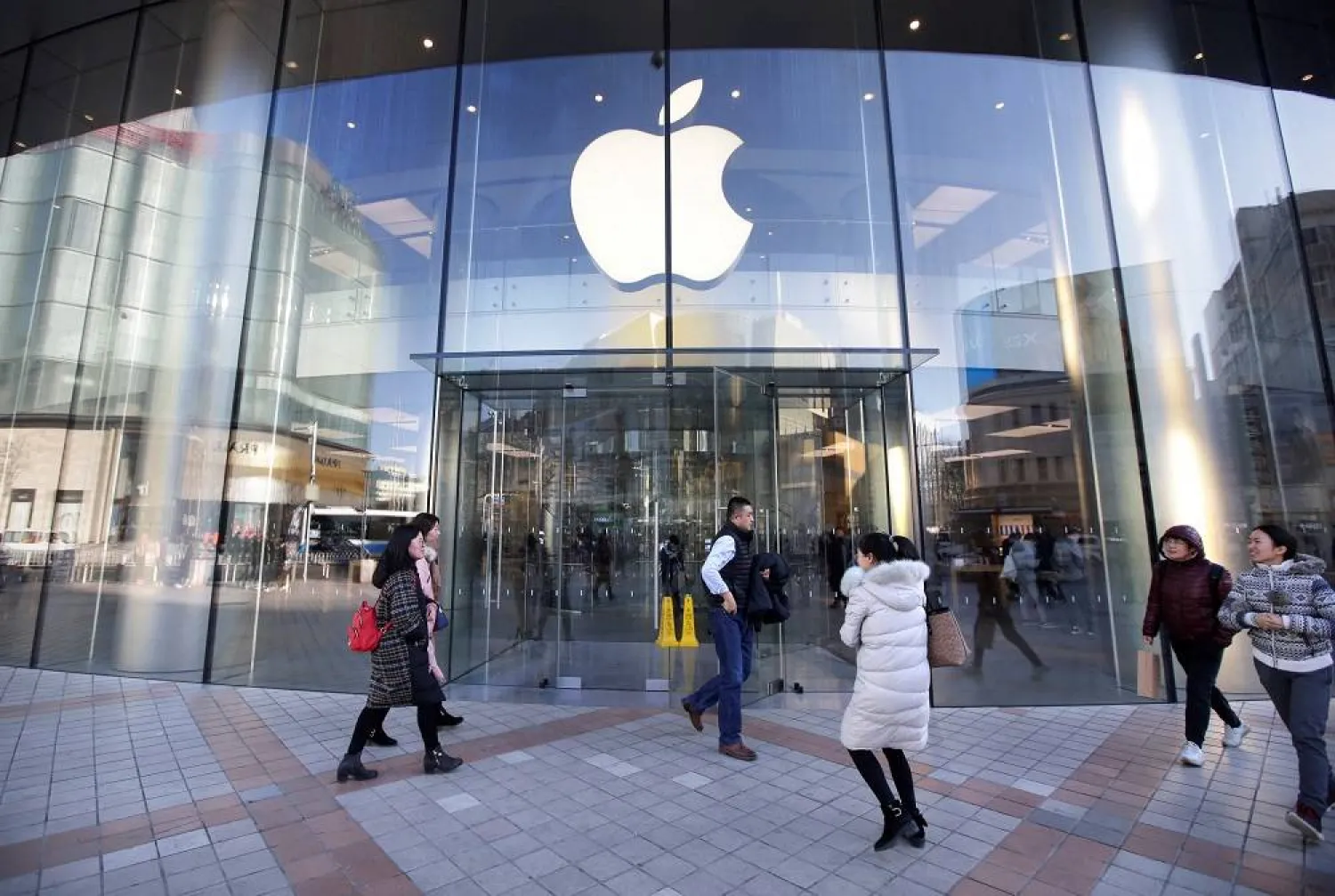
People walk outside an Apple store in Beijing, China December 12, 2018. (Reuters)
TT

Qualcomm to Supply Apple with 5G Chips until 2026 under New Deal

People walk outside an Apple store in Beijing, China December 12, 2018. (Reuters)

Qualcomm on Monday said it had signed a deal with Apple to supply 5G chips until at least 2026, at a time when the iPhone maker faces increased challenges in China and looks to reinforce its supply chains elsewhere.

Qualcomm shares were up 3.2% at $109.55 after markets opened. The company is the leading designer of what are known as modem chips that connect phones to mobile data networks. Apple shares were flat.

San Diego, California-based Qualcomm previously signed a chip supply deal with Apple in 2019, after the two companies settled a protracted legal battle.

That supply agreement ends this year, meaning that the iPhones that Apple is expected to announce Tuesday would be the last phone debut under that deal.

Under the accord announced Monday, Qualcomm said it will supply Apple with chips for phones that will come out each year until 2026. Qualcomm did not disclose the value of the deal, saying only that the terms are "similar" to its previous agreement.

Apple did not immediately respond to a request for comment.

In a research note on Aug. 3, UBS analysts estimated that Qualcomm sold $7.26 billion of chips to Apple in 2022.

Qualcomm also said a patent licensing deal it signed with Apple in 2019 remains in place. That deal expires in 2025, but the companies have an option to extend it for two years.

"At a time when Apple is running into increasing challenges in China, reinforcing its supply chains elsewhere is a priority, and it appears the company is rolling back or at least delaying plans to go at it alone in more areas with its own chip production," said Susannah Streeter, head of money and markets at Hargreaves Lansdown.

Apple is working on its own modem technology and spent $1 billion to buy Intel's modem unit in 2019. Apple has not said how quickly it plans to ramp up the use of its own chips.

Qualcomm on Monday said its financial projections will assume that only a fifth of Apple's iPhones will use its chips by 2026.

However, Qualcomm made a similar projection about its business with Apple in 2021 that turned out to be overly conservative, with iPhone 14 models released last year all using Qualcomm modems.

And last year, Qualcomm Chief Financial Officer Akash Palkhiwala updated his predictions for the 2023 iPhones that will be released this week, saying he expected the "vast majority" of them to include Qualcomm modems.



Intel Says Competition from Nvidia PC Chip a ‘Good Thing’

A sign is posted in front of Intel headquarters in Santa Clara, California, US, Aug. 1, 2024. (AFP)
TT

Intel Says Competition from Nvidia PC Chip a ‘Good Thing’

A sign is posted in front of Intel headquarters in Santa Clara, California, US, Aug. 1, 2024. (AFP)

Intel said Tuesday that competition in personal computer chips from hardware giant Nvidia as a "good thing" as artificial intelligence presents new business opportunities.

The comments come a day after Nvidia, the world's most valuable company, unveiled a powerful chip for Windows machines designed to run AI agents, tools that can carry out tasks for users.

The announcement from Nvidia is a challenge to legacy PC chipmakers including Intel and AMD, as well as Apple's laptop business.

"If you take a look at what they brought to market (Monday), I think it's a good thing," Alex Katouzian, general manager of Intel's client computing and physical AI group, told a news conference in Taipei.

"It shows the importance of how critical the PC is," he added.

"We welcome the competition, but I think we're going to do really well," he said, touting Intel's scale -- with "every segment covered" -- and the trust of its customer base.

"They want us to grow with them, there's new opportunities on the AI side," Katouzian said, calling the company's roadmap "super strong".

Shares in Intel took off late last year after Nvidia announced it would invest $5 billion in the firm.

And in April, the company smashed quarterly earnings expectations, in what could be a sign it is on a path to recovery.

Intel largely missed the smartphone boom and failed to develop competitive hardware for the AI era, allowing Asian manufacturers TSMC and Samsung to dominate the custom semiconductor market.

Most notably, Intel was blindsided by Nvidia's rise as the world's leading AI chip provider.

Nvidia's graphics processing units (GPUs), originally designed for gaming consoles, have become the essential building blocks of AI systems, with tech giants scrambling to secure them for their data servers and AI projects.

The heads of both companies are in Taipei this week for the major industry show Computex.

On Tuesday, Intel announced upgrades to its AI data center hardware offerings as well as new collaborations with supply chain partners such as Taiwan's Foxconn.

While several experts told AFP that Nvidia's competitors should be worried about its new PC chip for the AI era, the RTX Spark, others were more cautious.

"This move may create incremental pressure for Intel and Qualcomm; however, given the complexity and likely premium pricing, we don't expect significant competition with mainstream AI PCs," Bloomberg Intelligence analysts wrote.


Global Smartphone Market Faces Record Annual Decline as Chip Crunch Worsens

The iPhone 17 series on display at the Apple Store in New York City, US, September 19, 2025. (Reuters)
TT

Global Smartphone Market Faces Record Annual Decline as Chip Crunch Worsens

The iPhone 17 series on display at the Apple Store in New York City, US, September 19, 2025. (Reuters)

The global smartphone market is heading for its steepest annual contraction on record, with shipments projected to slump by 13.9% this year to 1.08 billion units, Counterpoint Research said on Monday, citing a worsening shortage of memory chips.

The forecast is a downgrade from the 12.4% decline projected in February, with the squeeze in global chip supply exacerbated by the Iran war.

IMPACT MOST ACUTE AT BUDGET END OF MARKET

The impact is being felt most acutely in lower-end smartphones as ‌chipmakers shift ‌production capacity to AI-related chips, making entry-level devices less ‌economical ⁠to produce.

Global smartphone wholesale ⁠prices rose 14% in the first quarter while shipments fell 3.1% year on year. That trend is expected to continue as inventory built before the supply shock becomes depleted, with some models priced below $150 likely to disappear from the market.

"Smartphone makers in the low and mid-tier are caught between cost increases they cannot absorb and consumers with limited spending power," said Wang ⁠Yang, a principal analyst at Counterpoint, an independent research ‌company that publishes quarterly smartphone shipment data.

"The ‌question is no longer how to grow shipments or market share, but whether ‌to remain in the market at all."

The memory chip shortage ‌is the most severe supply-side disruption the smartphone industry has faced, Wang said, adding that manufacturers are unable to offset the impact through pricing or product changes.

PREMIUM END OF THE MARKET MORE RESILIENT

The premium segment has proven more resilient. Apple posted ‌record revenue for the first three months of the year, helped by customers upgrading to its iPhone ⁠17 series. ⁠Apple's 2026 shipments are expected to remain flat before rising 5% next year, Counterpoint projections show.

With more stable chip supply and stronger margins than many rivals, Apple is well placed to gain market share and could face less pressure to raise prices.

Samsung Electronics kept volumes steady in the first quarter and is expected by Counterpoint to register only a 4% decline in shipments over the full year, outperforming the wider market thanks to stable supply and a consistent product line-up.

Transsion, which is heavily exposed to the market for smartphones priced below $150, is forecast to suffer a 32% drop in shipments this year. Rivals Xiaomi and Honor, meanwhile, are projected to post full-year declines of 28% and 20% respectively, Counterpoint said.


Nvidia to Work with US, European Humanoid Robot Makers in Addition to China’s Unitree

A man shakes the hand of a Chinese G1 humanoid robot made by Unitree Robotics at a conference in Mumbai, India, May 22, 2026. (Reuters)
TT

Nvidia to Work with US, European Humanoid Robot Makers in Addition to China’s Unitree

A man shakes the hand of a Chinese G1 humanoid robot made by Unitree Robotics at a conference in Mumbai, India, May 22, 2026. (Reuters)

Nvidia ‌plans to work with humanoid robot makers in the US, Europe and South Korea in addition to China's Unitree to build robots for researchers, according to the AI chip company's executives.

After CEO Jensen Huang's keynote address in Taiwan on Monday ahead of the Computex trade show, Nvidia announced that the company is working with China's Unitree, a leading maker of humanoid robots, to provide a standardized version of Unitree's H2 robot that can be used by academic researchers.

The robot's body will come from ‌Unitree, its ‌hands will come from Singapore-headquartered Sharpa, and the ‌computing ⁠brains of the device ⁠will come from Nvidia. Nvidia said that researchers at Stanford University and the University of California San Diego, among others, plan to use the machines.

Unitree, whose dancing robots were the centerpiece of China's Spring Festival gala earlier this year, is pursuing a public listing in China.

But US lawmakers have alleged that ⁠Unitree has extensive ties to the Chinese government ‌and military and have introduced a ‌bill that would ban use of the firm's robots by ‌researchers who receive US government funding.

Nvidia executives told Reuters that ‌the company plans to pursue more efforts like the Unitree one with robotics firms outside China. They did not name the partners in the US, South Korea and Europe and spoke on condition of ‌anonymity as the plans are not public.

The Nvidia executives said the work with Unitree is ⁠aimed at improving ⁠the cybersecurity of the Unitree robots for researchers. For example, any software updates meant for the robot's subsystems will have to flow through Nvidia's chip, where the code can be checked for authenticity.

By directly integrating Nvidia's "Blackwell" chips with Unitree's robot bodies, Nvidia, which plans to use the machines in its own research, will bring the same security features that it uses to protect data center servers, the executives said.

Those security technologies, known as secure boot and confidential computing, are aimed at ensuring the robots cannot run malicious code and that sensitive data cannot be moved off the robots without permission.