

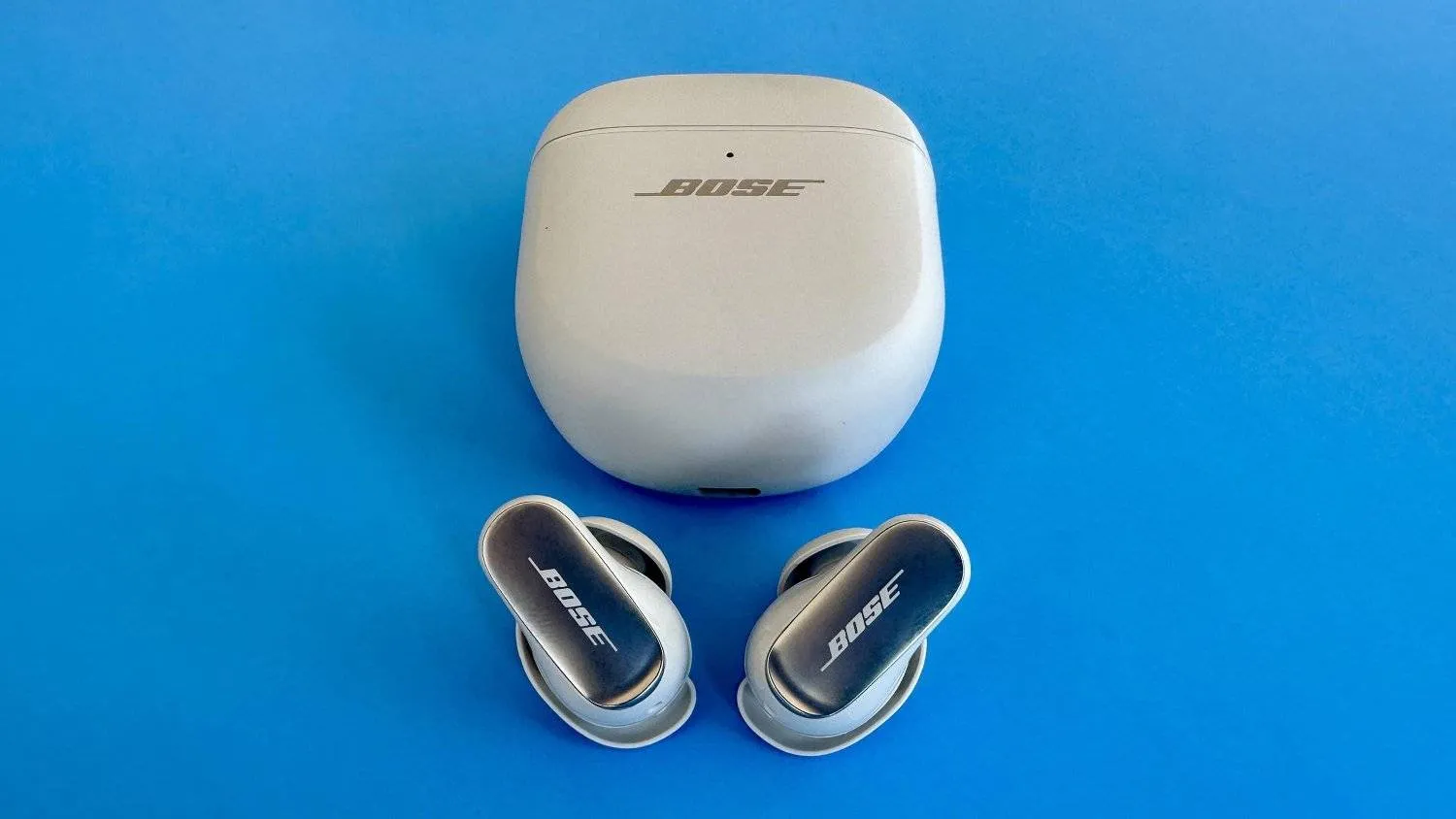

Best Wireless Headphones for 2024

QuietComfort Ultra Headphones
TT

Best Wireless Headphones for 2024

QuietComfort Ultra Headphones

When you're cutting the wire, you have a lot of features and wear styles to choose from. There are a few front-runners like the Bose QuietComfort Ultra Headphones, and AirPods Pro 2.

We test wireless headphones based on six key criteria: design, sound quality, noise-canceling performance, voice-calling performance, features, and value.

Here are our current wireless headphone favorites -- including some value picks.

Best new noise-canceling headphones

Bose QuietComfort Ultra Headphones

While Bose's new flagship QuietComfort Ultra Headphones may not be a huge upgrade over the company's Noise Cancelling 700 headphones, they feature a more premium design along with Bose's new Immersive Audio feature, which delivers some sound-quality enhancements. Along with excellent sound and great noise canceling, the QC Ultra Headphones are also superb for making calls, with top-notch background noise reduction.

Updated Apple noise-canceling wireless earbuds

Apple AirPods Pro 2 (USB-C)

Apple not only swapped in USB-C for Lightning connectivity in its new iPhone 15 models, but it made the switch with the AirPods Pro (second generation).

The new AirPods Pro 2 with MagSafe (USB-C) are nearly identical to their Lightning predecessor, delivering the same excellent sound, noise canceling and voice-calling performance. That said, they offer some other small upgrades, including additional dust resistance and a new acoustic architecture that allows for Lossless Audio with the Vision Pro, the wearable headset Apple released on Feb. 2 for $3,499. Is it possible that new acoustic architecture makes the buds sound subtly different with current devices like the iPhone? Maybe, maybe not. Either way, the AirPods Pro 2 (USB-C) are easy to recommend to Apple users despite their high price.

Best budget noise-canceling wireless earbuds

Earfun Air Pro 3

Earfun has put out a series of wireless earbuds over the last couple of years with one important commonality: They're very good values, made more so by frequent discounts. The company's new-for-2023 Earfun Air Pro 3 earbuds feature the latest Qualcomm QCC3071 system-on-a-chip with AptX Adaptive for Android and other devices that support the new LE Audio standard and LC3 audio codec, which is superior to the SBC codec (they also support AAC for Apple devices).

Lightweight and comfortable to wear -- I got a good seal with the largest ear tip size -- these aren't a huge upgrade over the Earfun Air S, but they are better. They have slightly larger wool-composite drivers (11mm versus 10mm), slightly improved noise canceling and better battery life (up to 7 hours with noise canceling on, according to Earfun).

CNET


Nvidia, Joining Big Tech Deal Spree, to License Groq Technology, Hire Executives

The Nvidia logo is seen on a graphic card package in this illustration created on August 19, 2025. (Reuters)
TT

Nvidia, Joining Big Tech Deal Spree, to License Groq Technology, Hire Executives

The Nvidia logo is seen on a graphic card package in this illustration created on August 19, 2025. (Reuters)

Nvidia has agreed to license chip technology from startup Groq and hire away its CEO, a veteran of Alphabet's Google, Groq said in a blog post on Wednesday.

The deal follows a familiar pattern in recent years where the world's biggest technology firms pay large sums in deals with promising startups to take their technology and talent but stop short of formally acquiring the target.

Groq specializes in what is known as inference, where artificial intelligence models that have already been trained respond to requests from users. While Nvidia dominates the market for training AI models, it faces much more competition in inference, where traditional rivals such as Advanced Micro Devices have aimed ‌to challenge it ‌as well as startups such as Groq and Cerebras Systems.

Nvidia ‌has ⁠agreed to a "non-exclusive" ‌license to Groq's technology, Groq said. It said its founder Jonathan Ross, who helped Google start its AI chip program, as well as Groq President Sunny Madra and other members of its engineering team, will join Nvidia.

A person close to Nvidia confirmed the licensing agreement.

Groq did not disclose financial details of the deal. CNBC reported that Nvidia had agreed to acquire Groq for $20 billion in cash, but neither Nvidia nor Groq commented on the report. Groq said in its blog post that it will continue to ⁠operate as an independent company with Simon Edwards as CEO and that its cloud business will continue operating.

In similar recent deals, Microsoft's ‌top AI executive came through a $650 million deal with a startup ‍that was billed as a licensing fee, and ‍Meta spent $15 billion to hire Scale AI's CEO without acquiring the entire firm. Amazon hired ‍away founders from Adept AI, and Nvidia did a similar deal this year. The deals have faced scrutiny by regulators, though none has yet been unwound.

"Antitrust would seem to be the primary risk here, though structuring the deal as a non-exclusive license may keep the fiction of competition alive (even as Groq’s leadership and, we would presume, technical talent move over to Nvidia)," Bernstein analyst Stacy Rasgon wrote in a note to clients on Wednesday after Groq's announcement. And Nvidia CEO Jensen Huang's "relationship with ⁠the Trump administration appears among the strongest of the key US tech companies."

Groq more than doubled its valuation to $6.9 billion from $2.8 billion in August last year, following a $750 million funding round in September.

Groq is one of a number of upstarts that do not use external high-bandwidth memory chips, freeing them from the memory crunch affecting the global chip industry. The approach, which uses a form of on-chip memory called SRAM, helps speed up interactions with chatbots and other AI models but also limits the size of the model that can be served.

Groq's primary rival in the approach is Cerebras Systems, which Reuters this month reported plans to go public as soon as next year. Groq and Cerebras have signed large deals in the Middle East.

Nvidia's Huang spent much of his biggest keynote speech of 2025 arguing that ‌Nvidia would be able to maintain its lead as AI markets shift from training to inference.


Italy Watchdog Orders Meta to Halt WhatsApp Terms Barring Rival AI Chatbots

The logo of Meta is seen at Porte de Versailles exhibition center in Paris, France, June 11, 2025. (Reuters)
TT

Italy Watchdog Orders Meta to Halt WhatsApp Terms Barring Rival AI Chatbots

The logo of Meta is seen at Porte de Versailles exhibition center in Paris, France, June 11, 2025. (Reuters)

Italy's antitrust authority (AGCM) on Wednesday ordered Meta Platforms to suspend contractual terms ​that could shut rival AI chatbots out of WhatsApp, as it investigates the US tech group for suspected abuse of a dominant position.

A spokesperson for Meta called the decision "fundamentally flawed," and said the emergence of AI chatbots "put a strain on our systems that ‌they were ‌not designed to support".

"We ‌will ⁠appeal," ​the ‌spokesperson added.

The move is the latest in a string by European regulators against Big Tech firms, as the EU seeks to balance support for the sector with efforts to curb its expanding influence.

Meta's conduct appeared capable of restricting "output, market ⁠access or technical development in the AI chatbot services market", ‌potentially harming consumers, AGCM ‍said.

In July, the ‍Italian regulator opened the investigation into Meta over ‍the suspected abuse of a dominant position related to WhatsApp. It widened the probe in November to cover updated terms for the messaging app's business ​platform.

"These contractual conditions completely exclude Meta AI's competitors in the AI chatbot services ⁠market from the WhatsApp platform," the watchdog said.

EU antitrust regulators launched a parallel investigation into Meta last month over the same allegations.

Europe's tough stance - a marked contrast to more lenient US regulation - has sparked industry pushback, particularly by US tech titans, and led to criticism from the administration of US President Donald Trump.

The Italian watchdog said it was coordinating with the European ‌Commission to ensure Meta's conduct was addressed "in the most effective manner".


Amazon Says Blocked 1,800 North Koreans from Applying for Jobs

Amazon logo (Reuters)
TT

Amazon Says Blocked 1,800 North Koreans from Applying for Jobs

Amazon logo (Reuters)

US tech giant Amazon said it has blocked over 1,800 North Koreans from joining the company, as Pyongyang sends large numbers of IT workers overseas to earn and launder funds.

In a post on LinkedIn, Amazon's Chief Security Officer Stephen Schmidt said last week that North Korean workers had been "attempting to secure remote IT jobs with companies worldwide, particularly in the US".

He said the firm had seen nearly a one-third rise in applications by North Koreans in the past year, reported AFP.

The North Koreans typically use "laptop farms" -- a computer in the United States operated remotely from outside the country, he said.

He warned the problem wasn't specific to Amazon and "is likely happening at scale across the industry".

Tell-tale signs of North Korean workers, Schmidt said, included wrongly formatted phone numbers and dodgy academic credentials.

In July, a woman in Arizona was sentenced to more than eight years in prison for running a laptop farm helping North Korean IT workers secure remote jobs at more than 300 US companies.

The scheme generated more than $17 million in revenue for her and North Korea, officials said.

Last year, Seoul's intelligence agency warned that North Korean operatives had used LinkedIn to pose as recruiters and approach South Koreans working at defense firms to obtain information on their technologies.

"North Korea is actively training cyber personnel and infiltrating key locations worldwide," Hong Min, an analyst at the Korea Institute for National Unification, told AFP.

"Given Amazon's business nature, the motive seems largely economic, with a high likelihood that the operation was planned to steal financial assets," he added.

North Korea's cyber-warfare program dates back to at least the mid-1990s.

It has since grown into a 6,000-strong cyber unit known as Bureau 121, which operates from several countries, according to a 2020 US military report.

In November, Washington announced sanctions on eight individuals accused of being "state-sponsored hackers", whose illicit operations were conducted "to fund the regime's nuclear weapons program" by stealing and laundering money.

The US Department of the Treasury has accused North Korea-affiliated cybercriminals of stealing over $3 billion over the past three years, primarily in cryptocurrency.
