


Blistering Barnacles! AI Takes on Europe's Cartoon Heroes 

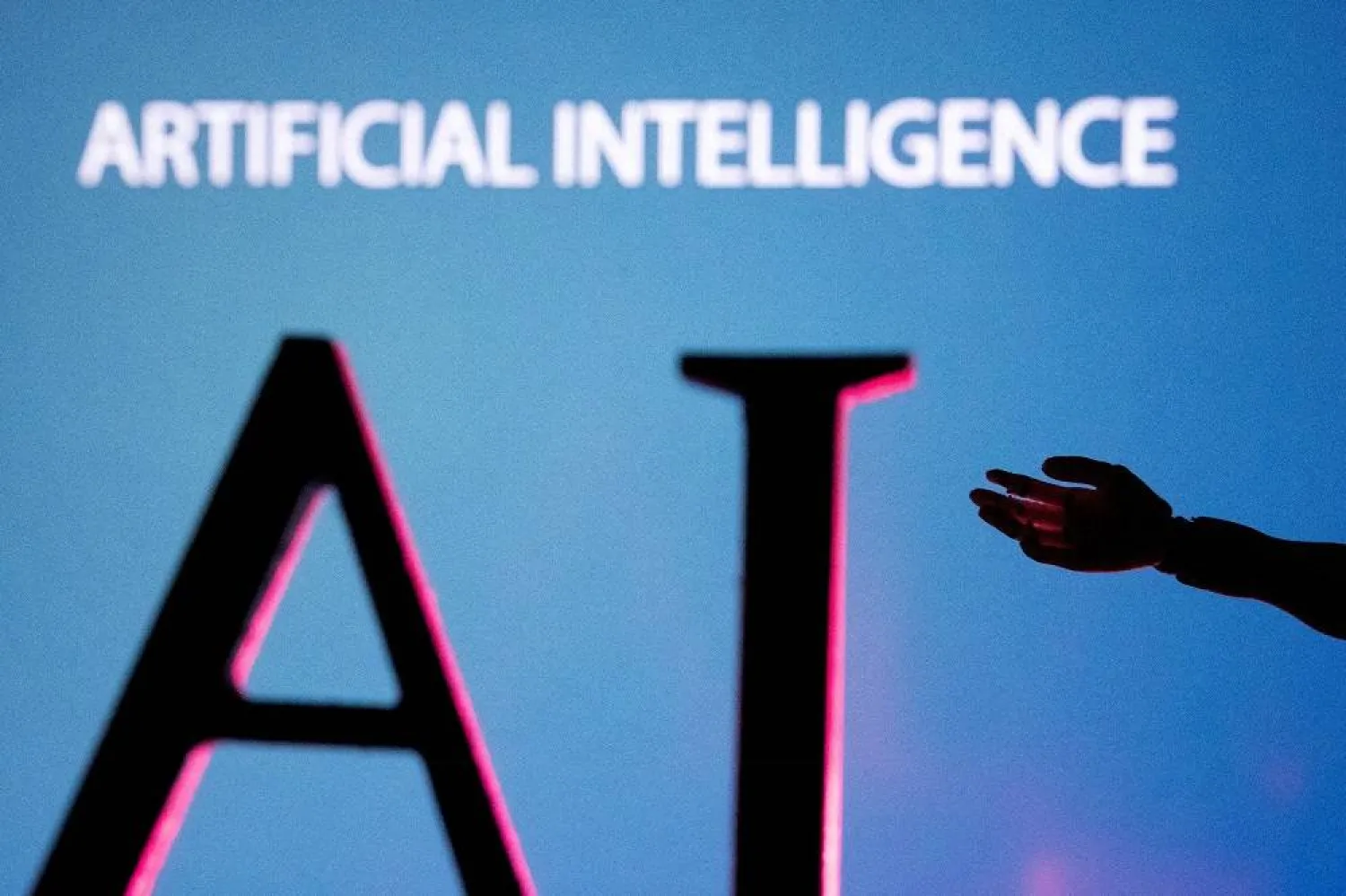
AI (Artificial Intelligence) letters and robot hand miniature in this illustration taken, June 23, 2023. (Reuters)
TT

Blistering Barnacles! AI Takes on Europe's Cartoon Heroes 

AI (Artificial Intelligence) letters and robot hand miniature in this illustration taken, June 23, 2023. (Reuters)

Home to animated heroes from Tintin to the Smurfs, Brussels is proud to display its cartoon heritage in mammoth murals that tower over the city's stately streets. But all is not well in the self-declared capital of comics.

In an industry where animators routinely depict epic battles between super-heroes and arch-villains, European cartoon artists are now in a real-life fight of their own, fending off a new, faceless adversary: artificial intelligence (AI).

AI-generated art currently operates in a legal grey area, ensuring novel intellectual property disputes in what is a fast-growing and ever-changing field.

Copyright laws in the European Union do not explicitly cover AI-generated art, leaving some artists wondering if AI will help or hinder creativity and throwing up the thorny question of whether low-cost AI tools will eventually replace human artists.

LITIGATE OR LICENCE

While artists spend years honing their skills, generative AI tools, such as MidJourney, use a machine-learning algorithm - trained on artists' images - to generate pictures in minutes.

This has triggered a "complete rejection" of AI in the European comic-book industry, according to Gauthier van Meerbeeck, editorial director at Le Lombard.

His firm is publisher of the legendary adventures of Tintin, an intrepid boy-reporter who is now almost a century old.

Created by Herge, Tintin became known for his blond quiff, baggy plus fours and trusty sidekick, Snowy the dog, and is considered an icon in what is now a global industry.

"This art is generated by stealing from artists. So morally I could never get involved in that," said van Meerbeeck.

AI IN THE DOCK

Across the Atlantic, Disney sparked controversy in June 2023 by using AI-generated images in Marvel's "Secret Invasion", and the boom in generative AI has spawned a flurry of US lawsuits.

Prominent tech companies from Microsoft-backed OpenAI to Meta Platforms, have been hit with copyright cases by artists who say AI profited from their work without permission or compensation.

European comic book publishing houses are gearing up for litigation when new EU rules under the AI act kick in mid-2025, forcing tech firms to be transparent about training inputs and opening them up to potential copyright lawsuits.

"It's huge for publishers," Quentin Deschandelliers, legal advisor at the Federation of European Publishers, told the Thomson Reuters Foundation, explaining that if you want to litigate you need to "know what is under the hood".

He said the incoming law may push tech firms towards licensing agreements to compensate artists if their work is used to train a generative AI model.

Amid growing scrutiny over copyright, several big tech companies that trained their AI using others' output have already signed content-licensing deals with media outlets, such as OpenAI with the Financial Times and Google with NewsCorp.

However, some publishers and authors are afraid of "giving away the keys to the kingdom", explained Deschandelliers, over fears of AI-generated works flooding the markets.

ART, SOUL AND BOTS

Courtroom battles aside, artists are also wondering whether to harness or reject the new tools.

Belgian comic book artist's Marnix Verduyn, who goes by the pseudonym NIX, describes himself as a computer engineer who "accidentally became a comic book artist". He chose to train a generative algorithm on his own comics, joking that he had a fantasy of replacing himself to spend more time at the beach.

But his fellow comic artists didn't find it so funny, especially when the generative AI model Dall-E came out in 2021; it was a watershed moment.

"It was a shock how powerful it was," he told the Thomson Reuters Foundation. "That's when I thought there's a lot of people who are not going to have jobs in the future."

In Europe, the cultural sector employed 7.7 million people in 2022, while its net turnover was about 448 billion euros ($481.51 billion)in 2021, according to European Commission business statistics.

NIX believes his use of AI - taking on low-skilled, repetitive tasks - is "gently disruptive" and necessary to keep up with competition from Japanese and US comic-book giants.

But recent art graduates are worked up over entry-level jobs they might once have filled now being filled by machines.

"It's cheap, fast, no humans needed, and it kills any kind of artistic endeavor in the industry," Sarah Vanderhaegen told the Thomson Reuters Foundation.

The 24-year-old Belgian described how a brush with AI during an internship had left her crushed, forcing her to reconsider options - and pivoting her to an archeology degree.

Now working on a comic book in her spare time, she sees AI as a bogus short-cut powered by an algorithm that can never hope to match an artist's ability to translate emotions onto a page.

A point where artists and publishers agree.

"AI-generated images, I can spot them straight away," noted van Meerbeeck, who thinks comics are safe for now, as storyline, text and images remain too complex for the current crop of generative AI to create.

For NIX the human remains the boss, AI - a mere tool.

"It's just a cocktail of ideas stolen from somebody. I see the mathematics (of AI), so there's no soul in the mathematics."

Swiss Interior Minister Open to Social Media Ban for Children

A teenager poses holding a mobile phone displaying a message from TikTok as law banning social media for users under 16 in Australia takes effect, in Sydney, Australia, December 10, 2025. (Reuters)
TT

Swiss Interior Minister Open to Social Media Ban for Children

A teenager poses holding a mobile phone displaying a message from TikTok as law banning social media for users under 16 in Australia takes effect, in Sydney, Australia, December 10, 2025. (Reuters)

Switzerland must do more to shield children from social media risks, Interior Minister Elisabeth Baume-Schneider was quoted as saying on Sunday, signaling she was open to a potential ban on the platforms for youngsters.

Following Australia's recent ban on social media for under-16s, Baume-Schneider told SonntagsBlick newspaper that Switzerland should examine similar measures.

"The debate in Australia and the ‌EU is ‌important. It must also ‌be ⁠conducted in Switzerland. ‌I am open to a social media ban," said the minister, a member of the center-left Social Democrats. "We must better protect our children."

She said authorities needed to look at what should be restricted, listing options ⁠such as banning social media use by children, ‌curbing harmful content, and addressing ‍algorithms that prey on ‍young people's vulnerabilities.

Detailed discussions will begin ‍in the new year, supported by a report on the issue, Baume-Schneider said, adding: "We mustn't forget social media platforms themselves: they must take responsibility for what children and young people consume."

Australia's ban has won praise ⁠from many parents and groups advocating for the welfare of children, and drawn criticism from major technology companies and defenders of free speech.

Earlier this month, the parliament of the Swiss canton of Fribourg voted to prohibit children from using mobile phones at school until they are about 15, the latest step taken at ‌a local level in Switzerland to curb their use in schools.


Google Warns Staff with US Visas against International Travel

FILE PHOTO: The Google logo is displayed during a press conference in Berlin, Germany, November 11, 2025. REUTERS/Lisi Niesner/File Photo
TT

Google Warns Staff with US Visas against International Travel

FILE PHOTO: The Google logo is displayed during a press conference in Berlin, Germany, November 11, 2025. REUTERS/Lisi Niesner/File Photo

Alphabet's Google has advised some employees on US visas to avoid international travel due to delays at embassies, Business Insider reported on Friday, citing an internal email.

The email, sent by the company's outside counsel BAL Immigration Law on Thursday, warned staff who need a visa ⁠stamp to re-enter the United States not to leave the country because visa processing times have lengthened, the report said.

Google did not immediately respond to a Reuters request for comment.

Some US embassies and consulates face visa ⁠appointment delays of up to 12 months, the memo said, warning that international travel will "risk an extended stay outside the US", according to the report.

The administration of President Donald Trump this month announced increased vetting of applicants for H-1B visas for highly skilled workers, including screening social media accounts.

The H-1B visa program, widely used by the US ⁠technology sector to hire skilled workers from India and China, has been under the spotlight after the Trump administration imposed a $100,000 fee for new applications this year.

In September, Google's parent company Alphabet had strongly advised its employees to avoid international travel and urged H-1B visa holders to remain in the US, according to an email seen by Reuters.


AI Boom Drives Data-Center Dealmaking to Record High, Says Report

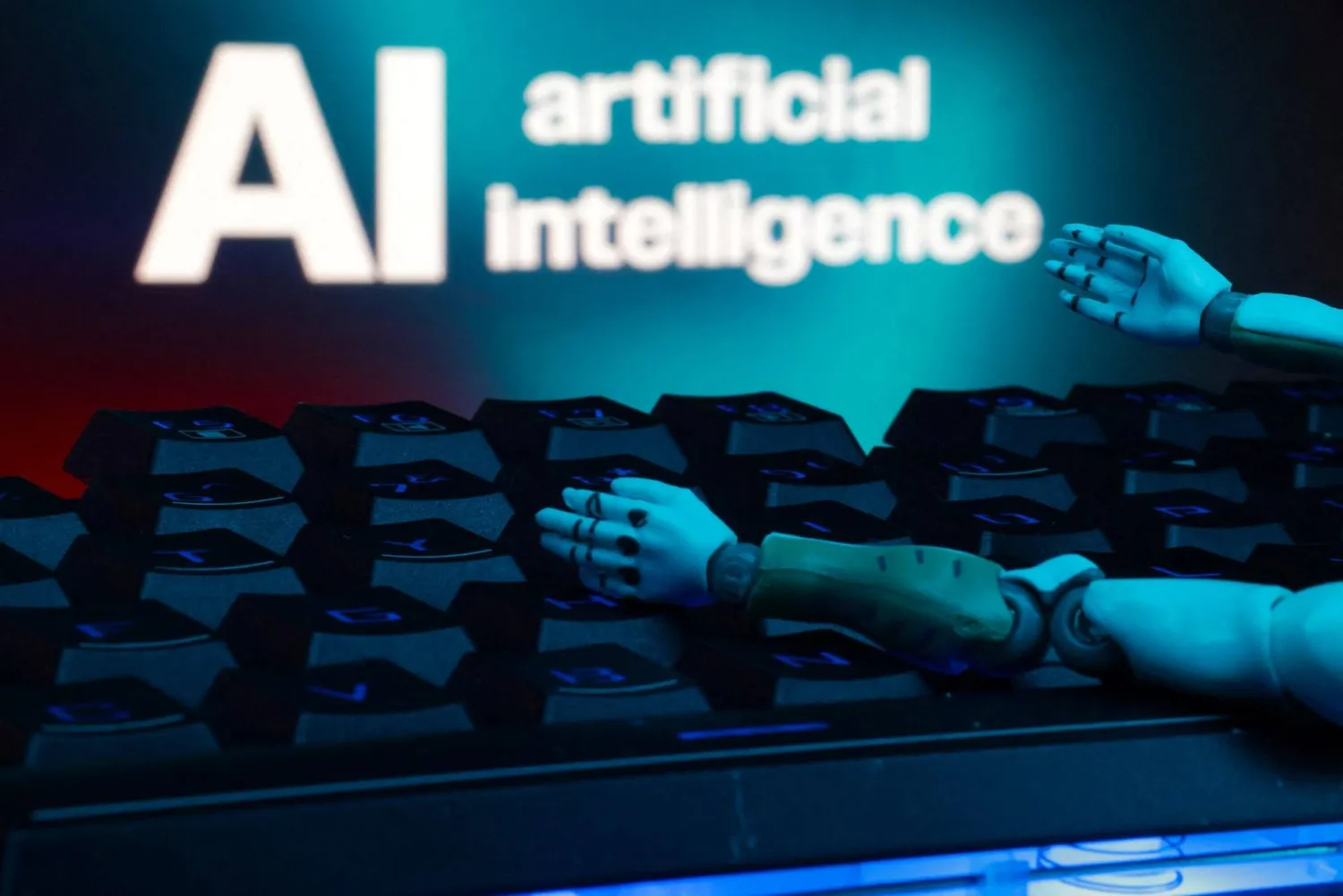
AI (Artificial Intelligence) letters and robot hand are placed on computer motherboard in this illustration created on June 23, 2023. REUTERS/Dado Ruvic/Illustration/File Photo
TT

AI Boom Drives Data-Center Dealmaking to Record High, Says Report

AI (Artificial Intelligence) letters and robot hand are placed on computer motherboard in this illustration created on June 23, 2023. REUTERS/Dado Ruvic/Illustration/File Photo

Global data-center dealmaking surged to a record high through November this year, driven by an insatiable demand for ​computing infrastructure to meet the boom in artificial intelligence usage.

Data from S&P Global Market Intelligence showed that there were more than 100 data center transactions during the period, with the total value sitting just under $61 billion.

WHY ‌IT'S IMPORTANT

Interest ‌in data centers ‌has ⁠swelled ​this ‌year as tech giants and AI hyperscalers have planned billions of dollars in spending to scale up infrastructure.

AI-related companies have powered much of the gains in US stocks this year, but concerns over lofty ⁠valuations and debt-fueled spending have also sparked worries ‌over how quickly corporates can ‍turn the investments ‍into profits.

BY THE NUMBERS

Including M&As, asset ‍sales and equity investments, data center investments hit nearly $61 billion through the end of November, already surpassing 2024's record high $60.81 billion.

Since ​2019, data center dealmaking in the US and Canada totaled about $160 billion, ⁠with Asia-Pacific reaching nearly $40 billion and Europe $24.2 billion.

GRAPHIC KEY QUOTE

"High interest comes from financial sponsors, which are attracted by the risk/reward profile of such assets. Private equity firms are eager buyers but are generally reluctant sellers, creating an environment where availability for sale of high-quality data center assets is scarce," said Iuri ‌Struta, TMT analyst at S&P Global Market Intelligence.
