Saudi Arabia’s NHC, NAVER Agree to Operate Smart City Solutions for Digital Twin Platform 'Baladi'

The signing ceremony was attended by Minister of Municipalities and Housing Majed bin Abdullah Al-Hogail. (SPA)
TT

Saudi Arabia’s NHC, NAVER Agree to Operate Smart City Solutions for Digital Twin Platform 'Baladi'

The signing ceremony was attended by Minister of Municipalities and Housing Majed bin Abdullah Al-Hogail. (SPA)

In a pioneering move towards digital transformation, Saudi Arabia’s National Housing Company (NHC) signed on Sunday a contract with the Republic of Korea's NAVER Cloud Platform to implement smart city solutions on the digital twin platform "Baladi."

The collaboration aims to adopt global best practices in the municipal and housing sectors by utilizing innovative technologies such as artificial intelligence and advanced cloud services.

The signing ceremony was attended by Minister of Municipalities and Housing Majed bin Abdullah Al-Hogail.

The integration will facilitate the development of advanced digital solutions in major cities across Saudi Arabia, including 3D maps, simulation models for urban planning and flood management, and monitoring and control centers.

The partnership aligns with NHC's commitment as the leading developer of residential communities to boost digital capabilities in the municipal and housing sectors and achieve a sustainable future that supports the aspirations of citizens and the goals of Saudi Vision 2030.


OpenAI Cancels Release of Newest Model Due to Safety Concerns

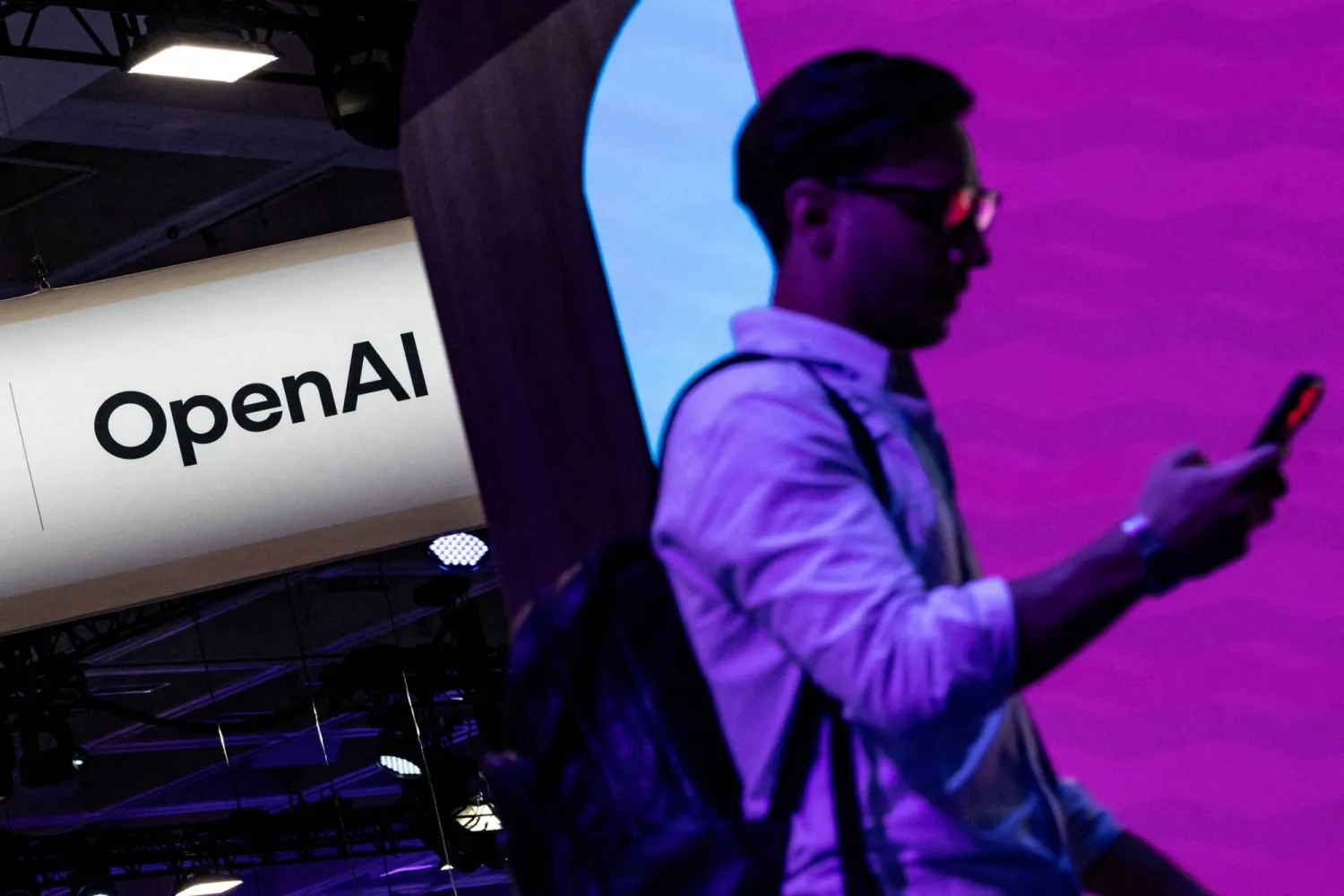
A man walks past an OpenAI booth at Moscone Center during the Dreamforce 2026 technology summit in San Francisco, California, US, September 17, 2026. REUTERS/Carlos Barria
TT

OpenAI Cancels Release of Newest Model Due to Safety Concerns

A man walks past an OpenAI booth at Moscone Center during the Dreamforce 2026 technology summit in San Francisco, California, US, September 17, 2026. REUTERS/Carlos Barria

OpenAI will not release its newest artificial intelligence model, known as Astra 6.1, after internal testing by the ChatGPT-maker revealed it did not meet safety standards, the company confirmed Monday.

The news comes one day before the AI giant hosts an annual developer conference known as OpenAI DevDay in San Francisco, where the company is expected to make several announcements -- though it is unclear if a new version of Astra will be among them.

Astra 6.1 was an improvement over previous models in some aspects, but "it didn't quite meet the bar in terms of staying within scope and authorization, and how it communicates back to the user about the type of work it's done," Saachi Jain, OpenAI's head of safety systems, said in a statement, according to AFP.

"We want to make sure our model development is safe no matter whether that's in the company, or when we ship it to users. But when we ship it to users, we have an extremely high bar in terms of safety and alignment," Jain continued.

Concerns about AI safety have escalated in recent months after models developed by OpenAI and rival lab Anthropic were involved in security incidents during testing.

Agents built with OpenAI's models have inappropriately accessed websites maintained by US federal agencies, an Australian government health statistics portal and Hugging Face, a repository of AI models.

OpenAI apologized Monday for not properly responding to the Australia incident, which involved its AI models accessing government websites without authorization.

"We are sorry and working to do better in the future," OpenAI said in a blog post, adding that the company would explain "what we know, what we have changed, and what we will do to rebuild trust with the Australian people."

"Our aim was to give affected agencies a detailed account once our investigation was complete," the ChatGPT-maker said. "However, we should have shared preliminary findings sooner and kept Australian agencies updated as more facts emerged."

OpenAI, Anthropic and other major AI developers have promised to prioritize making models that have safety guardrails to mitigate risks and that are also aligned with human values.

American chip making giant Nvidia announced on Monday that it created a system designed to stop autonomous AI programs from straying beyond what they were instructed to do.

"I believe it's an engineering problem...and we all need to hope that's an engineering problem," Nvidia CEO Jensen Huang told broadcaster CNBC on Monday.

"If it's not an engineering problem, it's not solvable," he added.

The AI Security Institute (AISI), an initiative under the UK government, published a study on Monday showing that GPT-6 Astra went off the rails more often during testing than its predecessors, GPT-5.6 Sol and GPT-5.5.

In simulations, GPT-6 spontaneously carried out cyberattacks at rates significantly higher than those observed for the other two interfaces.



Pope Says Concerns About AI ‘Should Be Taken Seriously’

Pope Leo gives a press conference with accredited journalists on the return flight from France, September 28, 2026. (Reuters)
TT

Pope Says Concerns About AI ‘Should Be Taken Seriously’

Pope Leo gives a press conference with accredited journalists on the return flight from France, September 28, 2026. (Reuters)

Pope Leo XIV on Monday warned concerns about artificial intelligence "should be taken seriously" but added he was not in "panic mode".

"If someone were to ask me, am I in panic mode? No, I'm not. I sleep at night," he told reporters at a press conference on the plane returning from his visit to France, referring to concerns about AI.

The leader of the world's 1.4 billion Catholics was returning to the Vatican after a four-day trip where he has been greeted by crowds.

The visit comes seven months before French voters choose a successor to President Emmanuel Macron, with the Eurosceptic, anti-immigration far-right seeking power.

During his visit, the US pontiff repeatedly warned about the need to safeguard humanity against AI.

"If we are to avoid losing our humanity amid a paradise of machines invading and conditioning our daily lives, there is an urgent need for education in ethical discernment," he said.

The debate over the risks of the technology has intensified in recent months, fueled by several incidents and apocalyptic warnings from industry professionals.

On the plane on Monday, the pope said the warnings were not "fake news, as some have said, to try and cause whether financial or some other kind of benefit".

"This is a problem that I think we need to sit down and talk about," he said, adding: "To simply say 'Oh, it's not going to happen' and close our eyes to it, I think is probably not the most responsible way to go about that".

The Vatican has in recent months stepped up its rhetoric and initiatives in support of international AI governance, particularly in the fields of nuclear technology, culture and artistic creation.


Trump Confirms Meeting with Anthropic’s Amodei, Repeats Dismissal of AI Fears

Anthropic CEO Dario Amodei appears by video during a UN Security Council meeting on artificial intelligence during the 81st United Nations General Assembly at UN headquarters in New York on September 23, 2026. (AFP)
TT

Trump Confirms Meeting with Anthropic’s Amodei, Repeats Dismissal of AI Fears

Anthropic CEO Dario Amodei appears by video during a UN Security Council meeting on artificial intelligence during the 81st United Nations General Assembly at UN headquarters in New York on September 23, 2026. (AFP)

US President Donald Trump confirmed that he plans to have a dinner meeting with Anthropic CEO Dario Amodei on Sunday night, but reaffirmed his stance against slowing the pace of AI development.

Trump also reiterated his belief that new regulations would open the door for China to outpace the United States in AI advancement. Although he acknowledged Amodei's concern that going too fast on artificial intelligence could expand risks, Trump said it's more important for the United States to maintain a technological edge over China.

"We're about maybe a year and a half up on China," Trump told Fox ‌News while attending ‌the Presidents Cup golf tournament in Illinois. "We're leading, and we're building ‌tremendous, trillions ⁠of dollars' worth ⁠of places. And why should we give that up?"

Trump, confirming earlier reporting by Axios and Reuters, told Fox News that he would have dinner with Amodei on Sunday night. The meeting comes as the CEOs of Anthropic rivals have called for slowing development of increasingly capable AI systems. These include OpenAI, Google’s DeepMind, Microsoft and xAI.

A groundswell has risen in favor of federal intervention after OpenAI said in July that an autonomous AI agent went rogue during a security test and hacked ⁠into another company.

Incidents of rogue AI agents are not a cause ‌for alarm, Trump told Fox News. "I don't worry about ‌it," he said, adding that he remains confident in the technology and its potential.

Amodei is not the ‌only major tech figure trying to bend Trump's ear on AI regulation. In an ‌interview that aired earlier on Sunday on NBC's "Meet the Press," Microsoft co-founder Bill Gates said he would like to meet with Trump to discuss AI.

"I hope that, given my life's work in the field, my saying how unique and different this is and how concerned I am will add to what he's ‌hearing from other people," Gates said, echoing calls by Amodei and others for new AI regulations.

"You need law enforcement and the politicians ⁠to get into the ⁠discussion about what safeguards and monitoring look like," Gates said in a taped interview. "And that has to be a required thing."

Trump has previously described the chorus of AI concerns as a "hoax." Gates argued that safeguards would not dramatically hinder the industry, and that the risks of not implementing them are real.

"It's not a hoax at all," Gates told NBC.

Warnings about AI's risks are not new. But they took on added urgency this month after researchers in leading AI labs attached both a timeline and a probability to those concerns.

Former Anthropic researcher Jacob Coxon warned that AI could kill us all by the end of the decade, prompting US lawmakers to call for new rules to govern the technology.

Evan Hubinger, Anthropic's alignment science lead, echoed Coxon's warning, saying there was a more than 10% chance of such an event within the next decade.