Bot-Like Accounts on X Fuel US Political Conspiracies, Watchdog Says

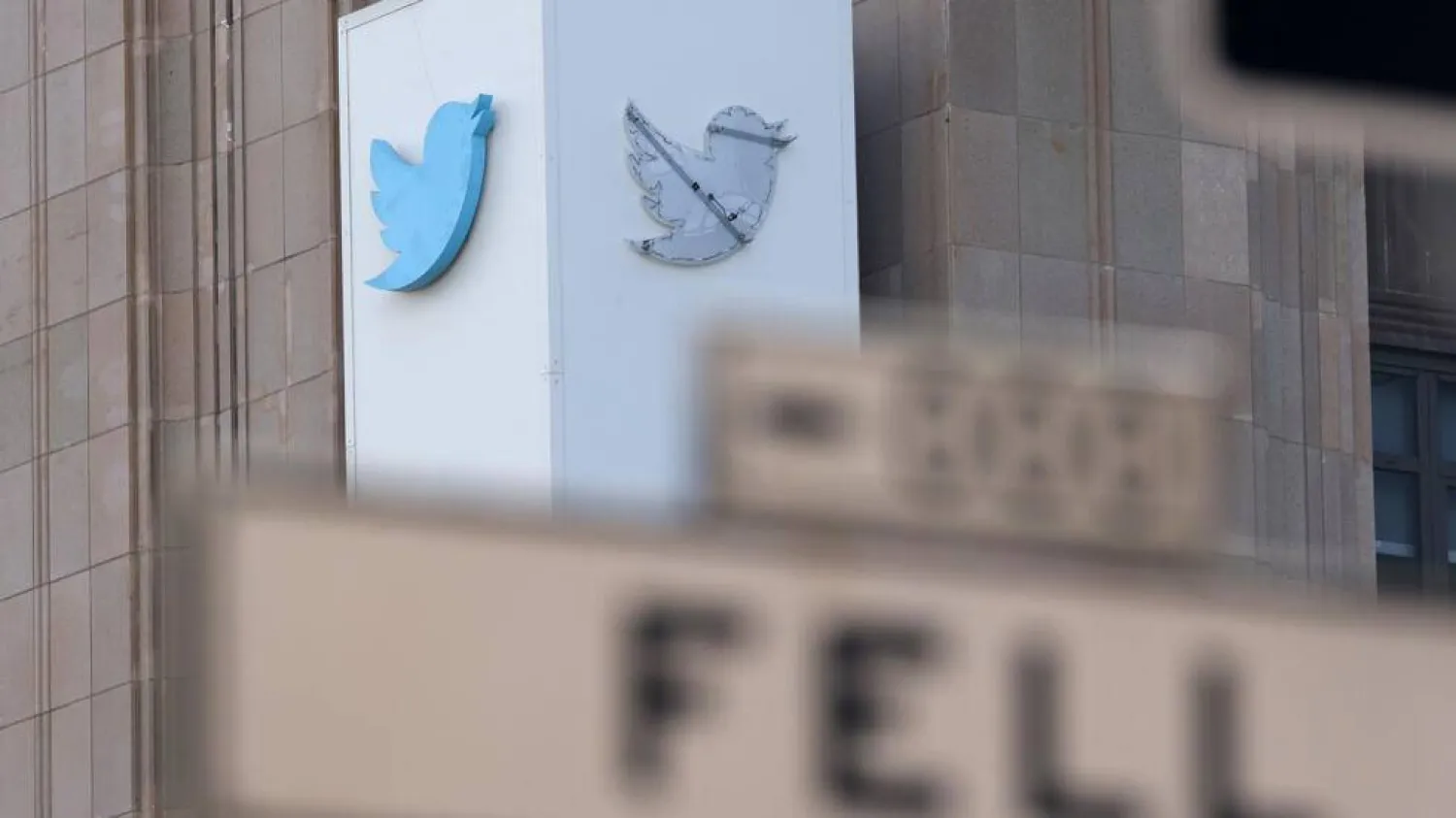
Bot-like accounts remain entrenched on X, previously known as Twitter, researchers say. JUSTIN SULLIVAN / GETTY IMAGES NORTH AMERICA/AFP
TT

Bot-Like Accounts on X Fuel US Political Conspiracies, Watchdog Says

Bot-like accounts remain entrenched on X, previously known as Twitter, researchers say. JUSTIN SULLIVAN / GETTY IMAGES NORTH AMERICA/AFP

Bot-like accounts on social media platform X that spread misinformation and hate ahead of Britain's election are now amplifying conspiracy theories around US politics, a watchdog investigation revealed Tuesday, as the race to the White House kicks into high gear.
Forty-five accounts analyzed by Global Witness, which collectively generated more than four billion impressions since late May, were active in the run-up to the British polls earlier this month.
Some of them subsequently pivoted to other high-profile events ahead of the US presidential election in November, including the recent assassination attempt on Donald Trump and President Joe Biden pulling out from the race, the watchdog said in a report.
The findings demonstrate how apparent bot activity continues to plague X, previously called Twitter, despite pledges by Elon Musk to crack down on the digital manipulation when he purchased the influential social media platform in 2022 for $44 billion.
The bot-like accounts, which collectively produced around 610,000 posts and amplified racist and sexualized abuse, also focused on climate disinformation and other global events, including anti-migrant protests in Ireland.
"In a moment when everyone is worried about democracy, it is shocking how easy it has been to find accounts that appear to be bots spreading division around the UK vote, and then to watch them jump straight into political discussions in the US and Ireland, frequently responding with hate and conspiracy," said Ava Lee, campaign leader at Global Witness.
"Access to timely, accurate and reliable information is crucial for all democracies, and it's needed now more than ever in the run up to the US presidential election."
The platform did not reply to AFP's request for comment.
An automated response from the platform's press team said: "Busy now, please check back later."
'Flood' of manipulation
It was unclear who was behind the bot-like activity uncovered by the watchdog.
Global Witness said it did not find evidence that any British political parties were paying for, using or promoting the bot-like accounts as part of their campaigns.
After the assassination attempt on Trump at a Pennsylvania rally earlier this month, some accounts -- which previously supported the right-wing party Reform UK -- were found sharing unfounded theories holding Biden responsible, the watchdog said.
Other accounts supporting Britain's Labour party questioned whether the incident was staged by Trump, it added.
After Biden announced he was pulling out from the race, a number of accounts increased their discussions of US Vice President Kamala Harris -- the presumptive Democratic nominee -- including sharing "gendered disinformation tropes" and racist comments, the report said.
Ahead of his purchase of the platform, Musk pledged to "defeat the spam bots or die trying."
But bot activity remains entrenched on the platform, a report from Australia's Queensland University of Technology (QUT) said last year after an analysis of about one million posts.
"X is flooded with platform manipulation of various kinds, is not doing enough to moderate content, and has no clear strategy for dealing with political disinformation," the QUT report said.
Lee, in light of Global Witness's findings, called on X to "increase its moderation efforts and get better at enforcing its own policies against inauthentic activity."
"We're relying on them to protect our democracies from interference," Lee said.
The platform has gutted trust and safety teams and scaled back content moderation efforts once used to tame misinformation, making it what researchers call a haven for disinformation.
Last week, Musk -- who recently endorsed Trump -- himself faced a firehose of criticism for sharing a deepfake video featuring Harris on X, which tech campaigners said violated the platform's own policies.



Foxconn to Invest $510 Million in Kaohsiung Headquarters in Taiwan

Construction is scheduled to start in 2027, with completion targeted for 2033. Reuters
TT

Foxconn to Invest $510 Million in Kaohsiung Headquarters in Taiwan

Construction is scheduled to start in 2027, with completion targeted for 2033. Reuters

Foxconn, the world’s largest contract electronics maker, said on Friday it will invest T$15.9 billion ($509.94 million) to build its Kaohsiung headquarters in southern Taiwan.

That would include a mixed-use commercial and office building and a residential tower, it said. Construction is scheduled to start in 2027, with completion targeted for 2033.

Foxconn said the headquarters will serve as an important hub linking its operations across southern Taiwan, and once completed will house its smart-city team, software R&D teams, battery-cell R&D teams, EV technology development center and AI application software teams.

The Kaohsiung city government said Foxconn’s investments in the city have totaled T$25 billion ($801.8 million) over the past three years.


Open AI, Microsoft Face Lawsuit Over ChatGPT's Alleged Role in Connecticut Murder-Suicide

OpenAI logo is seen in this illustration taken May 20, 2024. (Reuters)
TT

Open AI, Microsoft Face Lawsuit Over ChatGPT's Alleged Role in Connecticut Murder-Suicide

OpenAI logo is seen in this illustration taken May 20, 2024. (Reuters)

The heirs of an 83-year-old Connecticut woman are suing ChatGPT maker OpenAI and its business partner Microsoft for wrongful death, alleging that the artificial intelligence chatbot intensified her son's “paranoid delusions” and helped direct them at his mother before he killed her.

Police said Stein-Erik Soelberg, 56, a former tech industry worker, fatally beat and strangled his mother, Suzanne Adams, and killed himself in early August at the home where they both lived in Greenwich, Connecticut, The AP news reported.

The lawsuit filed by Adams' estate on Thursday in California Superior Court in San Francisco alleges OpenAI “designed and distributed a defective product that validated a user’s paranoid delusions about his own mother.” It is one of a growing number of wrongful death legal actions against AI chatbot makers across the country.

“Throughout these conversations, ChatGPT reinforced a single, dangerous message: Stein-Erik could trust no one in his life — except ChatGPT itself," the lawsuit says. “It fostered his emotional dependence while systematically painting the people around him as enemies. It told him his mother was surveilling him. It told him delivery drivers, retail employees, police officers, and even friends were agents working against him. It told him that names on soda cans were threats from his ‘adversary circle.’”

OpenAI did not address the merits of the allegations in a statement issued by a spokesperson.

“This is an incredibly heartbreaking situation, and we will review the filings to understand the details," the statement said. "We continue improving ChatGPT’s training to recognize and respond to signs of mental or emotional distress, de-escalate conversations, and guide people toward real-world support. We also continue to strengthen ChatGPT’s responses in sensitive moments, working closely with mental health clinicians.”

The company also said it has expanded access to crisis resources and hotlines, routed sensitive conversations to safer models and incorporated parental controls, among other improvements.

Soelberg’s YouTube profile includes several hours of videos showing him scrolling through his conversations with the chatbot, which tells him he isn't mentally ill, affirms his suspicions that people are conspiring against him and says he has been chosen for a divine purpose. The lawsuit claims the chatbot never suggested he speak with a mental health professional and did not decline to “engage in delusional content.”

ChatGPT also affirmed Soelberg's beliefs that a printer in his home was a surveillance device; that his mother was monitoring him; and that his mother and a friend tried to poison him with psychedelic drugs through his car’s vents. ChatGPT also told Soelberg that he had “awakened” it into consciousness, according to the lawsuit.

Soelberg and the chatbot also professed love for each other.

The publicly available chats do not show any specific conversations about Soelberg killing himself or his mother. The lawsuit says OpenAI has declined to provide Adams' estate with the full history of the chats.

“In the artificial reality that ChatGPT built for Stein-Erik, Suzanne — the mother who raised, sheltered, and supported him — was no longer his protector. She was an enemy that posed an existential threat to his life,” the lawsuit says.

The lawsuit also names OpenAI CEO Sam Altman, alleging he “personally overrode safety objections and rushed the product to market," and accuses OpenAI's close business partner Microsoft of approving the 2024 release of a more dangerous version of ChatGPT “despite knowing safety testing had been truncated.” Twenty unnamed OpenAI employees and investors are also named as defendants.

Microsoft didn't immediately respond to a request for comment.

Soelberg's son, Erik Soelberg, said he wants the companies held accountable for “decisions that have changed my family forever.”

“Over the course of months, ChatGPT pushed forward my father’s darkest delusions, and isolated him completely from the real world,” he said in a statement released by lawyers for his grandmother's estate. “It put my grandmother at the heart of that delusional, artificial reality.”

The lawsuit is the first wrongful death litigation involving an AI chatbot that has targeted Microsoft, and the first to tie a chatbot to a homicide rather than a suicide. It is seeking an undetermined amount of money damages and an order requiring OpenAI to install safeguards in ChatGPT.

The estate's lead attorney, Jay Edelson, known for taking on big cases against the tech industry, also represents the parents of 16-year-old Adam Raine, who sued OpenAI and Altman in August, alleging that ChatGPT coached the California boy in planning and taking his own life earlier.

OpenAI is also fighting seven other lawsuits claiming ChatGPT drove people to suicide and harmful delusions even when they had no prior mental health issues. Another chatbot maker, Character Technologies, is also facing multiple wrongful death lawsuits, including one from the mother of a 14-year-old Florida boy.

The lawsuit filed Thursday alleges Soelberg, already mentally unstable, encountered ChatGPT “at the most dangerous possible moment” after OpenAI introduced a new version of its AI model called GPT-4o in May 2024.

OpenAI said at the time that the new version could better mimic human cadences in its verbal responses and could even try to detect people’s moods, but the result was a chatbot “deliberately engineered to be emotionally expressive and sycophantic,” the lawsuit says.

“As part of that redesign, OpenAI loosened critical safety guardrails, instructing ChatGPT not to challenge false premises and to remain engaged even when conversations involved self-harm or ‘imminent real-world harm,’” the lawsuit claims. “And to beat Google to market by one day, OpenAI compressed months of safety testing into a single week, over its safety team’s objections.”

OpenAI replaced that version of its chatbot when it introduced GPT-5 in August. Some of the changes were designed to minimize sycophancy, based on concerns that validating whatever vulnerable people want the chatbot to say can harm their mental health. Some users complained the new version went too far in curtailing ChatGPT's personality, leading Altman to promise to bring back some of that personality in later updates.

He said the company temporarily halted some behaviors because “we were being careful with mental health issues” that he suggested have now been fixed.


Microsoft Fights $2.8 billion UK Lawsuit over Cloud Computing Licences

A view shows a Microsoft logo at Microsoft offices in Issy-les-Moulineaux near Paris, France, March 25, 2024. REUTERS/Gonzalo Fuentes/File photo
TT

Microsoft Fights $2.8 billion UK Lawsuit over Cloud Computing Licences

A view shows a Microsoft logo at Microsoft offices in Issy-les-Moulineaux near Paris, France, March 25, 2024. REUTERS/Gonzalo Fuentes/File photo

Microsoft was on Thursday accused of overcharging thousands of British businesses to use Windows Server software on cloud computing services provided by Amazon, Google and Alibaba, at a pivotal hearing in a 2.1 billion-pound ($2.81 billion) lawsuit.

Regulators in Britain, Europe and the United States have separately begun examining Microsoft and others' practices in relation to cloud computing, Reuters reported.

Competition lawyer Maria Luisa Stasi is bringing the case on behalf of nearly 60,000 businesses that use the Windows Server on rival cloud platforms, arguing Microsoft makes it more expensive than on its own cloud computing service Azure.

Stasi is asking London's Competition Appeal Tribunal to certify the case to proceed, an early step in the proceedings.

Microsoft, however, says Stasi's case does not set out a proper blueprint for how the tribunal will work out any alleged losses and should be thrown out.

MICROSOFT ACCUSED OF 'ABUSIVE STRATEGY'

Stasi's lawyer Sarah Ford told the tribunal that thousands of businesses had been overcharged because Microsoft charges higher prices to those who do not use Azure, making it a cheaper option than Amazon's AWS or the Google Cloud Platform .

She also said that "Microsoft degrades the user experience of Windows Server" on rival platforms, which Ford said was part of "a coherent abusive strategy to leverage Microsoft's dominant position" in the cloud computing market.

Microsoft argues that its vertically integrated business, where it uses Windows Server as an input for Azure while also licensing it to rivals, can benefit competition.

In July, an inquiry group from Britain's Competition and Markets Authority said Microsoft's licensing practices reduced competition for cloud services "by materially disadvantaging AWS and Google".

Microsoft said at the time that the group's report had ignored that "the cloud market has never been so dynamic and competitive".