


US Supports Musk Argument in OpenAI Lawsuit

OpenAI logo is seen in front of Elon Musk photo in this illustration taken March 11, 2024. REUTERS/Dado Ruvic/Illustration/File Photo
TT

US Supports Musk Argument in OpenAI Lawsuit

OpenAI logo is seen in front of Elon Musk photo in this illustration taken March 11, 2024. REUTERS/Dado Ruvic/Illustration/File Photo


US antitrust enforcers weighed in on Friday on Elon Musk's lawsuit seeking to block OpenAI's conversion to a public company, pointing out legal doctrines that support his claim that OpenAI and Microsoft (MSFT.O), engaged in anticompetitive practices.

The US Federal Trade Commission and Department of Justice were not expressing an opinion on the case, but offered legal analysis on aspects of the case ahead of a Tuesday hearing in Oakland, California. Musk co-founded OpenAI and owns AI startup xAI, Reuters reported.

A spokesperson for OpenAI referred to a court document where the company said the lawsuit lacks evidence and amounts to harassment.

Musk's lawyer Marc Toberoff said, "the participation of the DOJ and FTC is a sign of how seriously regulators take OpenAI and Microsoft’s misconduct.”

The FTC is separately looking into partnerships in AI, including between Microsoft and OpenAI, investigating potentially anticompetitive conduct at Microsoft and probing whether OpenAI violated consumer protection laws.

Musk alleges OpenAI violated antitrust law by making investors agree not to invest in rival artificial intelligence firms, and by sharing board members with Microsoft, which is also a defendant in the lawsuit.

OpenAI has said the board member claims are moot, because Microsoft board member Reid Hoffman, who was on OpenAI's board, and Microsoft executive Deannah Templeton, who had an observer seat, are no longer affiliated with it.

But even after they leave boards, directors could still have sensitive competitive information, the FTC and DOJ said. Board members who only have observer status are not exempt from the law, the authorities said in their brief.

Musk also claims that OpenAI facilitated a group investor boycott against its rivals. Such claims are viable even when the organizer of the boycott is not a member, the FTC and DOJ said.
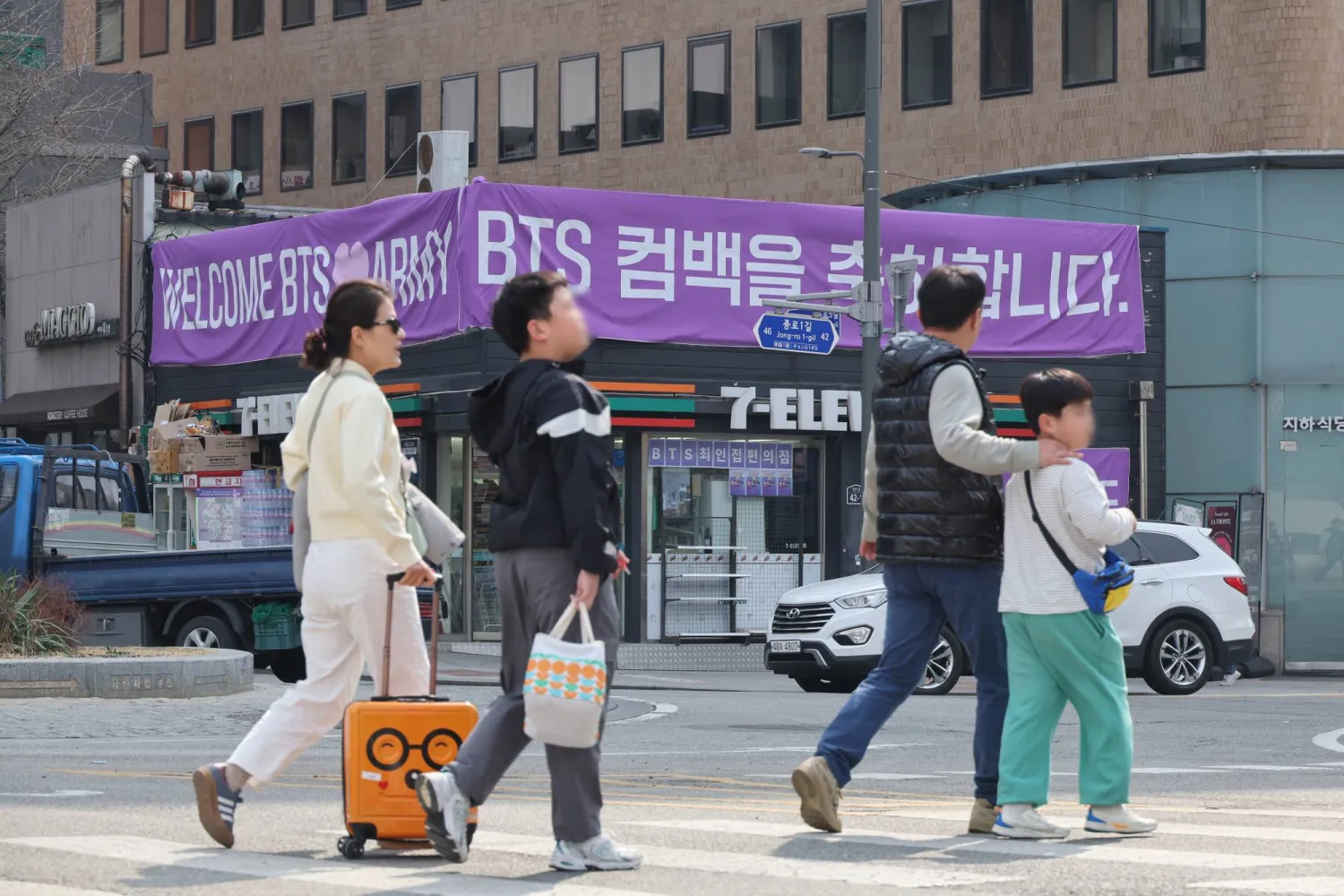



South Korea to Invest $166 Million in AI Chip Startup Rebellions

People walk near Gwanghwamun Square in Seoul, South Korea, 22 March 2026. The band performed their comeback concert on 21 March.  EPA/YONHAP
People walk near Gwanghwamun Square in Seoul, South Korea, 22 March 2026. The band performed their comeback concert on 21 March. EPA/YONHAP
TT

South Korea to Invest $166 Million in AI Chip Startup Rebellions

People walk near Gwanghwamun Square in Seoul, South Korea, 22 March 2026. The band performed their comeback concert on 21 March.  EPA/YONHAP
People walk near Gwanghwamun Square in Seoul, South Korea, 22 March 2026. The band performed their comeback concert on 21 March. EPA/YONHAP

South Korea's industry ministry on Tuesday said the Financial Services Commission's advisory board approved a 250 billion won ($166 million) investment in a local artificial intelligence chip startup called Rebellions, part of a government-backed push to nurture a homegrown advanced semiconductor firm.

Here are some details:

South Korea's Financial Services Commission advisory board, which evaluates investments in advanced strategic industries, ⁠approved a 250 ⁠billion won direct investment into Rebellions, an AI chip startup.

Rebellions, founded in 2020, designs neural processing units (NPUs) that handle AI computations.

The decision was made at a ⁠fund management committee meeting for the state-led "National Growth Fund," marking the first direct investment under the country's "K-Nvidia" initiative.

The funding will support Rebellions' mass production of NPU chips and the development of next-generation AI semiconductors, the industry ministry said in a statement.

The "K-Nvidia" project, jointly led by the Financial Services Commission and the ⁠Ministry ⁠of Science and ICT, seeks to nurture a globally competitive AI chip company amid intensifying competition in the sector, which is dominated by US firms like Nvidia.

The move underscores Seoul's efforts to strengthen its position in the AI supply chain and reduce reliance on foreign technology, as demand for high-performance computing chips surges.


Uber, Autonomous Mobility Firms to Launch Europe's 1st Commercial Robotaxis

Aerial photo shows light installation during the Festival of Lights in Zagreb, Croatia, March 18, 2026. REUTERS/Antonio Bronic
TT

Uber, Autonomous Mobility Firms to Launch Europe's 1st Commercial Robotaxis

Aerial photo shows light installation during the Festival of Lights in Zagreb, Croatia, March 18, 2026. REUTERS/Antonio Bronic

Uber Technologies and autonomous mobility companies Verne and Pony.ai have partnered up to launch Europe's first commercial robotaxi service in the Croatian capital Zagreb, with plans to expand to other cities, they said on Thursday.

Robotaxis are rapidly expanding into US cities as companies race to commercialize ⁠autonomous ride-hailing worldwide.

Alphabet's ⁠Waymo remains the early leader, while Tesla hopes its vast manufacturing scale and financial resources could reshape the competitive landscape.

The first ⁠commercial robotaxi service in Zagreb will be launched "soon,” the companies said.

Initial deployment work is underway, including public-road validation.

Pony.ai will provide autonomous driving solutions, while Verne will act as the fleet owner and service operator.

The three companies plan ⁠to ⁠expand the fleet to thousands of robotaxis in European cities over the next few years.

Uber and Nvidia said earlier this month they planned to expand their robotaxi service in 28 cities across North America, Europe, Australia and Asia.


Samsung, SK Urge Employees to Cut Car Use Amid Rising Energy Risks

FILE - The logo of the Samsung is seen at the Samsung Electronics' Seocho building in Seoul, South Korea, Friday, July 5, 2024.  (AP Photo/Lee Jin-man, File)
FILE - The logo of the Samsung is seen at the Samsung Electronics' Seocho building in Seoul, South Korea, Friday, July 5, 2024. (AP Photo/Lee Jin-man, File)
TT

Samsung, SK Urge Employees to Cut Car Use Amid Rising Energy Risks

FILE - The logo of the Samsung is seen at the Samsung Electronics' Seocho building in Seoul, South Korea, Friday, July 5, 2024.  (AP Photo/Lee Jin-man, File)
FILE - The logo of the Samsung is seen at the Samsung Electronics' Seocho building in Seoul, South Korea, Friday, July 5, 2024. (AP Photo/Lee Jin-man, File)

South Korean tech giants Samsung Electronics and SK Group said they were asking employees to curb private car use and follow fuel-saving measures after South Korea rolled ⁠out emergency energy-conservation steps ⁠amid instability in Middle Eastern energy supplies.

Internal notices showed the companies encouraging car-use restrictions ⁠such as a five and 10-day vehicle rotation system, reduced parking availability and other energy-saving practices at offices from Thursday for Samsung and from March 30 ⁠for ⁠SK.

The moves follow government guidance aimed at cutting fuel consumption as concerns grow over prolonged disruptions linked to the Iran-related energy crisis.