


US Supreme Court Upholds Law Banning TikTok If It’s Not Sold by Its Chinese Parent Company

A person live streams to their TikTok followers as the high justices rule to uphold a ban on the video-sharing app TikTok in the TikTok vs. Merrick Garland case in Washington, DC, USA, 17 January 2025. (EPA)
TT

US Supreme Court Upholds Law Banning TikTok If It’s Not Sold by Its Chinese Parent Company

A person live streams to their TikTok followers as the high justices rule to uphold a ban on the video-sharing app TikTok in the TikTok vs. Merrick Garland case in Washington, DC, USA, 17 January 2025. (EPA)

The Supreme Court on Friday unanimously upheld the federal law banning TikTok beginning Sunday unless it's sold by its China-based parent company, holding that the risk to national security posed by its ties to China overcomes concerns about limiting speech by the app or its 170 million users in the United States.

A sale does not appear imminent and, although experts have said the app will not disappear from existing users' phones once the law takes effect on Jan. 19, new users won't be able to download it and updates won't be available. That will eventually render the app unworkable, the Justice Department has said in court filings.

The decision came against the backdrop of unusual political agitation by President-elect Donald Trump, who vowed that he could negotiate a solution and the administration of President Joe Biden, which has signaled it won't enforce the law beginning Sunday, his final full day in office.

Trump, mindful of TikTok’s popularity, and his own 14.7 million followers on the app, finds himself on the opposite side of the argument from prominent Senate Republicans who fault TikTok’s Chinese owner for not finding a buyer before now. Trump said in a Truth Social post shortly before the decision was issued that TikTok was among the topics in his conversation Friday with Chinese leader Xi Jinping.

It’s unclear what options are open to Trump once he is sworn in as president on Monday. The law allowed for a 90-day pause in the restrictions on the app if there had been progress toward a sale before it took effect. Solicitor General Elizabeth Prelogar, who defended the law at the Supreme Court for the Democratic Biden administration, told the justices last week that it's uncertain whether the prospect of a sale once the law is in effect could trigger a 90-day respite for TikTok.

“Congress has determined that divestiture is necessary to address its well-supported national security concerns regarding TikTok’s data collection practices and relationship with a foreign adversary,” the court said in an unsigned opinion, adding that the law “does not violate petitioners' First Amendment rights.”

Justices Sonia Sotomayor and Neil Gorsuch filed short separate opinions noting some reservations about the court's decision but going along with the outcome.

“Without doubt, the remedy Congress and the President chose here is dramatic,” Gorsuch wrote. Still, he said he was persuaded by the argument that China could get access to “vast troves of personal information about tens of millions of Americans.”

Some digital rights groups slammed the court’s ruling shortly after it was released.

“Today’s unprecedented decision upholding the TikTok ban harms the free expression of hundreds of millions of TikTok users in this country and around the world,” said Kate Ruane, a director at the Washington-based Center for Democracy & Technology, which has supported TikTok’s challenge to the federal law.

Content creators who opposed the law also worried about the effect on their business if TikTok shuts down. “I’m very, very concerned about what’s going to happen over the next couple weeks,” said Desiree Hill, owner of Crown’s Corner mechanic shop in Conyers, Georgia. “And very scared about the decrease that I’m going to have in reaching customers and worried I’m going to potentially lose my business in the next six months.”

At arguments, the justices were told by a lawyer for TikTok and ByteDance Ltd., the Chinese technology company that is its parent, how difficult it would be to consummate a deal, especially since Chinese law restricts the sale of the proprietary algorithm that has made the social media platform wildly successful.

The app allows users to watch hundreds of videos in about half an hour because some are only a few seconds long, according to a lawsuit filed last year by Kentucky complaining that TikTok is designed to be addictive and harms kids' mental health. Similar suits were filed by more than a dozen states. TikTok has called the claims inaccurate.

The dispute over TikTok's ties to China has come to embody the geopolitical competition between Washington and Beijing.

“ByteDance and its Chinese Communist masters had nine months to sell TikTok before the Sunday deadline,” Sen. Tom Cotton, R-Ark., wrote on X. “The very fact that Communist China refuses to permit its sale reveals exactly what TikTok is: a communist spy app. The Supreme Court correctly rejected TikTok’s lies and propaganda masquerading as legal arguments.”

The US has said it’s concerned about TikTok collecting vast swaths of user data, including sensitive information on viewing habits, that could fall into the hands of the Chinese government through coercion. Officials have also warned the algorithm that fuels what users see on the app is vulnerable to manipulation by Chinese authorities, who can use it to shape content on the platform in a way that’s difficult to detect.

TikTok points out the US has not presented evidence that China has attempted to manipulate content on its US platform or gather American user data through TikTok.

Bipartisan majorities in Congress passed legislation and Biden signed it into law in April. The law was the culmination of a yearslong saga in Washington over TikTok, which the government sees as a national security threat.

TikTok, which sued the government last year over the law, has long denied it could be used as a tool of Beijing. A three-judge panel made up of two Republican appointees and a Democratic appointee unanimously upheld the law in December, prompting TikTok’s quick appeal to the Supreme Court.

Without a sale to an approved buyer, the law bars app stores operated by Apple, Google and others from offering TikTok beginning on Sunday. Internet hosting services also will be prohibited from hosting TikTok.

ByteDance has said it won’t sell. But some investors have been eyeing it, including Trump’s former Treasury Secretary Steven Mnuchin and billionaire businessman Frank McCourt. McCourt’s Project Liberty initiative has said it and its unnamed partners have presented a proposal to ByteDance to acquire TikTok’s US assets. The consortium, which includes “Shark Tank” host Kevin O’Leary, did not disclose the financial terms of the offer.

McCourt, in a statement following the ruling, said his group was “ready to work with the company and President Trump to complete a deal.”

Prelogar told the justices last week that having the law take effect “might be just the jolt” ByteDance needs to reconsider its position.

Ericsson Lags Profit Expectations as AI Demand Drives Up Chip Costs

FILE PHOTO: A woman walks across the logo of Ericsson at the ongoing India Mobile Congress 2025 at Yashobhoomi, a convention and expo center in New Delhi, India, October 8, 2025. REUTERS/Anushree Fadnavis/File Photo
TT

Ericsson Lags Profit Expectations as AI Demand Drives Up Chip Costs

FILE PHOTO: A woman walks across the logo of Ericsson at the ongoing India Mobile Congress 2025 at Yashobhoomi, a convention and expo center in New Delhi, India, October 8, 2025. REUTERS/Anushree Fadnavis/File Photo

Sweden's Ericsson reported a first-quarter core profit that slightly missed market expectations on Friday, citing increasing chip costs caused by artificial intelligence demand and a sales slowdown in North America.

The network equipment maker is facing rising input costs partially due to high demand for AI technology that is driving up prices of semiconductors, CEO Börje Ekholm said in a statement.

"We are working ⁠together with our ⁠suppliers to mitigate this. But also, we will need to work with our customers to share the burden on this," finance chief Lars Sandström added in an interview with Reuters.

The company reported an adjusted operating profit of 5.2 billion Swedish ⁠crowns ($566 million), excluding restructuring charges, for the first quarter of 2026. Analysts polled by Infront were expecting 5.4 billion crowns on average.

Ericsson, one of the main Western suppliers of network equipment alongside Finland's Nokia, is betting heavily on the US market even as transatlantic ties have become strained under President Donald Trump's rule.

The Swedish group has significant exposure to the United States, especially after winning a $14 ⁠billion ⁠deal with operator AT&T in 2023, which could help outweigh slower telecoms investments in other markets.

Sandström said sales in North America fell by a mid-single-digit percentage in the quarter, compared to a strong year-ago period that was boosted by tariff-related demand. Underlying market conditions in the region remain solid, he added.

The group reported quarterly net sales of 49.3 billion crowns, compared with an Infront poll estimate of 50.7 billion crowns.


EU: Google Should Allow Third-party Search Engines Access to Data

FILE PHOTO: Google's logo during the CERAWeek energy conference 2026 in Houston, Texas, US, March 24, 2026. REUTERS/Danielle Villasana/File Photo
TT

EU: Google Should Allow Third-party Search Engines Access to Data

FILE PHOTO: Google's logo during the CERAWeek energy conference 2026 in Houston, Texas, US, March 24, 2026. REUTERS/Danielle Villasana/File Photo

The European Commission has sent preliminary findings to Google on proposed measures to comply with the EU's Digital Markets Act, which would allow third-party search engines to access Google search data, including ⁠that of artificial ⁠intelligence chatbots with search functionalities, the commission said on Thursday.

Interested parties have until May ⁠1 to submit their views on the proposed measures, with a final decision to be made in July.

Google, the world's most popular search engine, was charged in March 2025 with ⁠breaching ⁠the Digital Markets Act. It has made its own proposals to mollify rivals and EU regulators, but rivals have complained the measures were insufficient.


Samsung Asks Court to Block Illegal Strike Activities by Unions

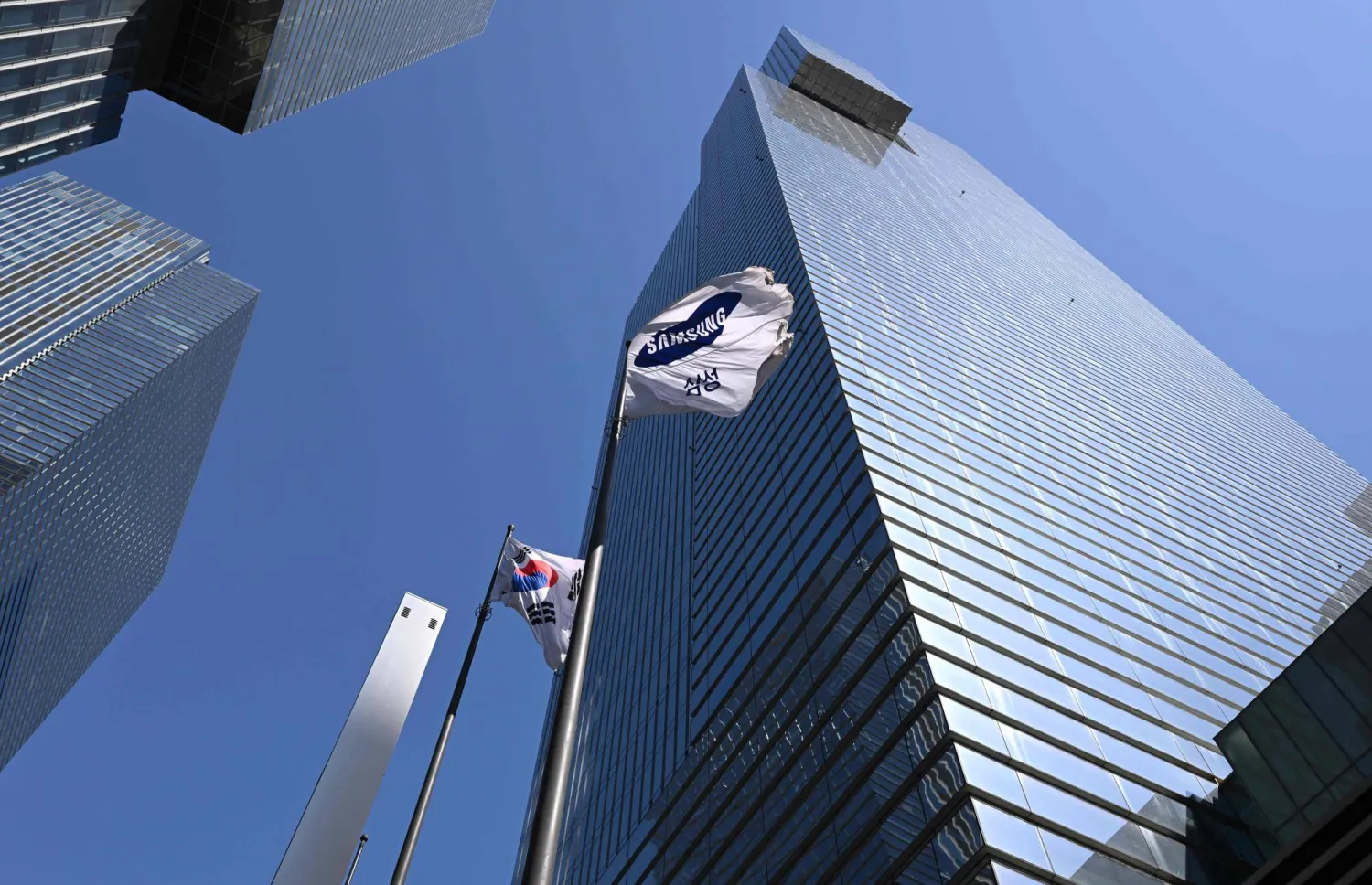
A South Korean national flag (L) and a Samsung flag (R) flutter outside the company's Seocho building in Seoul on April 7, 2026. (Photo by Jung Yeon-je / AFP)
TT

Samsung Asks Court to Block Illegal Strike Activities by Unions

A South Korean national flag (L) and a Samsung flag (R) flutter outside the company's Seocho building in Seoul on April 7, 2026. (Photo by Jung Yeon-je / AFP)

Samsung Electronics asked a court on Thursday to block its South Korean labour unions engaging in illegal activities during a planned strike, a spokesperson said, as a wage dispute threatens to disrupt operations at the world's top memory chipmaker.

Samsung did not elaborate on details of its legal action. Unions labelled it a "declaration of war," accusing the company of infringing on its right to strike, which ⁠is protected under the ⁠law.

Unionized workers at Samsung last month voted to authorize strike plans and threatened to walk out for 18 days from May 21, should they fail to agree on a wage deal with management.

The unions also plan to ⁠hold a major rally on April 23, ramping up pressure on Samsung during wage negotiations.

Samsung workers, frustrated by a pay gap with crosstown rival SK Hynix, are calling on Samsung to remove its performance pay cap and link bonuses to operating profit.

The company estimated it made an operating profit of 57.2 trillion won ($38.85 billion) for the January to March period, more than an eightfold ⁠jump ⁠from 6.69 trillion won a year earlier.

Samsung's union leader told Reuters that a potential strike could affect about half the output at Samsung's giant semiconductor complex in Pyeongtaek, south of Seoul, the capital.

A strike at the world's largest manufacturer of memory chips could worsen bottlenecks in global supply of semiconductors, stemming from robust demand for artificial intelligence data center operations that has curbed supply to industries from cars and computers to smartphones.