Musk’s Social Media Firm X Bought by His AI Company, Valued at $33 Billion

 xAI and X logos are seen in this illustration taken, March 28, 2025. (Reuters)
xAI and X logos are seen in this illustration taken, March 28, 2025. (Reuters)
TT

Musk’s Social Media Firm X Bought by His AI Company, Valued at $33 Billion

 xAI and X logos are seen in this illustration taken, March 28, 2025. (Reuters)
xAI and X logos are seen in this illustration taken, March 28, 2025. (Reuters)

Elon Musk's xAI has acquired X in a deal that values the social media platform at $33 billion and allows the value of his artificial intelligence firm to be shared with his co-investors in the company formerly known as Twitter.

The deal could also help xAI's ability to train its chatbot known as Grok.

"xAI and X's futures are intertwined," Musk, who also heads automaker Tesla and SpaceX, wrote in a post on X: "Today, we officially take the step to combine the data, models, compute, distribution and talent."

He said the combination values "xAI at $80 billion and X at $33 billion ($45B less $12B debt)".

Representatives for X and xAI did not immediately respond to requests for comment. Much of the deal's specifics remain unclear, such as how X's leaders would be integrated in the new firm or whether there would be regulatory scrutiny.

Musk, the world's wealthiest man, is also a close ally of US President Donald Trump and heads the Department of Government Efficiency.

D.A. Davidson analyst Gil Luria said the price tag for X of $45 billion when debt was included was not a coincidence. "It is $1 billion higher than the take-private transaction for Twitter in 2022."

An investor in xAI who declined to be identified said they were not surprised by the deal, viewing it as Musk consolidating his leadership and management at his own companies.

Musk did not ask investors for approval but told them that the two companies had been collaborating closely and the deal would drive deeper integration with Grok, the investor said.

OPENAI RIVALRY

Musk's xAI startup was launched less than two years ago and recently raised $10 billion in a funding round that valued the company at $75 billion, according to a media report.

It competes with the likes of Microsoft-backed OpenAI as well as with Chinese startup DeepSeek.

In February, Musk, 53, made a $97.4 billion bid with a consortium for OpenAI, which was rejected and he has sued to prevent the ChatGPT maker from converting from a non-profit to a for-profit business. A judge this month denied Musk's request for a preliminary injunction that would prevent the changeover.

As competition in AI intensifies, xAI has been ramping up its data center capacity to train more advanced models, and its supercomputer cluster in Memphis, Tennessee, called "Colossus," is touted as the largest in the world.

xAI introduced Grok-3, the latest iteration of its chatbot, in February.

The X platform could serve to further distribute xAI products, while also providing a real-time feed of users' musings, screenshots and other data.

After buying Twitter, Musk gutted the company's workforce, prompting advertisers to flee the platform and a rapid decline in revenue. Recently, brands have been returning to X as Musk's influence in the Trump administration grows.

The seven banks that extended $13 billion in loans to Musk to buy X kept the debt on their books for two years until they were able to sell it all at once last month, according to a source familiar with the transactions.

This was made possible after a surge in investor interest for exposure to AI companies along with X's improved operating performance over the previous two quarters, among other factors, according to two people familiar with the matter.

After the merger, investors who bought the debt from the banks will profit, said Espen Robak, founder of Pluris Valuation Advisors, which specializes in illiquid assets. "For sure the debt is worth more now, if not fully paid off."

Separately, a US judge on Friday rejected a bid by Musk to dismiss a lawsuit claiming he had defrauded former Twitter shareholders by waiting too long to disclose his initial investment in the company.

AI Giants Promise Publishers New Way to Block Some Scraping

An OpenAI logo is displayed at Moscone Center during the Dreamforce 2026 technology summit in San Francisco, California, US, September 17, 2026. (Reuters)
TT

AI Giants Promise Publishers New Way to Block Some Scraping

An OpenAI logo is displayed at Moscone Center during the Dreamforce 2026 technology summit in San Francisco, California, US, September 17, 2026. (Reuters)

OpenAI, Google, Microsoft and Anthropic pledged on Friday to give media outlets and other websites a single way to prevent their content from being scraped to train artificial intelligence (AI) models, amid growing criticisms and legal battles from news publishers.

Publishers currently have to implement multiple blocking commands for every bot that crawls the web to collect data, but the new proposed solution will allow them to enter a single, standardized instruction that's recognized and honored by any AI company that adopts the protocol.

The solution will not fully take effect for months, though.

Microsoft will implement it beginning February 1, 2027, and Google sometime in 2027. ChatGPT-maker OpenAI said it will roll it out "in the coming months," while Claude-maker Anthropic said it has "already started" rolling it out.

The announcement comes as publishers are facing a surge in bots that scrape their articles to feed AI models. Some, like the New York Times, have taken the matter to court.

In December 2023, the Times sued OpenAI and Microsoft for allegedly using millions of its articles without authorization or payment to train ChatGPT. The two tech companies are invoking an exception to copyright law known as fair use.

Meanwhile, internet infrastructure provider Cloudflare has blocked AI bots by default on new customer sites since July 2025, and a standard called Really Simple Licensing already allows publishers to charge bots that visit their pages.

The new setting will apply only to future training of models but does not prevent bots from crawling otherwise, and content scraping will be allowed by default until the setting is changed by a publisher, Microsoft said in a blog post.

Opting out of AI training could reduce the chances that a publisher's content will surface in AI apps and experiences, Microsoft and Google said in separate blog posts.

"We believe creating a common signal that conveys such preferences to multiple providers at once is an important step. And we look forward to working with other AI companies on the standards and their implementation across the industry," Meta spokesperson Andy Stone wrote on X, conveying his support for the effort.


Meta, TikTok, X Lose Legal Challenge against UK Watchdog over Online Safety Data Demands

Meta logo (Reuters)
Meta logo (Reuters)
TT

Meta, TikTok, X Lose Legal Challenge against UK Watchdog over Online Safety Data Demands

Meta logo (Reuters)
Meta logo (Reuters)

Meta, TikTok and X on Friday lost a legal challenge against British regulator Ofcom over the amount of information it is demanding they provide under Britain's nascent online safety regime.

The challenge is one of the first in relation ‌to the ‌2023 Online Safety Act, ‌which ⁠sets tougher standards ⁠for platforms such as TikTok, X and Meta's Facebook and Instagram with the aim to protect children from harmful and illegal content, reported Reuters.

Ofcom has been gradually ⁠implementing the regime, with ‌its requirements backed ‌up by the threat of fines ‌of up to 10% of ‌a company's global turnover for the most serious breaches.

In February, it issued information notices requesting detailed content moderation ‌metrics from the tech companies, including data on how ⁠many ⁠posts were removed or had visibility restricted, and how many users were exposed to harmful content.

Meta, TikTok and X argued the notices create unprecedented regulatory burdens, but their case was rejected by London's High Court.

None of the companies, nor Ofcom, immediately responded to requests for comment.


US Regulator Bans Chinese Labs from Electronics Testing

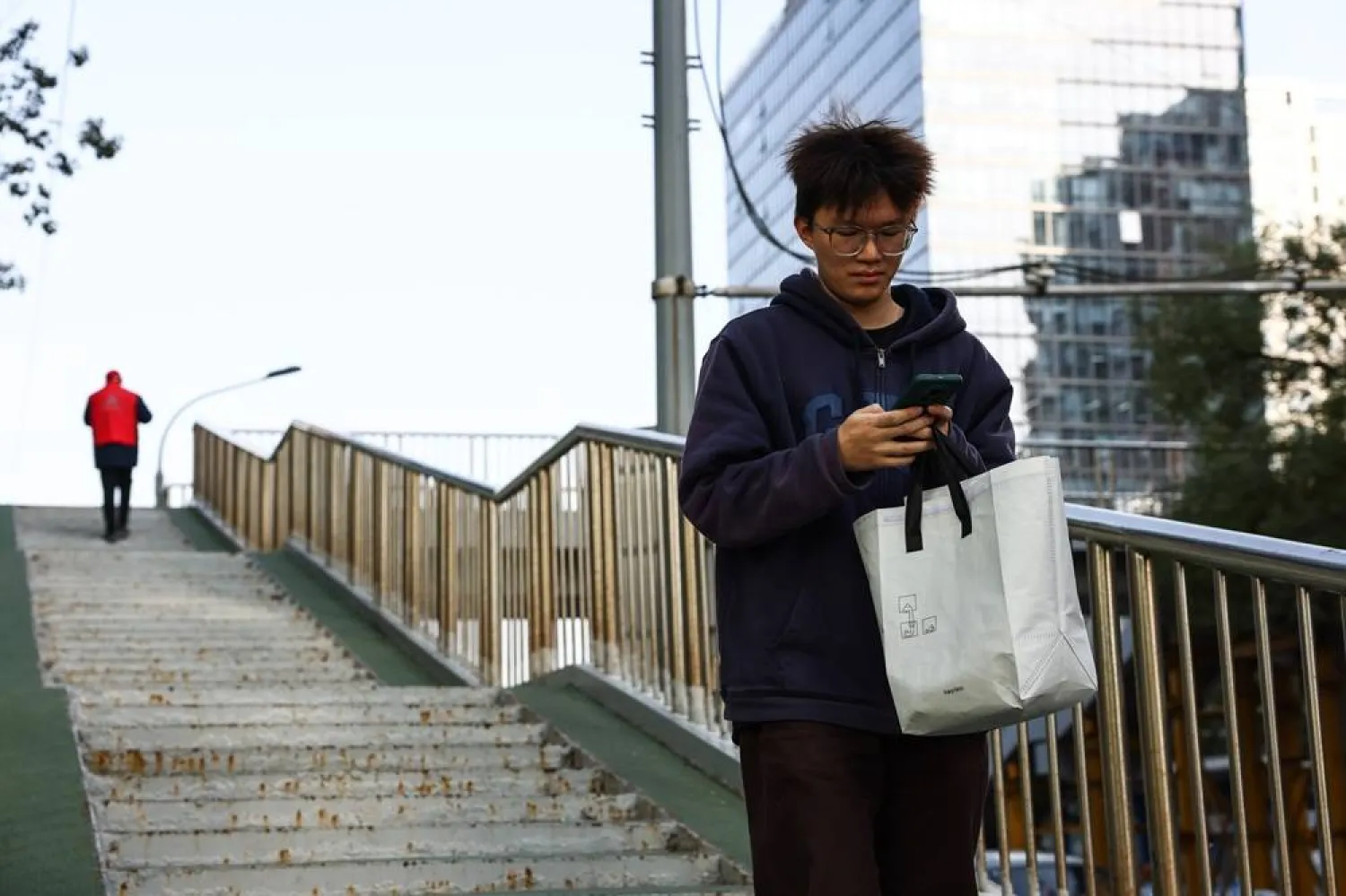
A person uses his cellphone on a street in Beijing, China, 29 October 2026. (EPA)
TT

US Regulator Bans Chinese Labs from Electronics Testing

A person uses his cellphone on a street in Beijing, China, 29 October 2026. (EPA)

A US regulator voted Thursday to ban Chinese labs from testing electronic devices ranging from smartphones to cameras for use in the United States.

The move, which the Federal Communications Commission (FCC) says aims to boost security, comes a year after the agency adopted rules to ban test labs "owned or controlled by foreign adversaries."

Around 82 percent of certified devices in the United States are tested in recognized labs in China, the FCC estimates.

"These labs are a critical gateway into American communications infrastructure. And their privileged role gives them access to sensitive and confidential information about electronic products often months before the devices enter the market," the FCC said in a statement.

The ban, which will come into force in 2028, applies to test labs and certification bodies in countries that do not have a mutual recognition agreement with the United States, the agency said.

China does not have such a pact with the FCC, according to its website.

The agency said it began investigating "bad labs" after discovering in 2024 that Chinese tech giant Huawei was running an FCC-recognized Test Lab.

The FCC had previously blacklisted telecommunications equipment made by Huawei and several other Chinese firms over security concerns.

The latest ban would also protect the US technology industry by fighting against the "offshoring of electronics manufacturing, which is often collocated where devices are tested", it added.

Beijing criticized the policy which it said harmed trade between the world's top two economies.

"The US has overstretched the concept of national security, abused state power and unjustifiably cracked down on Chinese companies," Chinese foreign ministry spokesman Guo Jiakun said at a regular briefing on Friday.

"The US actions seriously hinder normal economic and trade exchanges between Chinese and US businesses and run counter to the interests of all parties, including US companies and consumers."

He said Beijing would "take necessary measures" to safeguard its interests.

The FCC has been taking steps to separate Chinese entities from US supply chains.

In March, the regulator barred authorizations of new consumer routers made in foreign countries, also on national security grounds.