

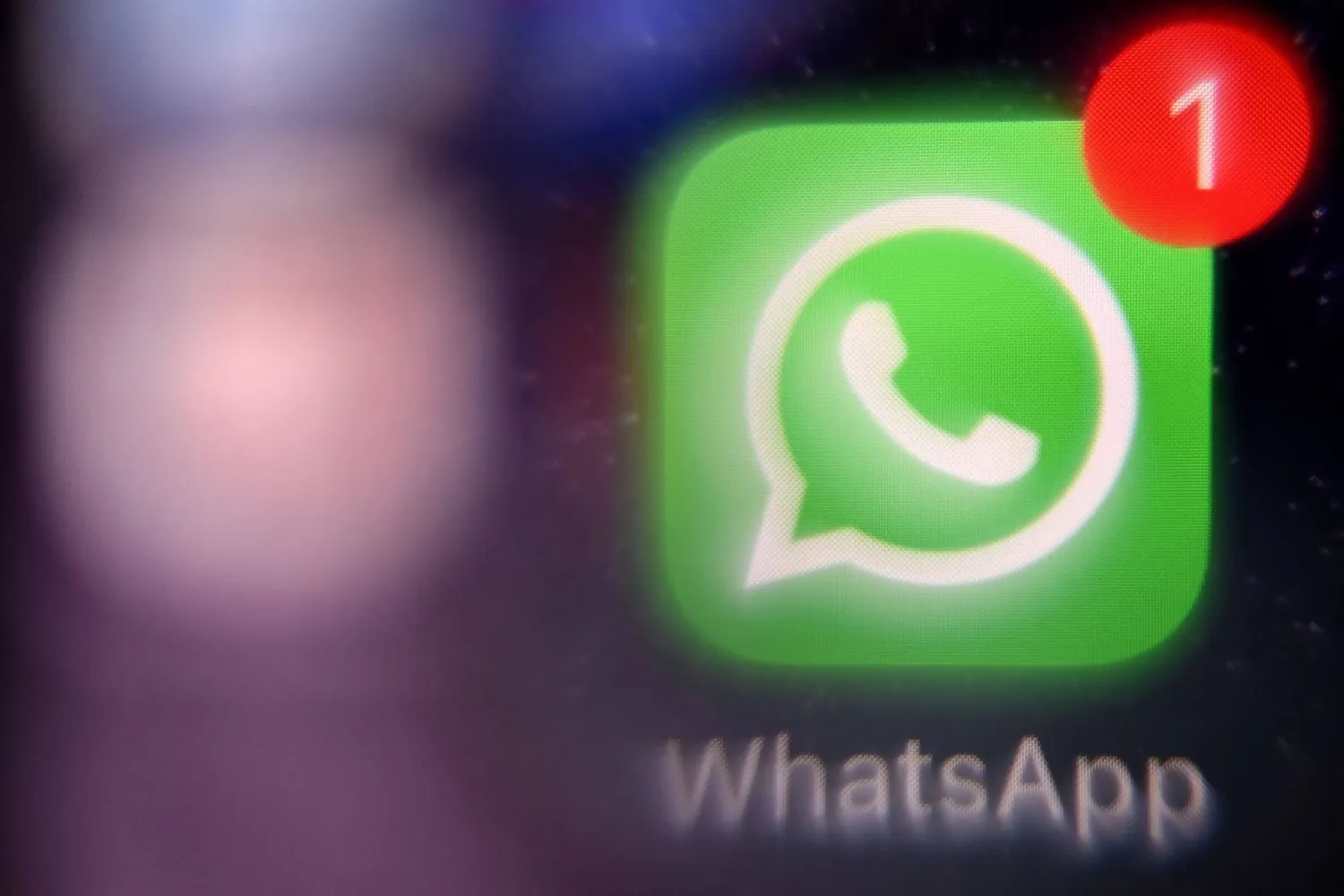

Russia Orders State-backed App, WhatsApp Rival, to be Pre-installed on All Phones and Tablets

(FILES) This photograph taken on March 23, 2022 shows the mobile US instant messaging software Whatsapp logo on a smartphone screen in Moscow. (Photo by AFP)
TT

Russia Orders State-backed App, WhatsApp Rival, to be Pre-installed on All Phones and Tablets

(FILES) This photograph taken on March 23, 2022 shows the mobile US instant messaging software Whatsapp logo on a smartphone screen in Moscow. (Photo by AFP)

A Russian state-backed messenger application cast as a rival to WhatsApp which critics have said could be used for surveillance purposes must be pre-installed on all mobile phones and tablets from next month, the Russian government said on Thursday.

The decision to promote the popularity of MAX, the new state-controlled messaging app, comes after Russia restricted some calls on WhatsApp, owned by Meta Platforms META.O, and on Telegram, accusing the foreign-owned platforms of failing to share information with law enforcement in fraud and terrorism cases.

The government, which is seeking greater control over the internet space, said in a statement on Thursday that MAX, which will be integrated with government services, would be on the list of mandatory pre-installed apps on all "gadgets,” including mobile phones and tablets, sold in Russia from September 1, Reuters reported.

It will also be mandatory from the same date for Russia's domestic app store, RuStore, currently pre-installed on all Android devices, to be pre-installed on all Apple devices, the government said.

An online Russian-language TV app called LIME HD TV, which allows people to watch Russian state TV channels for free, will be pre-installed on all smart TVs sold in Russia from January 1 next year, the government added.



South Korea to Invest $166 Million in AI Chip Startup Rebellions

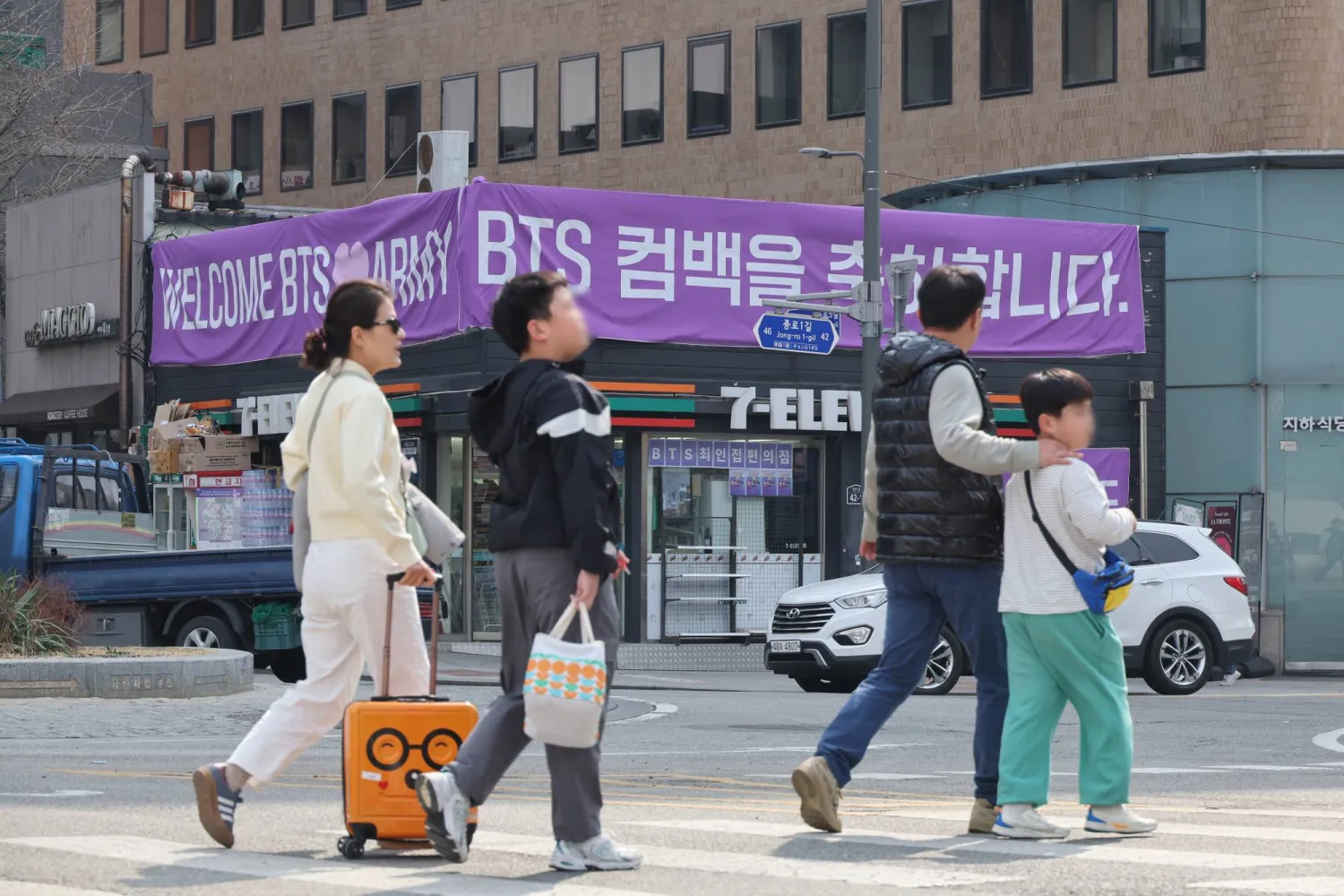
People walk near Gwanghwamun Square in Seoul, South Korea, 22 March 2026. The band performed their comeback concert on 21 March.  EPA/YONHAP
People walk near Gwanghwamun Square in Seoul, South Korea, 22 March 2026. The band performed their comeback concert on 21 March. EPA/YONHAP
TT

South Korea to Invest $166 Million in AI Chip Startup Rebellions

People walk near Gwanghwamun Square in Seoul, South Korea, 22 March 2026. The band performed their comeback concert on 21 March.  EPA/YONHAP
People walk near Gwanghwamun Square in Seoul, South Korea, 22 March 2026. The band performed their comeback concert on 21 March. EPA/YONHAP

South Korea's industry ministry on Tuesday said the Financial Services Commission's advisory board approved a 250 billion won ($166 million) investment in a local artificial intelligence chip startup called Rebellions, part of a government-backed push to nurture a homegrown advanced semiconductor firm.

Here are some details:

South Korea's Financial Services Commission advisory board, which evaluates investments in advanced strategic industries, ⁠approved a 250 ⁠billion won direct investment into Rebellions, an AI chip startup.

Rebellions, founded in 2020, designs neural processing units (NPUs) that handle AI computations.

The decision was made at a ⁠fund management committee meeting for the state-led "National Growth Fund," marking the first direct investment under the country's "K-Nvidia" initiative.

The funding will support Rebellions' mass production of NPU chips and the development of next-generation AI semiconductors, the industry ministry said in a statement.

The "K-Nvidia" project, jointly led by the Financial Services Commission and the ⁠Ministry ⁠of Science and ICT, seeks to nurture a globally competitive AI chip company amid intensifying competition in the sector, which is dominated by US firms like Nvidia.

The move underscores Seoul's efforts to strengthen its position in the AI supply chain and reduce reliance on foreign technology, as demand for high-performance computing chips surges.


Uber, Autonomous Mobility Firms to Launch Europe's 1st Commercial Robotaxis

Aerial photo shows light installation during the Festival of Lights in Zagreb, Croatia, March 18, 2026. REUTERS/Antonio Bronic
TT

Uber, Autonomous Mobility Firms to Launch Europe's 1st Commercial Robotaxis

Aerial photo shows light installation during the Festival of Lights in Zagreb, Croatia, March 18, 2026. REUTERS/Antonio Bronic

Uber Technologies and autonomous mobility companies Verne and Pony.ai have partnered up to launch Europe's first commercial robotaxi service in the Croatian capital Zagreb, with plans to expand to other cities, they said on Thursday.

Robotaxis are rapidly expanding into US cities as companies race to commercialize ⁠autonomous ride-hailing worldwide.

Alphabet's ⁠Waymo remains the early leader, while Tesla hopes its vast manufacturing scale and financial resources could reshape the competitive landscape.

The first ⁠commercial robotaxi service in Zagreb will be launched "soon,” the companies said.

Initial deployment work is underway, including public-road validation.

Pony.ai will provide autonomous driving solutions, while Verne will act as the fleet owner and service operator.

The three companies plan ⁠to ⁠expand the fleet to thousands of robotaxis in European cities over the next few years.

Uber and Nvidia said earlier this month they planned to expand their robotaxi service in 28 cities across North America, Europe, Australia and Asia.


Samsung, SK Urge Employees to Cut Car Use Amid Rising Energy Risks

FILE - The logo of the Samsung is seen at the Samsung Electronics' Seocho building in Seoul, South Korea, Friday, July 5, 2024.  (AP Photo/Lee Jin-man, File)
FILE - The logo of the Samsung is seen at the Samsung Electronics' Seocho building in Seoul, South Korea, Friday, July 5, 2024. (AP Photo/Lee Jin-man, File)
TT

Samsung, SK Urge Employees to Cut Car Use Amid Rising Energy Risks

FILE - The logo of the Samsung is seen at the Samsung Electronics' Seocho building in Seoul, South Korea, Friday, July 5, 2024.  (AP Photo/Lee Jin-man, File)
FILE - The logo of the Samsung is seen at the Samsung Electronics' Seocho building in Seoul, South Korea, Friday, July 5, 2024. (AP Photo/Lee Jin-man, File)

South Korean tech giants Samsung Electronics and SK Group said they were asking employees to curb private car use and follow fuel-saving measures after South Korea rolled ⁠out emergency energy-conservation steps ⁠amid instability in Middle Eastern energy supplies.

Internal notices showed the companies encouraging car-use restrictions ⁠such as a five and 10-day vehicle rotation system, reduced parking availability and other energy-saving practices at offices from Thursday for Samsung and from March 30 ⁠for ⁠SK.

The moves follow government guidance aimed at cutting fuel consumption as concerns grow over prolonged disruptions linked to the Iran-related energy crisis.