


TotalEnergies Agrees Renewable Power Deal with Google for Ohio Data Centers

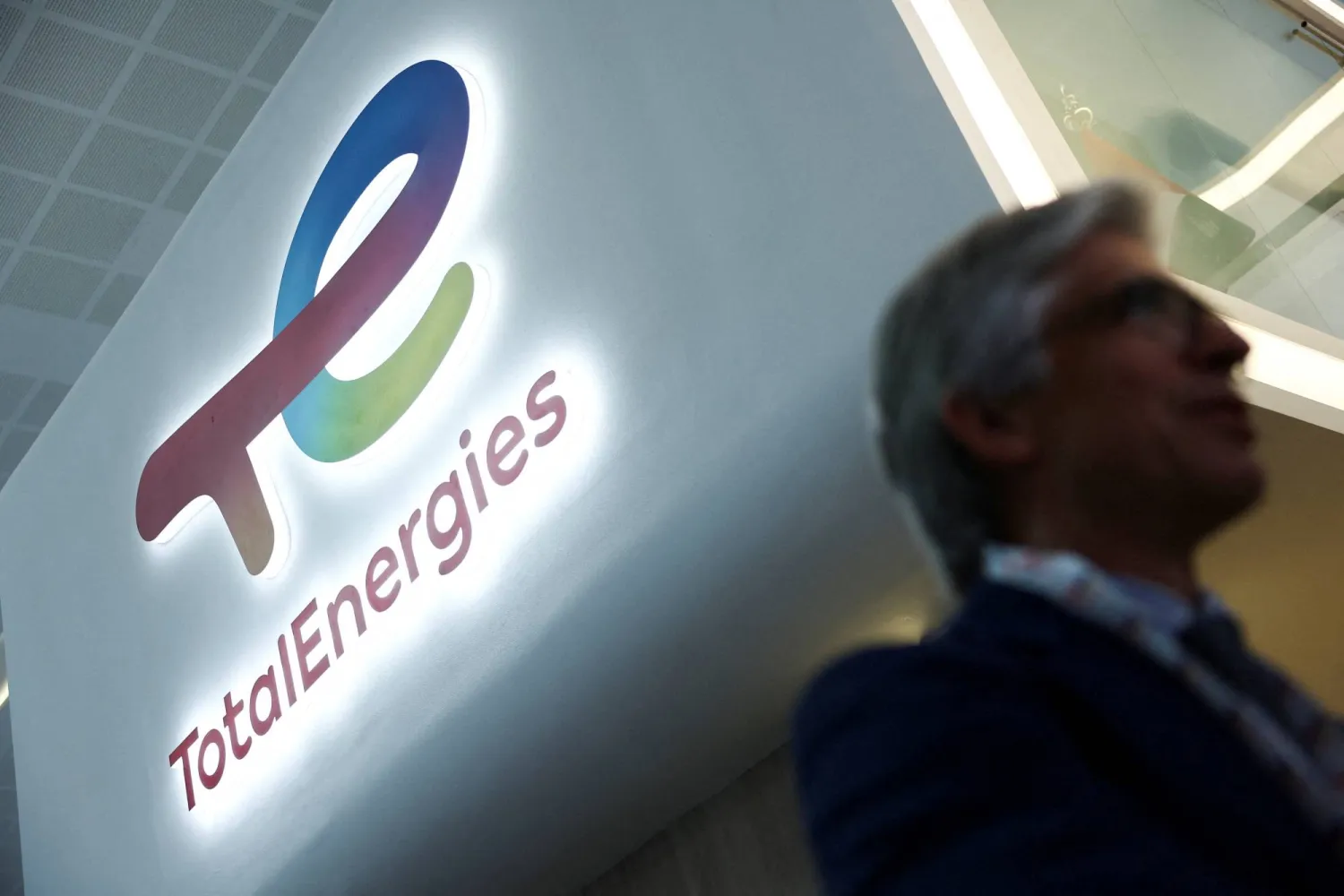
FILE PHOTO: A man walks past a logo of TotalEnergies during the annual energy industry event Abu Dhabi International Petroleum Exhibition and Conference (ADIPEC) in Abu Dhabi, United Arab Emirates, November 3, 2025. REUTERS/Amr Alfiky/File Photo
TT

TotalEnergies Agrees Renewable Power Deal with Google for Ohio Data Centers

FILE PHOTO: A man walks past a logo of TotalEnergies during the annual energy industry event Abu Dhabi International Petroleum Exhibition and Conference (ADIPEC) in Abu Dhabi, United Arab Emirates, November 3, 2025. REUTERS/Amr Alfiky/File Photo

Oil major TotalEnergies has agreed a 15-year power purchase deal to supply Alphabet's Google with 1.5 terawatt hours of renewable electricity from its Montpelier solar farm in Ohio, the French company said on Wednesday.

The solar facility, which is nearing completion, is connected to the PJM grid, the largest in the United States, and will help power Google’s data center operations in the state, Reuters quoted it as saying.

"This agreement illustrates TotalEnergies’s ability to meet the growing energy demands of major tech companies by leveraging its integrated portfolio of renewable and flexible assets," said Stéphane Michel, President of Gas, Renewables and Power at TotalEnergies.

The company's growing investment in electricity is helping the company secure a steadier revenue stream and avoid the boom-and-bust cycles typical of oil and gas, CEO Patrick Pouyanne said earlier this month at the ADIPEC conference in Abu Dhabi.

The Paris-listed firm is deploying a 10 gigawatt portfolio in the United States, with onshore solar, wind and battery storage projects.



Samsung Electronics Says Customers Praised Competitiveness of HBM4 Chip

FILE PHOTO: A Samsung Electronics logo and a computer motherboard appear in this illustration taken August 25, 2025. REUTERS/Dado Ruvic/Illustration/File Photo
TT

Samsung Electronics Says Customers Praised Competitiveness of HBM4 Chip

FILE PHOTO: A Samsung Electronics logo and a computer motherboard appear in this illustration taken August 25, 2025. REUTERS/Dado Ruvic/Illustration/File Photo

Samsung Electronics customers have praised the differentiated competitiveness of its next-generation high-bandwidth memory (HBM) chips, or HBM4, saying "Samsung is back", co-CEO and chip chief Jun Young-hyun said in a New Year address.

In October, Samsung said it was in "close discussion" to supply its HBM4 to US artificial intelligence leader Nvidia , as the South Korean chipmaker scrambles to catch rivals including compatriot SK Hynix in AI chips.

"On HBM4 in particular, customers have even ‌stated that 'Samsung ‌is back'," Jun said in remarks reviewed ‌by ⁠Reuters, adding that ‌the company still had work to do to further improve competitiveness.

SK Hynix CEO Kwak Noh-Jung said in New Year remarks reviewed by Reuters that the company benefited from favorable external conditions as demand for artificial-intelligence chips materialized faster than expected.

He said competition was intensifying rapidly, noting that AI demand was now a given rather than an upside surprise, and that the business environment ⁠in 2026 would be tougher than last year, while stressing that the need for ‌continued bolder investment and effort to prepare for ‍the future.

SK Hynix was the ‍leading player in the HBM market in the third quarter of 2025 ‍with a 53% share, followed by Samsung at 35% and Micron at 11%, data from Counterpoint Research showed.

Shares of Samsung Electronics and SK Hynix ended up 7.2% and 4%, respectively, on the first trading day of the year, hitting record highs and outperforming the benchmark KOSPI’s 2.3% gain.

Turning to the foundry business, which manufactures chips designed by customers, Samsung's ⁠Jun said recent supply deals with major global customers had left the foundry business "primed for a great leap forward."

In July, Samsung Electronics signed a $16.5 billion deal with Tesla.

In a separate address, Samsung Electronics' co-CEO TM Roh, who also heads the company's device experience division overseeing its mobile phone, TV and home appliance businesses, said 2026 was likely to bring greater uncertainty and risks, citing rising component prices and global tariff barriers.

"To position ourselves to maintain a competitive advantage in any situation, we will reinforce our core competitiveness through proactive supply chain diversification and optimization of global operations to ‌address issues like component sourcing and pricing, and global tariff risks," Roh said.


Foundation Stone Laid for World’s Largest Government Data Center in Riyadh

Officials are seen at Thursday's ceremony. (SPA)
TT

Foundation Stone Laid for World’s Largest Government Data Center in Riyadh

Officials are seen at Thursday's ceremony. (SPA)

The foundation stone was laid in Riyadh Thursday for the Saudi Data and Artificial Intelligence Authority (SDAIA) “Hexagon” Data Center, the world’s largest government data center by megawatt capacity.

Classified as Tier IV and holding the highest data center rating by the global Uptime Institute, the facility will have a total capacity of 480 megawatts and will be built on an area exceeding 30 million square feet in the Saudi capital.

Designed to the highest international standards, the center will provide maximum availability, security, and operational readiness for government data centers. It will meet the growing needs of government entities and support the increasing reliance on electronic services.

The project will contribute to strengthening the national economy and reinforce the Kingdom’s position as a key player in the future of the global digital economy.

A ceremony was held on the occasion, attended by senior officials from various government entities. They were received at the venue by President of SDAIA Dr. Abdullah bin Sharaf Alghamdi and SDAIA officials.

Director of the National Information Center at SDAIA Dr. Issam bin Abdullah Alwagait outlined the project’s details, technical and engineering specifications, and the operational architecture ensuring the highest levels of readiness and availability.

He also reviewed the international accreditations obtained for the center’s solutions and engineering design in line with recognized global standards.

In a press statement, SDAIA President Dr. Abdullah bin Sharaf Alghamdi said the landmark national project comes as part of the continued support of Prince Mohammed bin Salman bin Abdulaziz Al Saud, Crown Prince, Prime Minister and Chairman of SDAIA’s Board of Directors.

This support enables the authority, as the Kingdom’s competent body for data, including big data, and artificial intelligence and the national reference for their regulation, development, and use, to contribute to advancing the Kingdom toward leadership among data- and AI-driven economies, he noted.

The Kingdom will continue to strengthen its presence in advanced technologies with the ongoing support of the Crown Prince, he stressed.

SDAIA will pursue pioneering projects that reflect its ambitious path toward building an integrated digital ecosystem, strengthening national enablers in data and artificial intelligence, and developing world-class technical infrastructure that boosts the competitiveness of the national economy and attracts investment. This aligns with Saudi Vision 2030’s objectives of building a sustainable knowledge-based economy and achieving global leadership in advanced technologies.


Neuralink Plans ‘High-Volume’ Brain Implant Production by 2026, Musk Says

Elon Musk steps off Air Force One upon arrival at Morristown Municipal Airport in Morristown, New Jersey, US, March 22, 2025. (AFP)
TT

Neuralink Plans ‘High-Volume’ Brain Implant Production by 2026, Musk Says

Elon Musk steps off Air Force One upon arrival at Morristown Municipal Airport in Morristown, New Jersey, US, March 22, 2025. (AFP)

Elon Musk's brain implant company Neuralink will start "high-volume production" of brain-computer interface devices and move to an entirely automated surgical procedure in 2026, Musk said in a post on the social media platform X on ‌Wednesday.

Neuralink did ‌not immediately respond ‌to ⁠a Reuters ‌request for comment.

The implant is designed to help people with conditions such as a spinal cord injury. The first patient has used it to play video ⁠games, browse the internet, post on ‌social media, and ‍move a cursor ‍on a laptop.

The company began ‍human trials of its brain implant in 2024 after addressing safety concerns raised by the US Food and Drug Administration, which had initially rejected its application in ⁠2022.

Neuralink said in September that 12 people worldwide with severe paralysis have received its brain implants and were using them to control digital and physical tools through thought. It also secured $650 million in a June funding round.