


Qiddiya Unveils Smart Command Center to Boost Decision-Making, Cut Operating Costs

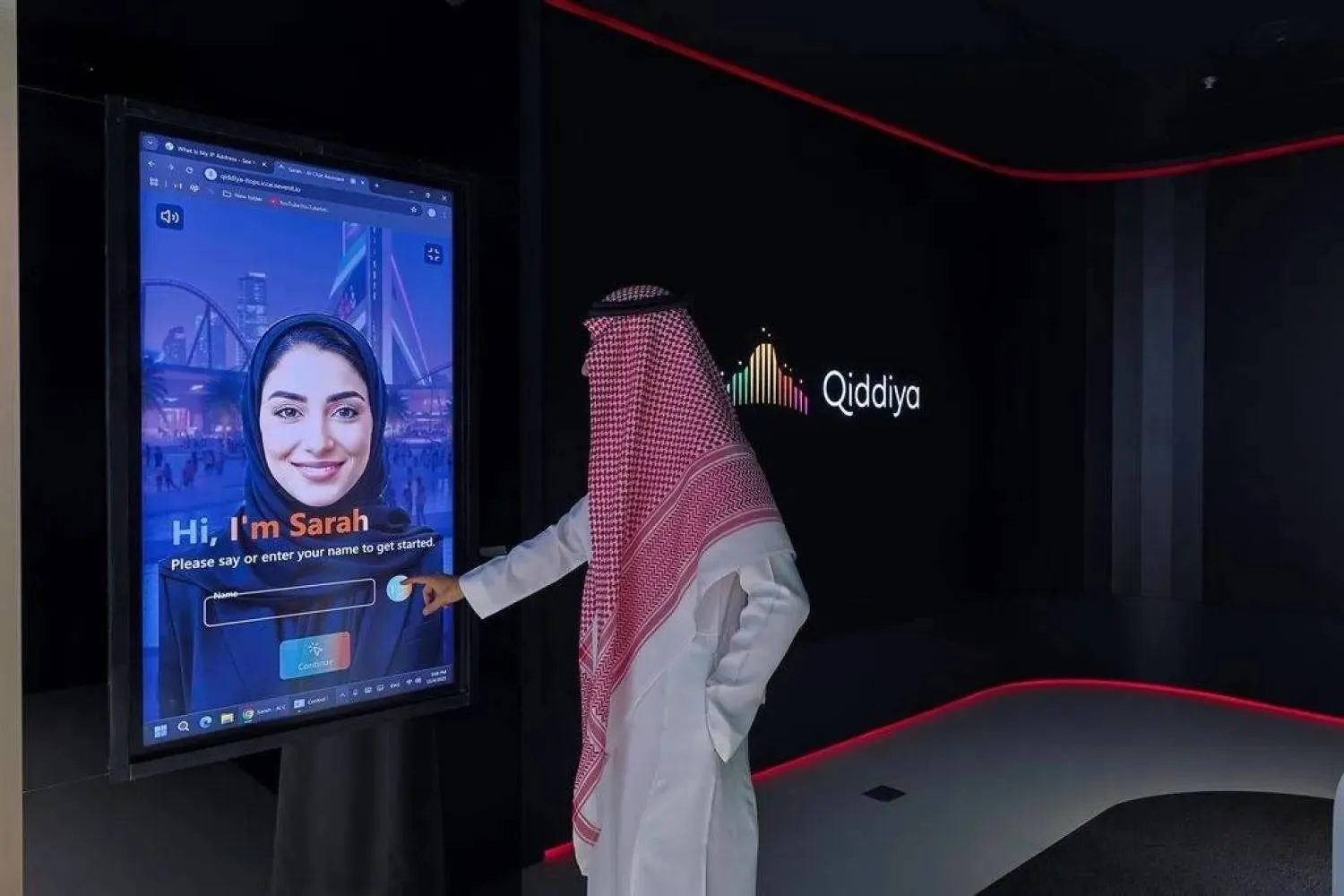
The Smart Command Center in Qiddiya. (Asharq Al-Awsat)
TT

Qiddiya Unveils Smart Command Center to Boost Decision-Making, Cut Operating Costs

The Smart Command Center in Qiddiya. (Asharq Al-Awsat)

The Qiddiya Investment Company (QIC) has launched its new Smart Command Center, a digital hub designed to provide real-time analytics, integrated automation, and advanced artificial intelligence to support the operations of the Qiddiya giga-project.

Abdulrahman Al Ali, QIC’s Chief Technology and Digital Transformation Officer, told Asharq Al-Awsat that the center will enhance operational efficiency, strengthen security, and improve the visitor experience in line with Saudi Vision 2030.

The center, developed in partnership with Deloitte, is described by QIC as a major upgrade in how the city’s operations will be managed. It consolidates data from across Qiddiya’s rapidly expanding infrastructure, using AI-driven tools to speed up executive decision-making and identify risks before they emerge.

According to Al Ali, the platform offers leaders a “comprehensive, instantaneous view” of performance across the development.

Integrating AI into command centers will reshape operational strategy by improving readiness and enabling faster, more accurate responses, he added.

“In an environment of increasing digital complexity and operational risk, smart command centers allow organizations to respond efficiently and maintain resilience,” he noted.

Al Ali said the center helps reduce costs by monitoring infrastructure, networks, and cybersecurity in real time. Continuous oversight allows for early detection of issues, such as intrusion attempts or system overloads, enabling rapid interventions that prevent service disruptions.

He added that the platform supports automated resource scaling, linking all security threats through a unified system that reduces financial risk.

The use of AI-powered analytics and 3D data models also helps operational teams prioritize tasks and strengthen the visitor experience.

Interactive dashboards give Qiddiya’s management live insights into visitor activity, infrastructure performance, wireless coverage, bandwidth use, and potential vulnerabilities, continued Al Ali.

The system’s Agentic AI capabilities analyze and diagnose problems, recommend solutions, and contextualize data, allowing decisions to be made more quickly and confidently.

The center continuously monitors essential performance indicators such as processing power, memory, storage capacity, and cloud-expansion thresholds. It automatically increases capacity when needed to maintain service stability without exceeding budget limits.

Al Ali said the center plays a key role in the Kingdom’s broader digital transformation goals by modernizing infrastructure and enabling the development of smart cities. It will support the management of major destinations, including Six Flags Qiddiya and the upcoming Aquarabia water park.

He added that sustainability is embedded in Qiddiya’s approach, with environmentally conscious measures, such as using native cactus plants to limit light pollution, positioning the command center as a model for future integrated digital-city management in Saudi Arabia.



China Approves First Two Level-3 Autonomous Driving Cars from State-owned Automakers

People pass by the entrance to Volkswagen (China) Technology Company, a 3 billion euros ($3.5 billion) R&D center in Hefei in eastern China's Anhui province, on Feb. 25, 2025. (AP Photo/Ken Moritsugu)
TT

China Approves First Two Level-3 Autonomous Driving Cars from State-owned Automakers

People pass by the entrance to Volkswagen (China) Technology Company, a 3 billion euros ($3.5 billion) R&D center in Hefei in eastern China's Anhui province, on Feb. 25, 2025. (AP Photo/Ken Moritsugu)

China's industry regulator on Monday approved two Chinese cars with level-3 autonomous driving capabilities, marking the first time such vehicles have been cleared by the national regulator as legitimate products ready for mass adoption.

The Ministry of Industry and Information Technology approved the two electric sedans from state-owned automakers Changan Auto and BAIC Motor in its latest automobile product entry category, said Reuters.

The two models are allowed to activate conditional autonomous driving in designated areas of Chongqing and Beijing with speed limits of 50km/h and 80km/h, respectively, the ministry said in a statement. The automakers will conduct trial operation with the cars on the specific roads via their ride-hailing units, it added.

The auto industry has defined five levels of autonomous driving, from cruise control at level one to fully self-driving cars at level five, and level three allows drivers to take their eyes and hands off the road in certain situations.

The move underscored China's ambition to lead the development and adoption of autonomous driving, a technology poised to disrupt the auto industry globally. Last year, China lined up nine automakers for public tests to advance the adoption of self-driving cars.

Chinese regulators earlier this year had sharpened scrutiny of the assisted driving technologies following an accident involving a Xiaomi SU7 sedan in March. That incident killed three occupants when their car crashed seconds after the driver took control from the assisted-driving system.

But government officials are pressing Chinese automakers to rapidly deploy even more advanced systems. In their level-3 push, Chinese regulators also are upping the regulatory ante by holding automakers and parts suppliers liable if their systems fail and cause an accident.

Autonomous driving developers such as Pony AI and WeRide have been testing their level-4 cars with licenses granted by local governments across China.

Tesla's Full Self-Driving, a level-2 driver assistance system, has been partially approved in China since February and falls short of its capabilities in the United States.


Elm Company Named Strategic Partner for International Data and AI Conference

Elm Company Named Strategic Partner for International Data and AI Conference
TT

Elm Company Named Strategic Partner for International Data and AI Conference

Elm Company Named Strategic Partner for International Data and AI Conference

The Saudi Data and Artificial Intelligence Authority (SDAIA) announced a strategic partnership with Elm Company for the International Conference on Data and AI Capacity Building (ICAN 2026), enhancing collaboration to empower the data and artificial intelligence ecosystem and promote innovation in education and human capacity development.

This partnership comes as part of preparations for ICAN 2026, organized by SDAIA from January 28 to 29 at King Saud University in Riyadh, with the participation of a select group of specialists and experts from around the world, SPA reported.

The step represents a qualitative addition that contributes to enriching the conference’s knowledge content and expanding partnerships with leading national entities.

Elm Company brings extensive experience in designing digital solutions and building technical capabilities, reinforcing its role as a strategic partner in supporting the conference. It contributes by developing training tracks and digital empowerment programs, participating in the technology exhibition, and presenting qualitative initiatives that help empower national competencies in the fields of data and artificial intelligence.


Foxconn to Invest $510 Million in Kaohsiung Headquarters in Taiwan

Construction is scheduled to start in 2027, with completion targeted for 2033. Reuters
TT

Foxconn to Invest $510 Million in Kaohsiung Headquarters in Taiwan

Construction is scheduled to start in 2027, with completion targeted for 2033. Reuters

Foxconn, the world’s largest contract electronics maker, said on Friday it will invest T$15.9 billion ($509.94 million) to build its Kaohsiung headquarters in southern Taiwan.

That would include a mixed-use commercial and office building and a residential tower, it said. Construction is scheduled to start in 2027, with completion targeted for 2033.

Foxconn said the headquarters will serve as an important hub linking its operations across southern Taiwan, and once completed will house its smart-city team, software R&D teams, battery-cell R&D teams, EV technology development center and AI application software teams.

The Kaohsiung city government said Foxconn’s investments in the city have totaled T$25 billion ($801.8 million) over the past three years.